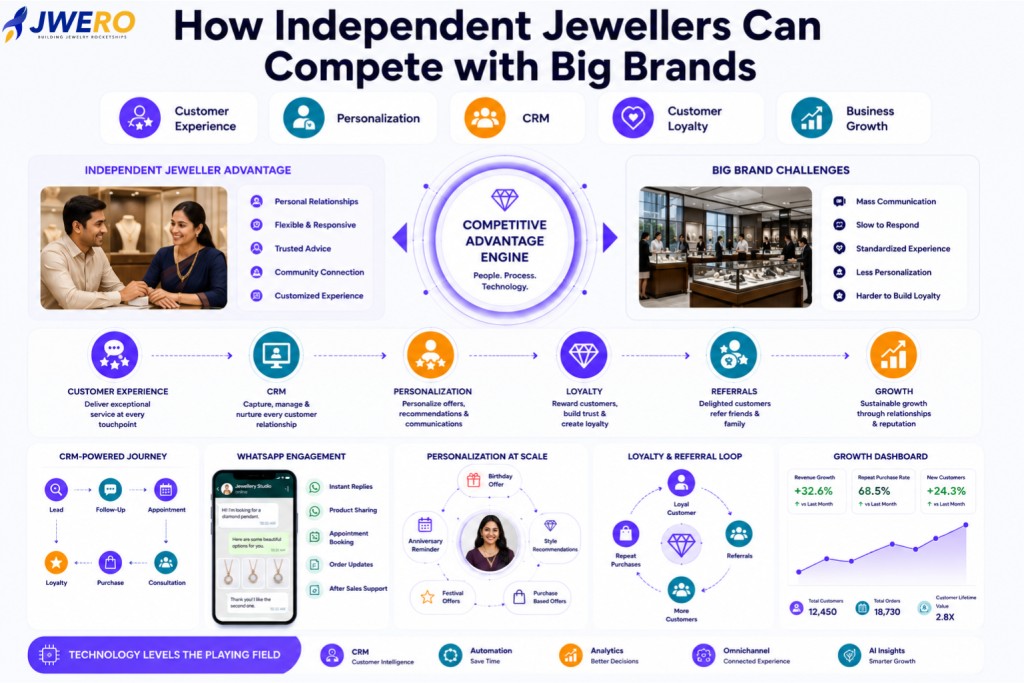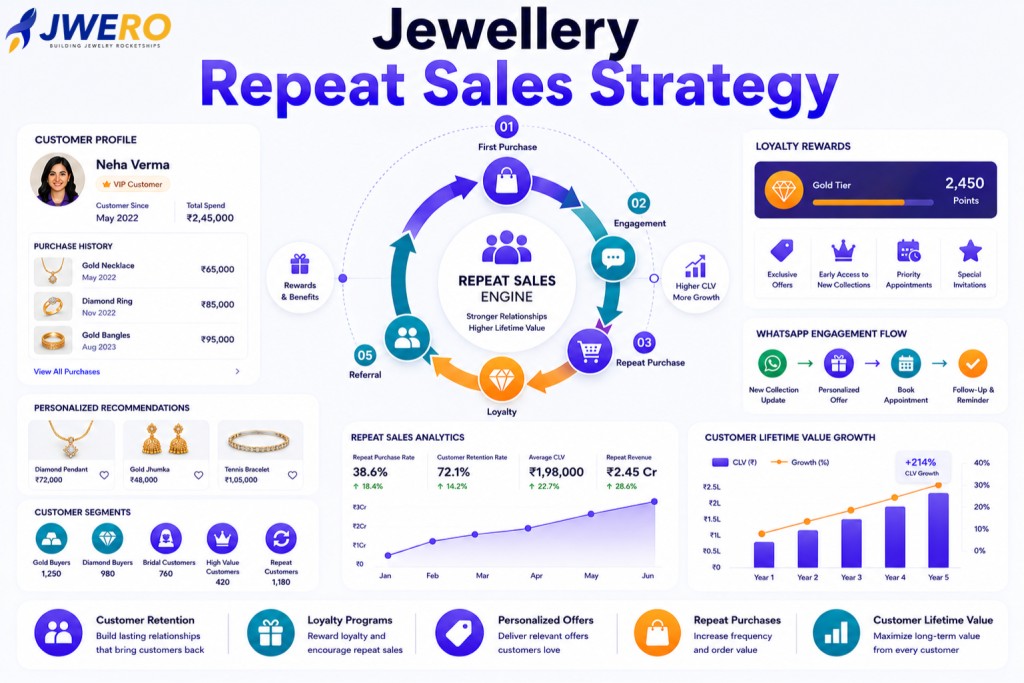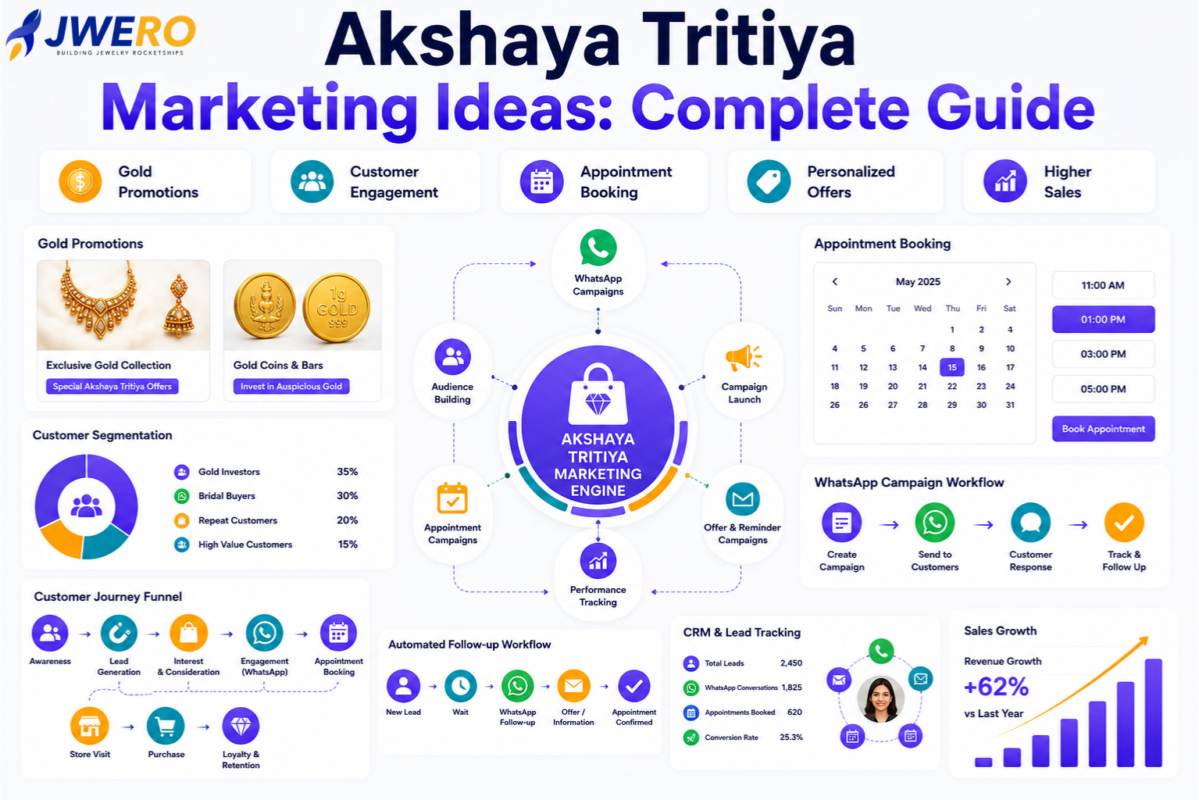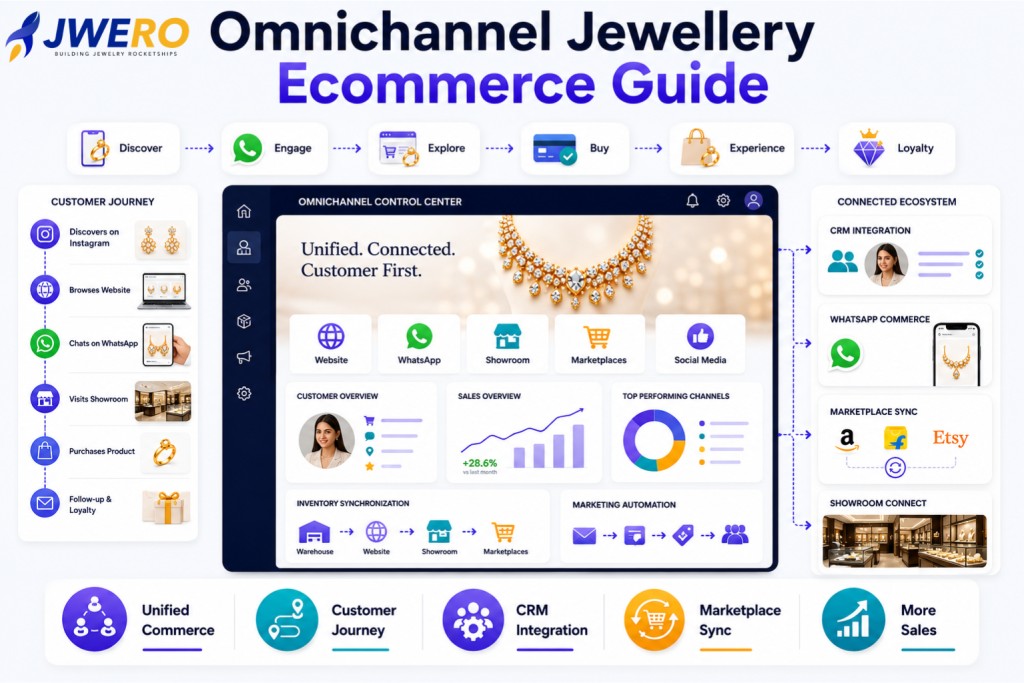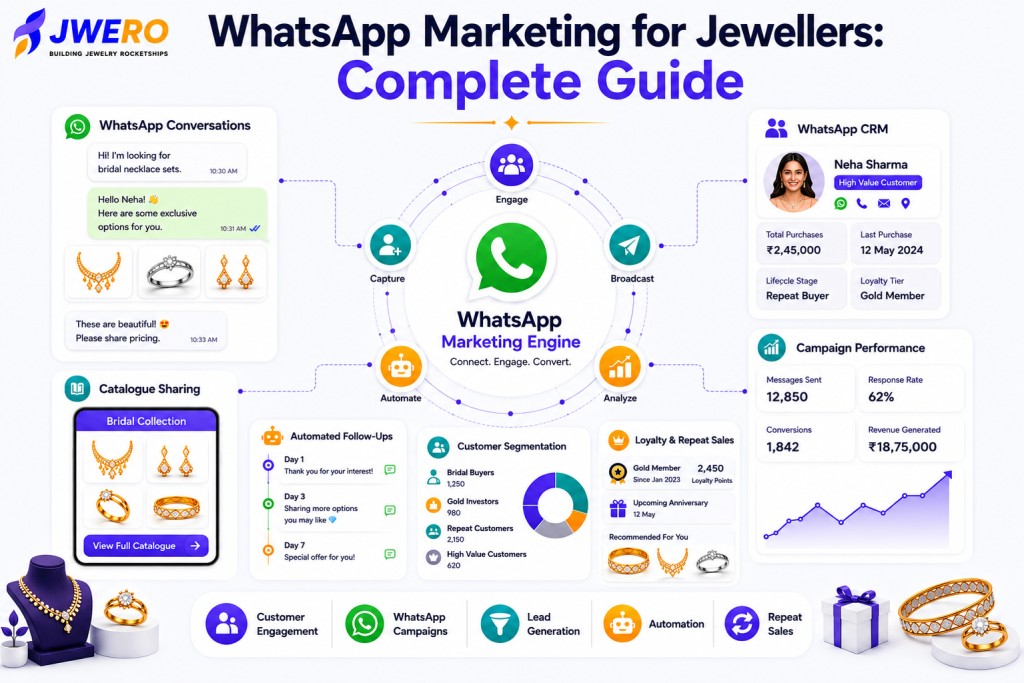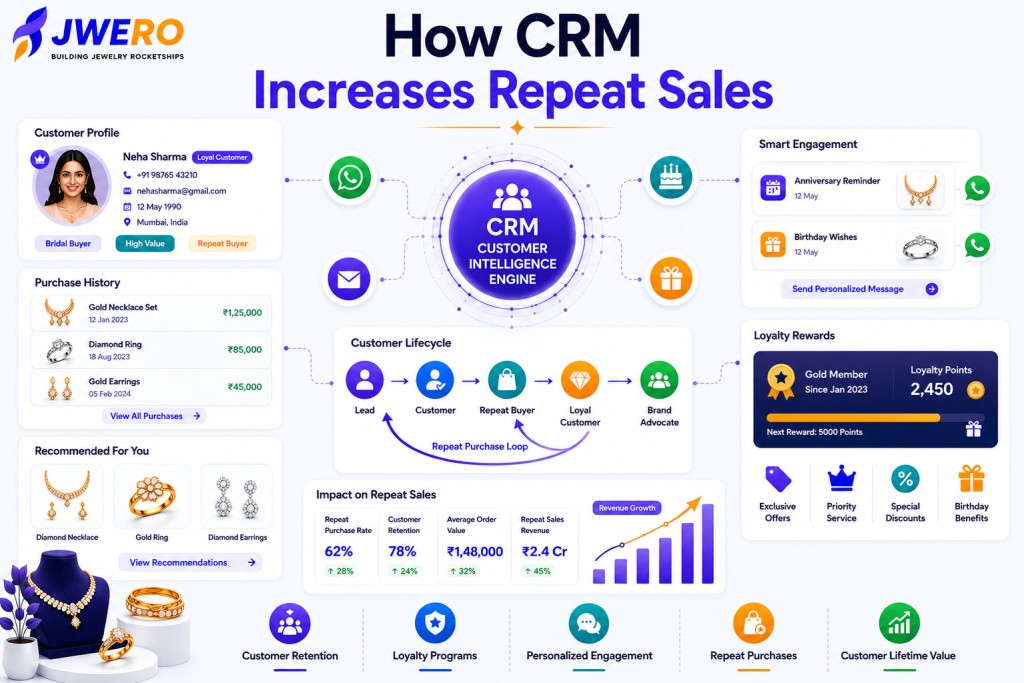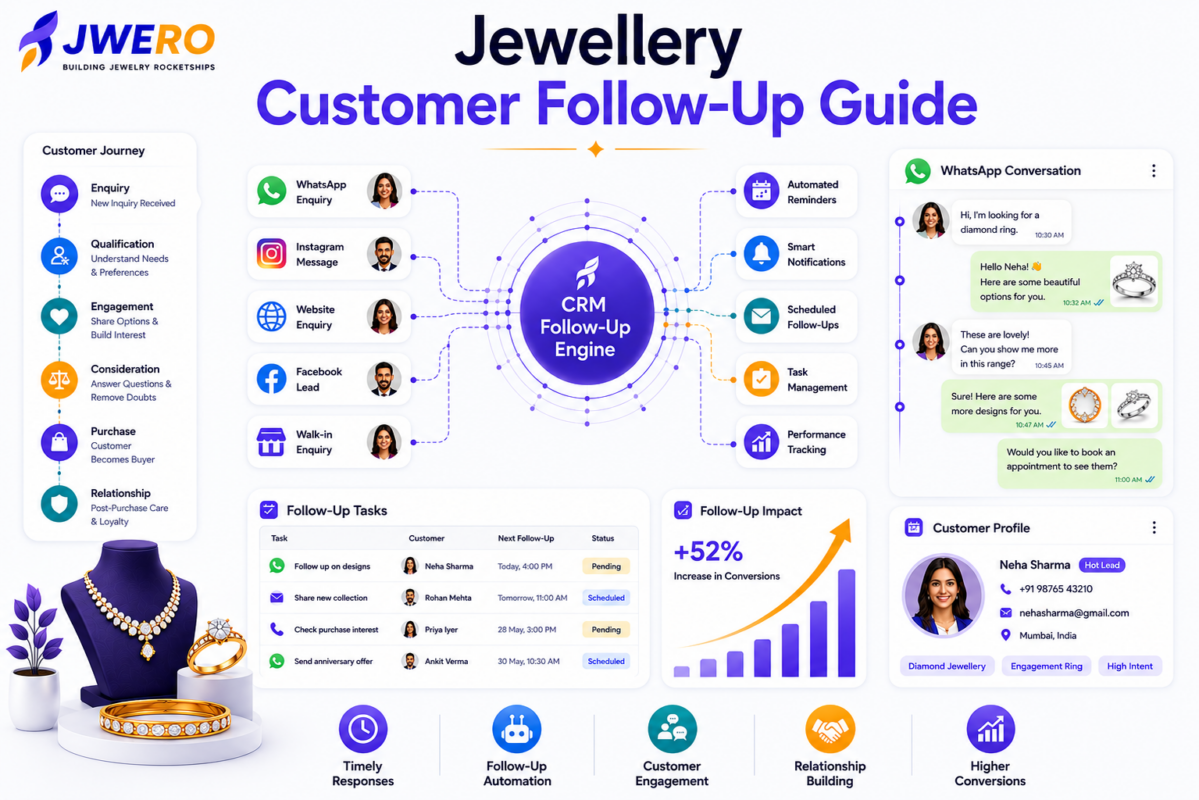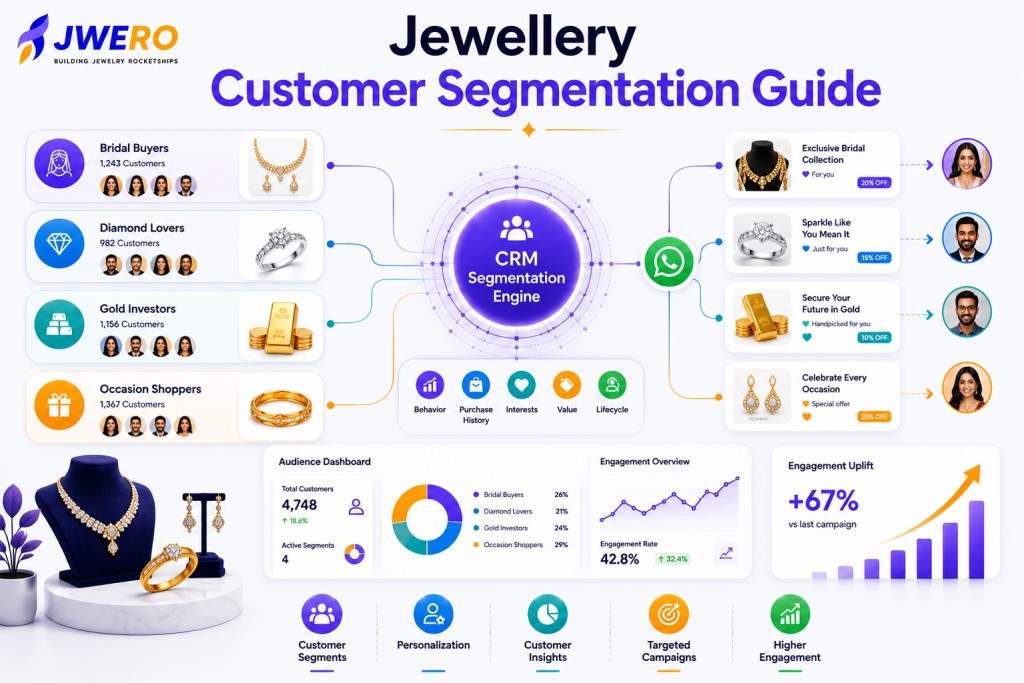


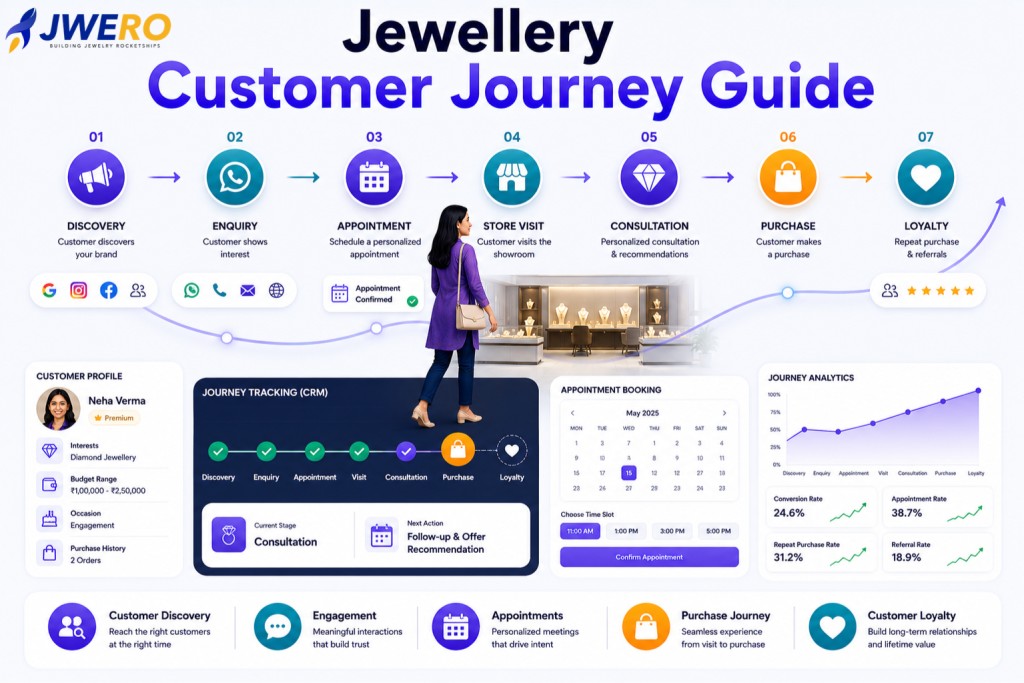
Modern jewellery customers do not purchase immediately.
Most customers interact with multiple touchpoints before making a decision.
A typical jewellery customer may:
- Discover a brand online
- Browse products
- Contact via WhatsApp
- Visit the showroom
- Compare options
- Purchase
- Return for future purchases
Understanding this journey helps retailers improve customer experience and conversion rates.
What Is a Jewellery Customer Journey?
A customer journey is the complete path a customer takes before and after making a purchase.
It includes:
- Discovery
- Engagement
- Consideration
- Appointment
- Store Visit
- Purchase
- Retention
- Loyalty
Each stage influences revenue.
Why Customer Journey Mapping Matters
A structured journey helps retailers:
- Increase Conversion Rates
- Improve Customer Experience
- Reduce Lead Leakage
- Increase Repeat Purchases
- Improve Customer Retention
- Increase Customer Lifetime Value
Businesses that optimise journeys grow faster.
The Modern Jewellery Customer Journey
Awareness
↓
Enquiry
↓
↓
Appointment Booking
↓
Store Visit
↓
Consultation
↓
Purchase
↓
Repeat Purchase
↓
Referral
This becomes the retailer’s growth engine.
Stage 1: Awareness
Customers first discover your business through:
- Google Search
- Referrals
- WhatsApp Sharing
- Google Business Profile
First impressions matter.
Stage 2: Enquiry
Once interested, customers may:
- Send WhatsApp Messages
- Call the Store
- Visit the Website
- Submit Forms
- Ask for Catalogues
Fast response times improve conversion.
Stage 3: Customer Engagement
Retailers should:
- Understand Requirements
- Identify Preferences
- Share Recommendations
- Answer Questions
- Build Trust
Engagement influences purchase decisions.
Stage 4: Appointment Booking
Appointments increase buying intent.
Benefits include:
- Personalized Consultations
- Better Service
- Improved Conversion Rates
- Higher Customer Satisfaction
Appointment-led journeys often perform better.
Stage 5: Store Visit
The showroom experience should include:
- Warm Welcome
- Personalized Guidance
- Product Demonstrations
- Collection Recommendations
- Expert Consultation
Experience drives sales.
Stage 6: Consultation
Understand:
- Budget
- Occasion
- Style Preferences
- Purchase Timeline
- Product Interests
Consultations improve relevance.
Stage 7: Purchase
At the purchase stage:
- Simplify Decision-Making
- Offer Relevant Options
- Build Confidence
- Ensure Smooth Billing
- Collect Customer Information
The goal is a seamless experience.
Stage 8: Repeat Purchase
Most growth comes from existing customers.
Strategies include:
- Anniversary Campaigns
- Birthday Campaigns
- New Collection Updates
- Loyalty Programs
- Personalized Recommendations
Retention increases profitability.
Stage 9: Referral
Happy customers become advocates.
Encourage:
- Reviews
- Referrals
- Testimonials
- Social Sharing
Referrals generate high-quality leads.
Customer Journey Analytics
Track:
- Lead Source
- Response Time
- Appointment Rate
- Store Visit Rate
- Conversion Rate
- Repeat Purchase Rate
- Referral Rate
Analytics reveal opportunities.
Common Customer Journey Mistakes
- Slow Responses
- No Follow-Ups
- Poor Appointment Process
- Generic Recommendations
- No CRM Tracking
- Weak Retention Strategy
These issues reduce conversions.
How CRM Improves Customer Journeys
CRM helps retailers:
- Track Customer Interactions
- Record Preferences
- Monitor Appointments
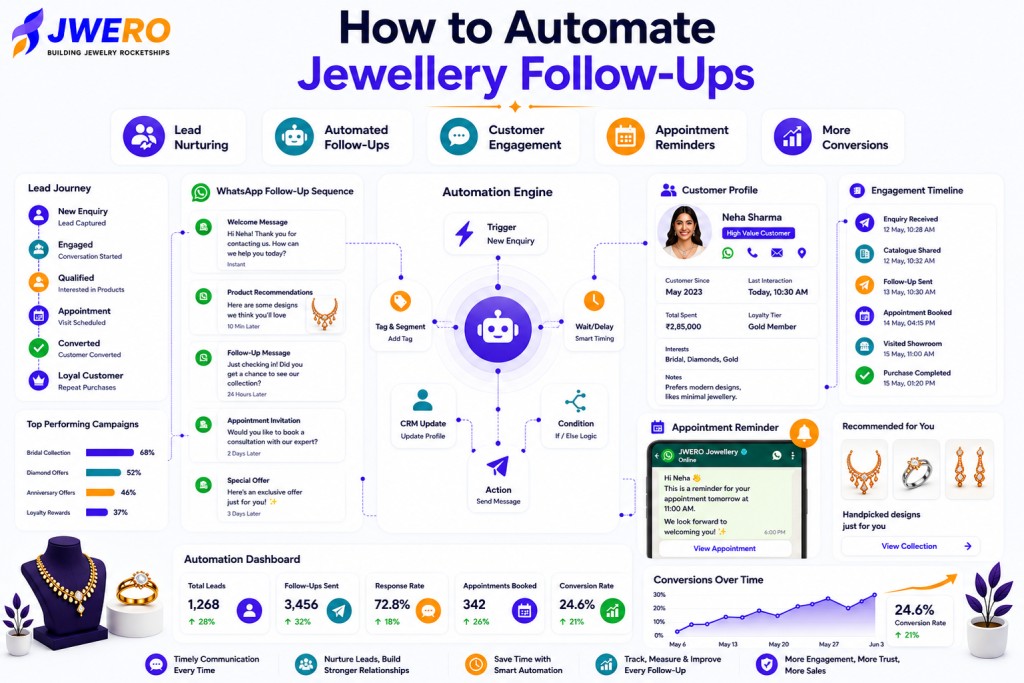
- Automate Follow-Ups
- Improve Personalization
- Increase Repeat Sales
CRM creates journey visibility.
How Jwero Helps Manage Customer Journeys
Jwero enables:
- Customer Journey Tracking
- Lead Management
- Appointment Booking
- WhatsApp CRM
- Follow-Up Automation
- Customer Segmentation
- Repeat Sales Campaigns
- Customer Analytics
This helps retailers optimise every customer touchpoint.
Final Thoughts
Jewellery customers rarely purchase after a single interaction.
The retailers that win are those that create seamless experiences across every stage of the journey.
By optimising:
- Lead handling
- Customer engagement
- Appointments
- Consultations
- Follow-ups
- Retention
Businesses can increase conversions and long-term customer value.
Frequently Asked Questions
What is a jewellery customer journey?
Jewellery Customer journey is the complete path a customer follows from discovery to purchase and repeat business.
Why is customer journey mapping important?
Customer journey mapping is important because it helps identify opportunities to improve conversion rates and customer experience.
What is the most important stage?
Every stage matters, but enquiry response and follow-up often have the greatest impact.
How does CRM improve customer journeys?
CRM provides visibility into interactions, preferences, appointments, and follow-ups.
Why are appointments important?
Appointments are important because they improve engagement, personalisation, and conversion rates.