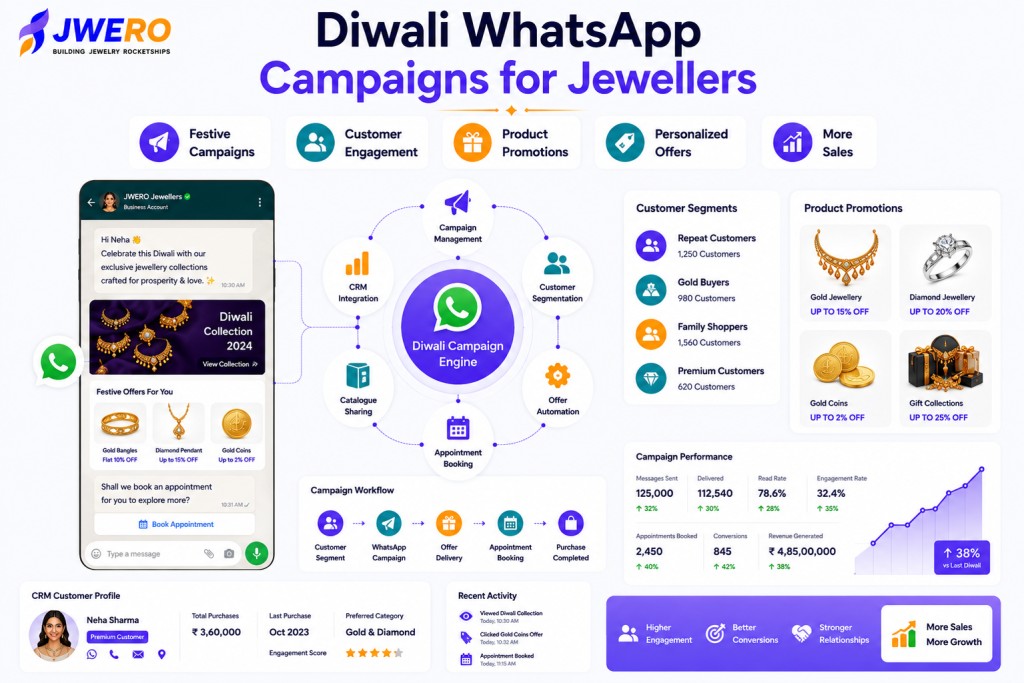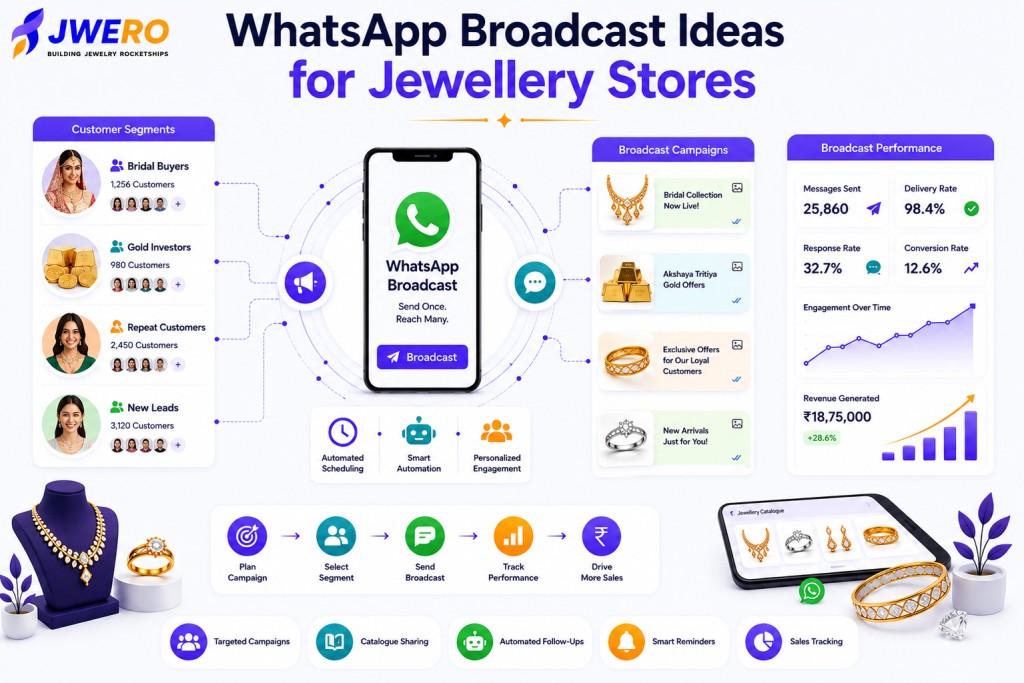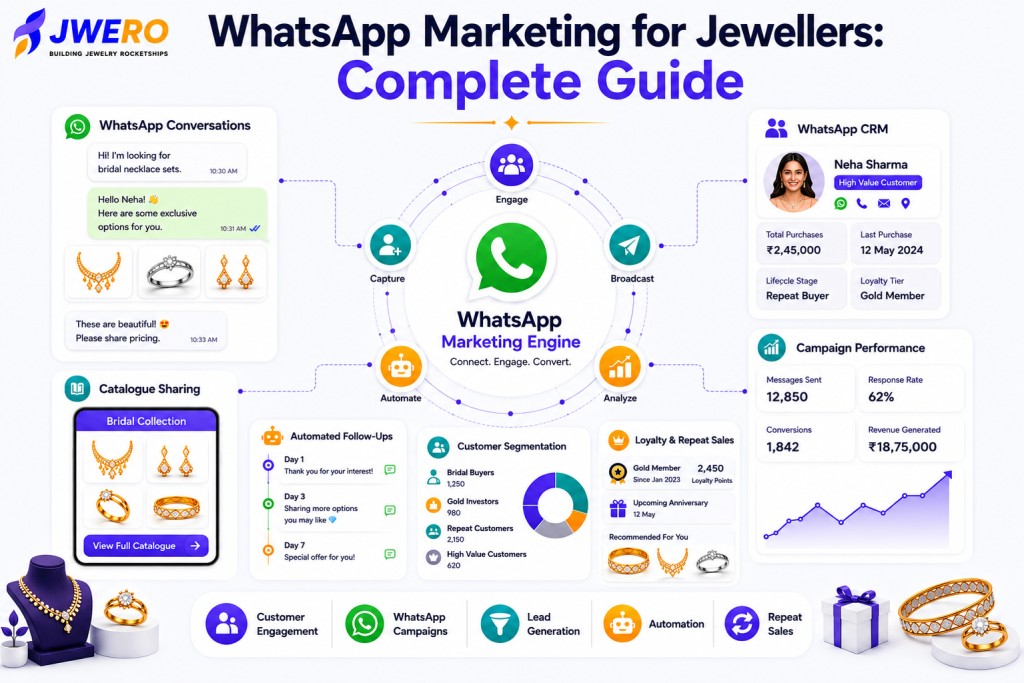


One of the biggest reasons jewellery stores lose sales is not pricing.
It is not product quality.
It is not competition.
It is poor follow-up.
Many customers enquire about jewellery but never hear back again.
Others receive inconsistent communication.
Some are forgotten completely.
The businesses that follow up consistently usually convert more leads and generate more sales.
Automation makes this possible.
This guide explains how jewellery retailers can automate follow-ups without losing the personal touch customers expect.
Why Follow-Ups Matter in Jewellery Retail
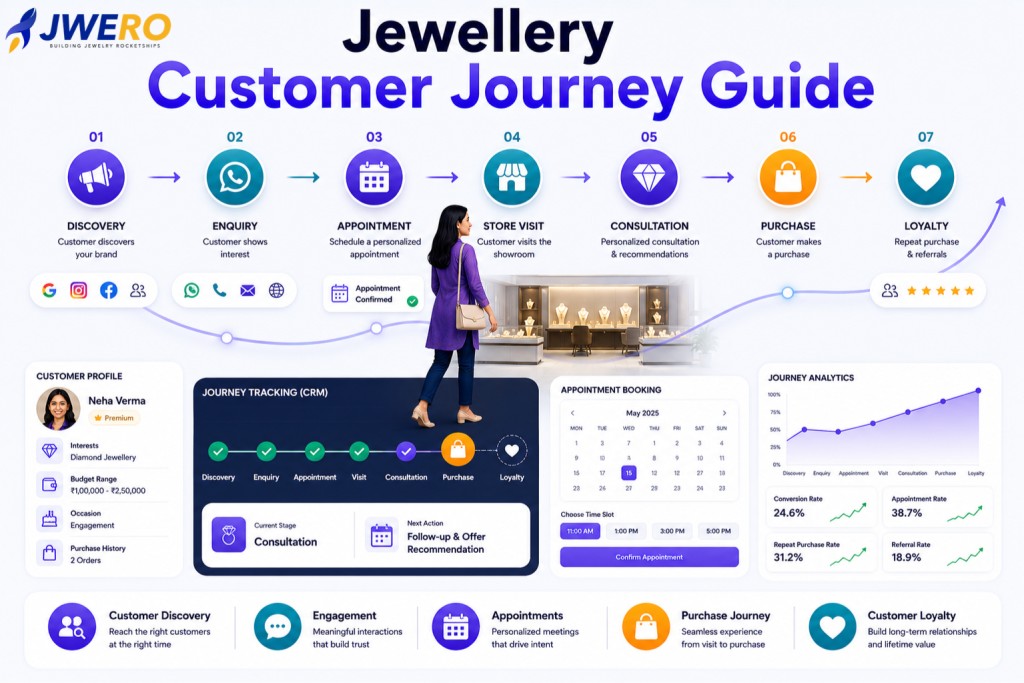
Jewellery purchases often involve a long decision-making process.
Customers:
- Compare designs
- Discuss with family
- Consider budgets
- Visit multiple stores
Very few customers buy during the first interaction.
Follow-ups help businesses stay top-of-mind throughout the buying journey.
Common Follow-Up Challenges
Without automation:
- Leads Are Forgotten
- Staff Miss Reminders
- Communication Is Inconsistent
- Customer Interest Fades
- Sales Opportunities Are Lost
Automation solves these issues.
What Is Follow-Up Automation?
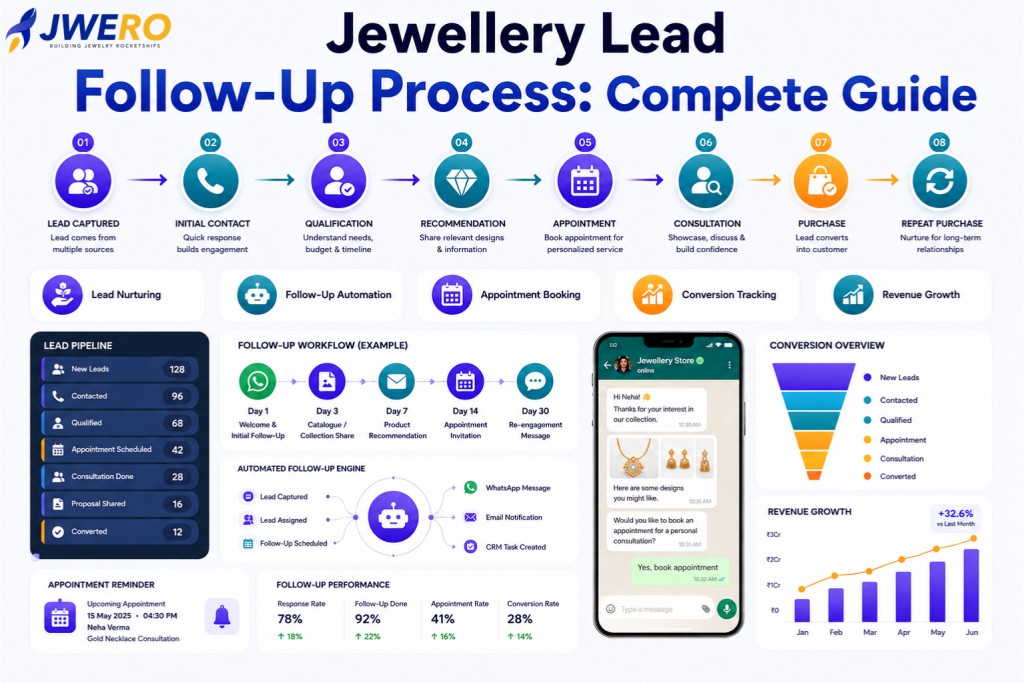
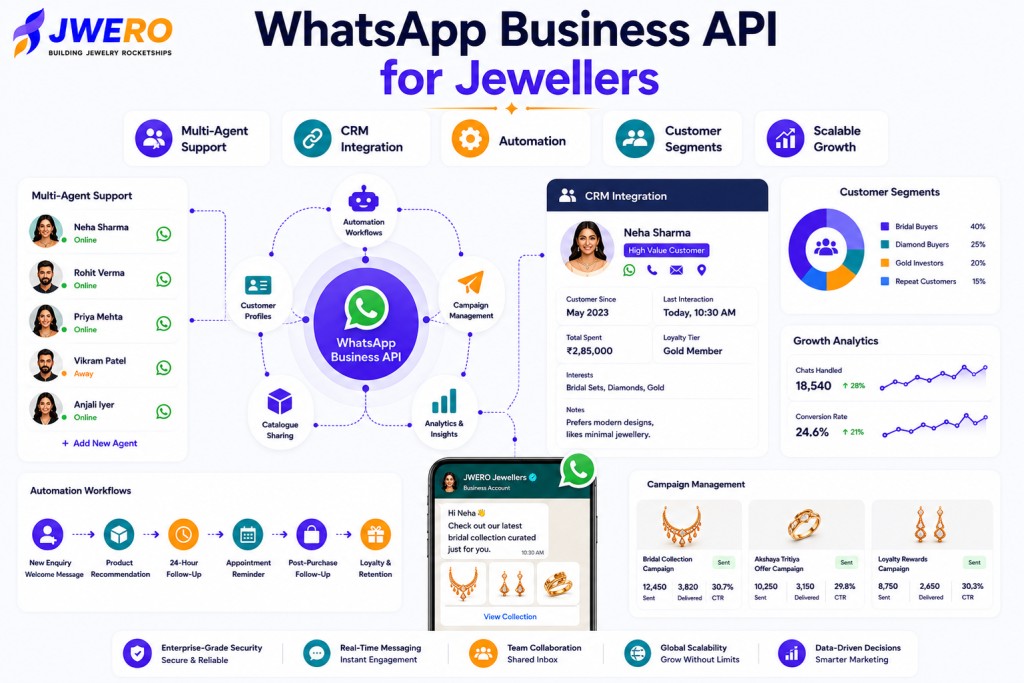
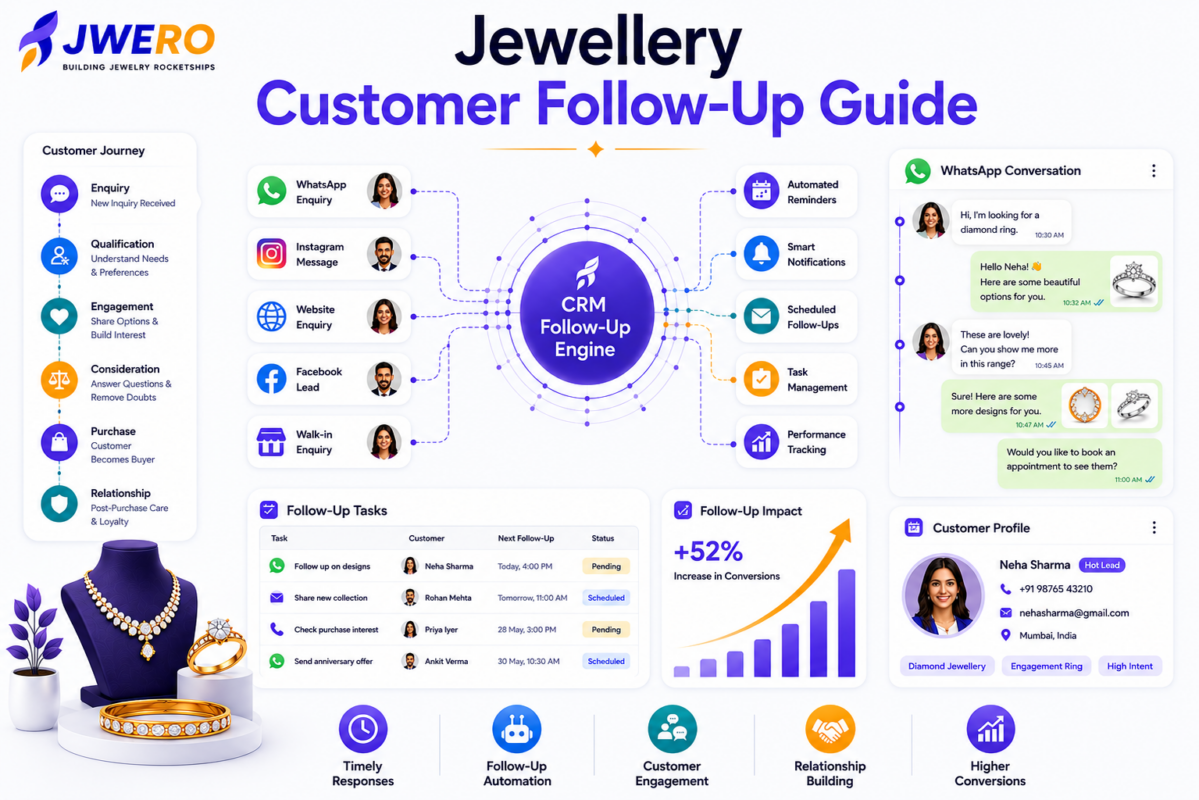
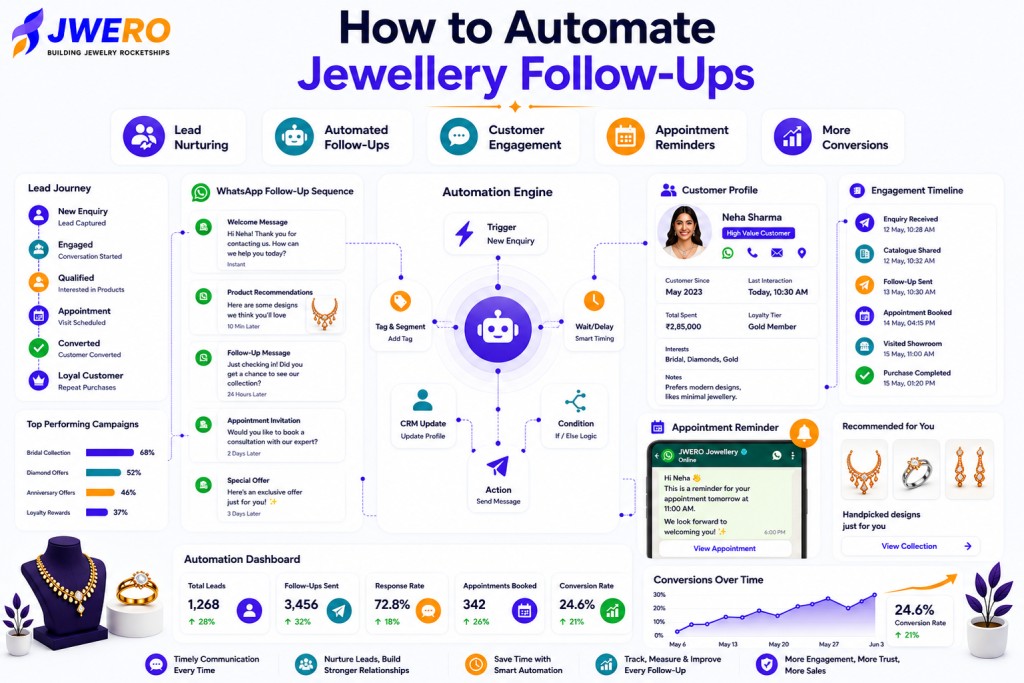
Follow-up automation uses CRM and WhatsApp workflows to send timely communications based on customer actions and stages.
Instead of manually tracking every customer, the system automatically triggers relevant messages.
Example:
Customer Enquiry
↓
Welcome Message
↓
Product Recommendation
↓
24-Hour Follow-Up
↓
Appointment Reminder
↓
Purchase
↓
Retention Campaign
Benefits of Automating Follow-Ups
Faster Response Times
Customers receive immediate engagement.
Better Customer Experience
Consistent communication builds trust.
Higher Lead Conversion
More conversations lead to more opportunities.
Improved Team Productivity
Less manual effort.
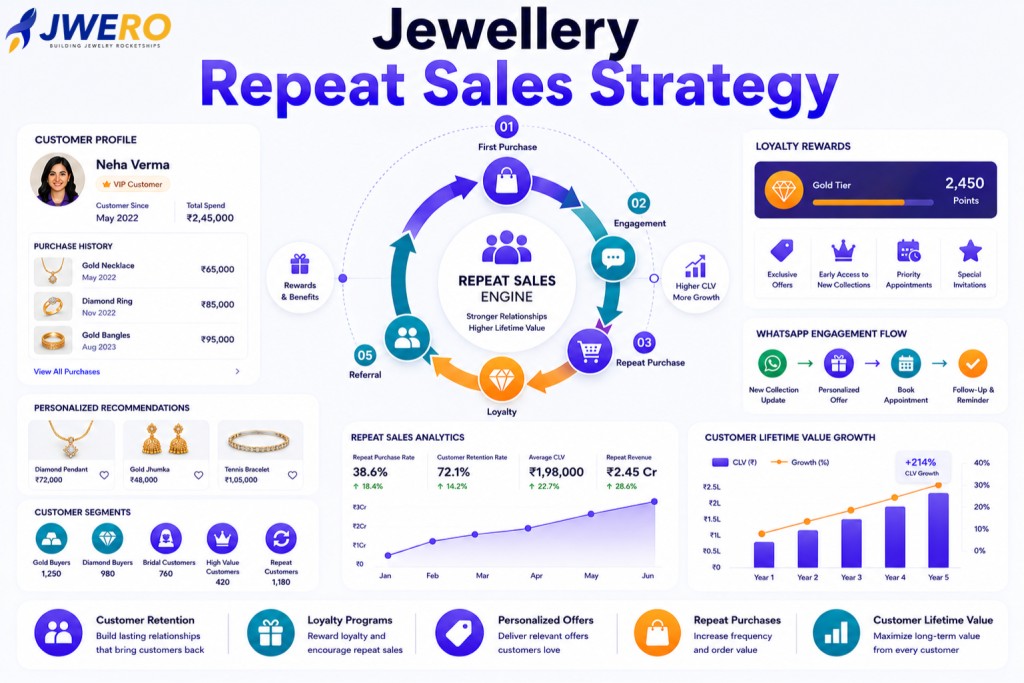
Increased Repeat Sales
Customers stay connected after purchase.
Key Follow-Up Workflows Every Jeweller Should Automate
1. New Lead Follow-Up
Trigger:
Customer sends an enquiry.
Automation:
- Welcome message
- Product recommendations
- Consultation invitation
2. Product Enquiry Follow-Up
Trigger:
Customer views or enquiries about a product.
Automation:
- Additional images
- Product details
- Related recommendations
3. Appointment Reminder Workflow
Trigger:
Appointment booked.
Automation:
- Confirmation message
- Reminder 24 hours before
- Reminder 2 hours before
4. Bridal Lead Nurturing
Trigger:
The customer is interested in wedding jewellery.
Automation:
- Bridal catalogue
- Wedding package options
- Consultation booking
5. Abandoned Enquiry Workflow
Trigger:
Customer stops responding.
Automation:
- Follow-up after 24 hours
- Follow-up after 3 days
- New collection recommendation
6. Post-Purchase Follow-Up
Trigger:
Purchase completed.
Automation:
- Thank-you message
- Care instructions
- Loyalty enrollment
7. Anniversary Automation
Trigger:
Customer anniversary date.
Automation:
- Anniversary greeting
- Personalized recommendations
- Exclusive offer
8. Birthday Campaign Automation
Trigger:
Customer’s birthday.
Automation:
- Birthday wishes
- Special offer
- Appointment invitation
Why WhatsApp Is Ideal for Follow-Up Automation
WhatsApp provides:
- High visibility
- Fast communication
- Personal engagement
- Rich media sharing
Customers are more likely to respond compared to traditional channels.
CRM + WhatsApp Automation = Better Results
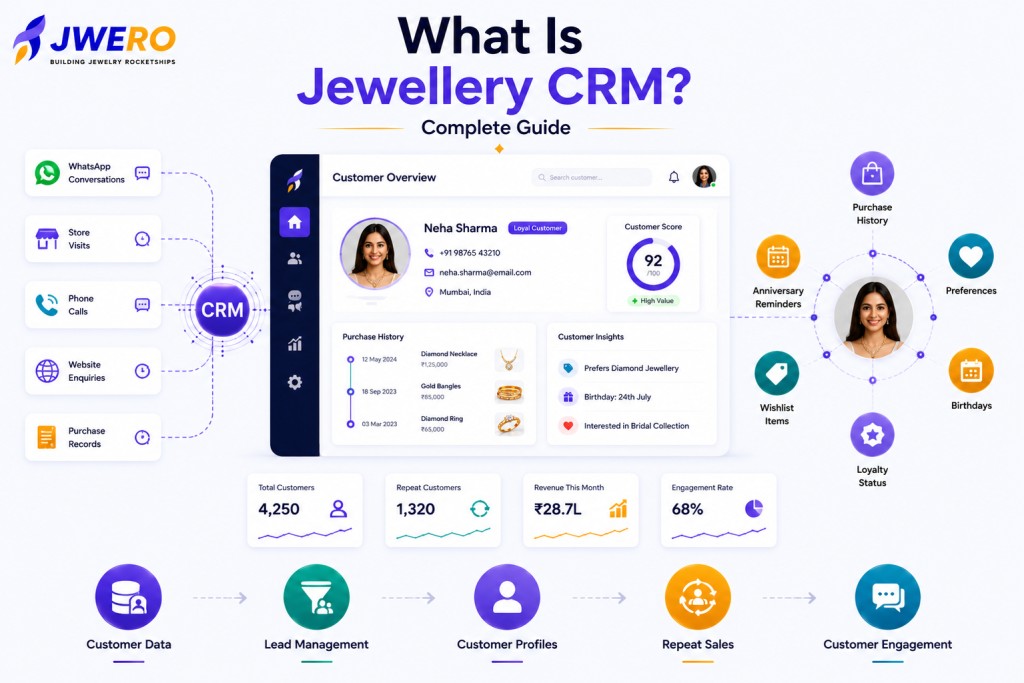
CRM provides:
- Customer Profiles
- Purchase History
- Customer Preferences
- Lifecycle Tracking
- Segmentation
When combined with WhatsApp automation, businesses can create highly personalised follow-ups.
Customer Segmentation Improves Follow-Ups
Examples:
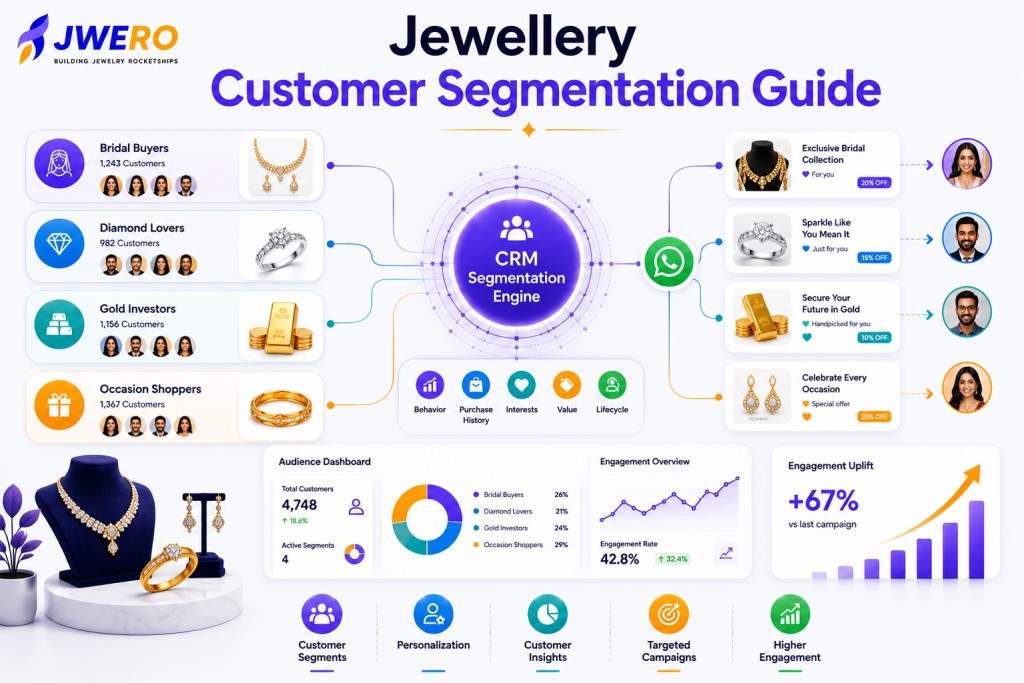
Bridal Buyers
Receive wedding-related content.
Diamond Buyers
Receive premium collection updates.
Gold Investors
Receive investment-focused communication.
Repeat Customers
Receive loyalty and retention campaigns.
Segmentation improves relevance.
Metrics to Track
- Follow-Up Completion Rate
- Response Rate
- Appointment Bookings
- Lead Conversion Rate
- Customer Retention Rate
- Repeat Purchase Rate
These metrics help optimise automation performance.
Common Follow-Up Automation Mistakes
Too Many Messages
Customers become disengaged.
Generic Communication
Personalisation matters.
No Segmentation
Relevance decreases.
Ignoring Customer Preferences
Customer experience suffers.
Not Measuring Results
Improvement becomes difficult.
How Jwero Helps Automate Jewellery Follow-Ups
Jwero enables:
- WhatsApp automation
- Lead nurturing
- Customer segmentation
- Appointment reminders
- Loyalty workflows
- Repeat sales campaigns
- CRM-driven engagement
This helps jewellery retailers convert more leads while reducing manual effort.
Final Thoughts
The most successful jewellery retailers do not rely on memory to manage customer relationships.
They use automation.
Automated follow-ups ensure every lead receives timely communication, every opportunity is nurtured, and every customer remains engaged.
Automation does not replace relationships.
It helps businesses maintain them consistently at scale.
Frequently Asked Questions (FAQs)
Why are follow-ups important in jewellery retail?
Most jewellery purchases require multiple interactions before customers make a buying decision.
Can automated follow-ups increase sales?
Yes. Consistent follow-ups improve engagement, lead conversion, and customer retention.
What follow-ups should jewellers automate?
Lead responses, product enquiries, appointment reminders, post-purchase communication, birthdays, anniversaries, and loyalty campaigns.
Is WhatsApp effective for follow-up automation?
Yes. WhatsApp offers high visibility and strong customer engagement rates.
Can CRM improve follow-up automation?
Absolutely. CRM provides customer data, segmentation, and lifecycle tracking that make automation more personalized.
How does automation help small jewellery businesses?
Automation reduces manual work, ensures consistency, and allows small teams to manage customer engagement more efficiently.