

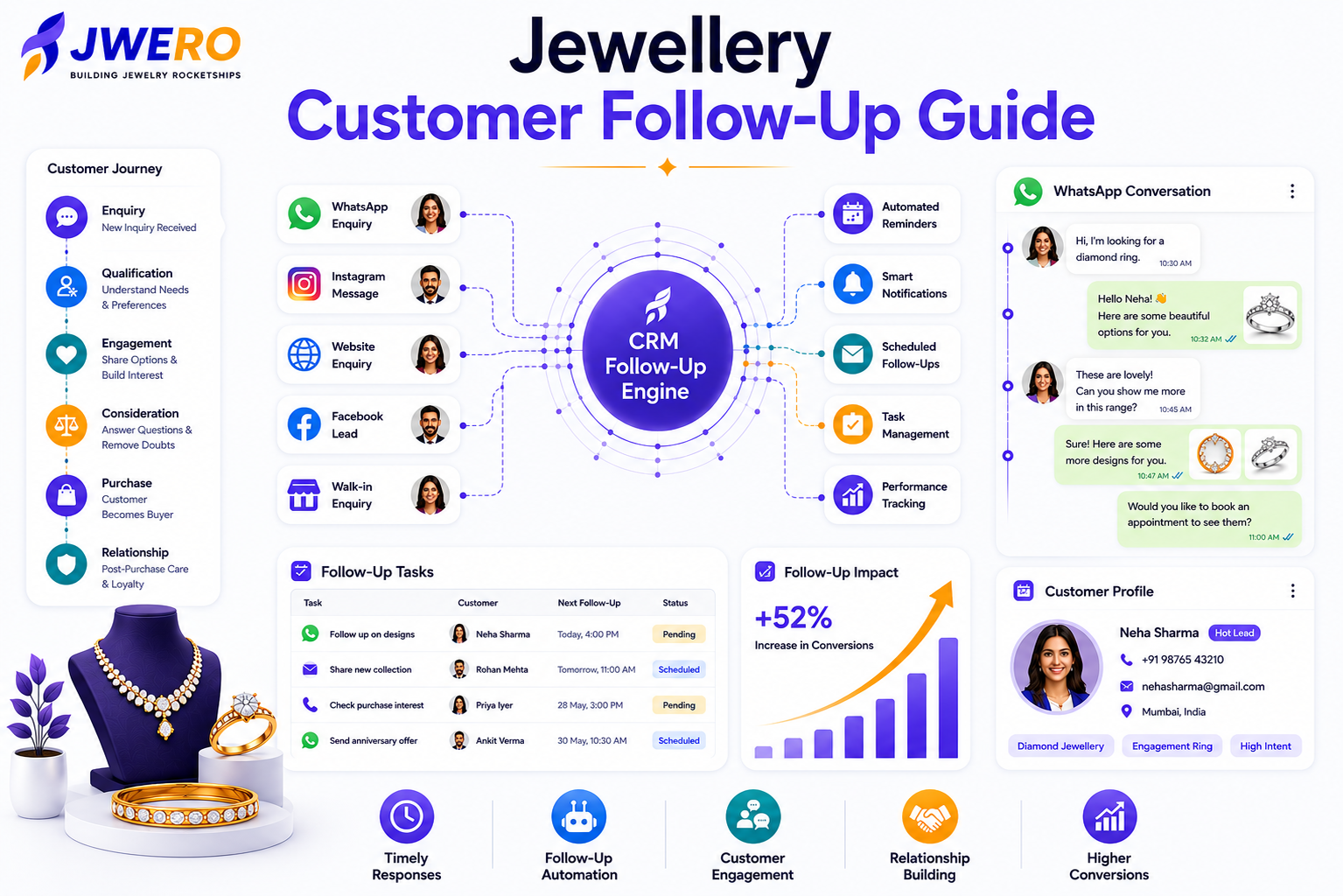
Many jewellery sales are not lost because customers are uninterested.
They are lost because businesses fail to follow up.
A customer may enquire about:
- Engagement rings
- Bridal jewellery
- Diamond necklaces
- Gold investments
- Anniversary gifts
They show interest
They ask questions
They explore options
Then silence follows
Not from the customer, from the business
In jewellery retail, effective follow-up is often the difference between an enquiry and a sale.
Why Follow-Up Matters in Jewellery Retail
Jewellery purchases rarely happen instantly.
Customers often need time to:
- Compare products
- Discuss options with family
- Evaluate budgets
- Consider designs
- Explore alternatives
This means most customers require multiple interactions before making a decision.
Businesses that remain present throughout the decision process are more likely to win the sale.
What Is Customer Follow-Up?
Customer follow-up is the process of continuing engagement after an initial interaction.
The purpose is to:
- Maintain interest
- Answer questions
- Build trust
- Guide decision-making
- Encourage purchase readiness
Good follow-up creates value.
Bad follow-up creates pressure.
Common Follow-Up Problems
Many jewellery retailers experience:
Forgotten Enquiries
No one remembers to follow up.
Inconsistent Communication
Every team member follows a different process.
Excessive Messaging
Customers feel pressured.
Poor Timing
Messages arrive too late.
No Visibility
Managers cannot see follow-up activity.
These issues reduce conversion rates.
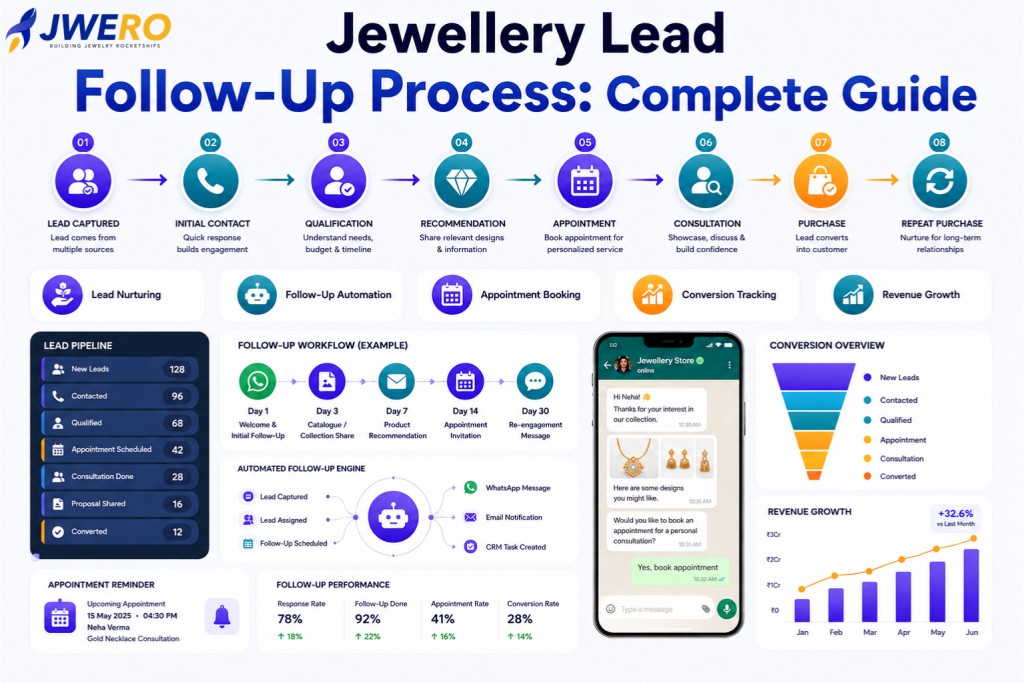
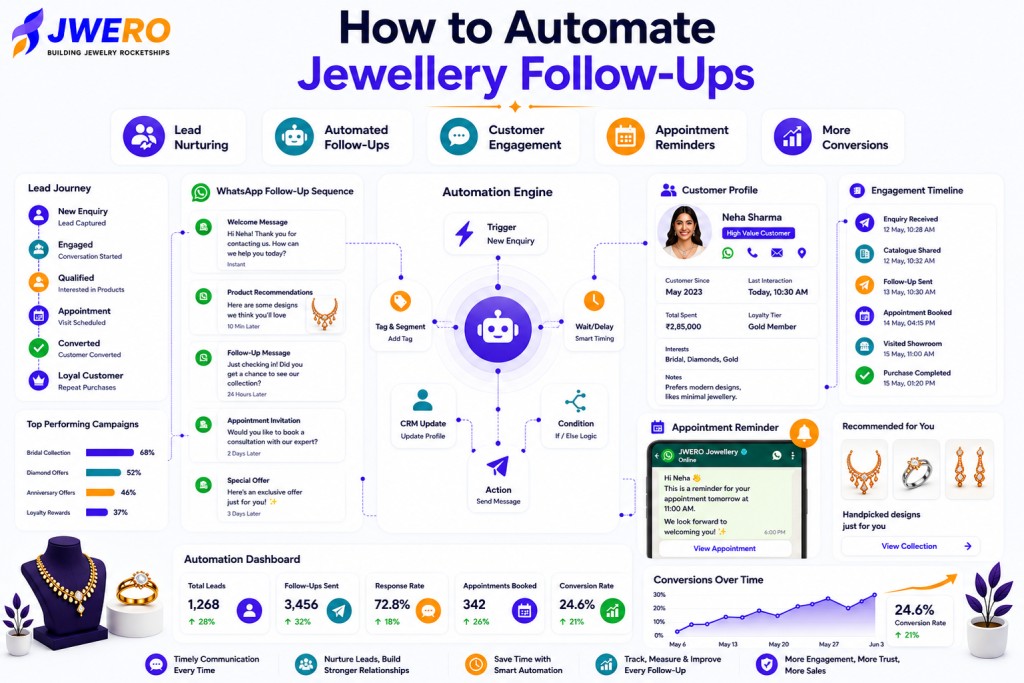
The Ideal Jewellery Follow-Up Process
Step 1: Immediate Response
The first response should happen quickly.
Customers increasingly expect:
- Fast answers
- Product information
- Helpful guidance
Speed creates trust.
Step 2: Qualification
Understand:
- Product interest
- Budget expectations
- Purchase timeline
- Occasion
This helps personalise future interactions.
Step 3: Value-Based Engagement
Follow-ups should provide value.
Examples:
- Product recommendations
- Design options
- Collection highlights
- Educational content
Every interaction should help the customer.
Step 4: Purchase Support
Customers often need reassurance.
Follow-ups can address:
- Product comparisons
- Pricing questions
- Customization options
- Appointment scheduling
This reduces purchase friction.
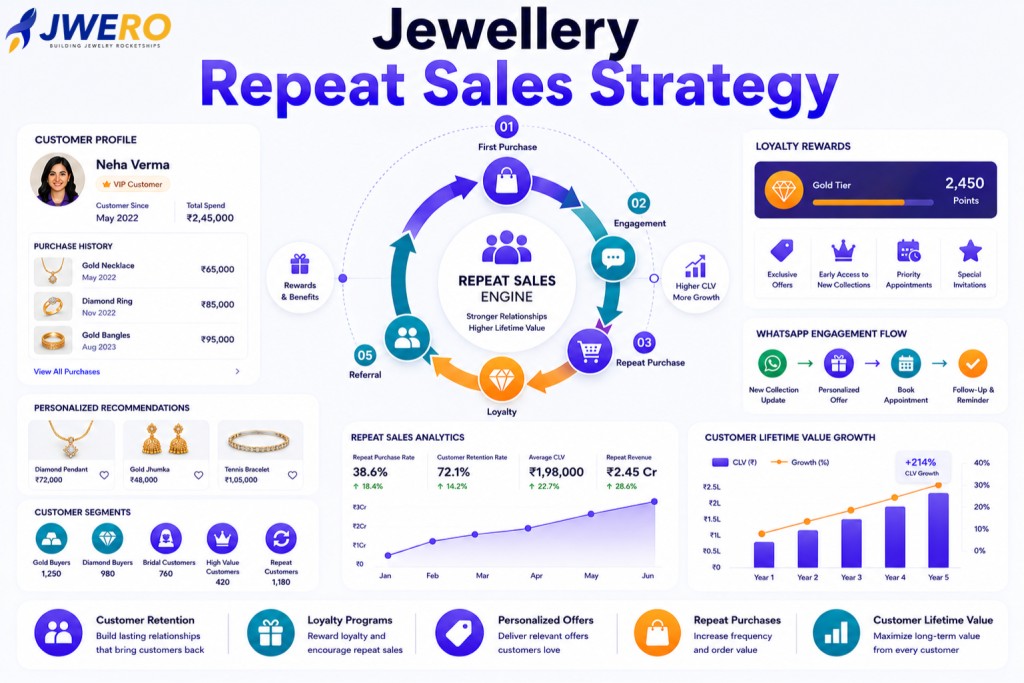
Step 5: Post-Purchase Follow-Up
Follow-up does not end after the sale.
Businesses should continue engagement through:
- Thank-you messages
- Care guidance
- Loyalty programs
- Occasion reminders
This supports long-term relationships.
Why Timing Matters
The same message can produce very different results depending on timing.
Good timing improves:
- Response rates
- Engagement
- Conversion
Poor timing often leads to disengagement.
CRM systems help businesses manage timing more effectively.
WhatsApp and Jewellery Follow-Ups
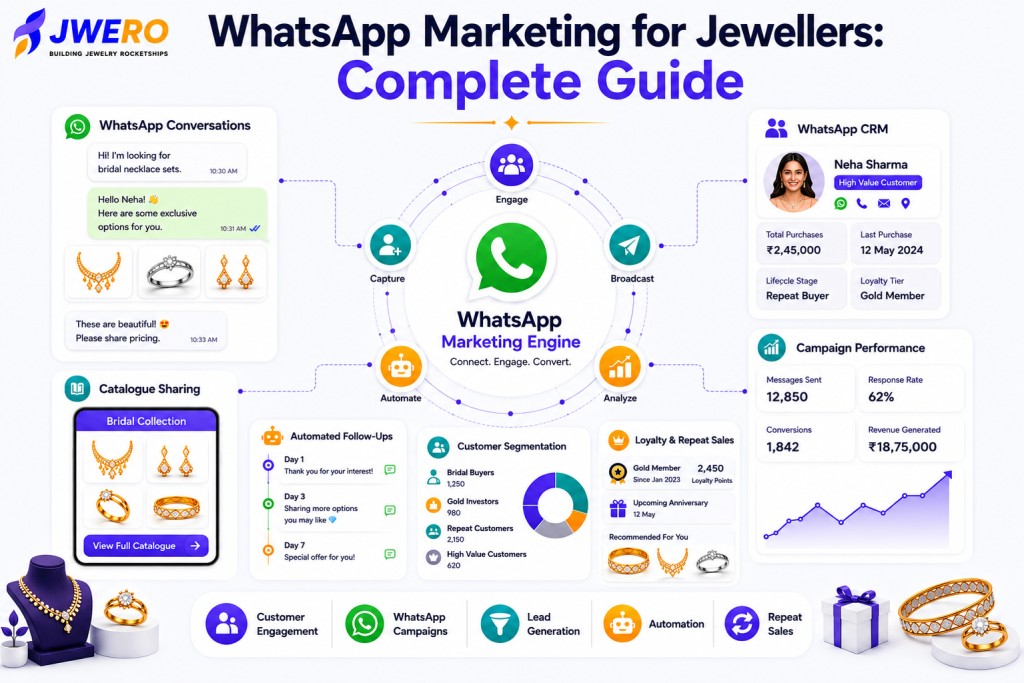
WhatsApp has become one of the most effective follow-up channels.
Customers appreciate:
- Convenience
- Fast communication
- Product sharing
- Personalized conversations
When used correctly, WhatsApp helps maintain engagement without feeling intrusive.
How CRM Improves Follow-Up Management
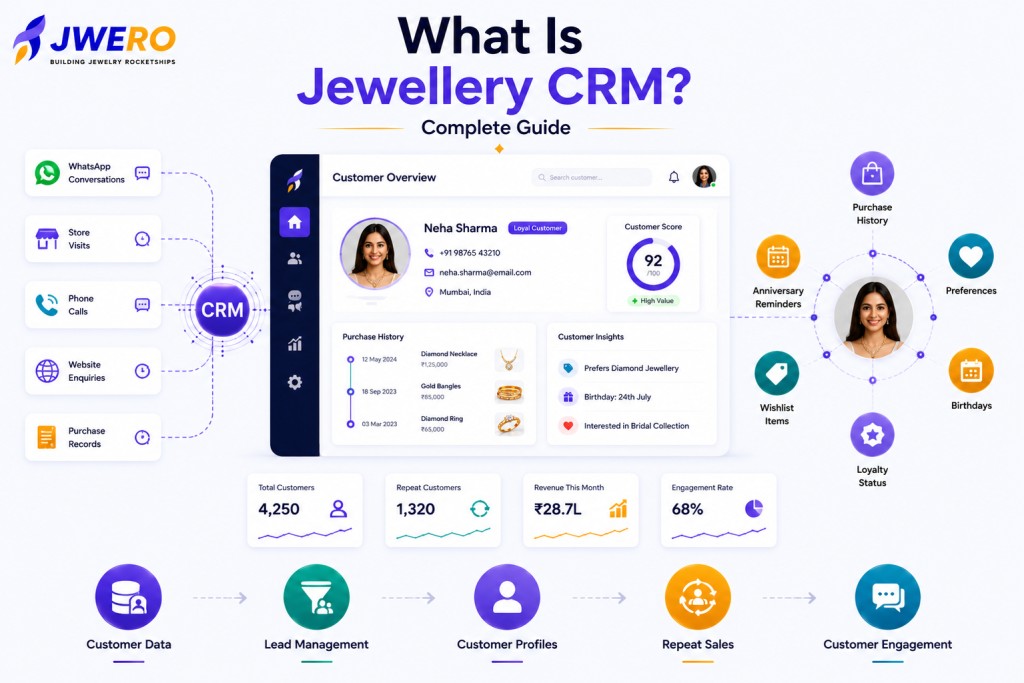
CRM provides structure and visibility.
Benefits include:
Follow-Up Reminders
Nothing gets forgotten.
Customer History
Previous conversations remain accessible.
Team Coordination
Everyone works from the same information.
Performance Tracking
Managers can monitor follow-up effectiveness.
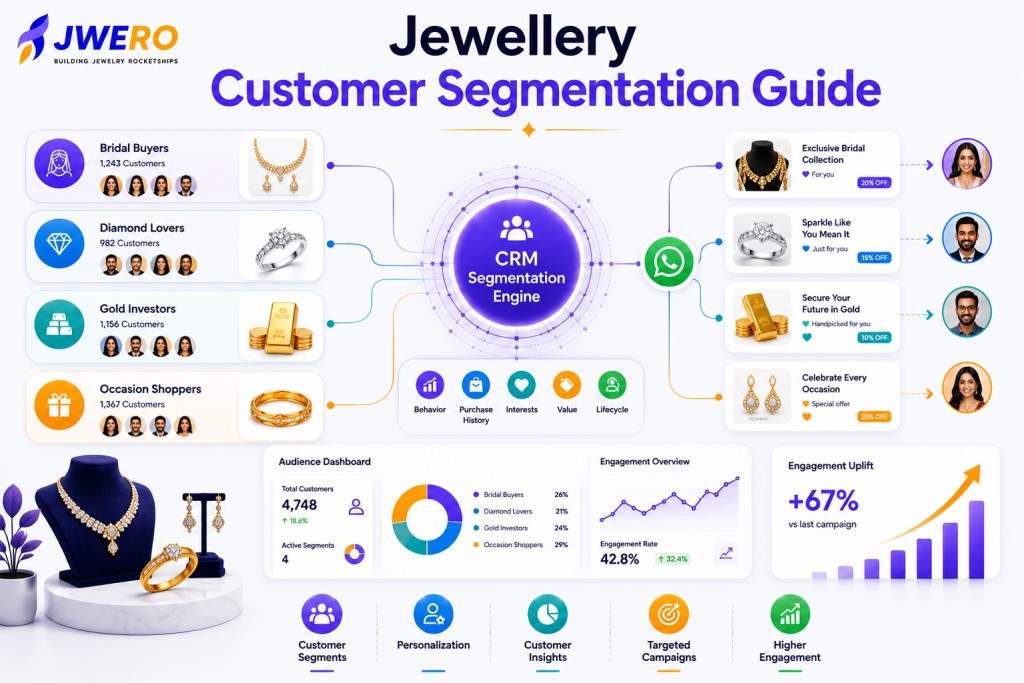
Customer Segmentation
Communication becomes more relevant.
Follow-Up Best Practices
Managers can monitor follow-up effectiveness.
Personalise Every Interaction
Reference customer interests whenever possible.
Focus on Value
Help customers make informed decisions.
Respect Timing
Avoid overwhelming customers.
Track Every Interaction
Visibility improves consistency.
Continue After the Sale
Relationships create repeat business.
Follow-Up Mistakes to Avoid
Generic Messages
Customers expect relevance.
Over-Messaging
Too much communication creates fatigue.
No Follow-Up System
Reliance on memory creates inconsistency.
Ignoring Customer Intent
Every customer has different needs.
Stopping After Purchase
The customer journey continues.
Measuring Follow-Up Success
Key metrics include:
Response Rate
How often customers engage.
Conversion Rate
How many enquiries become sales?
Follow-Up Completion Rate
Percentage of planned follow-ups completed.
Sales Cycle Duration
Time from enquiry to purchase.
Repeat Purchase Rate
Long-term relationship effectiveness.
How Follow-Ups Increase Jewellery Sales
Effective follow-up helps businesses:
- Stay visible
- Build trust
- Reduce customer uncertainty
- Improve engagement
- Increase conversions
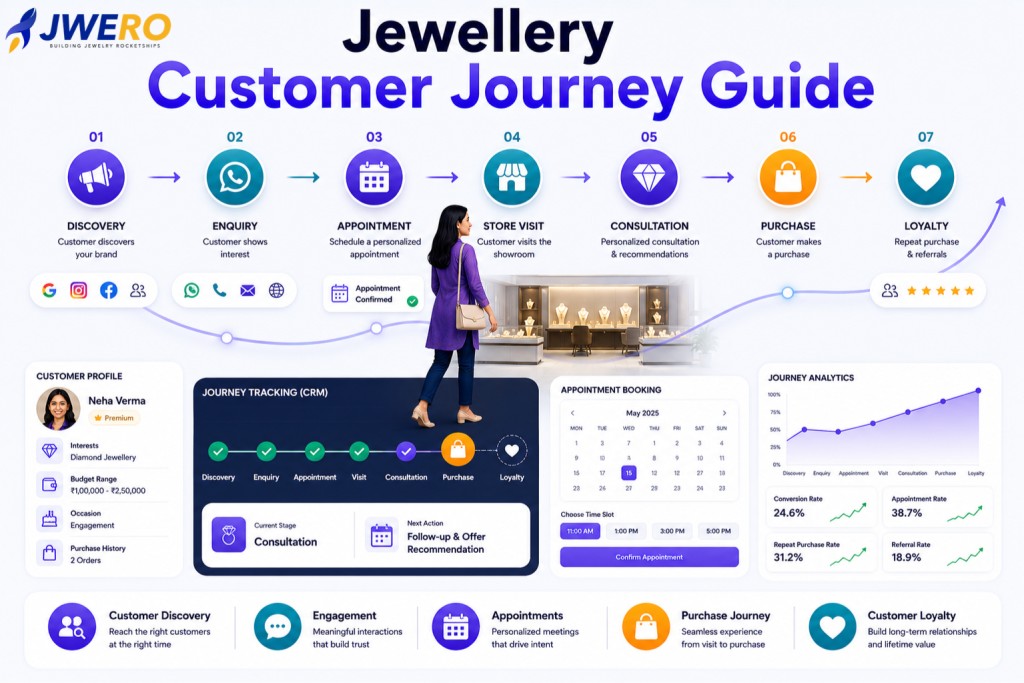
Many sales happen because businesses remain consistently helpful throughout the buying journey.
The Future of Jewellery Follow-Ups
Future follow-up systems will increasingly use:
- Artificial Intelligence
- Customer intent signals
- Predictive engagement
- Automated workflows
- Customer journey intelligence
The goal remains the same:
Deliver the right message at the right time.
How Jwero Supports Customer Follow-Ups
Jwero helps jewellery businesses manage:
- Customer interactions
- Follow-up workflows
- WhatsApp engagement
- Customer journeys
- CRM visibility
- Customer intelligence
This helps businesses improve consistency while creating better customer experiences.
Final Thoughts
Follow-up is not about sending more messages.
It is about maintaining meaningful conversations.
Jewellery customers often require time, trust, and guidance before making purchase decisions.
Businesses that provide helpful, timely, and relevant follow-ups create stronger relationships and achieve higher conversion rates.
The best follow-up systems feel supportive rather than sales-driven.
Frequently Asked Questions
Why are follow-ups important in jewellery retail?
Most jewellery purchases involve multiple interactions before a customer decides to buy.
How soon should jewellers follow up?
Initial responses should be fast, while ongoing communication should reflect customer interest and timing.
Can CRM improve customer follow-ups?
Yes. CRM systems provide reminders, visibility, tracking, and workflow management.
Is WhatsApp good for jewellery follow-ups?
Yes. WhatsApp is one of the most effective channels for customer engagement and relationship building.
What is the biggest follow-up mistake?
Failing to provide value and relying solely on sales-focused messaging.
Do follow-ups increase sales?
Yes. Consistent, relevant follow-ups often improve engagement and conversion rates.