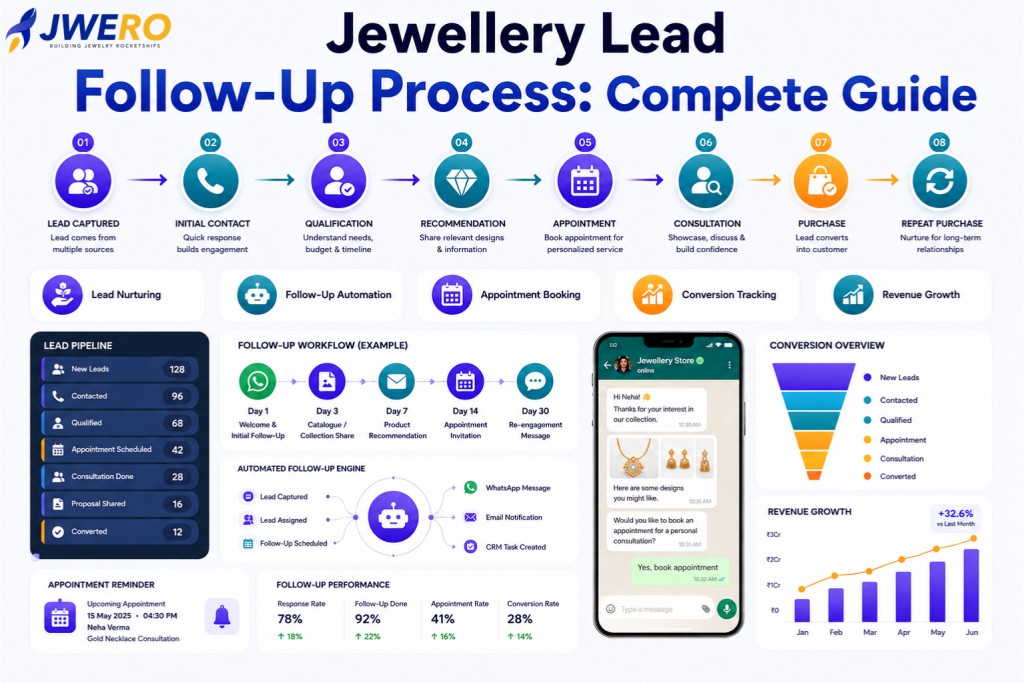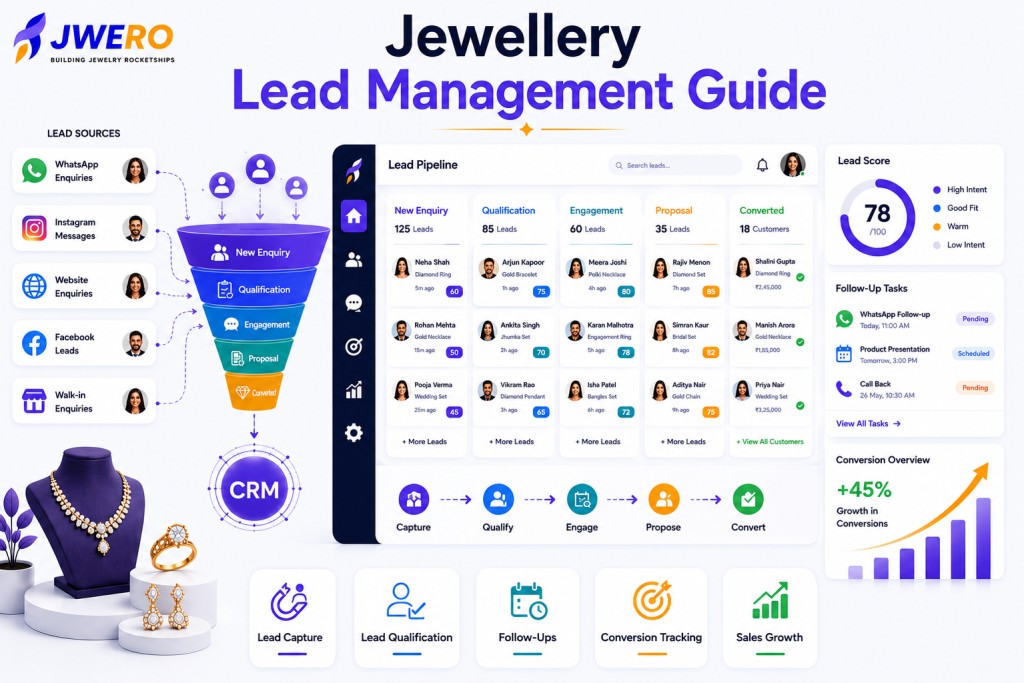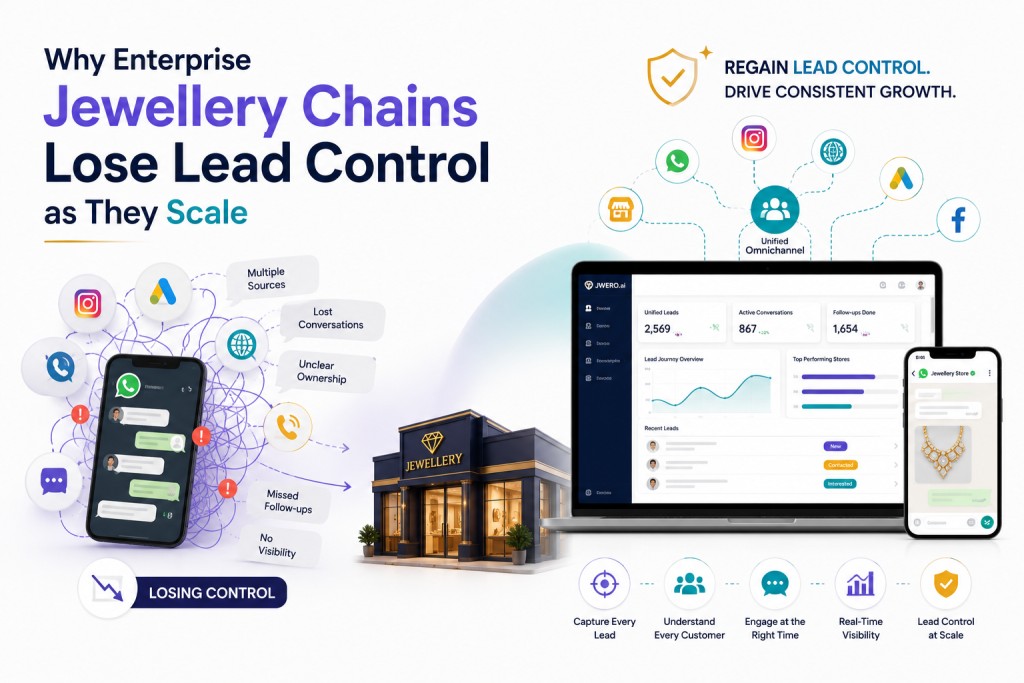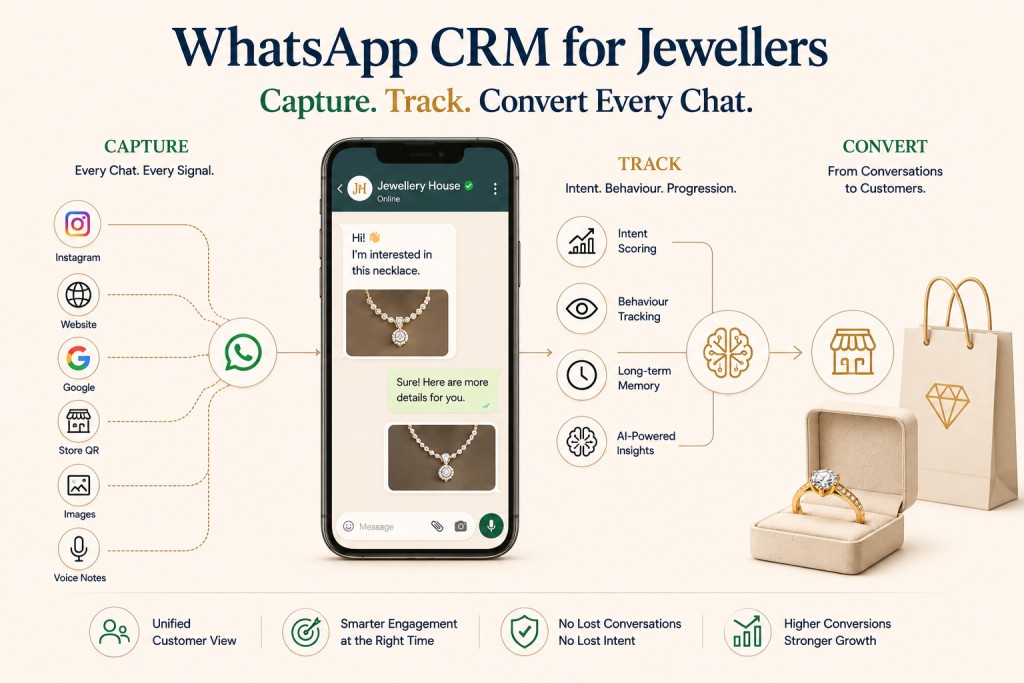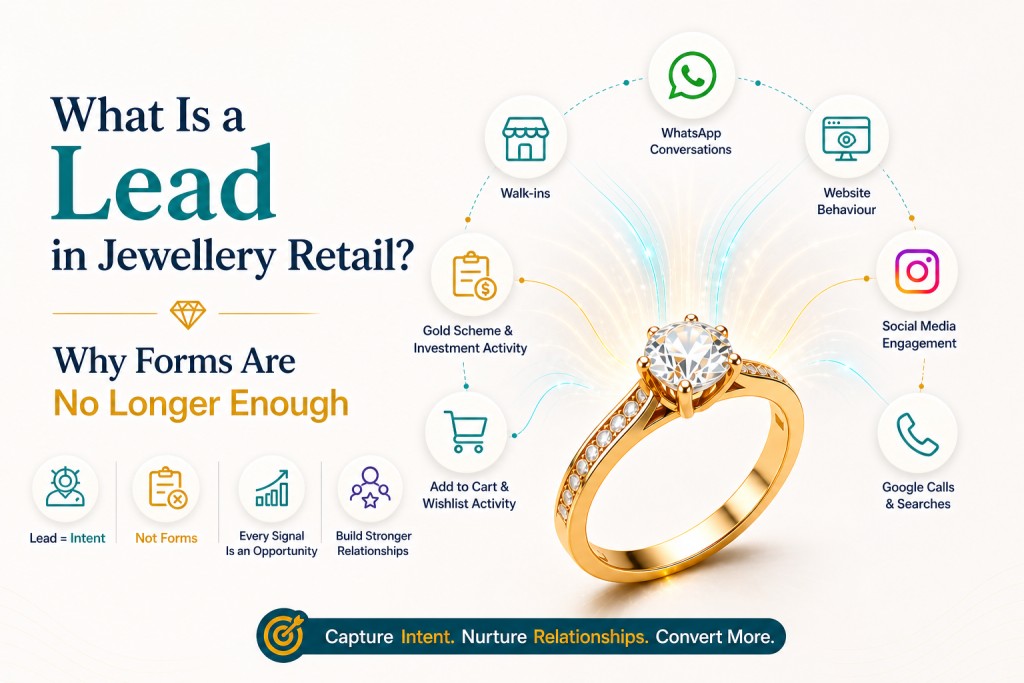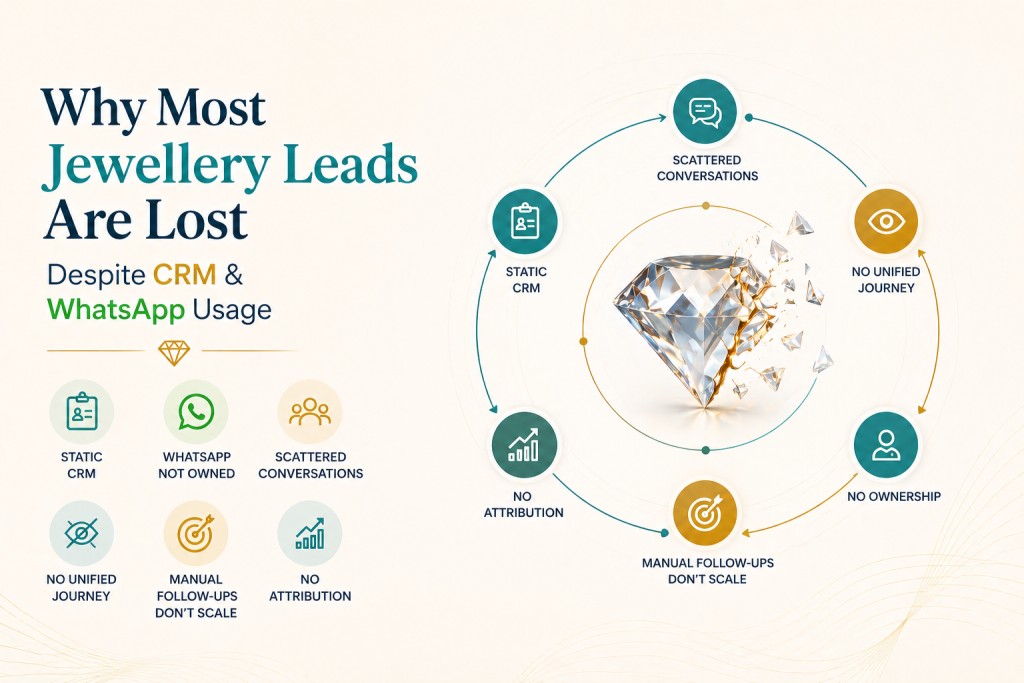


A jewellery sales pipeline gives retailers complete visibility into every sales opportunity.
Without a structured pipeline, leads often get lost, follow-ups become inconsistent, and managers struggle to identify where sales opportunities are leaking.
A well-defined sales pipeline helps jewellery businesses:
- Track every lead
- Improve follow-ups
- Increase conversions
- Measure team performance
- Forecast revenue
This guide explains how to build an effective jewellery sales pipeline.
What Is a Jewellery Sales Pipeline?
A sales pipeline is a visual representation of a customer’s journey from initial enquiry to purchase.
Each lead moves through predefined stages until it becomes a customer.
A structured pipeline creates accountability and visibility.
Why Sales Pipelines Matter
A sales pipeline helps retailers:
- Improve Lead Management
- Increase Conversion Rates
- Improve Follow-Up Consistency
- Forecast Revenue
- Measure Staff Performance
- Improve Customer Experience
Visibility drives better decisions.
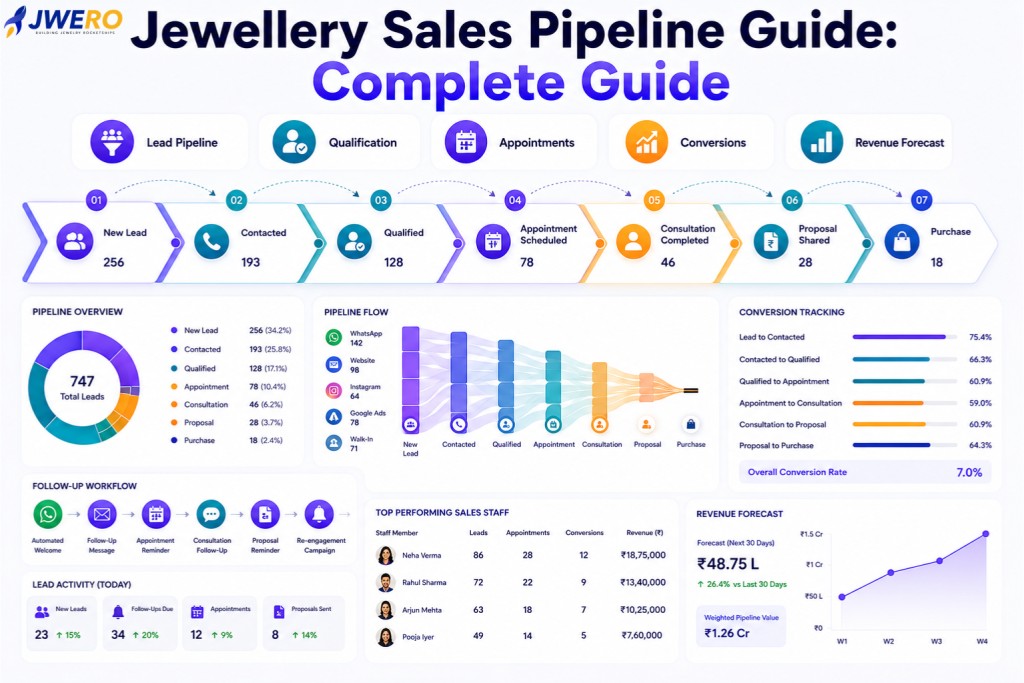
The Ideal Jewellery Sales Pipeline
New Lead
↓
Contacted
↓
Qualified
↓
↓
Consultation Completed
↓
Proposal Shared
↓
Purchase
↓
Repeat Purchase
Every lead should be visible inside the pipeline.
Stage 1: New Lead
Lead sources may include:
- Website
- Google Ads
- Walk-Ins
Every enquiry should enter the CRM.
Stage 2: Contacted
The first interaction occurs.
Goals:
- Respond Quickly
- Build Rapport
- Understand Requirements
- Schedule Next Action
Fast engagement improves conversions.
Stage 3: Qualified
Determine:
- Budget
- Product Interest
- Occasion
- Purchase Timeline
- Customer Intent
Qualification improves efficiency.
Stage 4: Appointment Scheduled
Appointments indicate strong purchase intent.
Benefits:
- Personalized Experience
- Better Conversion
- Higher Engagement
- Improved Planning
Stage 5: Consultation Completed
Consultations help retailers:
- Understand Preferences
- Recommend Products
- Address Concerns
- Build Trust
Trust drives purchases.
Examples:
- Product Recommendations
- Quotations
- Custom Designs
- Collection Suggestions
This stage requires strong follow-up.
Stage 7: Purchase
The lead becomes a customer.
Important actions:
- Smooth Billing
- Customer Profile Creation
- Purchase Recording
- Post-Purchase Follow-Up
Stage 8: Repeat Purchase
The pipeline should continue beyond the first sale.
Focus on:
- Retention
- Loyalty
- Repeat Sales
- Referrals
Long-term value matters.
Sales Pipeline Dashboard
Track:
- Leads by Stage
- Conversion Rates
- Pipeline Value
- Revenue Forecast
- Follow-Up Status
- Staff Performance
Visibility improves management.
Sales Pipeline Analytics
Monitor:
- Lead-to-Appointment Rate
- Appointment-to-Purchase Rate
- Conversion Rate
- Revenue Per Lead
- Pipeline Velocity
- Lost Lead Reasons
Analytics improve performance.
Common Pipeline Mistakes
- No Defined Stages
- Poor Follow-Ups
- No CRM
- No Ownership
- No Reporting
- No Pipeline Reviews
Structure creates consistency.
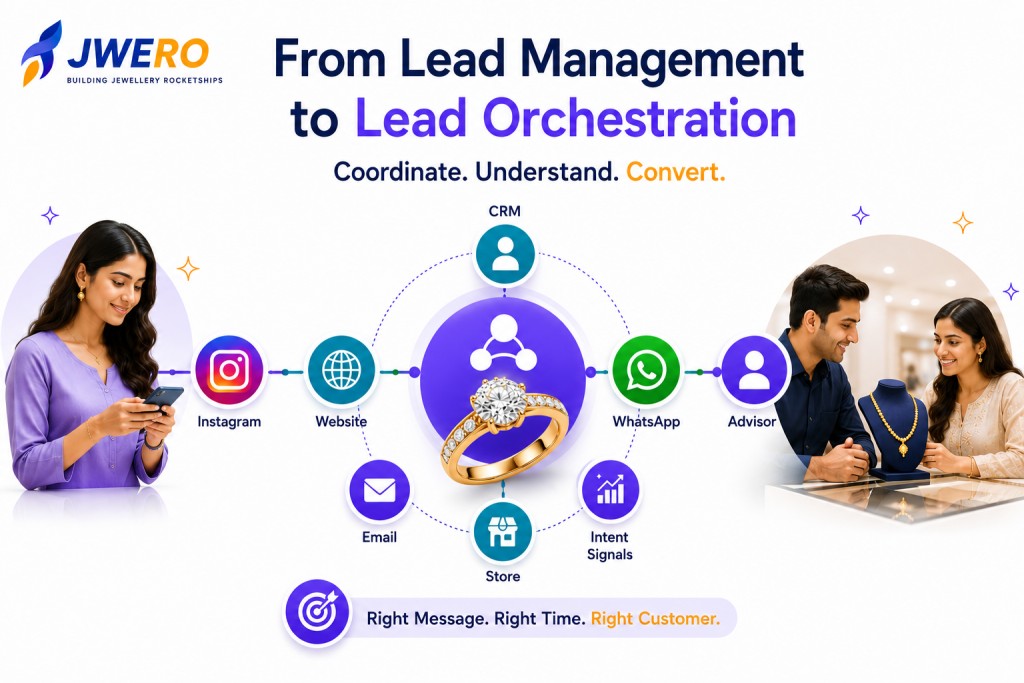
How CRM Improves Pipeline Management
CRM helps retailers:
- Track Every Lead
- Assign Ownership
- Schedule Follow-Ups
- Monitor Activity
- Measure Performance
- Forecast Revenue
CRM becomes the foundation of pipeline visibility.
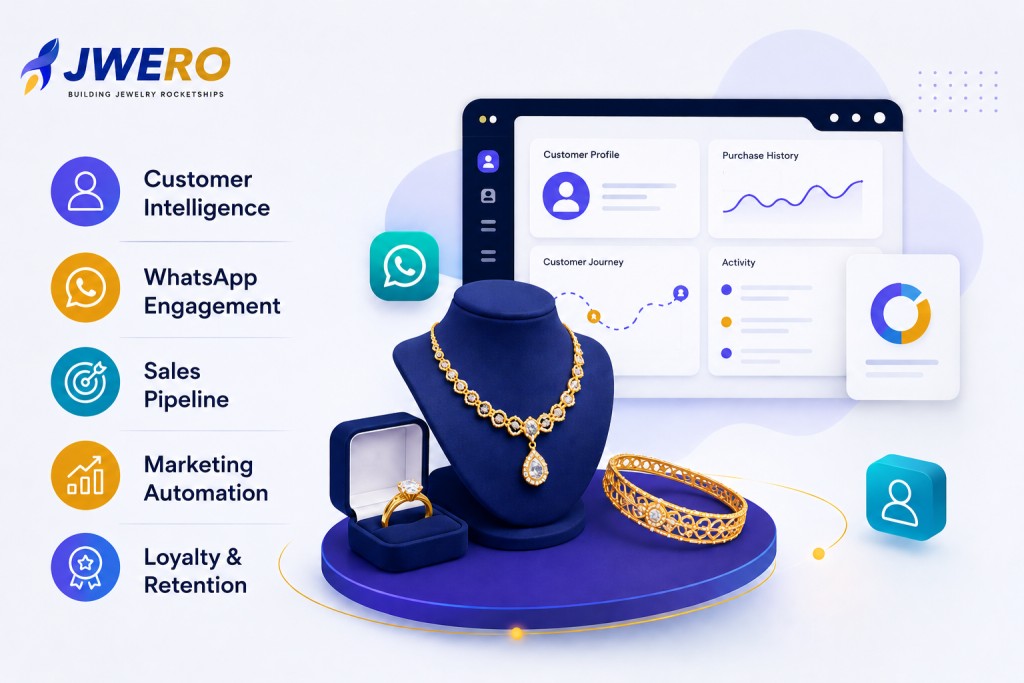
How Jwero Helps Manage Sales Pipelines
Jwero enables:
- Lead Pipeline Tracking
- Lead Assignment
- Appointment Management
- WhatsApp CRM
- Follow-Up Automation
- Conversion Analytics
- Revenue Forecasting
- Customer Journey Tracking
This helps jewellers convert more opportunities into revenue.
Final Thoughts
A sales pipeline is not simply a reporting tool.
It is a growth system that helps jewellery retailers:
- Track leads
- Improve follow-ups
- Increase conversions
- Forecast revenue
- Improve customer experiences
Businesses with structured pipelines consistently outperform those without them.
Frequently Asked Questions
What is a jewellery sales pipeline?
A structured process that tracks customers from enquiry to purchase and beyond is called a Jewellery Sales Pipeline.
Why is pipeline management important?
Pipeline management is important because it improves visibility, follow-up consistency, conversion rates, and revenue forecasting.
Which pipeline stage is most important?
Every stage matters, but qualification and follow-up often have the greatest impact on conversions.
How does CRM improve pipeline management?
CRM provides visibility into lead stages, follow-ups, appointments, and performance metrics.
What metrics should be tracked?
Metrics like Conversion rate, pipeline value, appointment rate, revenue forecast, and lead response time should be tracked by jewellers.