

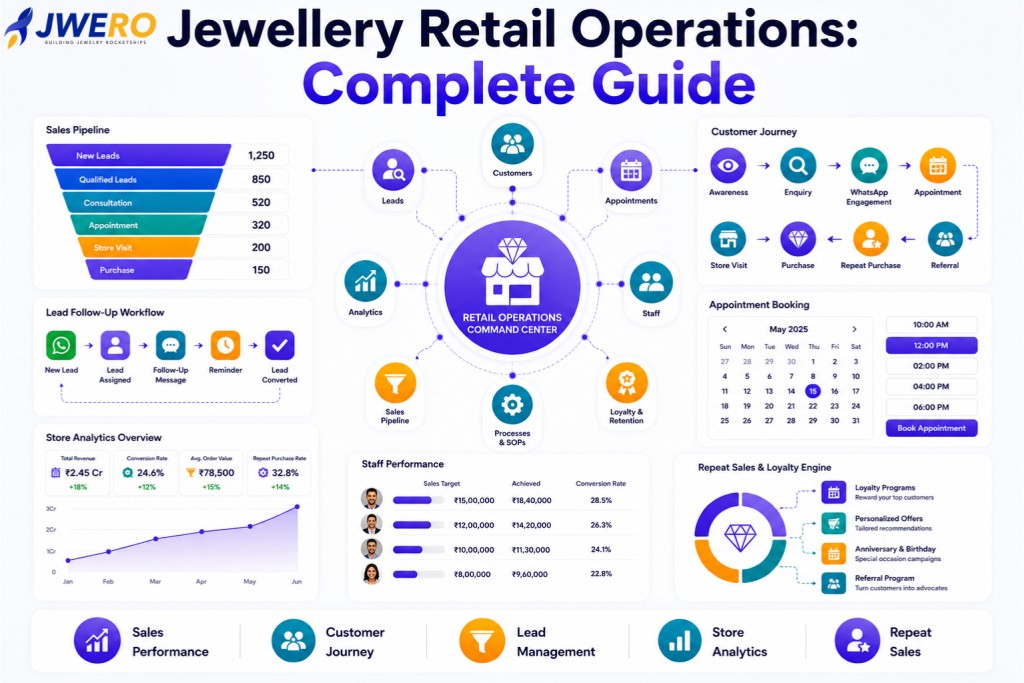
Running a successful jewellery store requires more than beautiful collections and competitive pricing.
The most successful jewellery retailers operate with structured systems that improve:
- Customer experience
- Staff productivity
- Lead conversion
- Store performance
- Repeat sales
- Revenue growth
Without clear processes, even stores with strong footfall can struggle with missed opportunities, poor follow-ups, inconsistent customer experiences, and operational inefficiencies.
This guide covers every major aspect of jewellery retail operations and how modern jewellers can build scalable systems for growth.
What Are Jewellery Retail Operations?
Jewellery retail operations include all processes involved in running and growing a jewellery business.
This includes:
- Sales Management
- Customer Experience
- Lead Management
- Staff Performance
- Appointment Management
- Store Analytics
- Customer Retention
- SOP Execution
Strong operations create predictable growth.
Why Retail Operations Matter
Effective retail operations help jewellery businesses:
- Increase Sales
- Improve Conversion Rates
- Deliver Better Customer Experiences
- Increase Staff Productivity
- Improve Customer Retention
- Create Sustainable Growth
Operations directly impact profitability.
Key Components of Jewellery Retail Operations
1. Sales Performance Management
Sales performance is the foundation of retail success.
Focus areas include:
- Lead conversion
- Walk-in conversion
- Appointment conversion
- Average transaction value
- Customer retention
2. Retail KPI Tracking
Every store owner should monitor performance metrics.
Examples include:
- Revenue
- Conversion Rate
- Appointment Rate
- Repeat Sales
- Lead Response Time
- Customer Lifetime Value
3. Standard Operating Procedures (SOPs)
SOPs create consistency across the business.
Examples include:
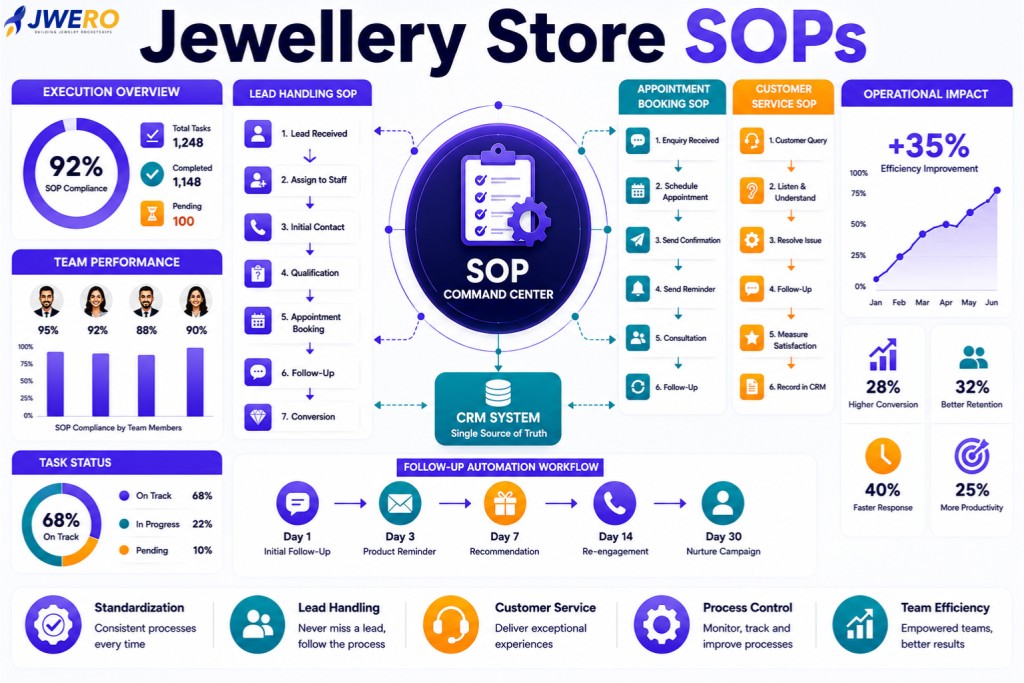
- Lead Handling SOP
- Customer Service SOP
- Appointment SOP
- Follow-Up SOP
- Sales SOP
4. Sales Staff Management
The performance of your sales team significantly impacts revenue.
Important areas include:
- Staff Training
- Goal Tracking
- Productivity Measurement
- Incentive Programs
- Performance Reviews
5. Customer Journey Optimisation
Customers interact with multiple touchpoints before purchasing.
Typical journey:
Awareness
↓
Enquiry
↓
WhatsApp Conversation
↓
Appointment
↓
Store Visit
↓
Purchase
↓
Repeat Purchase
Optimising every stage improves conversion
6. Repeat Sales Strategy
Long-term growth depends on customer retention.
Examples:
- Anniversary Campaigns
- Birthday Campaigns
- Loyalty Programs
- Personalized Recommendations
- VIP Customer Programs
7. Store Analytics & Reporting
Modern retailers rely on data.
Track:
- Sales Trends
- Customer Behaviour
- Campaign Performance
- Staff Performance
- Lead Sources
8. Lead Follow-Up Management
Many jewellery stores lose sales because leads are not followed up properly.
Best practices include:
- Lead Categorization
- Follow-Up Scheduling
- WhatsApp Communication
- CRM Tracking
- Automated Reminders
9. Sales Pipeline Management
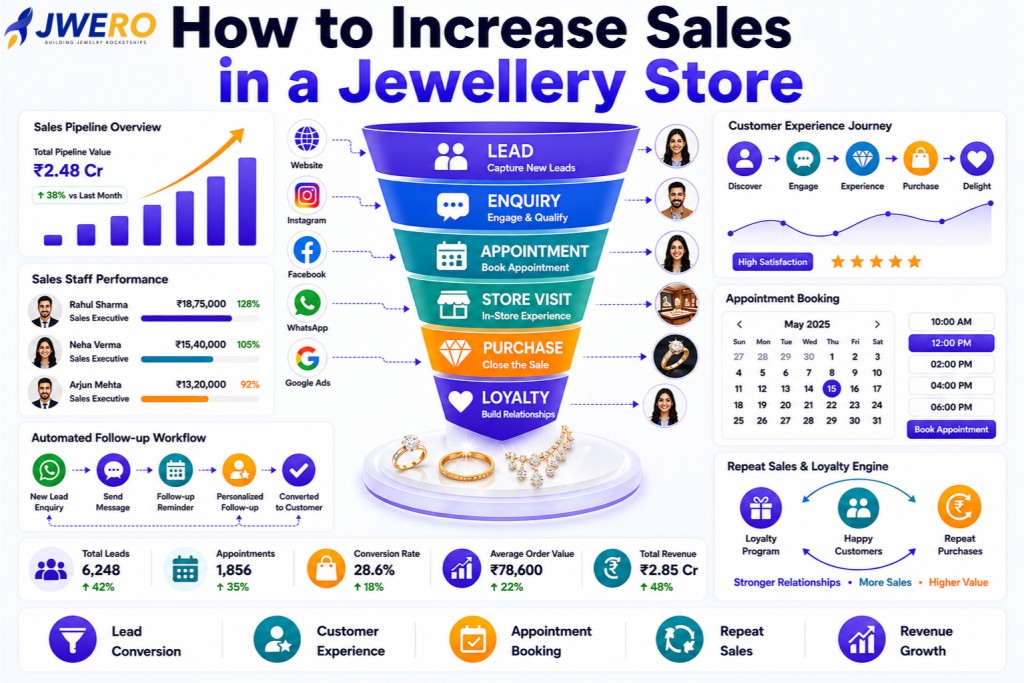
Every enquiry should move through a defined pipeline.
Example:
Lead
↓
Qualified Lead
↓
Consultation
↓
Appointment
↓
Store Visit
↓
Purchase
Pipeline visibility improves conversion rates.
10. Appointment Booking Systems
Appointments improve customer experience and conversion rates.
Benefits include:
- Better Planning
- Higher Conversion
- Improved Service Quality
- VIP Experiences
Technology’s Role in Jewellery Retail Operations
Modern retailers increasingly rely on:
- CRM
- WhatsApp Integration
- Analytics Dashboards
- Appointment Scheduling
- Lead Management Systems
- Customer Intelligence Platforms
Technology improves operational visibility.
The Modern Jewellery Operations Funnel
Lead Generation
↓
Lead Qualification
↓
Customer Engagement
↓
Appointment Booking
↓
Store Visit
↓
Purchase
↓
Repeat Purchase
↓
Referral
A structured funnel improves operational efficiency.
Common Operational Challenges
- Missed Leads
- Inconsistent Follow-Ups
- Lack of KPI Visibility
- Poor Staff Accountability
- Weak Customer Retention
- Manual Processes
- Limited Customer Data
These issues reduce growth potential.
How CRM Improves Retail Operations
CRM helps jewellers:
- Track customer interactions
- Manage appointments
- Monitor sales pipelines
- Measure staff performance
- Improve follow-ups
- Increase repeat sales
CRM becomes the operational backbone of the business.
How Jwero Helps Jewellery Retail Operations
Jwero enables jewellery retailers to:
- Lead Management
- Customer Journey Tracking
- Sales Pipeline Visibility
- Appointment Booking
- Staff Performance Monitoring
- WhatsApp CRM
- Customer Segmentation
- Repeat Sales Automation
- Analytics Dashboards
- Customer Intelligence
This helps retailers create scalable operational systems.
Benefits of Strong Retail Operations
Businesses with strong operations typically achieve:
✅ Faster Lead Response
✅ Higher Conversion Rates
✅ Better Customer Experiences
✅ Increased Repeat Sales
✅ Improved Staff Productivity
✅ Better Revenue Visibility
✅ Sustainable Growth
Final Thoughts
Jewellery retail success is driven by operational excellence.
Retailers that build systems around:
- Sales management
- Customer journeys
- CRM
- KPI tracking
- Staff productivity
- Customer retention
are better positioned to grow consistently and profitably.
The goal is simple:
Create a predictable system that converts more leads, improves customer experiences, and increases revenue.
Frequently Asked Questions
What are jewellery retail operations?
Jewellery retail operations include sales management, customer service, lead management, staff performance, analytics, and customer retention processes.
Why are retail operations important?
Strong operations improve efficiency, customer experience, conversion rates, and profitability.
Which KPIs should jewellery retailers track?
Revenue, conversion rate, appointments, repeat sales, lead response time, and customer lifetime value.
How does CRM help jewellery retailers?
CRM improves lead tracking, follow-ups, customer management, and operational visibility.
What is a jewellery sales pipeline?
Jewellery sales pipeline is a structured process that tracks customers from enquiry to purchase.
How can jewellers increase repeat sales?
Jewellers can increase repeat sales through loyalty programs, customer segmentation, personalised recommendations, and follow-up campaigns.