

Successful jewellery stores do not rely on individual employees to deliver consistent performance.
They rely on systems.
Standard Operating Procedures (SOPs) help retailers create consistency across customer interactions, sales processes, follow-ups, appointments, and store operations.
Without SOPs, businesses often experience:
- Inconsistent customer experiences
- Missed leads
- Poor follow-ups
- Staff dependency
- Operational inefficiencies
This guide explains the most important SOPs every jewellery retailer should implement.
What Are SOPs?
Standard Operating Procedures (SOPs) are documented processes that define how tasks should be completed.
They ensure every team member follows the same process.
Benefits include:
- Consistency
- Accountability
- Better Customer Experience
- Improved Productivity
- Faster Staff Training
- Scalable Growth
Why SOPs Matter in Jewellery Retail
Jewellery purchases involve:
- High-value transactions
- Multiple interactions
- Long decision cycles
- Personalized consultations
A structured process improves conversion rates and customer satisfaction.
Core SOPs Every Jewellery Store Needs
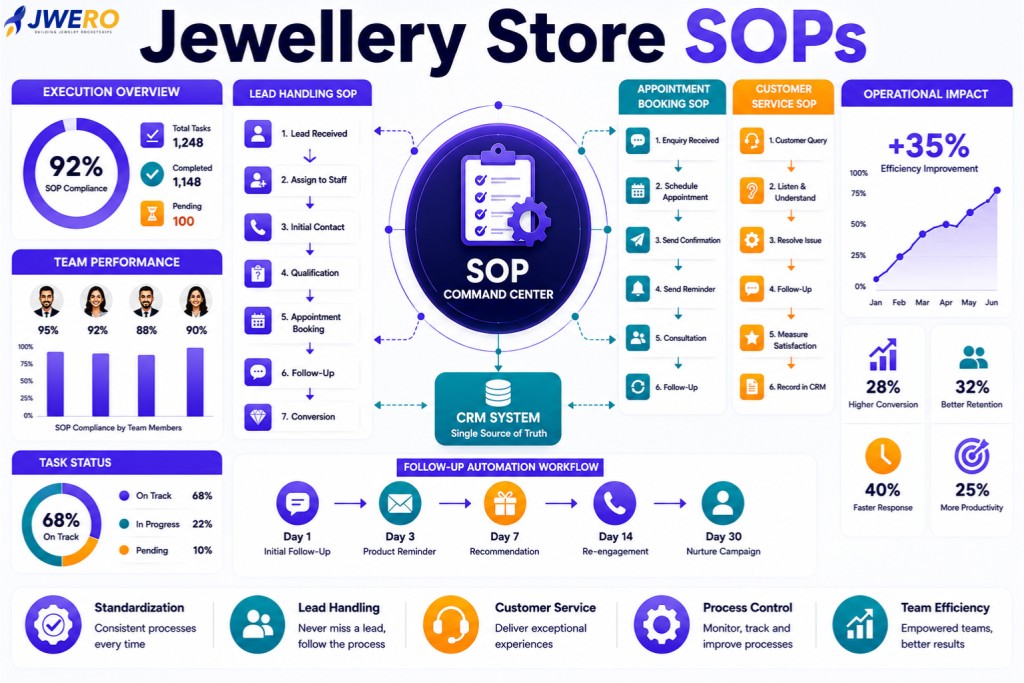
1. Lead Management SOP
Every lead should follow a standard process.
Lead Received
↓
Assigned to Staff
↓
Initial Contact
↓
Qualification
↓
Appointment Booking
↓
Follow-Up
↓
Conversion
No lead should be missed.
2. WhatsApp Enquiry SOP
When a customer sends an enquiry:
- Respond Quickly
- Understand Requirements
- Share Catalogue
- Record Customer Details
- Schedule Follow-Up
- Update CRM
This ensures consistency.
3. Appointment Booking SOP
Enquiry Received
↓
Appointment Scheduled
↓
Confirmation Sent
↓
Reminder Sent
↓
Consultation Conducted
↓
Follow-Up
A structured appointment process improves showroom conversion.
4. Customer Consultation SOP
During consultations:
- Understand Requirements
- Identify Budget
- Show Relevant Collections
- Record Preferences
- Capture Feedback
- Schedule Next Action
Consultations should be documented.
5. Sales Process SOP
Customer Discovery
↓
Product Recommendation
↓
Objection Handling
↓
Product Comparison
↓
Purchase Decision
↓
Billing
↓
Customer Onboarding
A structured sales process increases conversions.
6. Follow-Up SOP
Every enquiry requires follow-up.
Recommended schedule:
Day 1
Initial follow-up
Day 3
Product reminder
Day 7
Personalized recommendation
Day 14
Re-engagement
Day 30
Customer nurture campaign
Follow-up consistency drives revenue.
7. Repeat Sales SOP
After purchase:
- Thank You Message
- Product Care Tips
- Anniversary Tracking
- Birthday Tracking
- New Collection Updates
- Loyalty Program Enrollment
This improves retention.
8. Customer Complaint SOP
Listen
↓
Record Issue
↓
Resolve Quickly
↓
Follow-Up
↓
Measure Satisfaction
Customer service directly impacts reputation.
9. Staff Performance SOP
- Leads Assigned
- Appointments Booked
- Conversion Rate
- Revenue Generated
- Follow-Up Completion
This improves accountability.
10. CRM Update SOP
Every interaction should be recorded.
Examples:
- Calls
- WhatsApp Messages
- Consultations
- Purchases
- Follow-Ups
CRM accuracy improves visibility.
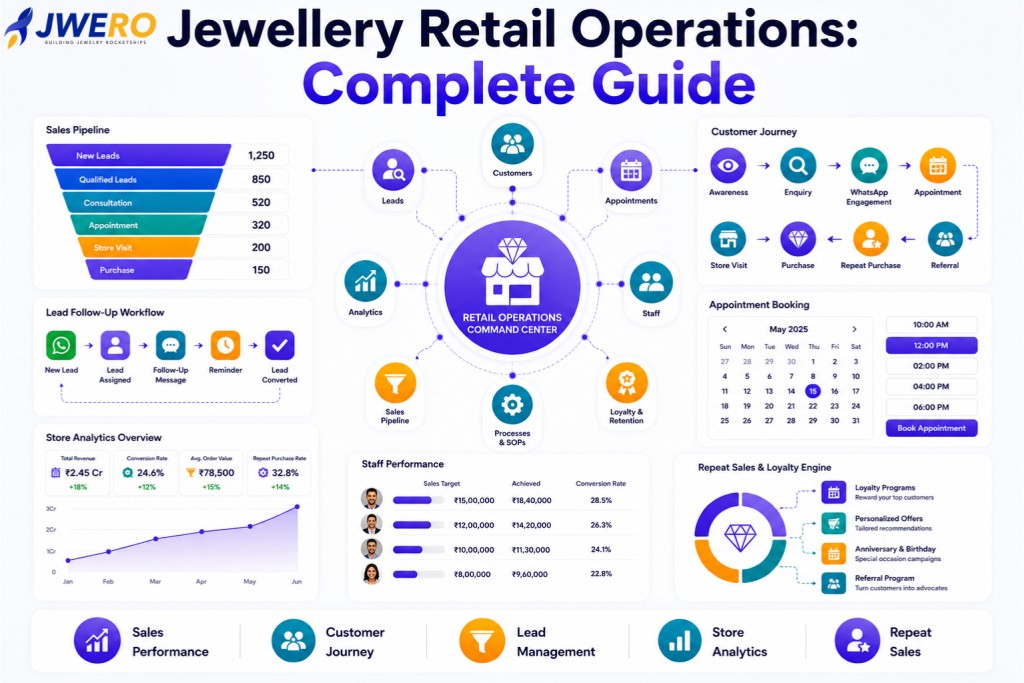
Jewellery Store Operational Workflow
Lead Generation
↓
Enquiry Management
↓
Appointment Booking
↓
Consultation
↓
Purchase
↓
Customer Retention
↓
Repeat Sales
↓
Referral
This becomes the store’s operating framework.
Benefits of SOP-Driven Retail Operations
- Faster Lead Response
- Better Customer Experience
- Higher Conversion Rates
- Stronger Team Accountability
- Better Customer Retention
- Improved Scalability
SOPs create predictable outcomes.
Common SOP Mistakes
- SOPs Not Documented
- SOPs Not Followed
- No CRM Integration
- No Accountability
- No Staff Training
- No Performance Tracking
Implementation matters as much as documentation.
How CRM Supports SOP Execution
CRM helps retailers:
- Standardize workflows
- Track task completion
- Monitor follow-ups
- Measure performance
- Improve visibility
Technology reinforces operational discipline.
How Jwero Helps SOP Management
Jwero enables:
- Lead Workflow Management
- Appointment Tracking
- Follow-Up Automation
- Customer Journey Tracking
- Staff Accountability
- CRM Visibility
- Repeat Sales Campaigns
- Operational Analytics
This helps jewellers execute SOPs consistently.
Final Thoughts
The best jewellery stores do not rely on luck or individual performance.
They rely on systems.
Well-designed SOPs improve:
- Customer experience
- Team productivity
- Lead conversion
- Repeat sales
- Operational efficiency
Businesses that standardise operations scale faster and more profitably.
Frequently Asked Questions
What is an SOP in jewellery retail?
An SOP is a documented process that defines how specific business tasks should be completed.
Why are SOPs important?
SOPs are important because they create consistency, accountability, and better customer experiences.
Which SOP should be implemented first?
Lead management and follow-up SOPs often deliver the biggest impact.
How do SOPs improve sales?
They ensure customers receive a consistent experience throughout the buying journey.
Should SOPs be connected to CRM?
Yes. SOPs should be connected to CRM to help teams follow processes and measure execution.
How often should SOPs be reviewed?
SOPs should be reviewed at least quarterly to ensure they remain effective and relevant.