


Micro-management Is Not a leadership choice; it’s a Symptom
Most jewellery leaders do not intend to micro-manage their teams.
Yet many founders, CEOs, and regional heads still find themselves:
- checking follow-up lists
- asking for daily updates
- jumping into WhatsApp groups
- escalating small issues
Not because they enjoy it, but because they do not trust the system to run without them.
Micro-management is rarely a leadership failure.
In many cases, it points to a deeper business problem.
Leaders often step in when teams fail to manage customer conversations properly, miss follow-ups, and delay reports.
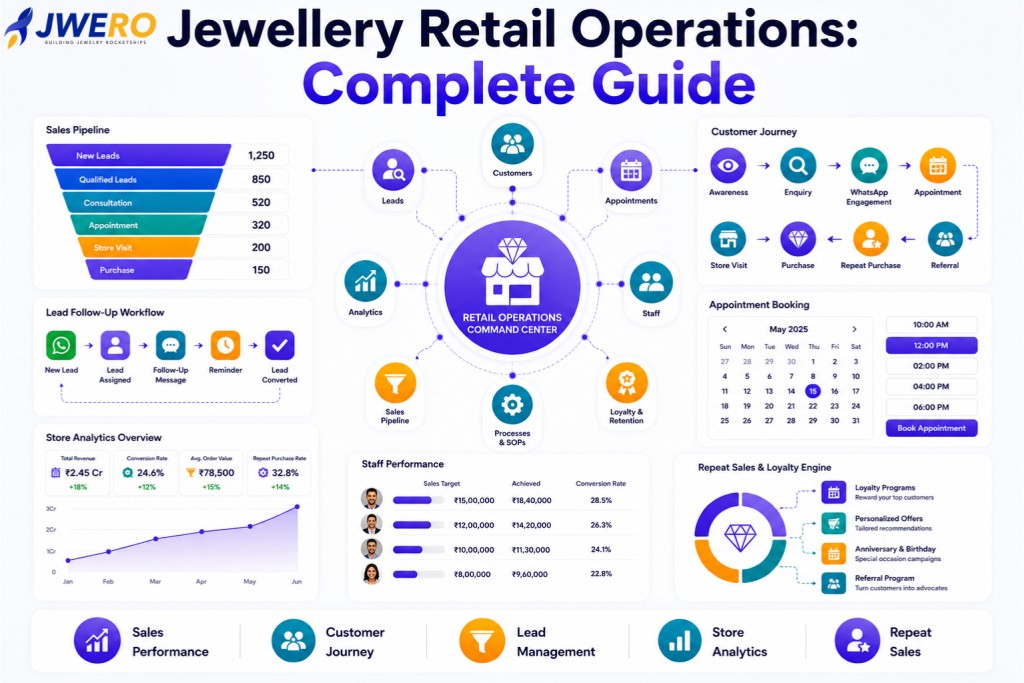
Many modern jewellery retailers now use connected retail systems and centralised engagement workflows. These systems reduce manual supervision and improve visibility across customer journeys.
Why Micro-management Is So Common in Jewellery Businesses
Jewellery retail creates perfect conditions for micro-management.
The business itself is emotionally intense.
Transactions are high-value.
Decision cycles are longer.
Customer expectations are sensitive.
Communication happens across multiple channels.
When leaders feel:
“If I don’t intervene, something may get missed.”
…they step in.
Not because they enjoy controlling people.
Because the process feels fragile.
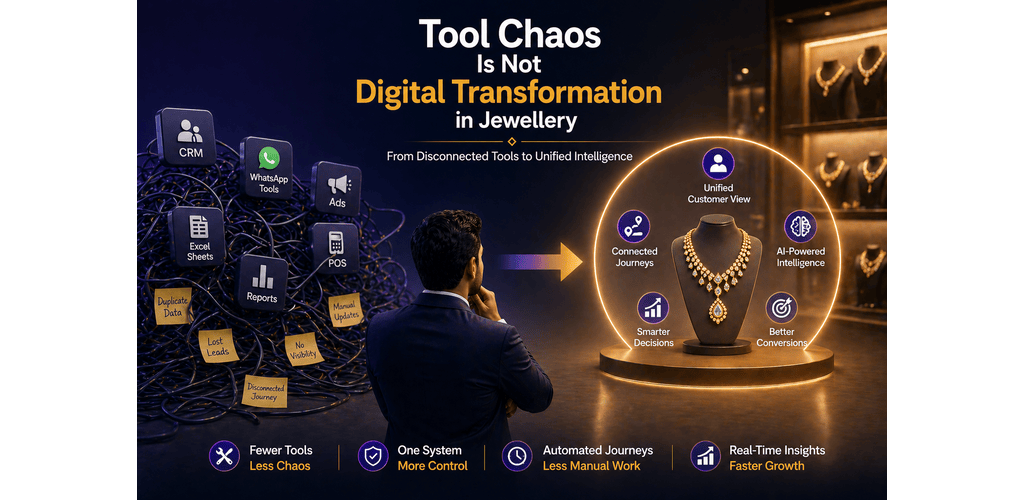
Many jewellery businesses still operate with disconnected communication systems, scattered customer conversations, manual reporting, and inconsistent follow-ups.
That uncertainty pushes leadership deeper into day-to-day execution.
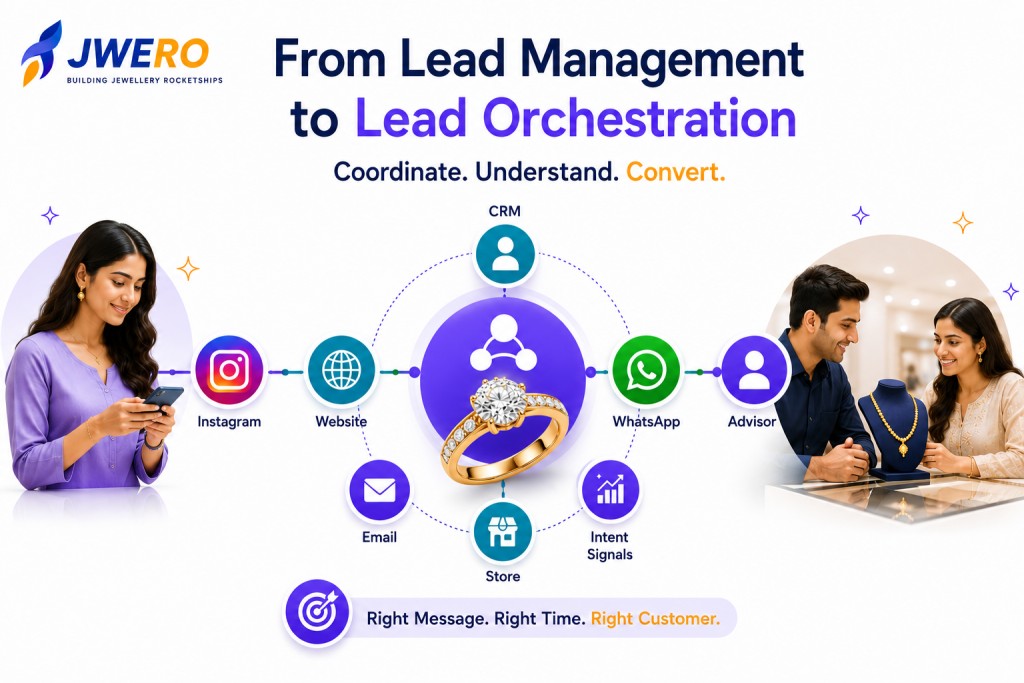
Modern omnichannel systems such as Jwero Chats help jewellery teams manage customer conversations in one place. These systems connect WhatsApp, Instagram, Facebook, and Meta Ads instead of relying on separate staff devices.
The Hidden Costs of Micro-management
Micro-management can feel productive in the moment.
But over time, it creates team fatigue, slows work, and weakens decision-making across the business.
1. Leaders Become Bottlenecks
When every important decision moves through leadership:
- Teams slow down
- approvals pile up
- urgency increases
- Strategic thinking disappears
Leaders spend their time managing activity instead of shaping direction.
This becomes even more damaging when jewellery retailers expand into multi-store operations and omnichannel customer journeys.
2. Teams Stop Thinking on Their Own
Micro-managed teams often stop taking initiative.
They begin to:
- wait for instructions
- avoid responsibility
- seek approval constantly
Eventually, employees optimise for leadership approval instead of customer outcomes.
Strong jewellery sales teams perform best when systems provide structure, accountability, and clear customer context without constant intervention.
3. High Performers Get Frustrated
Top-performing salespeople usually want:
- autonomy
- clarity
- trust
Micro-management sends the opposite message.
It quietly tells teams:
“We don’t fully trust your judgement.”
Over time, talented employees disengage or leave.
High-performing retail environments usually rely on strong systems, clear expectations, and business support instead of constant supervision.
4. Problems Still Continue
Ironically, micro-management still does not create consistency.
Even highly involved leaders cannot:
- Monitor every customer interaction
- Read every buying signal
- Time to follow up correctly
Eventually, leadership creates more stress than control.
This is why many jewellery retailers are now shifting toward automation-led governance models instead of manual oversight.
The Real Reason Leaders Micromanage
In reality,
Leaders usually micromanage because they cannot clearly see what is happening inside the business.
They struggle with:
- invisible leads
- unclear customer intent
- delayed reporting
- manual follow-ups
- inconsistent communication
When systems cannot answer:
“Are we handling customers correctly right now?”
…leaders step in personally.
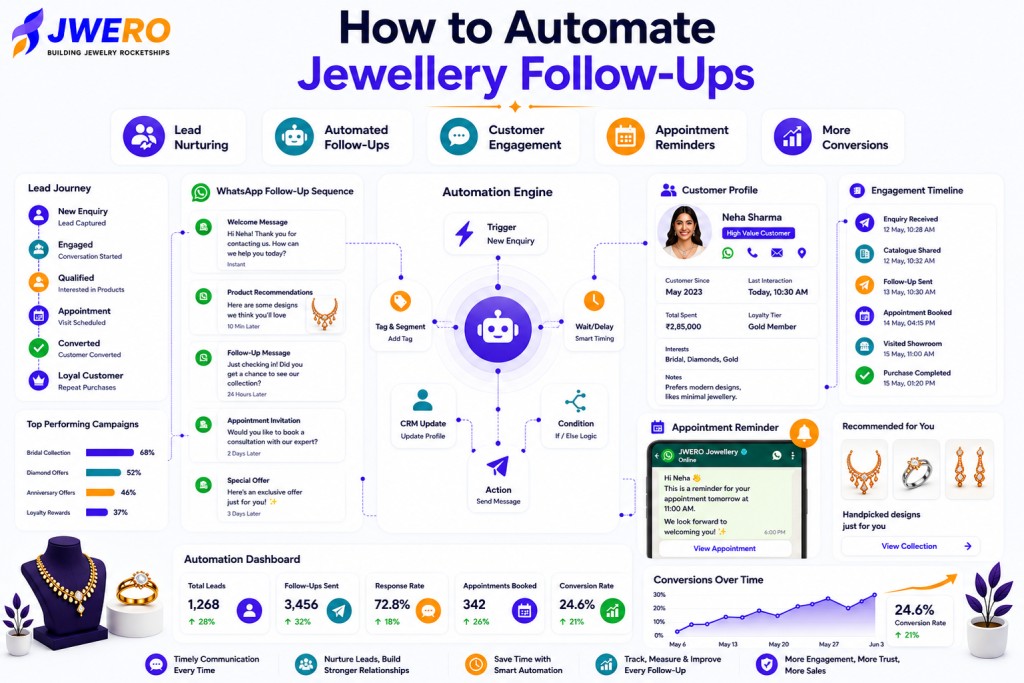
Jwero WhatsApp Automation helps retailers manage follow-ups and tasks more effectively. It also improves customer engagement at every stage of the customer journey.
Why More SOPs and Reviews Don’t Fix This
Many jewellery businesses respond to micro-management by adding:
- more SOPs
- more meetings
- more reporting
- more reviews
That increases compliance.
But it does not always increase confidence.
The real issue is usually a lack of business clarity.
Without real-time visibility into customer journeys and engagement quality, leadership still feels uncertain.
More reviews cannot compensate for disconnected systems.
The Shift From Managing People to Governing Systems
Micro-management starts fading when leadership stops asking:
“Are people doing their jobs?”
…and starts asking:
“Is the system guiding people properly?”
That shift changes everything.
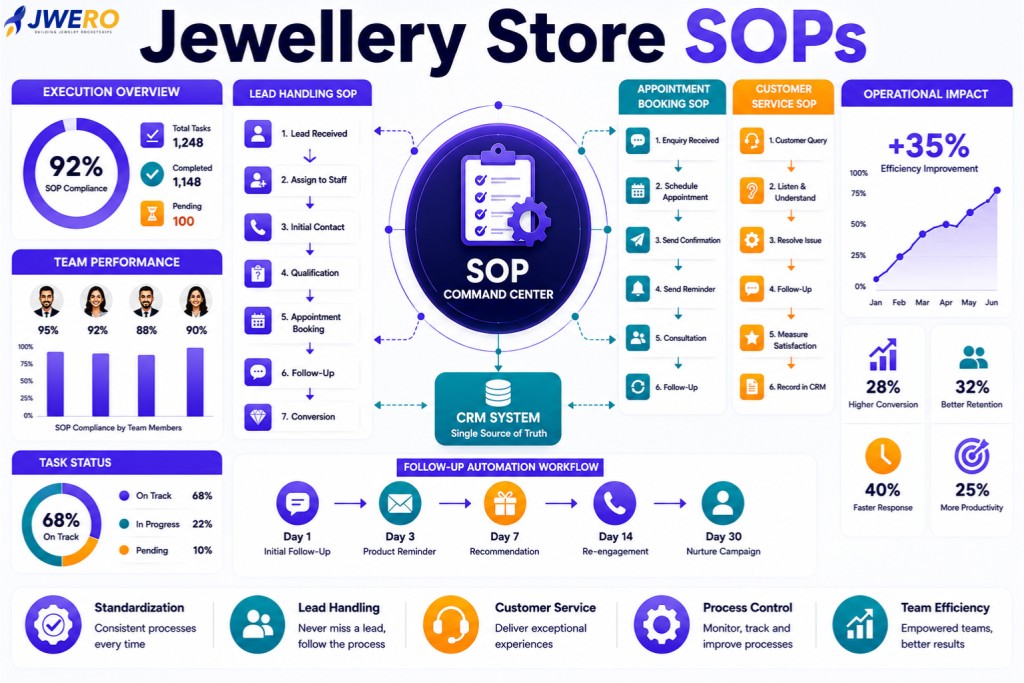
Scalable jewellery businesses rely on systems to create consistency, accountability, and customer engagement quality without depending entirely on individual supervision.
What Replaces Micro-management in Modern Jewellery Sales
1. Intent Visibility Replaces Status Chasing
Leaders do not need constant updates.
They need visibility into:
- customer intent
- engagement quality
- follow-up risks
- early warning signals
When intent becomes visible, unnecessary status chasing naturally reduces.
This is where connected CRM ecosystems become essential for growing jewellery retailers.
2. System Playbooks Replace Individual Judgement
When best practices become part of the workflow itself:
- Teams follow logic consistently
- execution becomes predictable
- Leadership gains confidence
Modern jewellery retailers increasingly standardise customer engagement processes to reduce dependency on memory, manual escalation, and inconsistent execution.
3. Governance Replaces Intervention
Strong systems allow leadership to define:
- engagement rules
- escalation triggers
- response expectations
- brand communication standards
The system then supports execution automatically.
Leaders only step in when exceptions appear.
Platforms like Jwero Instagram Automation and Jwero Facebook Automation help brands maintain consistent customer communication across digital channels without depending entirely on manual coordination.
The Role of AI in Ending Micro-management
AI reduces the need for constant supervision by helping businesses:
- Monitor engagement regularly
- Identify risks early
- surface missed follow-ups
- Detect changing customer behaviour
More importantly, AI gives leaders confidence that the system is actively watching for problems.
That changes leadership behaviour dramatically.
Instead of reacting constantly, teams can focus on customer experience, sales quality, and long-term growth.
Enterprise Impact: What Happens When Micro-management Ends
Jewellery retailers usually achieve several business improvements when they reduce micro-management:
- faster decision-making
- calmer leadership teams
- stronger accountability
- more empowered sales staff
- better customer consistency
Most importantly:
Leadership regains time to actually lead.
Business maturity improves when companies focus on systems instead of constant intervention.
Geography & Micro-management in Jewellery Retail
India
Many jewellery businesses still rely heavily on owner-led operations.
Daily WhatsApp groups often replace structured systems and centralised visibility.
Middle East
High brand sensitivity pushes leaders deeper into customer interactions to protect experience quality.
Structured systems provide reassurance and consistency.
Southeast Asia
Fast-moving digital retail environments create pressure for speed.
Leaders often intervene frequently to maintain pace and responsiveness.
Autonomy supported by systems helps teams move faster without creating chaos.
Businesses across different markets often face the same challenge.
Why Structured Systems Reduce Micro-management
Micro-management usually disappears when leaders gain confidence in the process itself.
That confidence comes from:
- clearer customer visibility
- centralized communication
- automated workflows
- structured follow-ups
- exception-based alerts
Modern platforms such as Jwero.ai help jewellery retailers centralise engagement workflows, improve business visibility, and reduce dependency on constant manual supervision across stores and teams.
The goal is not to remove leadership involvement completely.
The goal is to make leadership involvement more strategic and less reactive.
Frequently Asked Questions
Why do jewellery leaders micromanage sales teams?
Most jewellery leaders micromanage teams because they cannot clearly track customer intent, follow-up quality, and daily business activities.
Can technology reduce micro-management in jewellery retail?
Yes. Systems that improve customer visibility, automate follow-ups, and centralise communication reduce the need for constant manual oversight.
Does reducing micro-management reduce business control?
No. Strong systems usually improve control because businesses can monitor execution more consistently and predictably.
Is micro-management only a problem for large jewellery brands?
No. Many growing jewellery businesses face this problem early. It becomes more serious as teams, stores, and communication channels grow.
How can jewellery retailers improve accountability without micro-managing?
By using structured CRM systems, centralised communication workflows, automated task tracking, and exception-based business alerts.
Why is business visibility important in jewellery retail?
Jewellery buying journeys are emotional, multi-touchpoint, and often slower than other retail categories. Businesses need visibility across those interactions to maintain consistency and customer trust.
Build a Jewellery Business That Runs on Systems, Not Supervision
Explore how Jwero.ai helps jewellery retailers centralise customer communication, improve engagement visibility, automate follow-ups, and reduce manual micro-management across stores and teams.
Capabilities include:
- Jewellery CRM workflows
- Omnichannel customer engagement
- WhatsApp automation
- AI-powered visibility systems
- Centralised communication management
- Digital customer journey orchestration
- Why jewellery business owners micromanage teams
- How jewellery retailers can reduce manual micro-management
- Best systems to improve jewellery sales management
- How AI helps jewellery retailers avoid micro-management
- Why jewellery sales teams need intent visibility