

The Biggest Brand Risk Isn’t Price, It’s Behaviour
Jewellery brands spend enormous energy thinking about:
- design quality
- purity and certification
- store ambience
- pricing and margins
But one of the biggest brand risks today is rarely discussed.
Manual follow-ups.
Not because follow-ups themselves are bad —
But because inconsistent, poorly timed, and disconnected, follow-ups quietly damage customer trust.
In jewellery retail, customer trust plays a central role in brand value.
Most customers will not directly say:
“Your follow-up process damaged my perception.”
They simply stop responding.
Long before a customer says “no,” confidence usually starts fading through small moments of friction, pressure, repetition, or confusion.
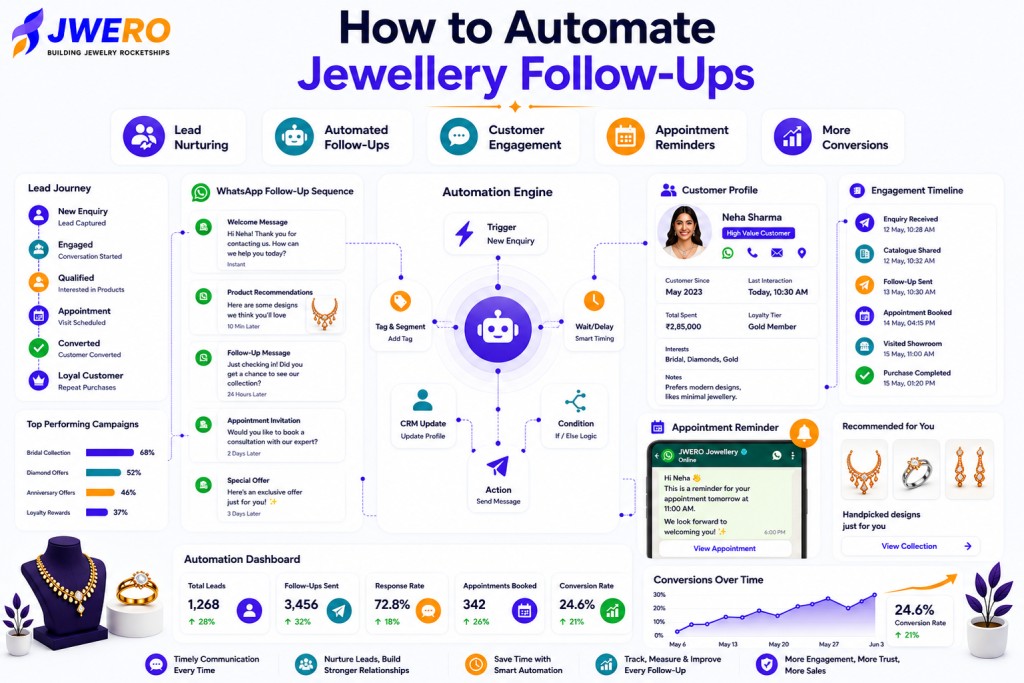
Many modern jewellery retailers now use structured engagement systems. These systems keep communication timely, relevant, and consistent across every customer touchpoint.
Why Follow-Ups Are Treated as a Sales Activity
Most jewellery businesses still treat follow-ups as:
- a salesperson’s responsibility
- a conversion tactic
- a pipeline management task
Performance gets measured through:
- calls completed
- messages sent
- reminder tasks closed
However, customers often experience follow-ups in different ways.
To them, every message, call, or reminder represents the brand itself.
A single interaction can either:
- increase comfort
- strengthen trust
- create pressure
- damage perception
That is why communication consistency matters far more in jewellery retail than many businesses realise.
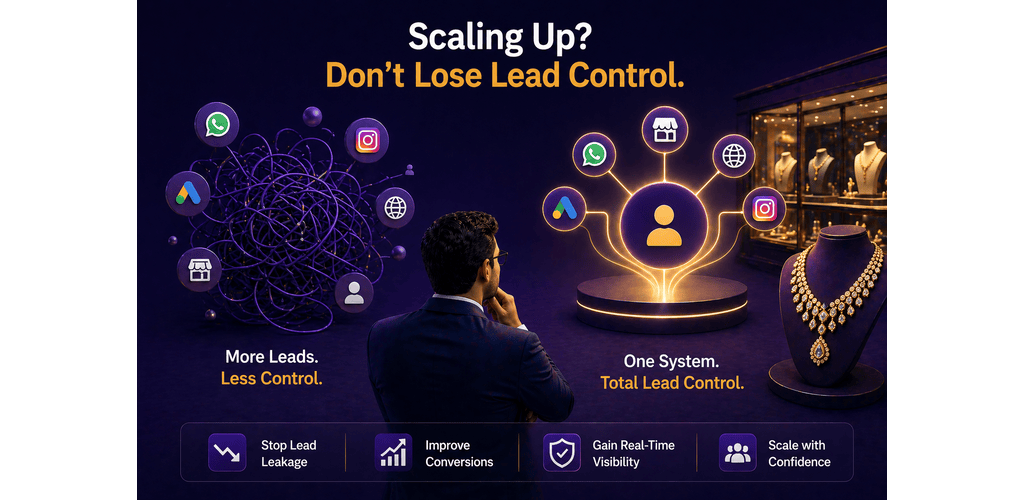
Modern jewellery retailers increasingly centralise customer engagement workflows to improve follow-up quality and reduce inconsistent customer experiences across channels.
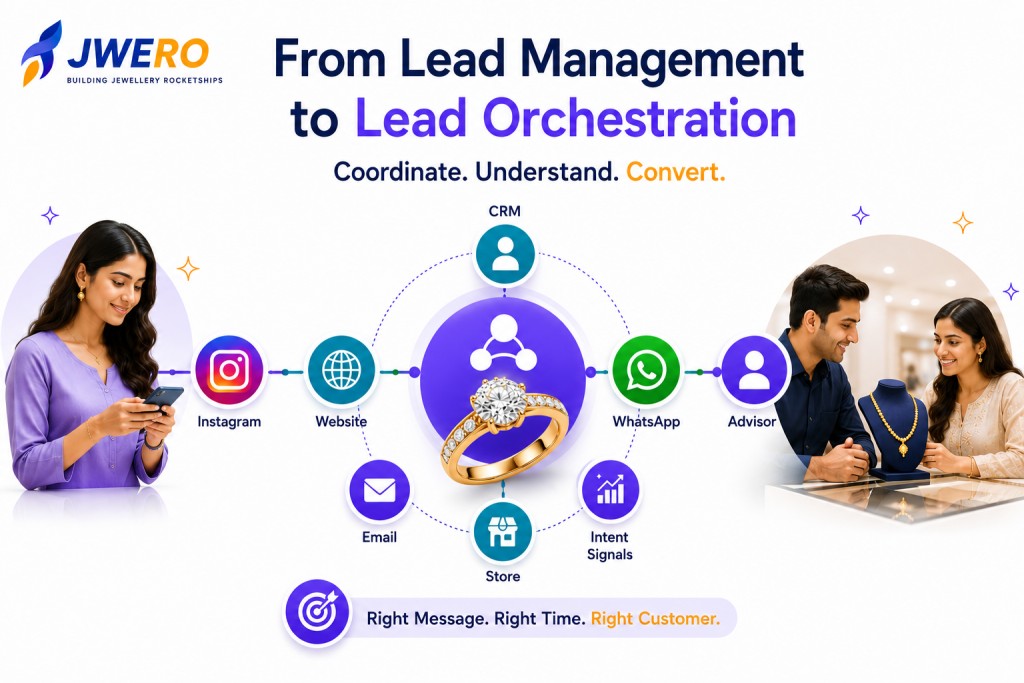
Platforms like Jwero Chats help unify WhatsApp, Instagram, Facebook, and Meta Ads conversations into one connected engagement workflow.
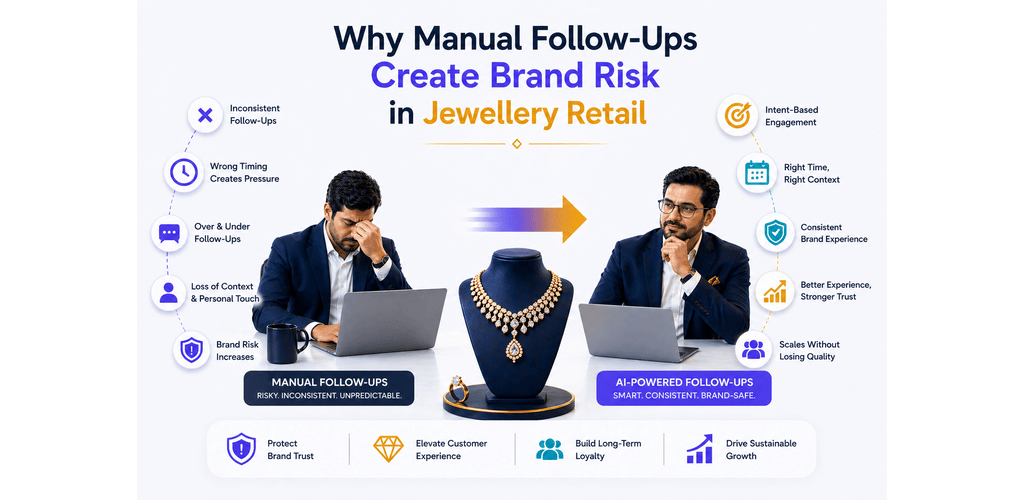
The 7 Brand Risks Created by Manual Follow-Ups in Jewellery
1. Inconsistent Follow-Ups Create Brand Confusion
In manual systems, every salesperson follows up differently.
Some communication styles appear more polished.
Some interactions may appear rushed.
Some over-message.
Other conversations may stop completely.
To leadership, this may look like sales variation.
Customers may view this as inconsistent brand communication.
Luxury brands cannot afford inconsistent communication.
Structured CRM ecosystems help jewellery retailers maintain stronger engagement standards across stores, teams, and customer touchpoints.
2. Bad Timing Feels Like Pressure
Timing changes everything in jewellery sales.
A follow-up sent too early can create pressure for the customer.
A follow-up sent too late can feel careless.
Manual systems usually depend on:
- memory
- reminders
- calendars
- personal judgement
Customers often interpret poor timing as:
“They are chasing a sale instead of helping me decide.”
That perception damages trust quickly.
Tools like Jwero WhatsApp Automation help jewellery retailers automate customer engagement based on customer behaviour and past interactions. This reduces dependence on guesswork.
3. Over-Following Creates Customer Fatigue
This happens constantly in jewellery retail.
If the customer does not respond, teams usually send another message.
If the customer does not respond, the team should follow up with a phone call.
If the customer still does not reply, teams often increase follow-up efforts.
But customers rarely experience this as “good follow-up.”
They experience it as pressure.
In jewellery retail, aspiration matters.
Once customers feel emotionally exhausted, conversion quality drops sharply.
Excessive outreach often damages the exact emotional connection luxury brands work hard to build.
4. Under-Following Signals Dis-organisation
The opposite problem can be just as damaging.
Manual systems often lead to:
- forgotten leads
- missed enquiries
- delayed responses
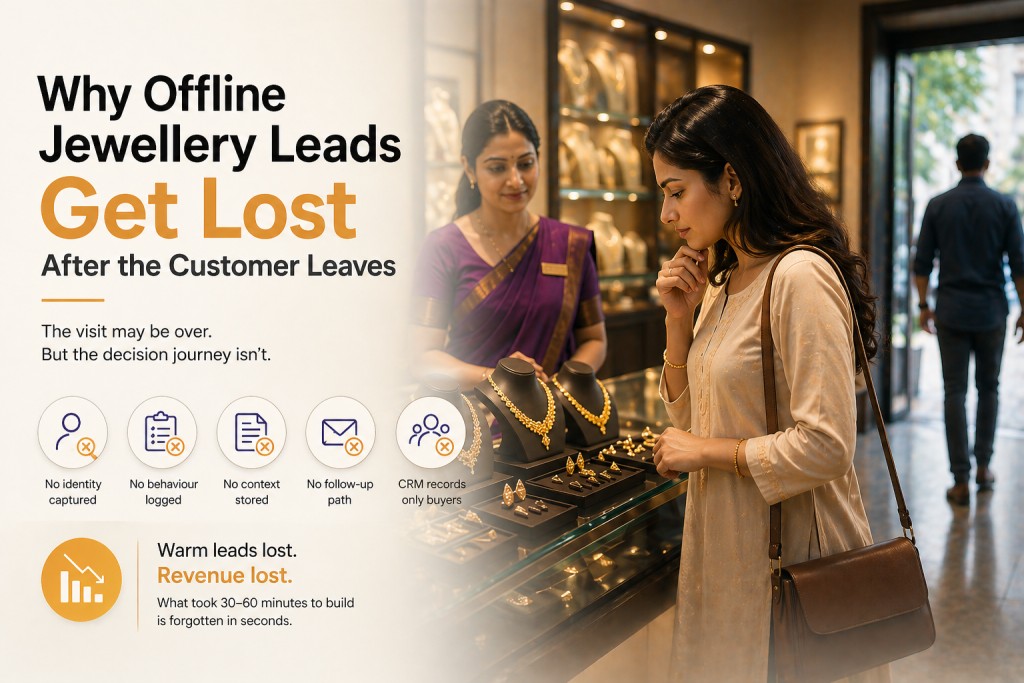
- abandoned walk-ins
Customers naturally assume:
“If the experience is inconsistent before purchase, what happens after the sale?”
Trust weakens quietly.
This becomes harder to manage as jewellery retailers expand across stores, digital channels, and multiple sales teams.
5. Context Loss Forces Customers to Repeat Themselves
Few things damage customer confidence faster than repetition.
Manual follow-ups often lose important context, such as:
- design preferences
- budgets
- prior discussions
- customer intent
Customers then need to explain themselves repeatedly.
That can create customer discomfort.
Luxury buyers expect consistency, recognition, and personal attention.
Integrated communication systems like Jwero Chats help preserve customer conversations and engagement history across every interaction point.
6. Personal WhatsApp Follow-Ups Blur Brand Boundaries
Many jewellery businesses still rely heavily on personal WhatsApp numbers.
That creates serious business risk.
Conversations become tied to individuals instead of the brand itself.
When employees leave:
- customer relationships disappear
- Conversation history gets lost, and
- follow-up quality changes dramatically
At scale, this becomes dangerous.
Brands should own customer journeys — not individual devices.
Structured omnichannel communication systems reduce dependence on personal follow-ups and scattered communication.
7. Manual Follow-Ups Don’t Scale
As lead volumes increase:
- Response quality drops
- Teams rush conversations
- follow-up consistency weakens
- important customers get missed
Externally, the brand may still appear premium.
Internally, the engagement process becomes chaotic.
This gap grows rapidly when jewellery businesses expand into e-commerce, multi-store retail, and digital lead generation.
Solutions like Jwero Ecommerce help connect online browsing behaviour with structured customer engagement workflows across sales teams.
Why This Risk Is Higher in Jewellery Than in Other Retail
Jewellery purchases are deeply emotional.
Customers are not simply buying products.
They are buying:
- trust
- reassurance
- identity
- celebration
- long-term confidence
That makes communication quality incredibly important.
One uncomfortable interaction can undo weeks of relationship-building.
This is why jewellery brands cannot treat follow-ups like generic retail reminders.
Manual Follow-Ups Turn Salespeople Into Brand Variables
This is the deeper business issue.
When follow-ups depend entirely on individual salespeople:
- brand consistency changes person to person
- customer experience becomes inconsistent
- communication quality fluctuates daily
Strong brands should not depend on individual behaviour alone.
They should deliver a reliable customer experience regardless of who handles the conversation.
Business consistency is what separates scalable jewellery retailers from unstable ones.
The Shift From Manual Follow-Ups to Structured Nurturing
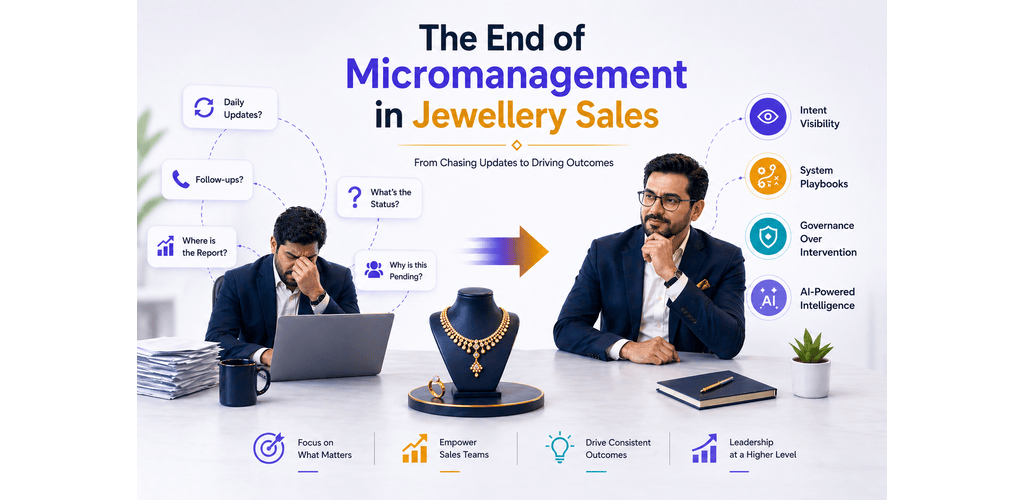
Leading jewellery brands are gradually moving away from:
- repetitive follow-up, pressure
- reminder-driven selling, and
- manual customer chasing
Instead, they focus on:
- intent-based engagement
- contextual communication
- behaviour-driven timing
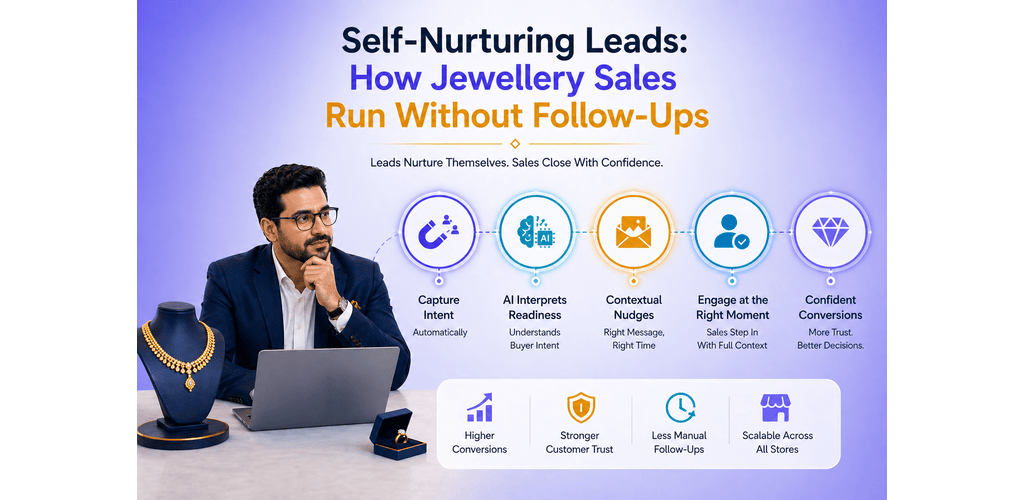
- system-guided nurturing
This creates healthier customer journeys while protecting long-term brand trust.
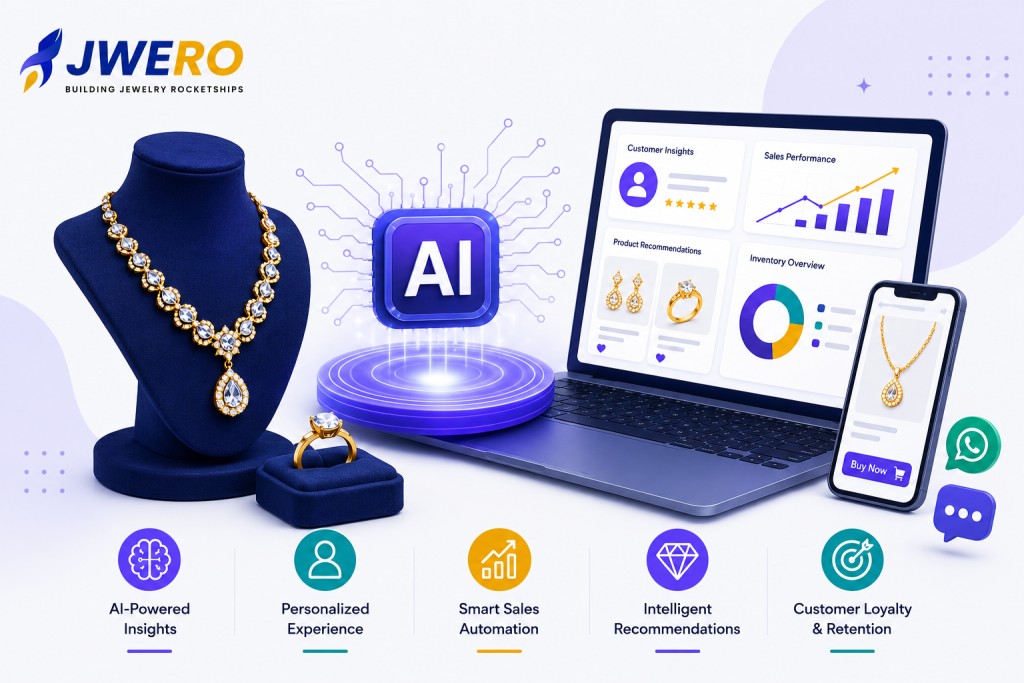
AI-driven engagement systems now help jewellery retailers maintain communication quality without sacrificing scale or responsiveness.
How AI Reduces Brand Risk in Customer Engagement
AI does not simply automate communication.
It improves communication quality.
AI systems can:
- Identify customer intent
- Reduce unnecessary outreach
- preserve context automatically
- improve timing consistency
- surface engagement risks early
Most importantly, AI removes randomness from customer communication.
And randomness is one of the biggest hidden risks in luxury retail engagement.
Solutions like Jwero.ai help jewellery retailers create more intelligent nurturing workflows instead of relying entirely on manual follow-ups.
Enterprise Perspective: Why Leadership Must Care
Large jewellery retailers handle thousands of customer interactions every day.
Even small issues can grow quickly.
Manual follow-up systems often create:
- uneven customer experiences
- brand dilution
- business dependency
- customer fatigue
- internal confusion
Brand risk rarely appears first in dashboards.
It appears in customer memory, hesitation, and trust erosion.
Geography & Follow-Up Brand Risk
India
Over-following on WhatsApp is common.
Family-led buying decisions often require patience and space.
Aggressive reminders can feel intrusive instead of helpful.
Middle East
Premium jewellery buyers expect restraint and refinement.
Poorly timed follow-ups can weaken luxury perception quickly.
Southeast Asia
Fast-moving digital environments demand timing precision.
Late or irrelevant follow-ups lose momentum immediately.
Some communication styles appear more polished.
The same business risk appears when teams do not manage follow-ups properly.
Why Structured Engagement Systems Matter
The goal is not to eliminate follow-ups.
The goal is to make follow-ups:
- timely
- contextual
- brand-consistent
- behaviour-aware
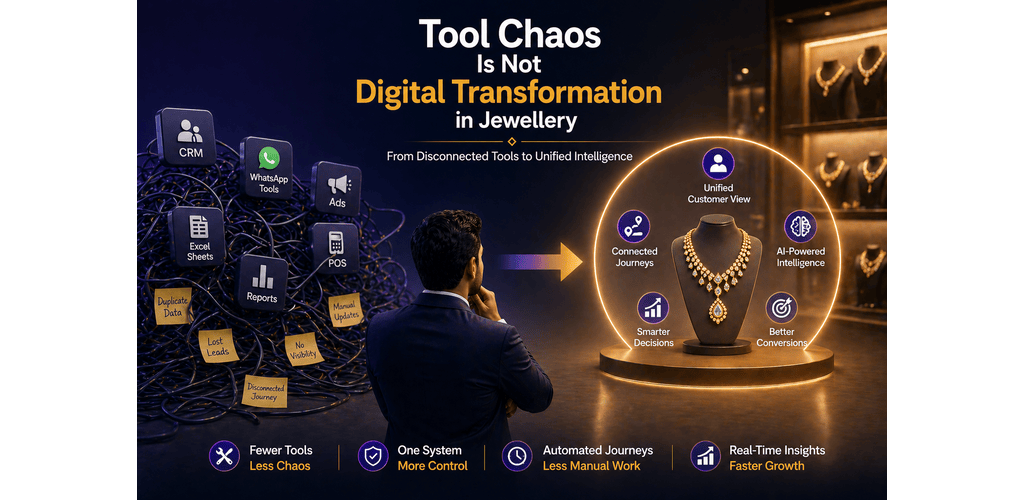
Modern jewellery retailers increasingly rely on centralised communication systems, AI-driven workflows, and omnichannel engagement visibility to improve customer nurturing quality at scale.
Platforms like Jwero.ai help jewellery retailers centralise conversations, improve follow-up consistency, and reduce communication gaps across customer journeys.
Strong engagement systems protect more than conversion rates.
They protect brand trust.
Frequently Asked Questions
Why are manual follow-ups risky for jewellery brands?
Manual follow-ups often create inconsistent communication, poor timing, customer fatigue, and fragmented customer experiences that damage trust.
Are follow-ups still important in jewellery sales?
Yes. But effective follow-ups should feel contextual, timely, and customer-focused instead of repetitive or pressure-driven.
How does AI improve jewellery customer engagement?
AI helps jewellery retailers improve communication timing, preserve customer context, identify intent signals, and reduce unnecessary outreach.
Why is WhatsApp follow-up management important for jewellers?
Because unmanaged WhatsApp communication can create inconsistent customer experiences, scattered conversations, and strong dependence on individual staff members.
Is this challenge more serious for large jewellery brands?
Yes. As customer interactions increase, even small communication issues can grow into larger brand experience problems.
How can jewellery retailers improve customer nurturing?
By using centralised CRM systems, omnichannel communication workflows, automated engagement journeys, and AI-assisted customer visibility systems.
Protect Your Jewellery Brand With Smarter Customer Engagement
Explore how Jwero.ai helps jewellery retailers improve follow-up consistency, centralise customer conversations, automate nurturing workflows, and maintain stronger brand communication across every interaction.
Capabilities include:
- AI-driven customer engagement
- WhatsApp automation workflows
- Omnichannel communication management
- Intent-based follow-up systems
- Customer journey orchestration
- Centralised CRM visibility
- Why manual follow-ups hurt jewellery brands
- How jewellery retailers can automate customer follow-ups
- best follow-up strategy for jewellery sales
- How AI improves jewellery customer engagement
- Why jewellery brands need consistent communication systems