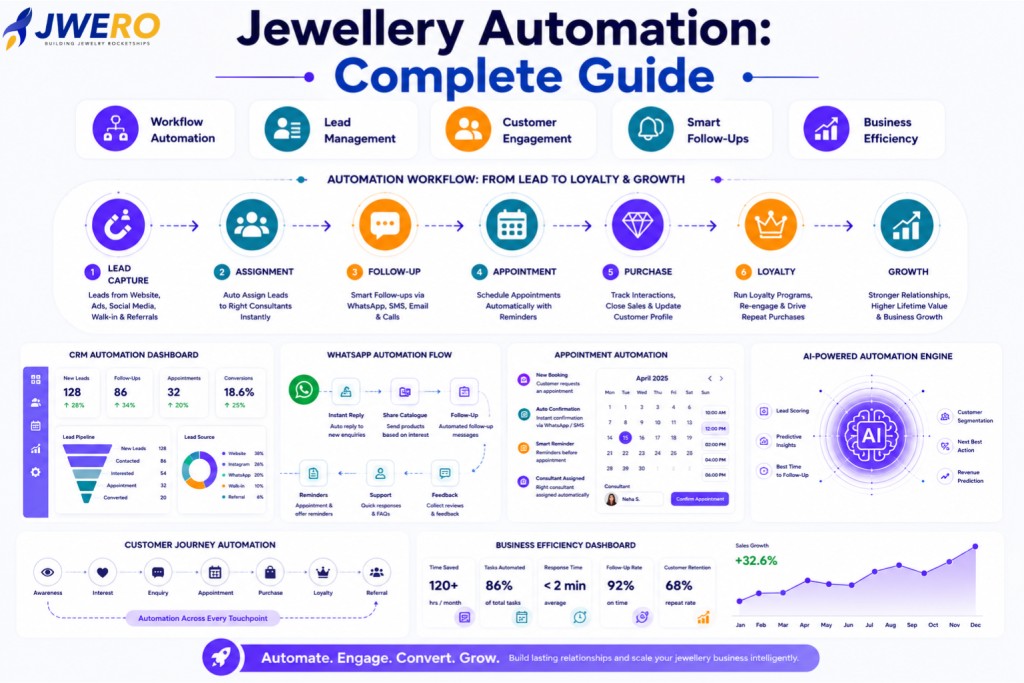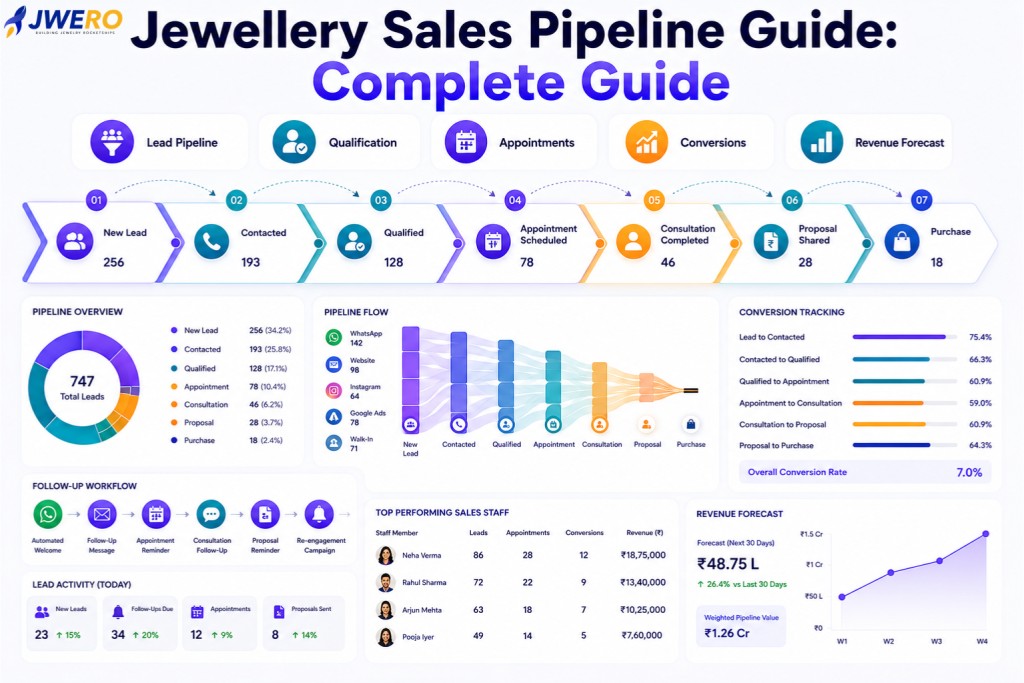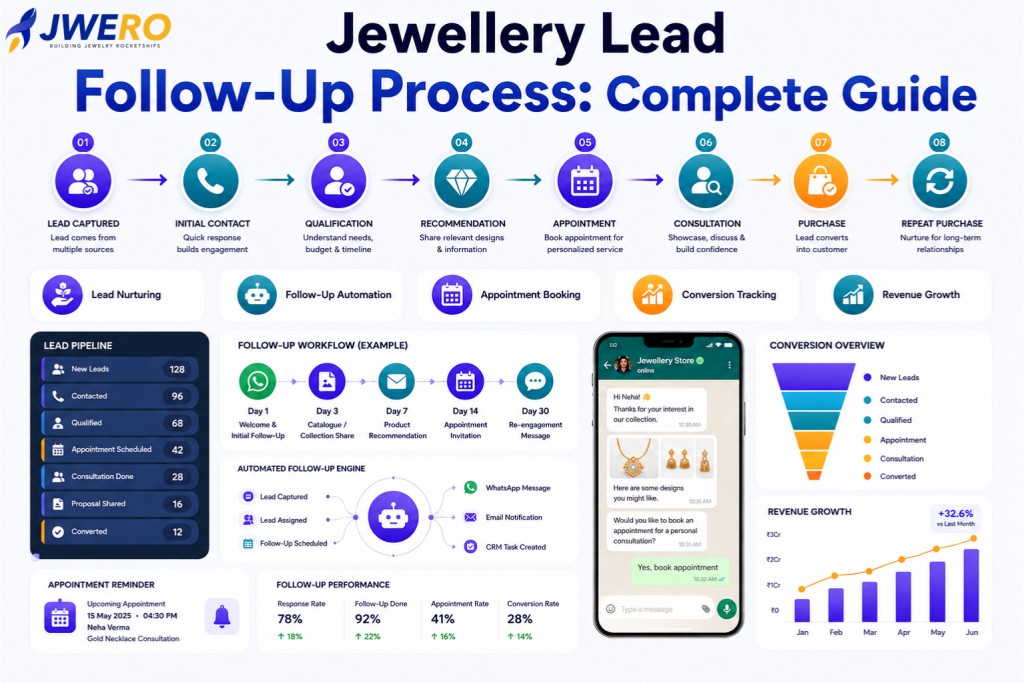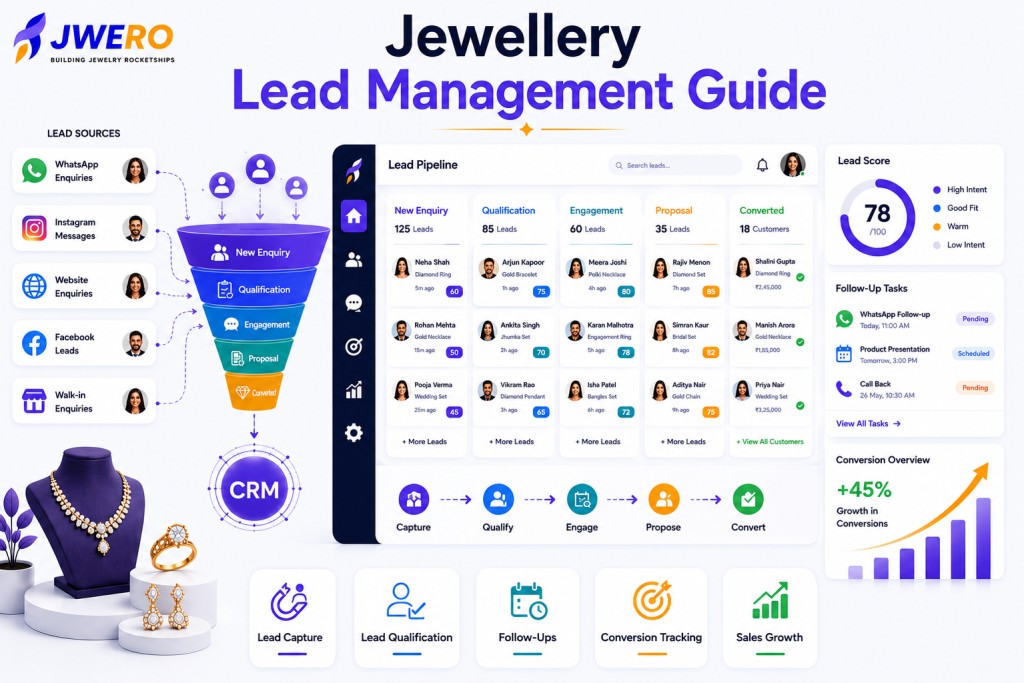


Growth should create confidence.
Not confusion.
Yet many jewellery businesses experience the opposite as they expand.
More stores open.
More campaigns run.
More enquiries arrive.
But somehow, clarity decreases.
Owners start hearing familiar complaints:
- “Leads are coming in, but follow-ups feel inconsistent.”
- “Teams are busy all day, yet conversions feel unstable.”
- “Everything depends on constant supervision.”
This usually begins after expansion accelerates.
The business grows faster than the systems supporting it.
And that is when lead control starts slipping quietly.
Table of Contents
- Why Jewellery Growth Creates Operational Complexity
- How Lead Sources Multiply Faster Than Systems
- Why People-Dependent Processes Break at Scale
- The Hidden WhatsApp Problem in Jewellery Retail
- Why Online and Offline Journeys Disconnect
- The Reporting Illusion in Growing Jewellery Chains
- How Managers Become Stuck in Reactive Work
- Why Selling Quality Changes Across Stores
- The Real Cause Behind Lead Leakage
- Why Traditional CRM Systems Struggle at Scale
- What Better Jewellery Lead Control Looks Like
- How AI Helps Enterprise Jewellery Chains Regain Control
1. Why Jewellery Growth Creates Operational Complexity
Jewellery growth is not linear.
Every new store adds layers of complexity.
Not just more sales volume.
A growing jewellery chain usually adds:
- more communication channels
- more staff
- more customer journeys
- more lead sources
- more follow-up dependencies
This changes the business structure completely.
What worked for three stores often fails at ten.
Because informal coordination stops scaling.
2. How Lead Sources Multiply Faster Than Systems
Smaller jewellery businesses usually operate with simple lead flows.
Maybe:
- one WhatsApp number
- walk-ins
- referrals
- direct calls
Expansion changes everything.
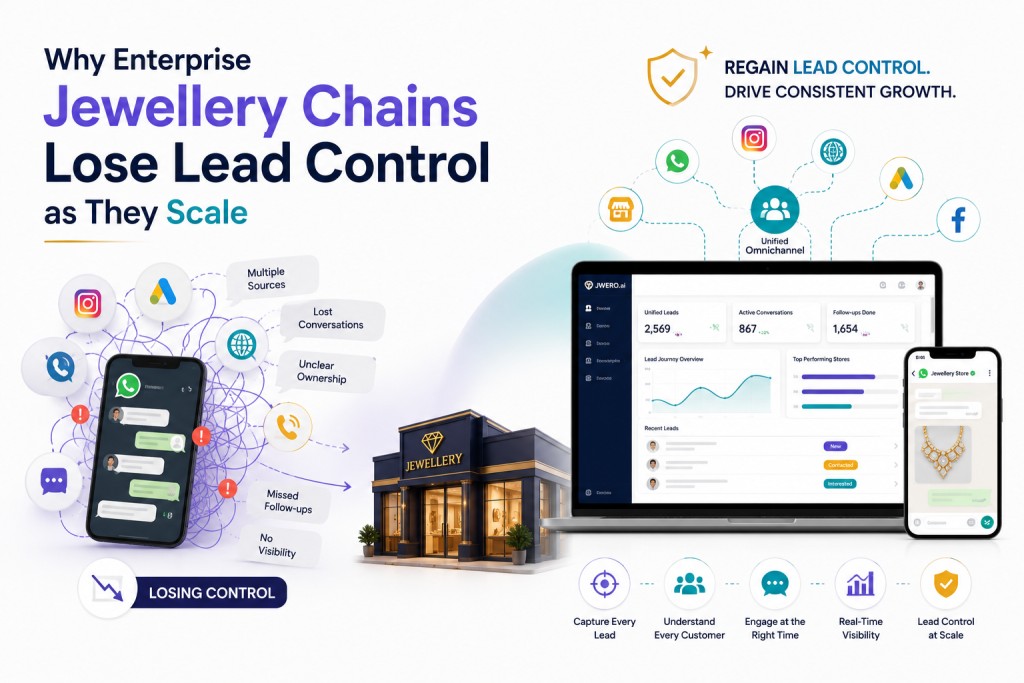
Suddenly, leads arrive from:
- Google Ads
- websites
- multiple WhatsApp numbers
- store campaigns
- gold schemes
- ecommerce enquiries
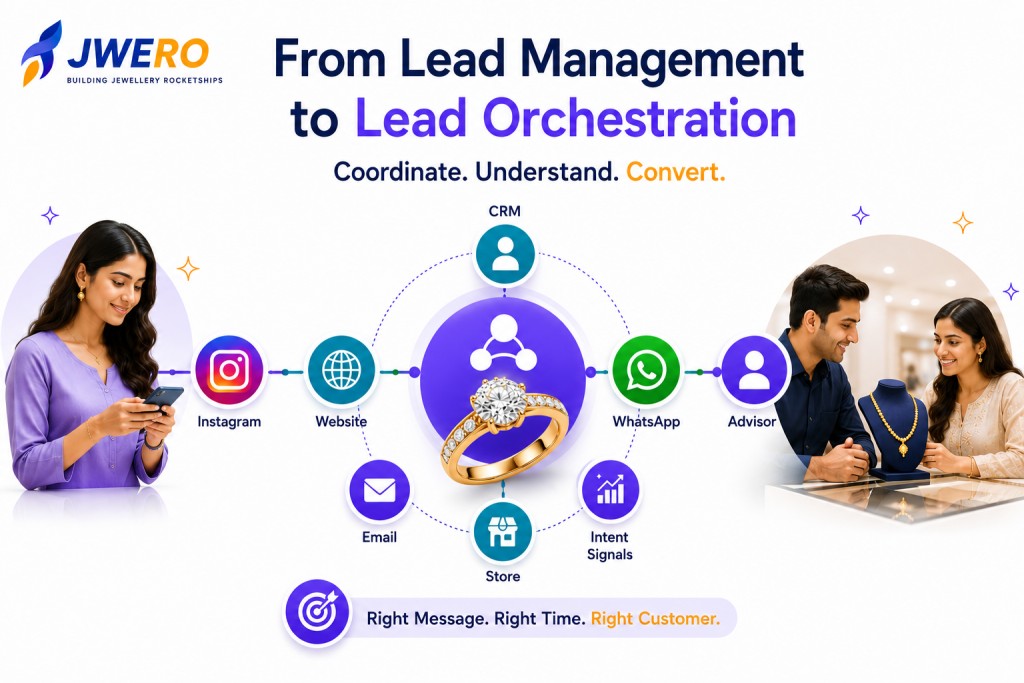
Without connected systems, customer journeys fragment quickly.
The same customer may appear across different channels repeatedly.
Different teams contact them separately.
Follow-ups overlap.
Context disappears.
This is where centralised communication systems become critical.
Platforms like Jwero Chats help growing jewellery businesses unify conversations instead of managing disconnected enquiries manually.
3. Why People-Dependent Processes Break at Scale
Many jewellery businesses rely heavily on experienced staff.
Senior employees remember customers.
Managers connect information mentally.
Owners intervene personally when issues appear.
On a smaller scale, this feels manageable.
On a larger scale, it becomes fragile.
Problems surface when:
- key staff leave
- Teams grow rapidly
- festive traffic increases
- stores operate independently
Knowledge trapped inside individuals does not scale safely.
That creates operational instability.
Especially during high-volume seasons.
4. The Hidden WhatsApp Problem in Jewellery Retail
WhatsApp feels simple initially.
That simplicity becomes risky during expansion.
Most growing jewellery chains eventually face:
- multiple store numbers
- unclear ownership
- lost conversations
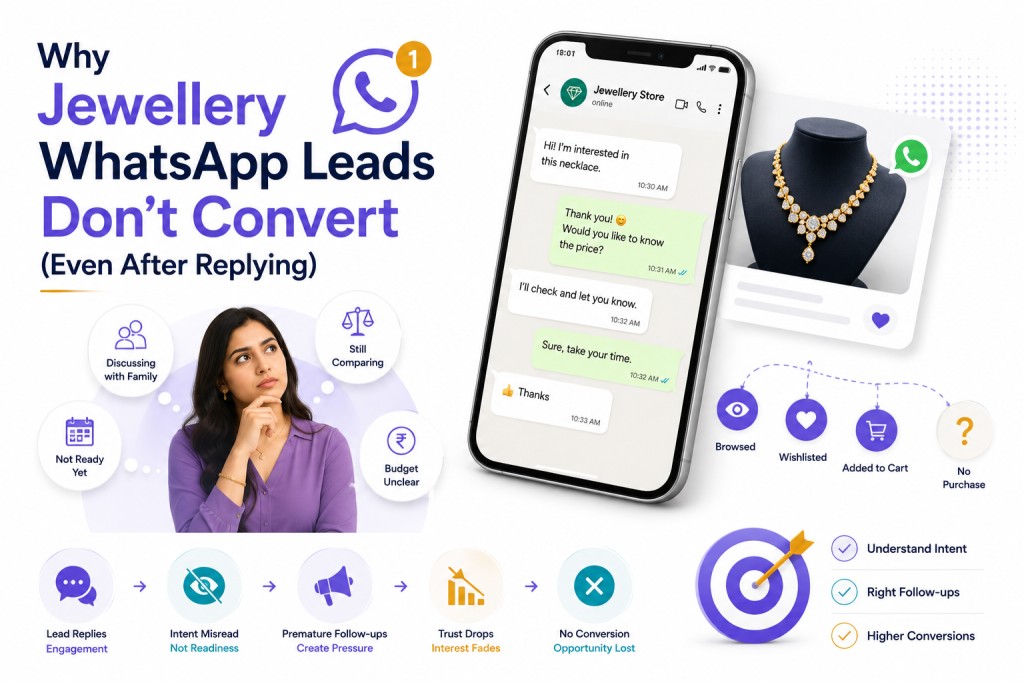
- inconsistent follow-ups
- customer history trapped in personal devices
Management often assumes everything is functioning normally.
But lead leakage happens silently.
Customers stop receiving timely responses.
Conversations lose continuity.
Intent weakens gradually.
Jewellery businesses managing larger customer volumes often move toward systems like Jwero WhatsApp to prevent enquiries from becoming dependent on individual phones.
Because at scale, even small follow-up gaps become expensive.
5. Why Online and Offline Journeys Disconnect
This is one of the biggest scaling problems in jewellery retail.
Digital teams focus on online engagement.
Store teams focus on physical visits.
But customers experience both as one journey.
A customer may:
- browse Instagram designs
- enquire online
- Visit a showroom later
Then suddenly, repeat everything from the beginning.
That breaks trust instantly.
The customer expects continuity.
Not reintroduction.
Disconnected journeys slow conversions because momentum disappears between channels.
This is where coordinated systems across:
become operationally important.
Not for convenience.
For customer continuity.
6. The Reporting Illusion in Growing Jewellery Chains
Many enterprise jewellery businesses rely heavily on surface-level reporting.
Typical metrics include:
- enquiries received
- revenue generated
- store performance
- campaign output
These numbers show activity.
Not control.
They rarely reveal:
- missed follow-ups
- delayed responses
- duplicated leads
- customer drop-offs
- Weakening purchase intent
That creates dangerous blind spots.
By the time revenue slows visibly, the operational damage often starts weeks earlier.
7. How Managers Become Stuck in Reactive Work
As lead complexity increases, managers stop leading strategically.
Instead, they start firefighting.
They chase updates constantly.
Review pending follow-ups manually.
Micromanage teams.
Resolve escalations repeatedly.
This creates:
- stress
- burnout
- inconsistent execution
- slower decision-making
Leadership energy shifts toward fixing operational symptoms instead of improving systems.
That eventually slows growth itself.
8. Why Selling Quality Changes Across Stores
Expansion exposes inconsistency quickly.
Not every store performs equally.
Not every salesperson handles leads effectively.
Without standardised lead workflows:
- Top performers carry entire locations
- Weak follow-up habits remain hidden.
- customer experiences vary dramatically
Over time, brand consistency weakens.
And customers notice.
Growth amplifies operational strengths.
But it also amplifies weaknesses.
9. The Real Cause Behind Lead Leakage
Most jewellery businesses scale activity faster than intelligence.
They increase:
- advertising
- staffing
- store count
- lead generation
But they often fail to improve:
- lead tracking
- customer understanding
- follow-up coordination
- intent monitoring
This creates a widening gap.
The business grows.
But leadership loses a clear understanding of customer movement.
That gap creates silent leakage.
10. Why Traditional CRM Systems Struggle at Scale
CRM systems remain useful.
But many jewellery businesses discover their limitations during rapid growth.
Traditional CRM depends heavily on manual discipline.
At scale:
- Updates get delayed
- entries become inconsistent
- Offline interactions disappear
- customer context gets fragmented
The problem is not CRM itself.
The problem is relying only on static data entry in a fast-moving retail environment.
Growing jewellery chains increasingly need systems that continuously capture customer behaviour automatically.
Not just manually updated records.
11. What Better Jewellery Lead Control Looks Like
The strongest jewellery businesses eventually stop asking:
“How many leads did we generate?”
Instead, they ask:
“Do we fully understand every customer journey?”
That changes operational priorities completely.
Better lead control means:
- Every lead source connects centrally
- customer interactions stay visible
- follow-ups remain consistent
- journeys continue across channels
- No lead depends on one employee
This creates stability during growth.
Which is far more valuable than temporary volume spikes.
12. How AI Helps Enterprise Jewellery Chains Regain Control
AI becomes valuable when complexity increases faster than human coordination.
It helps jewellery businesses:
- track customer intent continuously
- Identify weak follow-ups early
- Prioritise serious buyers
- maintain consistent engagement
- reduce dependency on manual supervision
Instead of reacting after problems appear, leadership gains earlier signals.
That changes decision-making quality significantly.
Systems like Jwero.ai are increasingly used by growing jewellery businesses because they help unify fragmented customer journeys into a single operational flow.
Not by increasing pressure.
But by reducing chaos.
Final Thought
Growth itself is not dangerous.
Uncontrolled growth is.
Jewellery businesses rarely struggle because demand disappears.
They struggle because customer journeys become harder to manage as complexity increases.
The strongest enterprise jewellers are not simply expanding faster.
They are building systems that scale with clarity.
That difference becomes enormous over time.
FAQs
Why do jewellery businesses lose lead control while scaling?
Lead sources grow faster than operational systems, causing fragmented customer journeys and inconsistent follow-ups.
What causes lead leakage in jewellery chains?
Disconnected channels, poor follow-up coordination, WhatsApp chaos, and people-dependent processes are common causes.
Is CRM enough for large jewellery businesses?
CRM helps, but growing jewellery chains also need centralised communication, journey tracking, and automation layers.
Why is WhatsApp difficult to manage at scale?
Multiple numbers, inconsistent ownership, and conversations stored in personal devices create operational risks.
How does AI improve jewellery lead management?
AI helps businesses track customer intent, prioritise leads, identify follow-up gaps, and maintain consistent customer engagement.
Build Jewellery Growth Without Losing Control
As jewellery businesses scale, customer journeys become harder to manage manually.
The right systems help unify conversations, reduce lead leakage, and create consistent follow-ups across every store and channel.
Explore:
- Jwero.ai
- Jwero Chats
- Jwero WhatsApp
- Why jewellery chains lose leads while scaling
- How jewellery businesses lose customer enquiries
- jewellery lead leakage problems
- Multi-store jewellery CRM challenges