

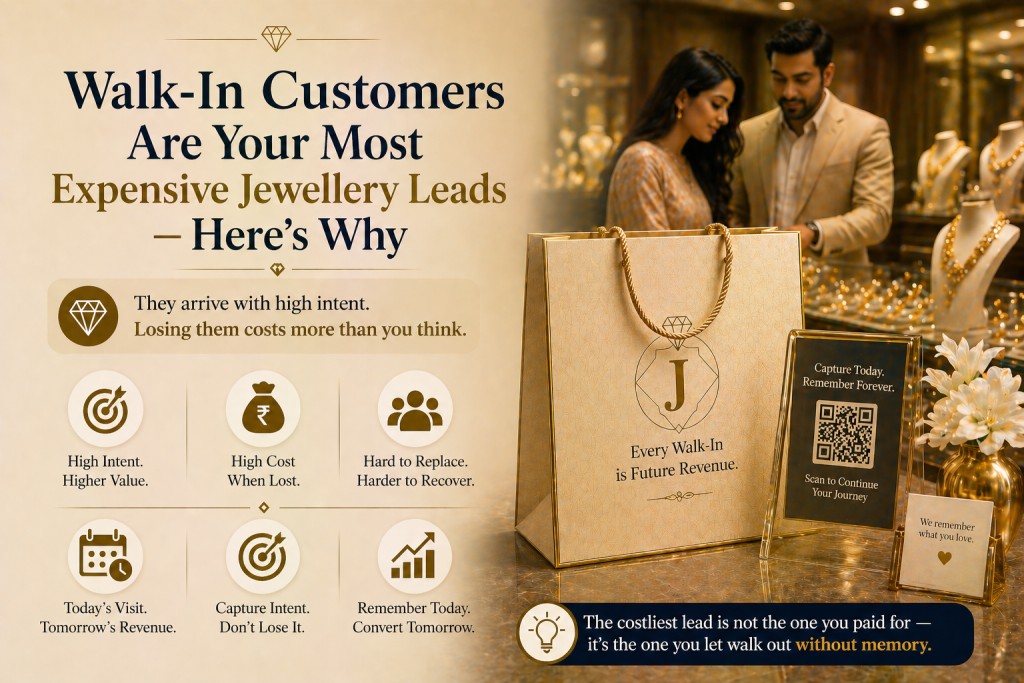
The Myth of the “Free” Walk-In Customer
Many jewellery retailers treat walk-in customers differently from digital leads
There is no advertising bill attached to them
No cost per click
No lead generation platform
No campaign invoice
That makes them feel free
But they are far from free
Every customer who enters your showroom arrives because the business has already invested heavily.
That investment includes store rent, product displays, sales staff, branding, local reputation, and often months of marketing activity.
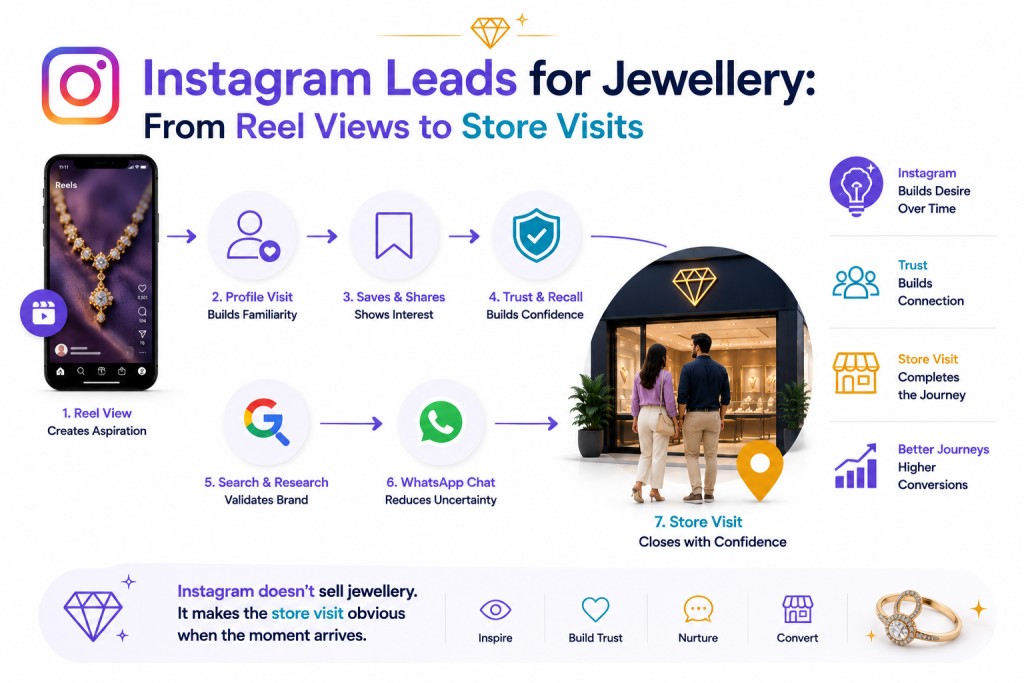
Some customers first discover a store through Instagram.
Others come through Google searches, referrals, or word of mouth.
The visit may happen today, but the influence often started much earlier.
By the time someone walks through your door, the real question is not whether they cost money.
The question is whether you capture the value they bring.
Walk-Ins Arrive With Strong Buying Intent
A website visitor can leave in seconds
A social media user can scroll away instantly
A walk-in customer is different
They have already invested time
They have travelled to your store
They have looked at products
They have spoken to your team
In many cases, they are already comparing options before making a decision.
This is not early-stage curiosity; it is often a late-stage evaluation.
That makes every lost walk-in more expensive than most businesses realise.
Why Losing a Walk-In Is So Costly
Not every visitor buys immediately; that is normal in jewellery retail.
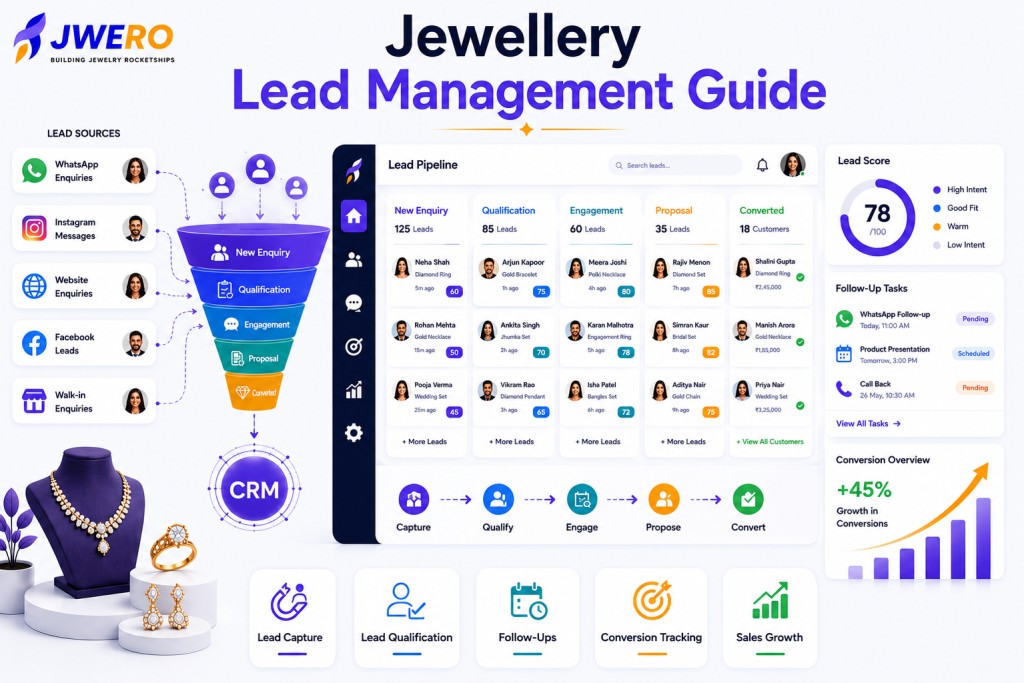
However, problems begin when the customer leaves, and the business loses track of them.
When that happens:
- The advisor’s time creates no future value
- Customers forget product demonstrations
- Customer preferences disappear
- Follow-up opportunities vanish
- Future conversion becomes harder
- Businesses can often re-engage digital leads
A showroom visitor who leaves without sharing their details is much harder to bring back.
The loss is not only today’s sale, but the bigger loss is future buying intent.
The Hidden Cost of Starting Over
Many jewellery purchases take time
Customers discuss options with family
They compare designs
They think about budgets
They revisit stores
When businesses fail to capture customer information, every future visit starts from the beginning.
- The customer explains their requirements again
- The advisor asks the same questions
- Teams often forget past conversations
This creates friction; more importantly, it weakens trust.
Customers rarely say it out loud, but many think:
“They don’t remember me.”
In a relationship-driven industry like jewellery, that feeling matters.
What Most Retail Reports Miss
Many management teams focus on metrics such as:
- Footfall
- Conversion rates
- Average bill value
These numbers are useful, but they do not tell the whole story.
The bigger question is:
How much buying intent entered the showroom today?
And how much of that intent did the business preserve?
A customer may leave without buying and return later to make a high-value purchase. If the business remembers previous interactions, the sale becomes more likely.
If businesses forget it, they often lose that opportunity.
Walk-Ins vs Digital Leads
The economics are often misunderstood
Digital leads are usually easier to track
Website enquiries leave contact information
WhatsApp conversations remain available
Teams can review customer history later
Walk-ins are different
If teams capture no information, they lose the entire interaction.
That makes walk-ins one of the hardest lead sources to replace.
The challenge is not acquiring them.
The challenge is losing them.
Why Manual Tracking Often Fails
Most jewellery stores depend on staff to capture customer information. In reality, this is difficult.
- Busy hours create distractions
- Some customers prefer browsing without questions
- Sales teams naturally focus on helping customers rather than updating records
- Human memory has limits
- Even the best advisors cannot remember every visitor, every preference, and every conversation.
- As store traffic grows, valuable customer information starts slipping away.
Not because staff are careless, because the process does not scale.
How Leading Jewellers Protect Customer Intent
The strongest jewellery retailers treat every showroom visitor as a potential future buyer.
- They focus on preserving context
- They remember preferences
- They connect visits over time
- They create smoother follow-up experiences
- Technology often plays a role here.
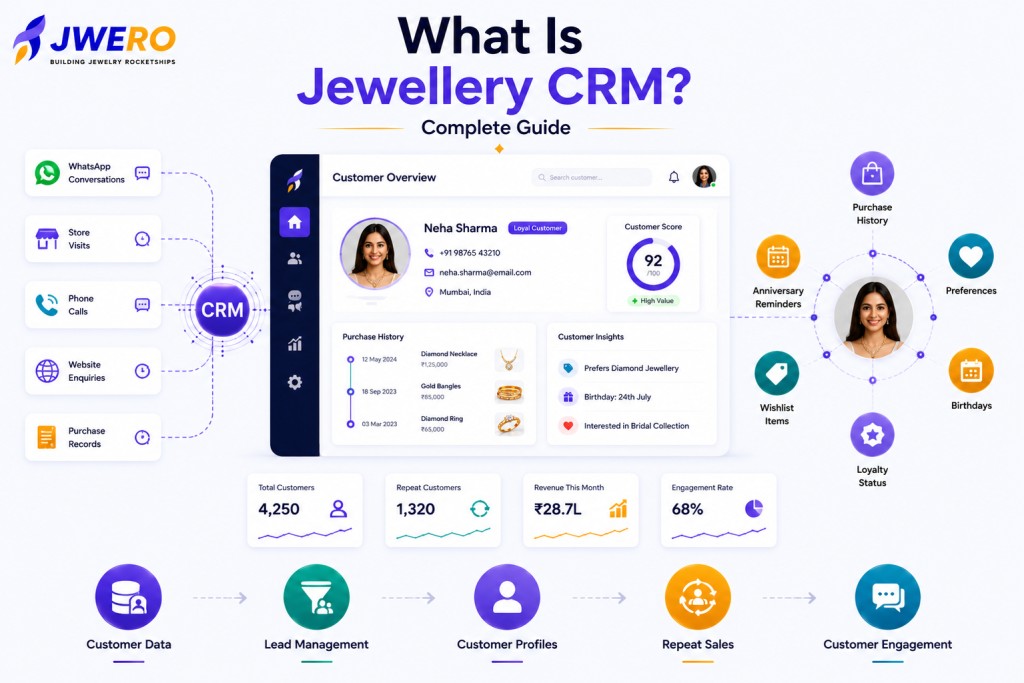
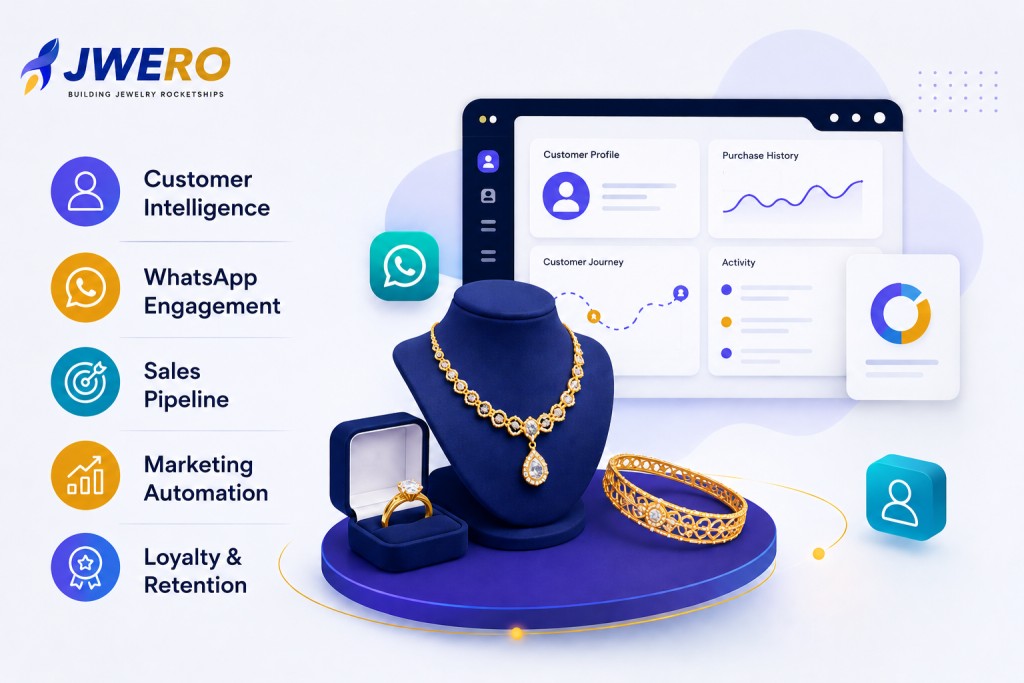
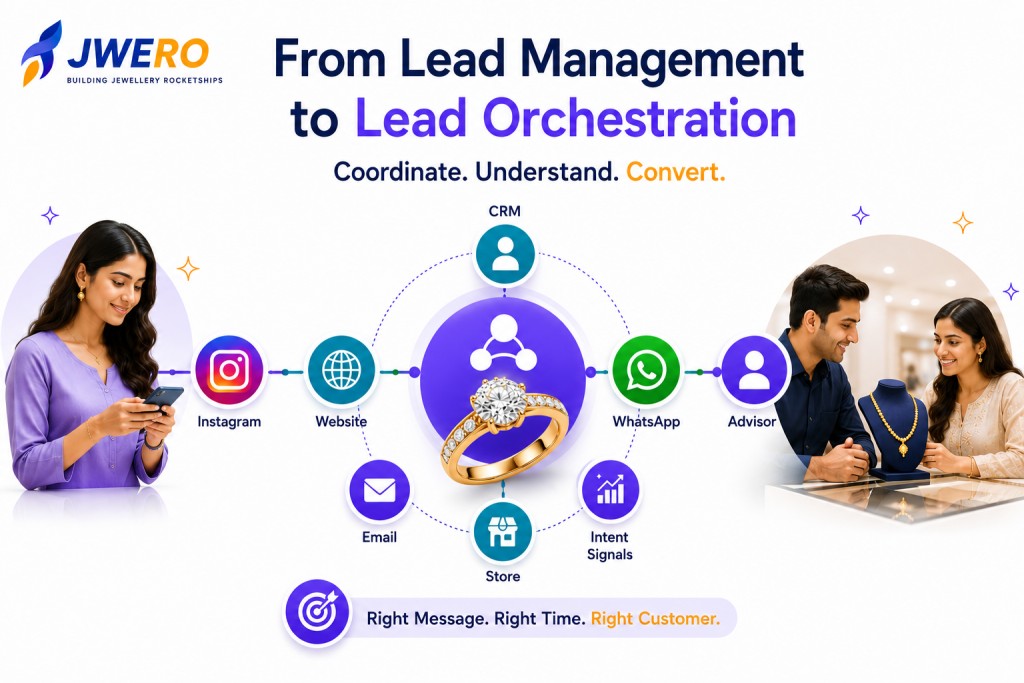
Centralised customer records, communication history, and follow-up workflows help teams continue conversations instead of restarting them.
Solutions such as Jwero Chats help retailers keep customer interactions connected across channels without relying entirely on memory.
The goal is simple: make every future conversation feel familiar.
Walk-In Customers Often Buy Later
Many jewellery purchases are not impulse decisions.
Customers need time
Family opinions matters
Budgets change
Confidence develops over multiple interactions
This means many walk-ins represent future revenue rather than immediate revenue.
The business has already invested. The opportunity already exists.
The challenge is making sure teams do not forget it.
Viewed this way, losing a walk-in is not merely a sales problem; it is revenue leakage.
From Footfall to Intent
The most successful jewellery retailers are changing how they think about showroom traffic.
Instead of asking:
“How many people walked in today?”
They ask:
“How much buying intent did we capture today?”
That shift changes everything.
It encourages better follow-ups
Better customer memory
Better long-term conversion
And stronger customer relationships.
Final Thoughts
Walk-in customers are among the most valuable opportunities a jewellery retailer receives.
They have already invested effort.
They have already shown interest.
They are often closer to purchasing than many digital leads.
You can always run another advertising campaign.
You can always generate more clicks.
Replacing a customer who walked into your showroom, explored your jewellery, and left undecided is far more difficult.
The true cost is not the visit itself. The true cost is forgetting the customer after they leave.
Frequently Asked Questions
Why are walk-in customers considered expensive leads?
Because significant business investment happens before the visit. Rent, staff, inventory presentation, reputation, and marketing all contribute to bringing customers into the showroom.
Why do jewellery stores lose walk-in customers?
Many stores fail to capture customer information or maintain follow-up records. As a result, they miss future sales opportunities.
How can jewellery retailers improve walk-in conversions?
Consistent follow-ups, customer history tracking, and connected communication channels help retailers build trust and continue conversations.
What role does a jewellery CRM play?
A jewellery CRM keeps customer details and past interactions in one place, helping teams provide better customer service.
Why is customer memory important in jewellery retail?
Jewellery purchases often happen over multiple visits. Remembering previous conversations creates trust and reduces friction during future interactions.
Want to understand how leading jewellery retailers track customer journeys, improve follow-ups, and reduce lost opportunities?
Explore how Jwero Chats help jewellery businesses keep every customer conversation connected.
- Why jewellery stores lose walk-in customers
- How jewellers track customer visits
- How to follow up with jewellery store visitors
- jewellery CRM for customer retention
- Why do walk-in customers not return
- capturing customer details in jewellery stores
- improving jewellery showroom conversions
- How jewellery retailers reduce lost sales