

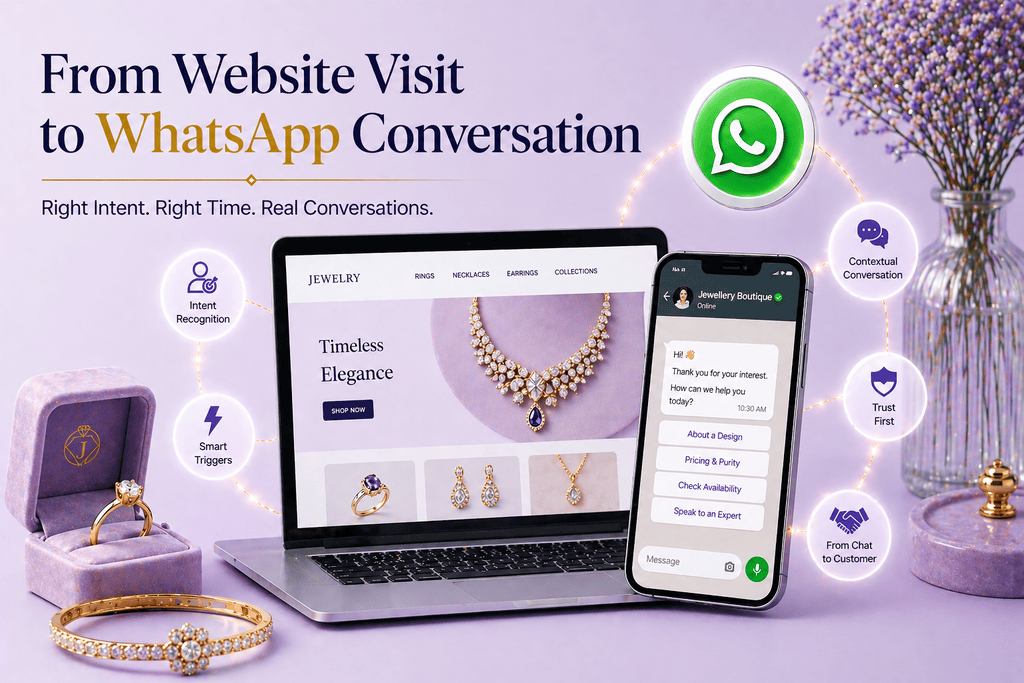
How Jewellery Brands Turn Website Visitors Into WhatsApp Leads
Jewellery websites attract serious buyers, but most of them leave silently.
Not because they aren’t interested.
But because they’re not ready to talk yet.
The mistake jewellery brands make is trying to force conversations instead of inviting them at the right moment.
Conversion from website to WhatsApp is not about pop-ups or CTAs.
It’s about timing, intent recognition, and trust.
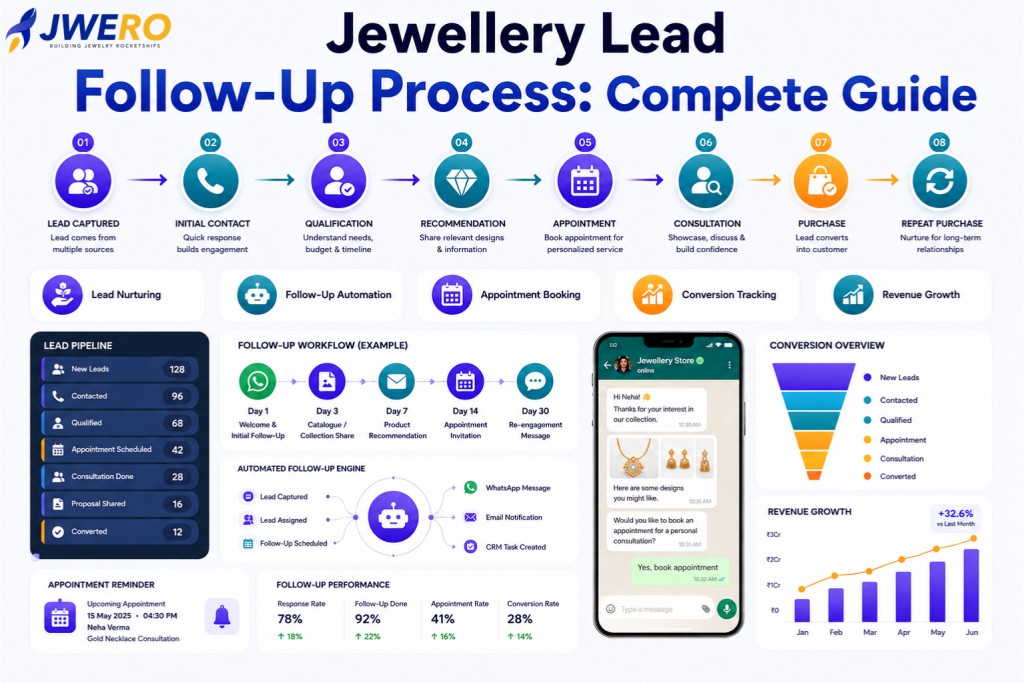
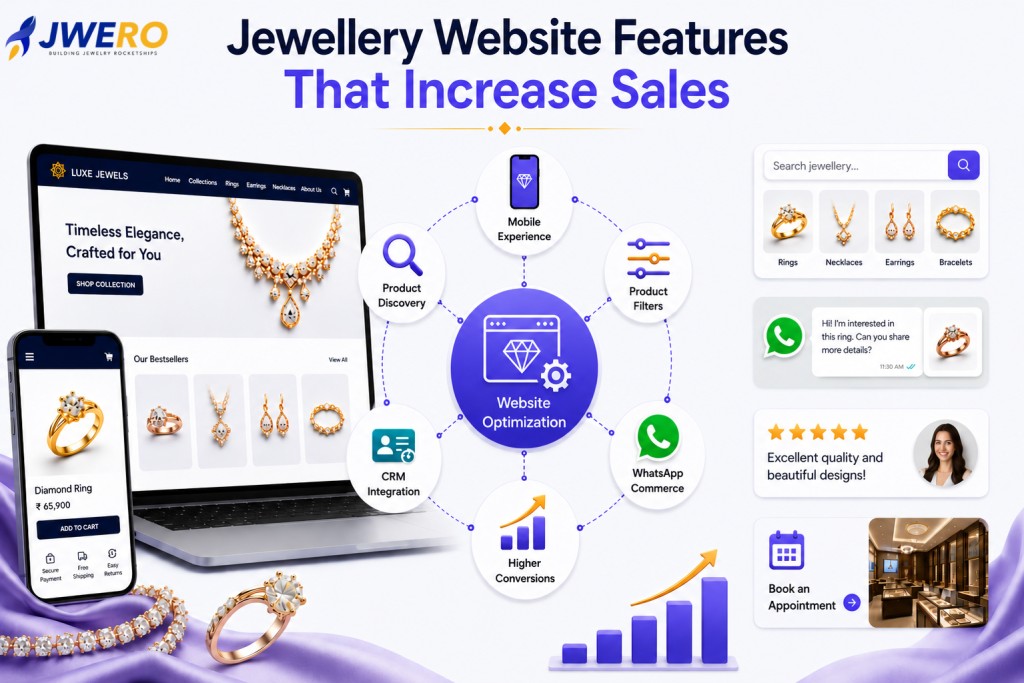
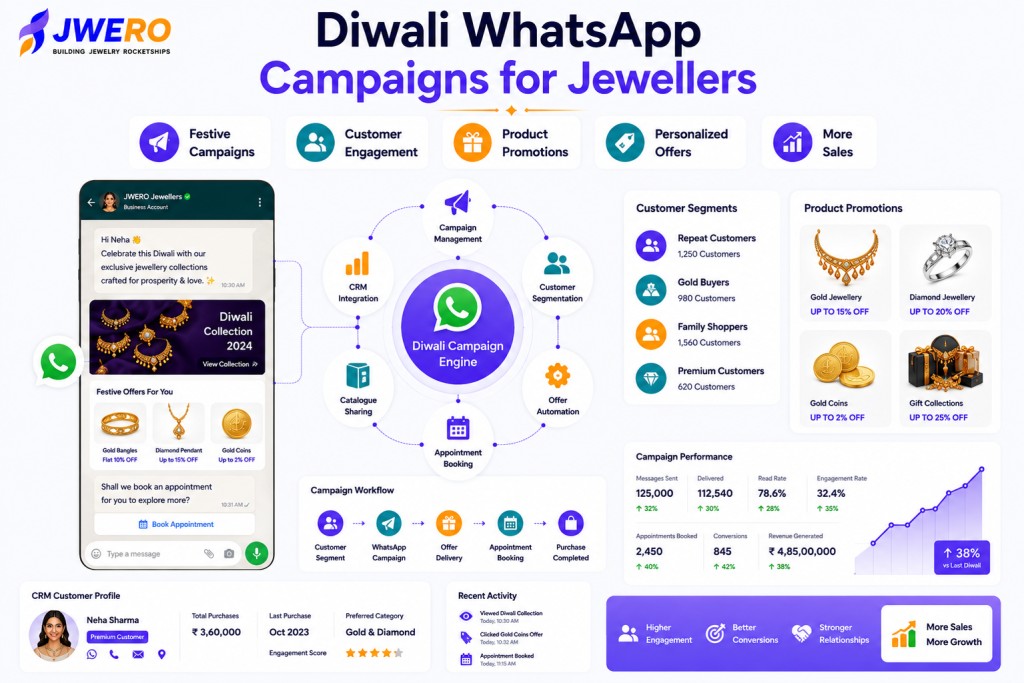
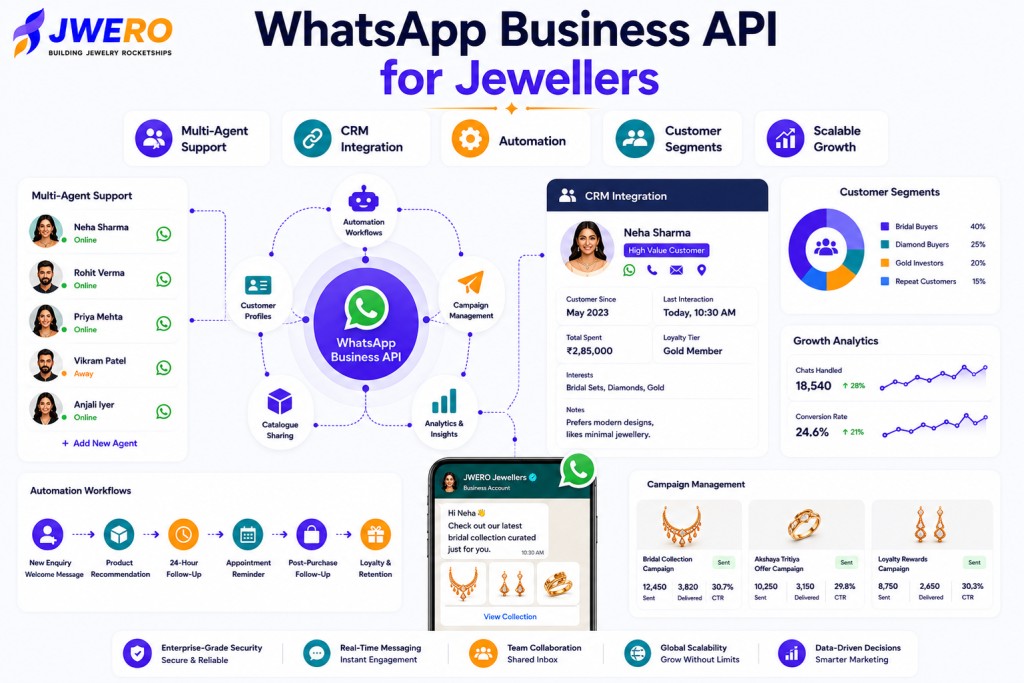
Modern jewellery retailers are increasingly using connected engagement ecosystems like JWERO.ai to unify website behaviour, customer intent, and WhatsApp engagement into a single customer journey.
1. Why Jewellery Website Visitors Don’t Start WhatsApp Chats
Jewellery buyers hesitate to chat because:
- They’re still evaluating designs
- They’re comparing prices quietly
- Family discussions aren’t complete
- Confidence is forming, not final
- They don’t want sales pressure
This silence is not disinterest.
It’s decision incubation.
Forcing WhatsApp too early breaks trust.
Jewellery purchases are emotional, high-consideration decisions. Customers often need reassurance and context before they feel comfortable starting direct conversations.
2. The Core Mistake: Treating WhatsApp as a CTA, Not a Journey
Most websites use:
- “Chat with us” buttons
- Pop-ups on first visit
- Generic WhatsApp prompts
- Urgent language
This assumes:
Website visit = readiness to talk
In jewellery, readiness is earned, not assumed.
Many jewellery ecommerce experiences still treat WhatsApp as a conversion shortcut instead of a relationship progression channel.
Retailers using systems like JWERO Ecommerce increasingly focus on connected customer journeys rather than isolated website CTAs.
3. Website → WhatsApp Is a Behavioral Transition
The shift from browsing to conversation happens when:
- Curiosity becomes confidence
- Evaluation becomes clarification
- Silence becomes questions
Your job is not to push chats —
it’s to recognise when the shift is happening.
Intent-based engagement consistently outperforms pressure-based prompts in jewellery retail environments.
4. The Website Behaviours That Signal WhatsApp Readiness
High-conversion signals include:
- Repeat visits to the same category
- Viewing similar designs across sessions
- Visiting price-sensitive collections
- Checking store locations after browsing
- Returning after Instagram or Google exposure
- Long session durations without cart activity
These visitors are not browsing casually.
They are preparing to talk.
Behaviour tracking systems help jewellery retailers identify high-intent moments before customers explicitly ask for assistance.
Platforms like JWERO Instagram Automation help brands connect social engagement with customer journey visibility across channels.
5. Why Most WhatsApp Prompts Fail
Generic prompts fail because they:
- Appear too early
- Offer no context
- Feel sales-led
- Ignore browsing history
- Don’t reduce uncertainty
“Chat with us” is vague.
Jewellery customers need reassurance, not invitations.
The most effective engagement systems reduce hesitation instead of increasing pressure.
6. What Actually Converts Website Visitors to WhatsApp
The highest-converting WhatsApp triggers are:
- Design-specific prompts (“Have questions about this piece?”)
- Price-clarity nudges (“Want help understanding pricing or purity?”)
- Occasion-based cues (“Buying for a wedding or gift?”)
- Store-coordination support (“Check availability at your nearest store”)
- Confidence-reducing messages (“No pressure, just guidance”)
WhatsApp works when it removes friction, not when it asks for commitment.
This is where conversational personalization becomes more important than aggressive lead capture tactics.
7. The Role of Automation in Website → WhatsApp Conversion
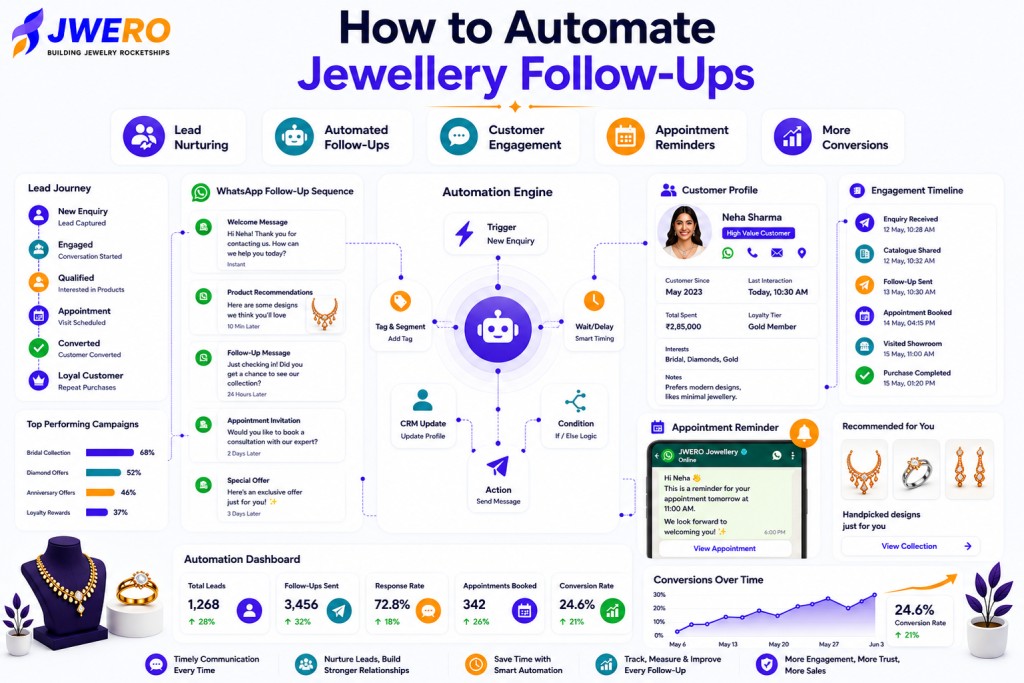
JWERO WhatsApp Automation doesn’t replace conversations.
It protects intent.
Automation enables:
- Behaviour-based WhatsApp triggers
- Context-aware opening messages
- Lead creation before human engagement
- Source and browsing history preservation
- Seamless continuation across days or weeks
Without automation, conversations start blind.
With automation, they start mid-journey.
Integrated systems like JWERO Chats also help jewellery retailers maintain continuity across WhatsApp, Instagram, Facebook, and website interactions.
8. Why Jewellery Brands Must Avoid Instant Sales Chats
Instant sales chats:
- Create pressure
- Shorten trust windows
- Increase ghosting
- Reduce lifetime value
The winning approach is:
Soft entry → contextual help → human timing
WhatsApp should feel like assistance, not pursuit.
Jewellery customers respond better to guided experiences than immediate sales conversations.
9. CXO Insight: Conversations Are Outcomes, Not Objectives
Leadership often asks:
“How many WhatsApp chats did the website generate?”
The better question is:
“How many confident conversations did the website enable?”
Quality conversations:
- Convert faster
- Close larger tickets
- Require less advisor effort
- Build long-term trust
Volume without readiness is expensive.
Intent quality matters more than conversation quantity in jewellery retail.
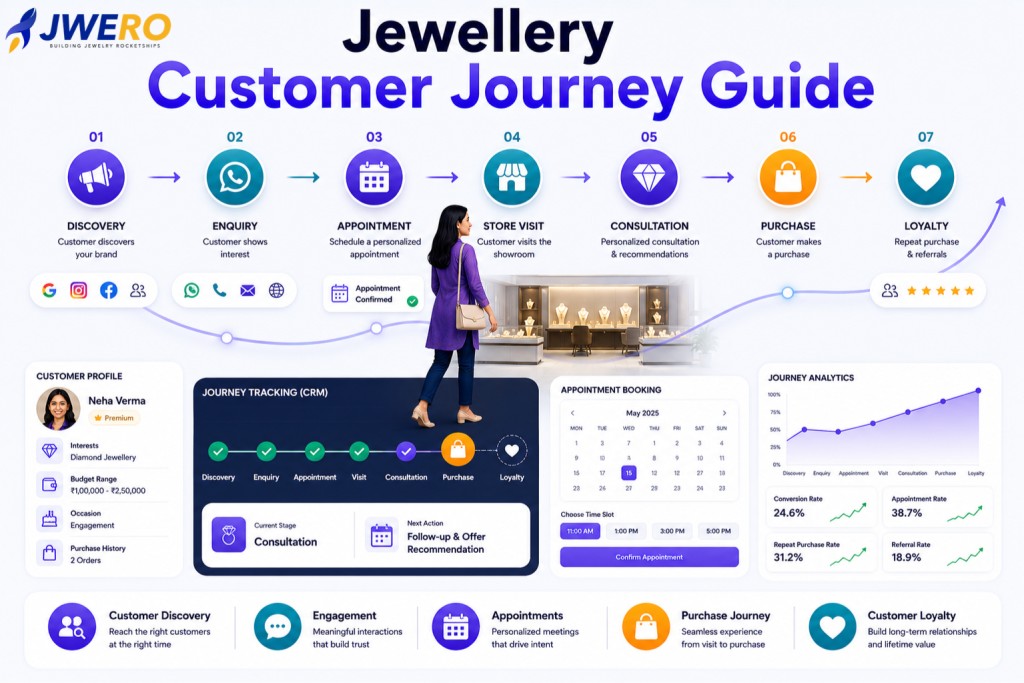
10. The Winning Model: Website → Intent → WhatsApp → Store
The future jewellery journey looks like this:
- Website listens for intent
- Automation recognises readiness
- WhatsApp opens with context
- Advisors engage with clarity
- Stores close with confidence
This is orchestration, not conversion hacking.
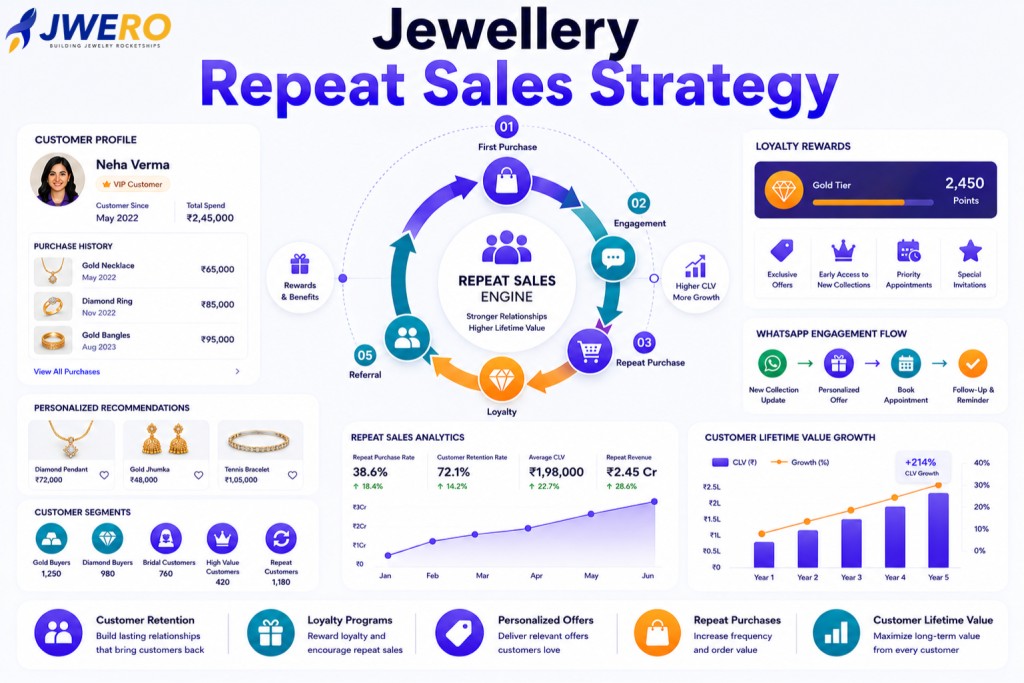
Connected customer journeys are replacing isolated marketing funnels in modern jewellery retail.
Retailers using JWERO.ai gain centralized visibility across website behaviour, WhatsApp conversations, store engagement, and customer intent progression.
Frequently Asked Questions
Why do jewellery website visitors avoid WhatsApp chats?
Because most visitors are still evaluating designs, prices, and trust factors before they feel ready for direct conversations.
What increases WhatsApp conversion on jewellery websites?
Behaviour-based timing, contextual prompts, reassurance-focused messaging, and personalized engagement significantly improve WhatsApp conversion rates.
Why do generic WhatsApp pop-ups fail in jewellery ecommerce?
Because they appear without understanding customer intent, browsing behaviour, or emotional readiness to engage.
How does automation improve website-to-WhatsApp conversion?
Automation tracks customer behaviour, recognizes buying signals, preserves context, and triggers conversations at the right moment.
Why is timing important in jewellery customer engagement?
Jewellery purchases involve emotional and financial consideration. Poor timing creates pressure and reduces trust.
How can jewellery retailers improve online-to-store conversion?
By connecting website behaviour, WhatsApp engagement, and store interactions into one continuous customer journey.
Final Thought
Jewellery customers don’t avoid WhatsApp because they dislike talking. They avoid it because they dislike being rushed.
When websites stop pushing chats
and start inviting conversations at the right moment,
WhatsApp stops feeling like a sales channel
and starts feeling like a natural next step.
That’s when browsing turns into belief —
and belief turns into buying.
Turn Silent Website Visitors Into High-Intent Jewellery Buyers
Discover how JWERO.ai helps jewellery retailers connect website behaviour, WhatsApp engagement, and store journeys through AI-powered customer intent orchestration.
Explore capabilities including:
- Behaviour-based WhatsApp automation
- Omnichannel customer engagement
- Jewellery ecommerce integration
- Context-aware customer journeys
- AI-powered lead nurturing
- Unified customer conversation management
how jewellery websites convert visitors into WhatsApp buyers, why jewellery customers avoid WhatsApp chats initially, best WhatsApp conversion strategy for jewellery retailers, how jewellery ecommerce websites improve customer engagement, how AI improves jewellery website conversions, why jewellery buyers need trust before WhatsApp conversations, behaviour-based WhatsApp automation for jewellery brands, how jewellery retailers increase high-intent conversations, jewellery customer journey from website to store, how jewellery websites reduce customer hesitation