

Why Wishlist Behaviour Predicts Jewellery Purchase Intent
Jewellery brands obsess over enquiries — calls, chats, forms — because they are loud, visible signals.
But the strongest predictor of jewellery purchase is often quiet:
Wishlist behaviour.
Customers who save, shortlist, or wishlist jewellery are not asking questions —
they are making internal decisions.
In long-cycle, high-trust categories like jewellery,
what customers choose to remember matters more than what they choose to ask.
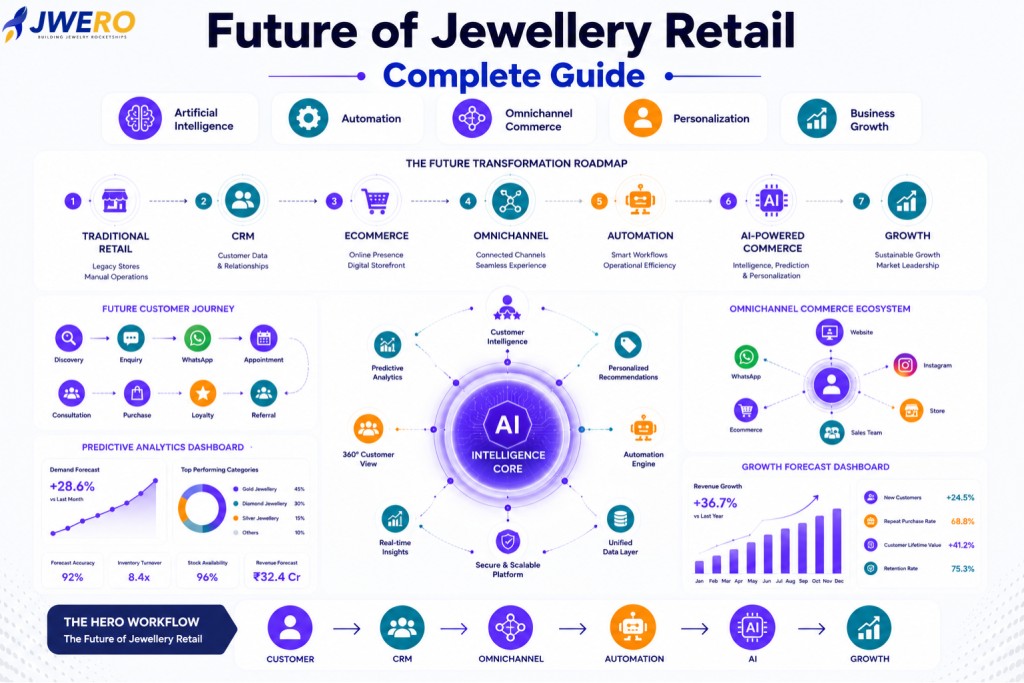
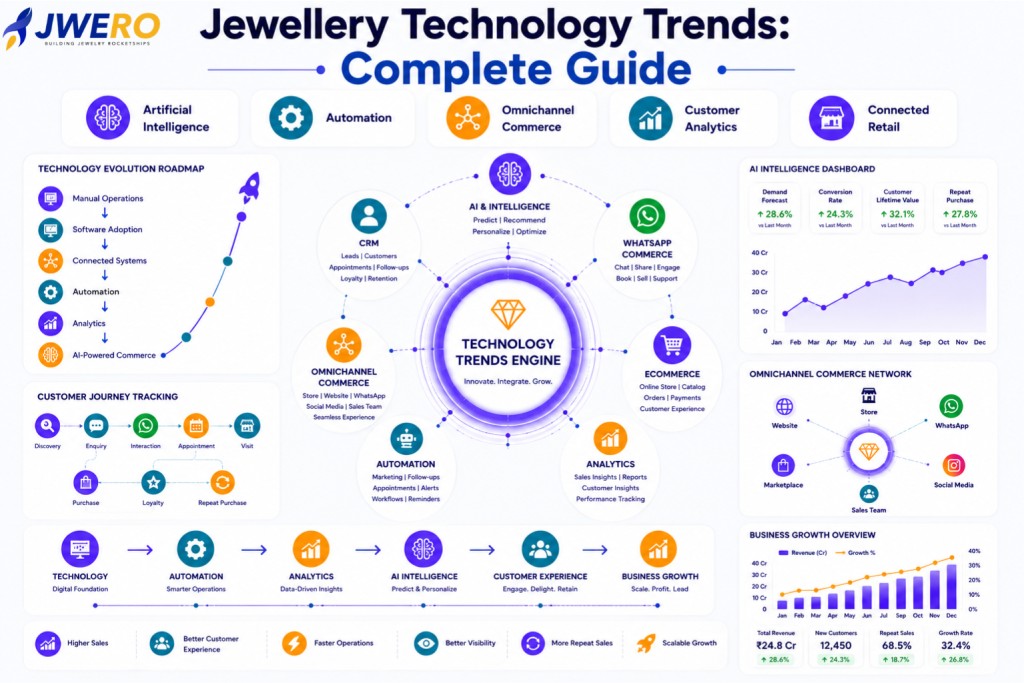
Modern jewellery retailers are increasingly using behaviour-driven engagement systems like JWERO.ai to track customer intent beyond traditional enquiries and form submissions.
Table of Contents
- Why Enquiries Are Overvalued in Jewellery
- Wishlist Behaviour Signals Internal Commitment
- Why Jewellery Buyers Wishlist Instead of Enquire
- Enquiry Intent vs Wishlist Intent
- Why Wishlist Behaviour Converts Better Over Time
- The CRM Mistake: Ignoring Silent Signals
- How Smart Jewellery Brands Use Wishlist Data
- Wishlist → WhatsApp → Store: The Natural Path
- CXO Insight: Silence Is Not Inaction
- The Strategic Shift: From Enquiries to Intent Signals
- Final Thought
1. Why Enquiries Are Overvalued in Jewellery
Enquiries feel important because they:
- Demand attention
- Trigger conversations
- Create urgency
- Appear “sales-ready”
But enquiries often happen:
- Too early
- Out of curiosity
- Under social pressure
- Without internal clarity
- Before family alignment
They signal interaction, not commitment.
This is why many jewellery businesses mistake activity for actual purchase readiness.
2. Wishlist Behaviour Signals Internal Commitment
When a customer:
- Saves a design
- Adds to wishlist
- Bookmarks a product
- Re-views the same piece repeatedly
They are doing something more important than enquiring:
They are narrowing choice.
In jewellery, narrowing choice is the hardest part of the journey.
Wishlist behaviour often reflects emotional alignment long before direct conversations begin.
Retailers using systems like JWERO Ecommerce gain deeper visibility into silent customer intent signals across digital storefronts.
3. Why Jewellery Buyers Wishlist Instead of Enquire
Customers wishlist because:
- They don’t want sales pressure yet
- They are comparing quietly
- Family discussions are ongoing
- Budget alignment is in progress
- Timing isn’t final
Wishlist behaviour says:
“This is important enough to remember.”
That’s a stronger signal than:
“Tell me more.”
Jewellery customers often prefer silent evaluation before direct engagement, especially in high-value purchase journeys.
4. Enquiry Intent vs Wishlist Intent
| Signal | What It Indicates |
|---|---|
| Enquiry | Curiosity, uncertainty |
| Wishlist | Preference, evaluation |
| Repeat wishlist views | Shortlisting |
| Wishlist → store locator | Readiness |
| Wishlist after Instagram | Brand confidence |
| Wishlist after price checks | Budget alignment |
Enquiries ask questions.
Wishlists answer them internally.
This distinction is critical for jewellery retailers trying to identify high-intent buyers early.
5. Why Wishlist Behaviour Converts Better Over Time
Wishlist users:
- Return more often
- Compare fewer alternatives
- Convert with less persuasion
- Purchase higher-ticket items
- Show stronger brand loyalty
They don’t need convincing.
They need timing and reassurance.
Intent-based customer journeys consistently outperform aggressive lead-chasing strategies in jewellery retail.
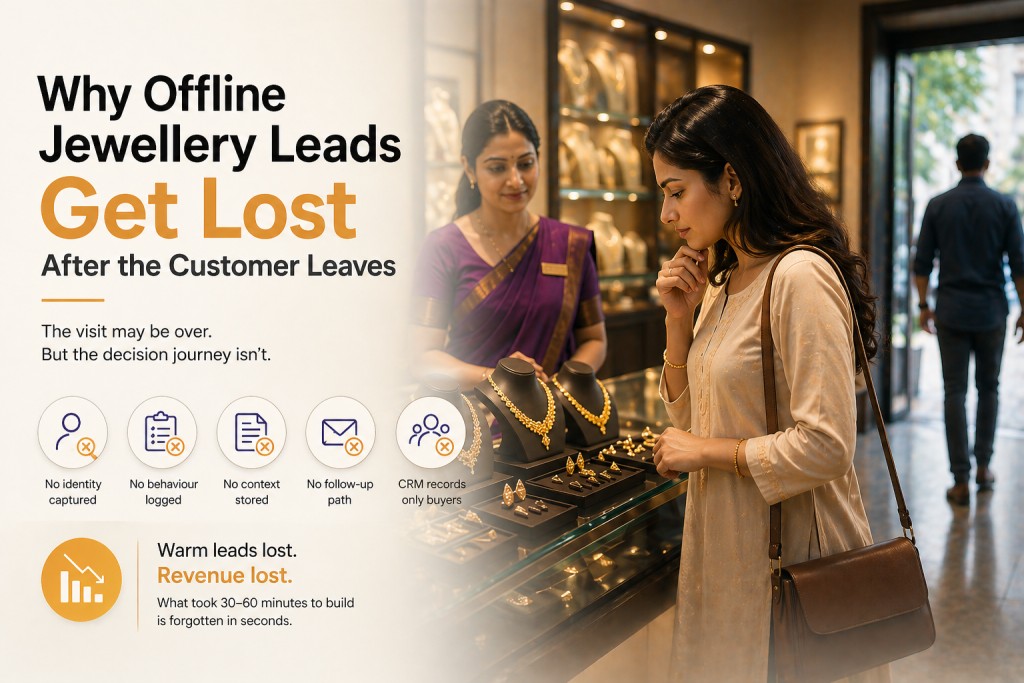
6. The CRM Mistake: Ignoring Silent Signals
Most CRMs:
- Log enquiries instantly
- Prioritise chats and calls
- Ignore wishlist behaviour
- Treat browsers as anonymous
This causes teams to:
- Chase weak intent
- Miss strong silent intent
- Engage too early
- Apply pressure prematurely
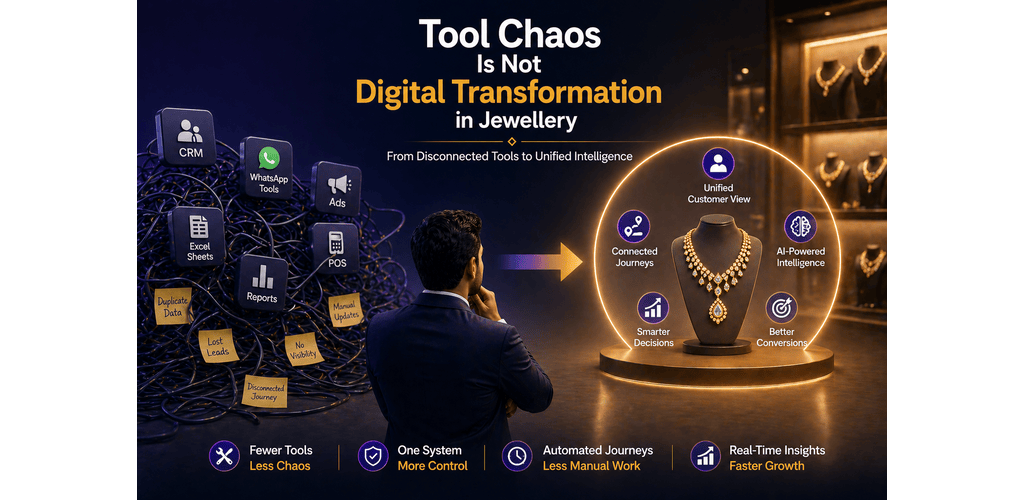
The system rewards noise — not readiness.
Modern jewellery CRM systems increasingly require behavioural intelligence instead of relying only on direct enquiries.
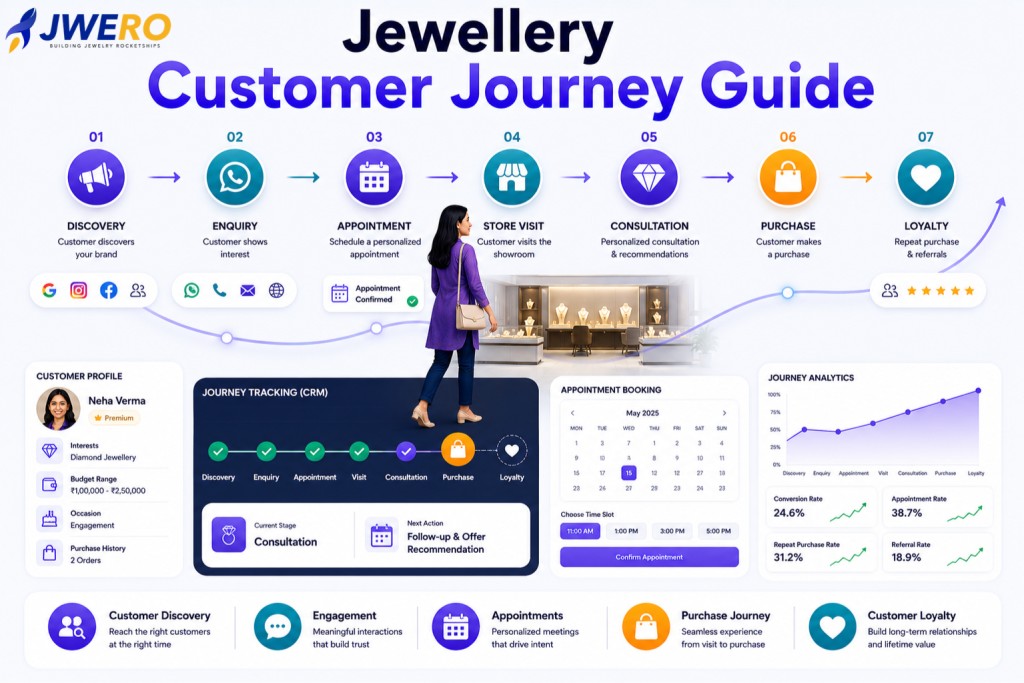
Platforms like JWERO CRM help jewellery retailers unify customer behaviour, engagement history, and intent tracking into a connected journey view.
7. How Smart Jewellery Brands Use Wishlist Data
Smart brands:
- Treat wishlists as intent escalation
- Track frequency and recency
- Combine wishlist and browsing patterns
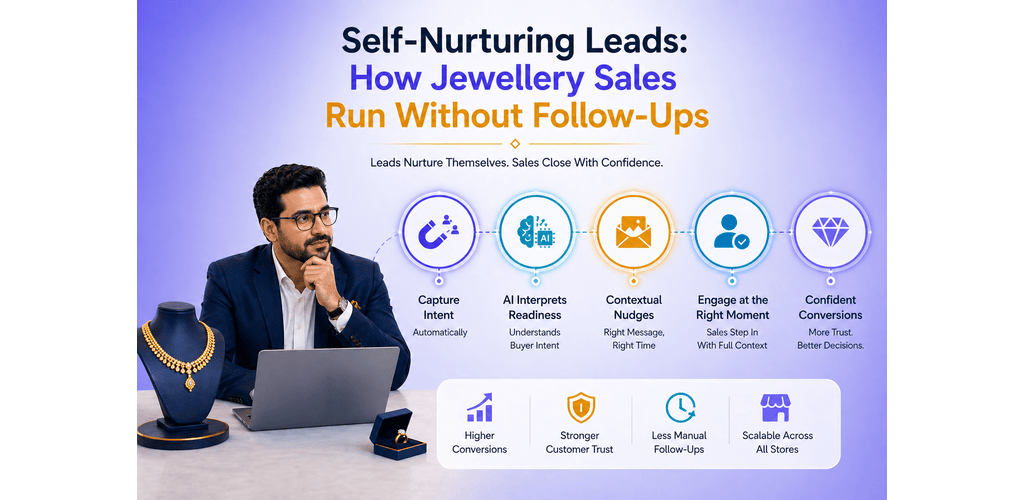
- Trigger soft nudges, not calls
- Alert advisors only when confidence peaks
Wishlist behaviour becomes a timing signal, not a sales trigger.
This reduces customer pressure while improving engagement quality.
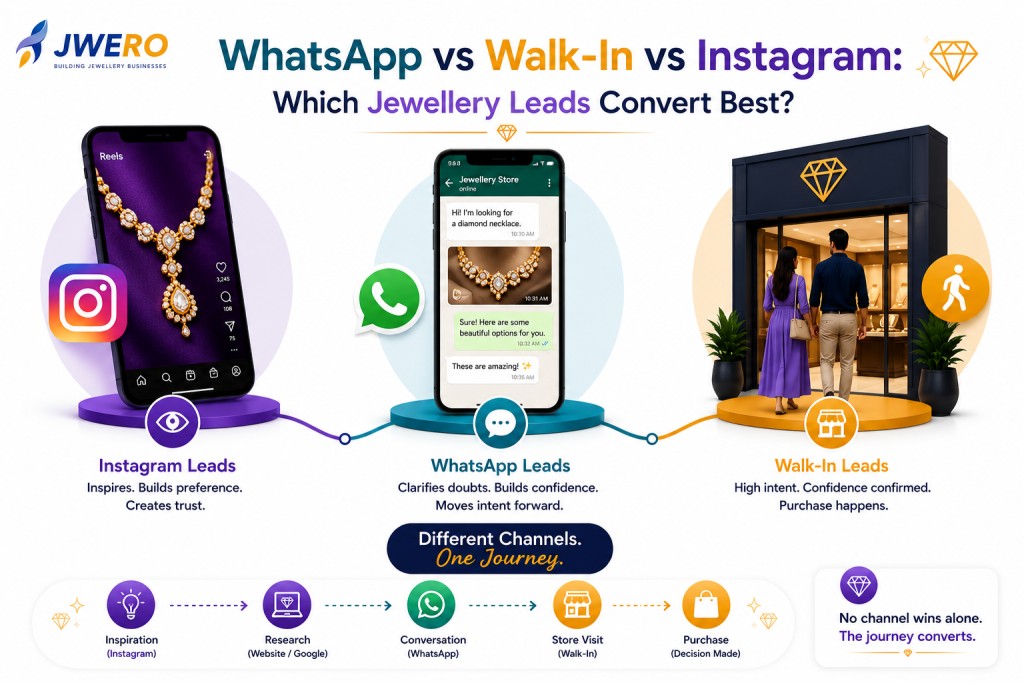
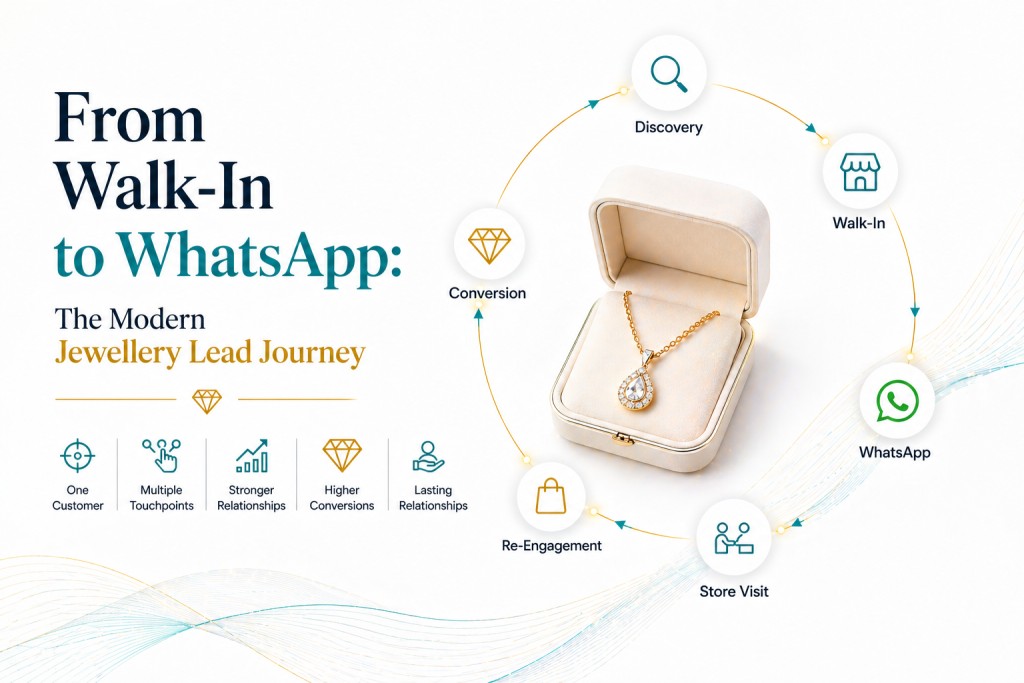
8. Wishlist → WhatsApp → Store: The Natural Path
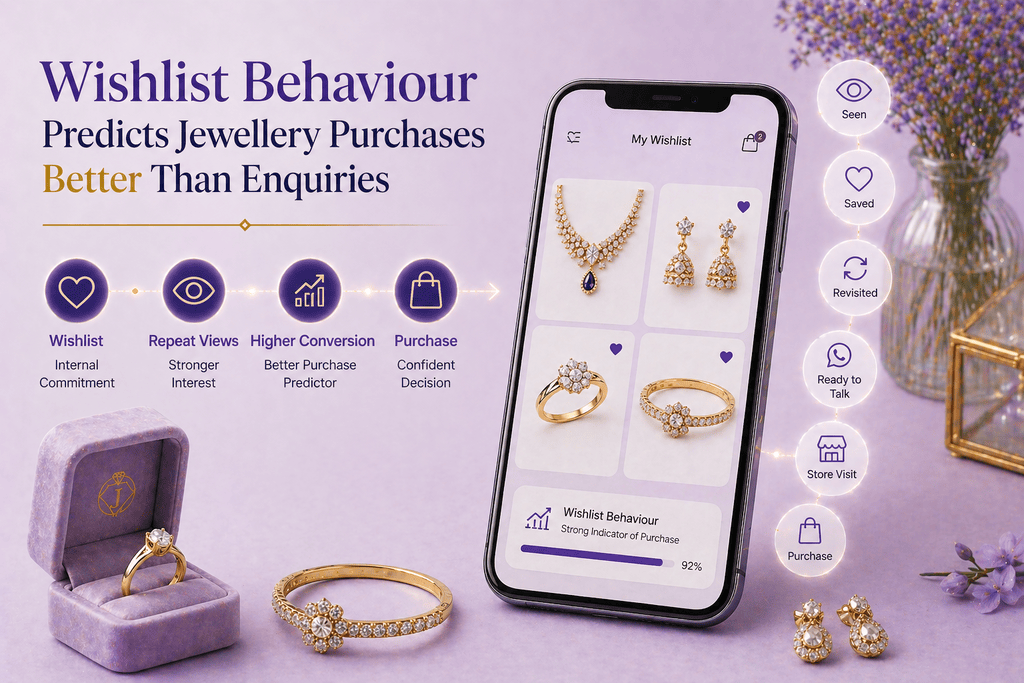
The highest-converting journeys often look like:
- Instagram exposure
- Website browsing
- Wishlist creation
- Silent return visits
- WhatsApp clarification
- Store visit
- Purchase
Enquiries may appear —
but wishlists shape the decision long before that.
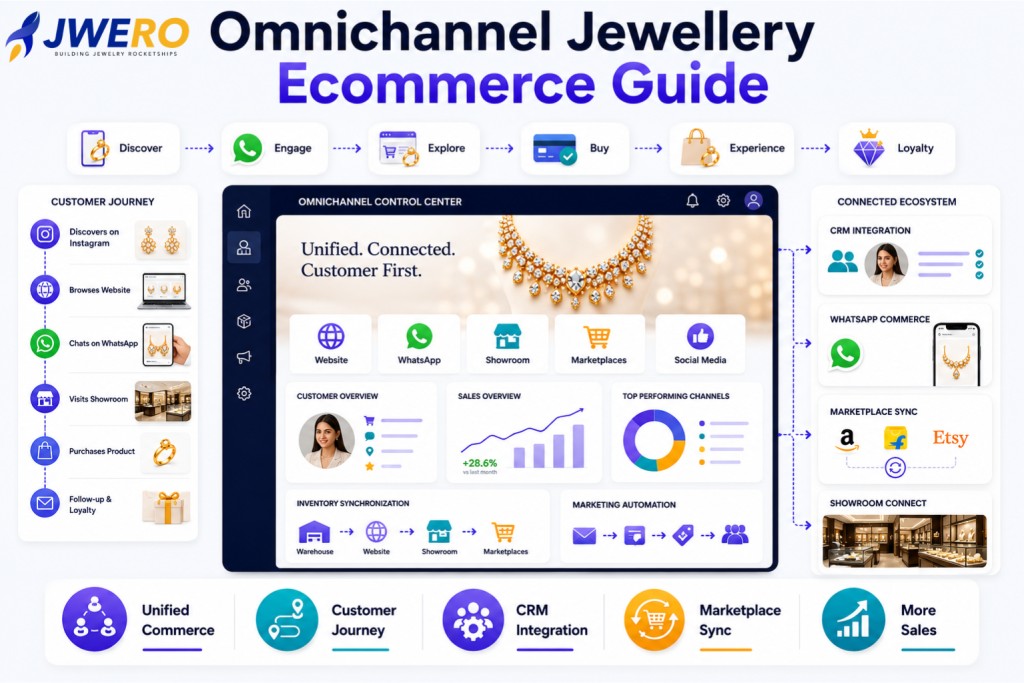
Connected engagement ecosystems like JWERO Chats help jewellery retailers maintain continuity across WhatsApp, Instagram, Facebook, and website interactions.
9. CXO Insight: Silence Is Not Inaction
Leadership often asks:
“Why didn’t this customer enquire?”
The better question is:
“What signals did they give without speaking?”
In jewellery:
- Silence often means deliberation
- Saving means preference
- Returning means confidence building
Ignoring this leads to reactive growth.
Tracking it enables predictive growth.
This is where behavioural intelligence becomes more valuable than raw enquiry volume.
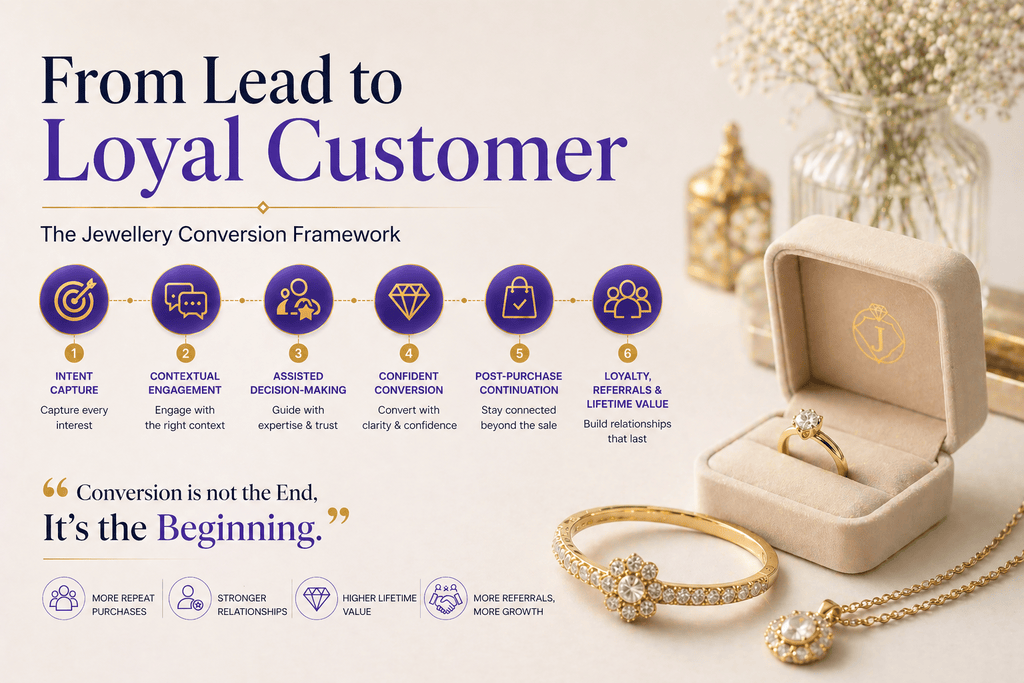
10. The Strategic Shift: From Enquiries to Intent Signals
The future jewellery CRM prioritises:
- Behaviour over messages
- Patterns over pings
- Confidence over contact
- Timing over volume
Wishlists are not passive features.
They are decision breadcrumbs.
AI-powered systems like JWERO.ai help jewellery retailers interpret these behavioural signals and orchestrate customer engagement at the right moment.
Frequently Asked Questions
Why is wishlist behaviour important in jewellery retail?
Because wishlist actions often indicate emotional preference, shortlisting behaviour, and purchase consideration long before customers directly enquire.
Do wishlists convert better than enquiries?
In many jewellery journeys, yes. Wishlist users often show stronger buying intent, higher return frequency, and better conversion quality over time.
Why do jewellery customers avoid enquiring immediately?
Because they are still comparing options, discussing budgets, aligning with family decisions, and building confidence privately.
How can jewellery retailers use wishlist data effectively?
By tracking browsing patterns, repeat visits, intent escalation, and timing signals instead of treating wishlists as passive website activity.
How does AI improve jewellery intent tracking?
AI identifies behavioural patterns, tracks silent buying signals, and helps retailers engage customers when confidence and readiness are highest.
Why do traditional CRMs miss high-intent jewellery buyers?
Because most CRMs prioritize direct interactions like calls and chats while ignoring behavioural signals such as wishlists and repeat browsing.
Final Thought
Jewellery buyers don’t rush to ask questions. They quietly decide what matters first.
Wishlist behaviour reveals what a customer is emotionally committing to —
long before they are ready to talk.
Brands that learn to read these silent signals
stop chasing interest
and start showing up exactly when intent is strongest.
That’s when conversion feels effortless —
and trust stays intact.
Turn Silent Jewellery Browsing Into High-Intent Customer Journeys
Discover how JWERO.ai helps jewellery retailers track wishlist behaviour, identify purchase intent, and orchestrate customer engagement using AI-powered behavioural intelligence.
Explore capabilities including:
- Behaviour-based customer tracking
- AI-powered intent recognition
- Omnichannel customer engagement
- Wishlist and browsing analytics
- WhatsApp engagement automation
- Unified jewellery customer journeys
why wishlist behaviour matters in jewellery retail, how jewellery retailers track purchase intent, why jewellery wishlists convert better than enquiries, how AI improves jewellery customer intent tracking, best jewellery CRM strategy for silent buyers, how jewellery ecommerce websites identify high-intent customers, why jewellery buyers save products before enquiring, how jewellery retailers improve conversion timing, behavioural signals in jewellery customer journey, how jewellery brands use wishlist data for conversions