

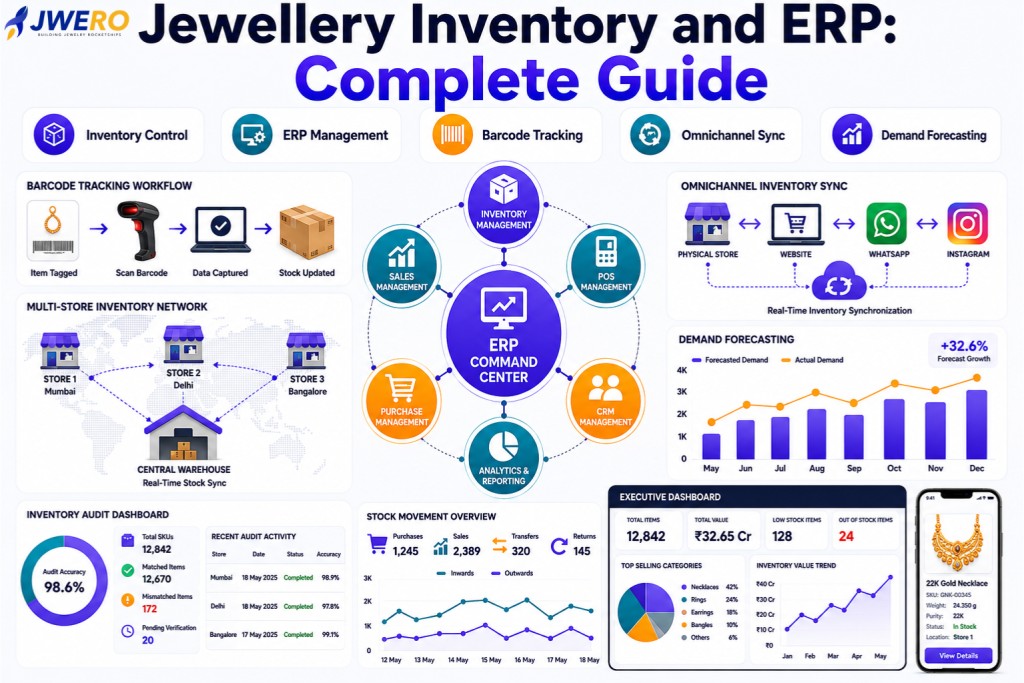
Inventory is the backbone of every jewellery business.
Whether you operate a single showroom or multiple stores, accurate inventory management directly impacts:
- Revenue
- Cash Flow
- Customer Experience
- Operational Efficiency
- Profitability
As jewellery businesses grow, spreadsheets and manual stock tracking become difficult to manage.
This is where Jewellery Inventory Management and ERP systems become essential.
This guide explains everything jewellers need to know about inventory management, ERP software, stock tracking, audits, barcode systems, omnichannel inventory, and demand forecasting.
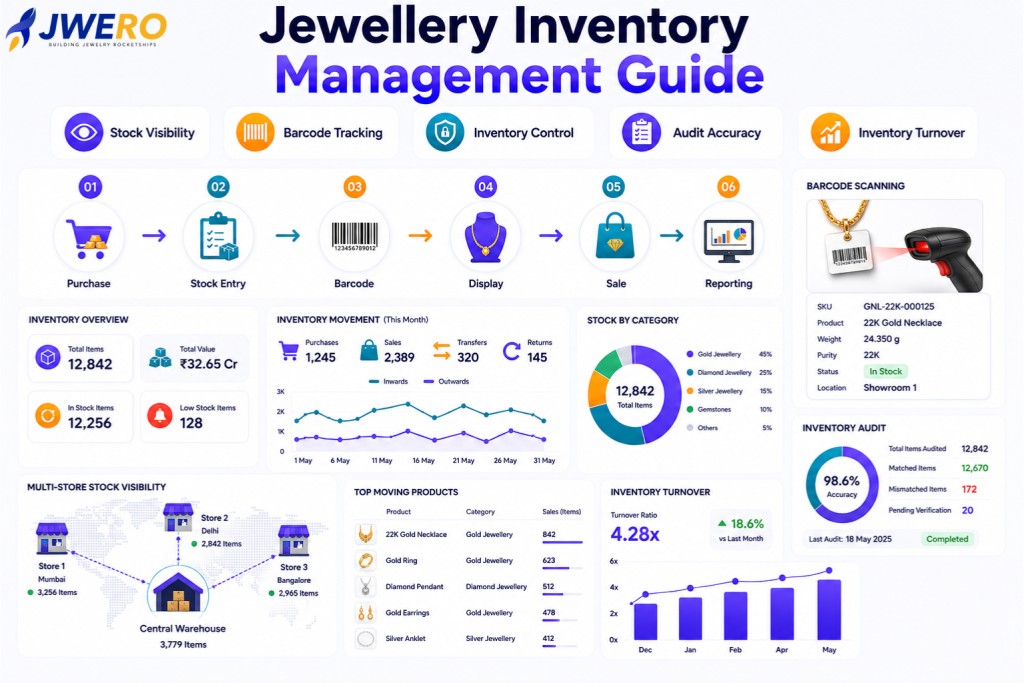
What is Jewellery Inventory Management?
Jewellery inventory management is the process of tracking and controlling:
- Gold Jewellery
- Diamond Jewellery
- Silver Jewellery
- Precious Stones
- Loose Diamonds
- Custom Orders
- Finished Goods
The goal is complete inventory visibility.
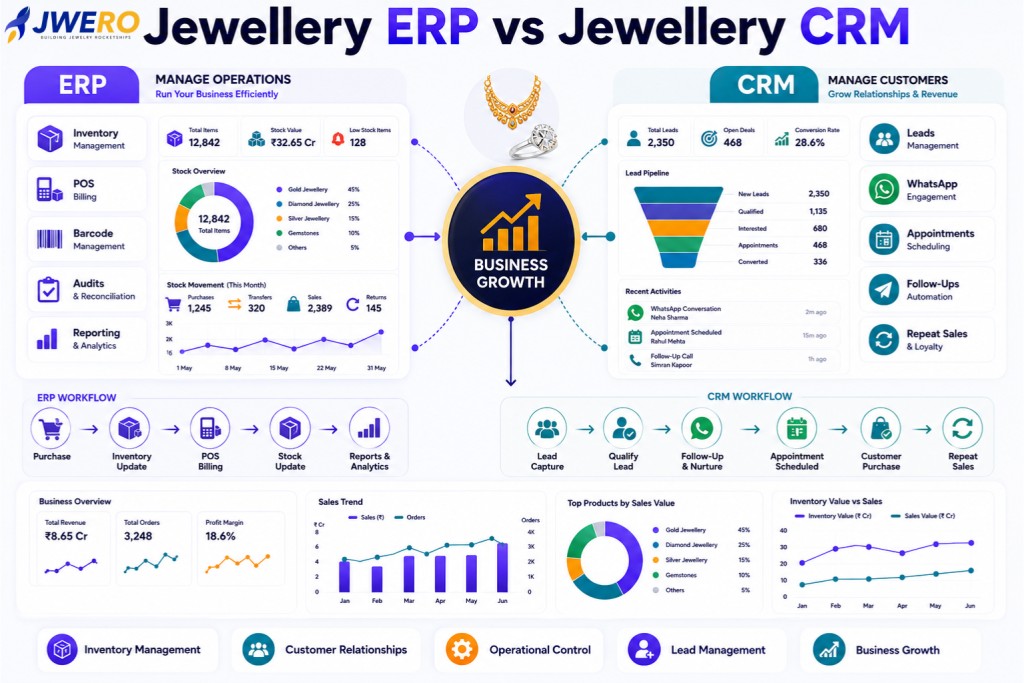
What is a Jewellery ERP?
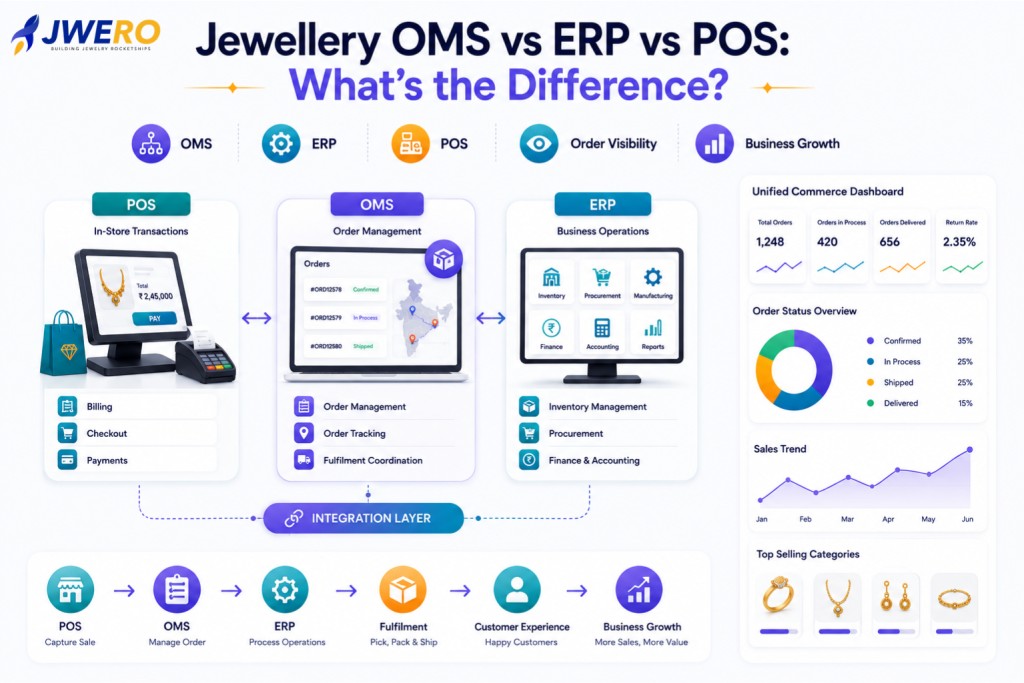
ERP (Enterprise Resource Planning) software connects multiple business functions into a single system.
Typical ERP modules include:
- Inventory Management
- Billing & POS
- Purchase Management
- Sales Management
- Vendor Management
- Customer Management
- Reporting & Analytics
- Multi-Store Operations
ERP becomes the operational backbone of the business.
Why Inventory Management Matters
Poor inventory management can cause:
- Stock Losses
- Dead Inventory
- Over-Stocking
- Under-Stocking
- Billing Errors
- Customer Dissatisfaction
Accurate inventory improves profitability.
Core Components of Jewellery Inventory Management
Inventory Tracking
Track:
- Product Details
- Weight
- Purity
- Metal Type
- Stone Details
- SKU
- Barcode
Every product should be traceable.
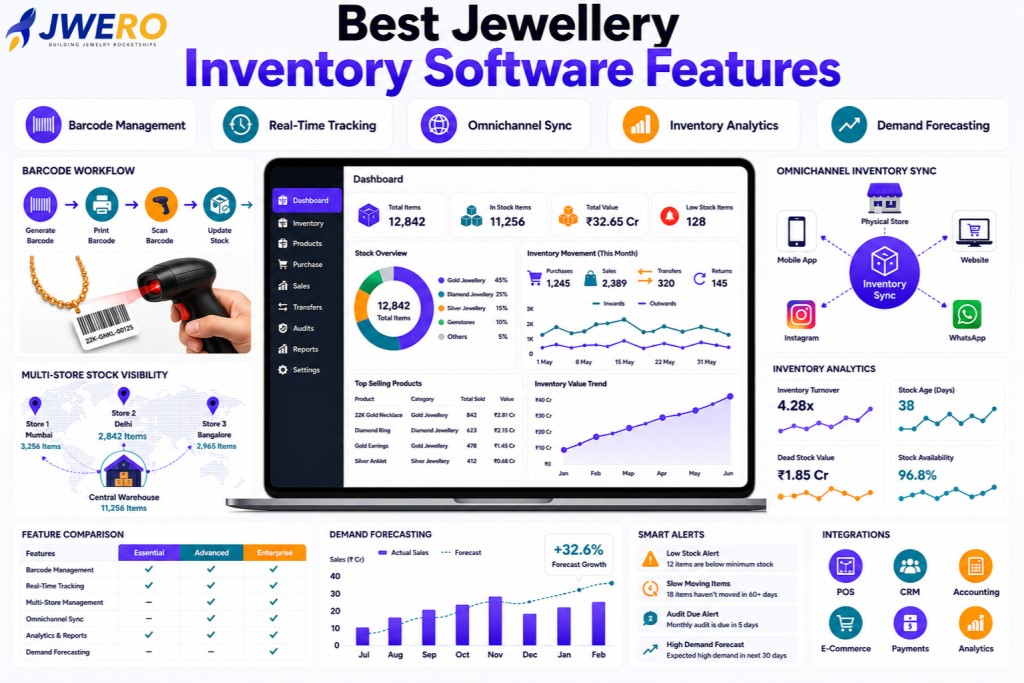
Barcode Inventory Management
Barcode systems help:
- Speed Up Billing
- Improve Accuracy
- Simplify Audits
- Reduce Human Error
- Improve Inventory Visibility
Barcode tracking has become standard practice.
Stock Movement Tracking
Track:
- Purchases
- Transfers
- Sales
- Returns
- Repairs
- Manufacturing Movements
Visibility reduces inventory discrepancies.
Multi-Store Inventory Management
Retailers operating multiple locations need:
- Centralized Inventory
- Inter-Store Transfers
- Store-Wise Visibility
- Real-Time Stock Updates
Multi-location control improves efficiency.
Jewellery ERP Modules
Inventory Module
Manage:
- Stock Levels
- Product Tracking
- Barcode Management
- Audits
- Inventory Reports
POS Module
Supports:
- Billing
- GST Compliance
- Customer Profiles
- Payment Tracking
- Sales Reporting
CRM Module
Track:
- Leads
- Customers
- Appointments
- Follow-Ups
- Purchase History
Analytics Module
Provides:
- Sales Reports
- Inventory Reports
- Customer Reports
- Staff Reports
- Profitability Analysis
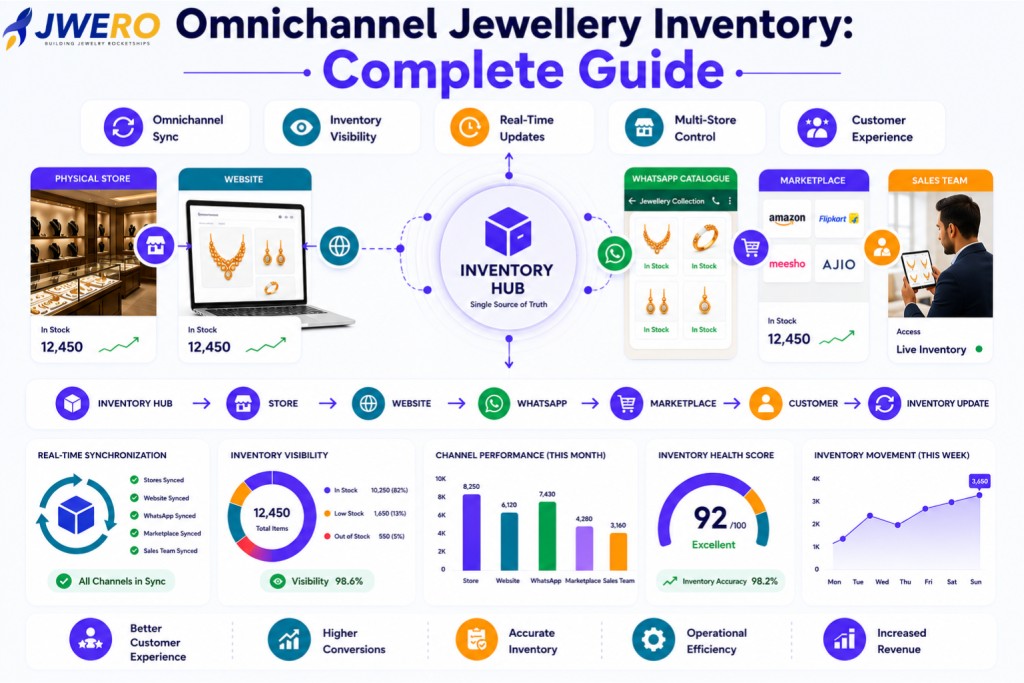
Omnichannel Inventory Management
Modern jewellers sell through:
- Physical Stores
- Ecommerce Websites
- Marketplaces
Inventory should remain synchronised across all channels.
Inventory Sync Across Channels
A modern inventory system should synchronise:
Store
↓
Website
↓
WhatsApp Catalogue
↓
Sales Team
↓
Customers
Real-time sync improves customer experience.
Jewellery Inventory KPIs
Track:
- Inventory Turnover
- Stock Age
- Dead Inventory
- Sell-Through Rate
- Stock Availability
- Fast-Moving Products
- Slow-Moving Products
These KPIs improve inventory efficiency.
Inventory Audit Best Practices
Conduct audits to:
- Verify Stock
- Identify Variances
- Reduce Shrinkage
- Improve Accuracy
- Improve Compliance
Regular audits protect profitability.
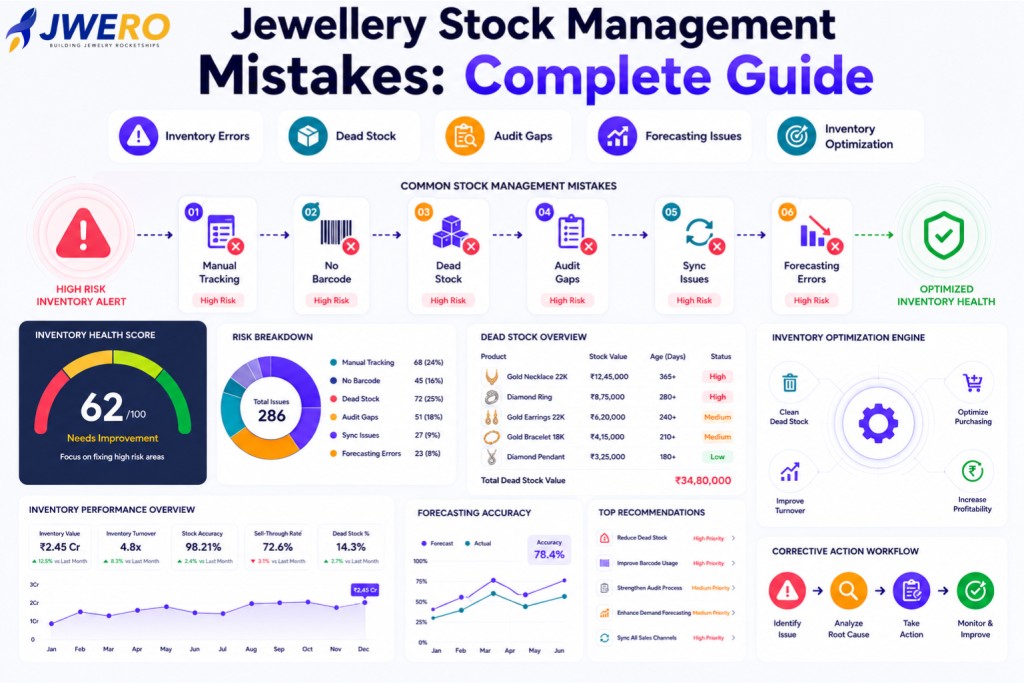
Common Inventory Management Mistakes
- Manual Tracking
- No Barcode System
- No Audits
- No Inventory Analytics
- No Channel Sync
- No Demand Forecasting
These mistakes create operational risks.
Demand Forecasting for Jewellers
Forecasting helps businesses predict:
- Seasonal Demand
- Wedding Season Demand
- Diwali Demand
- Akshaya Tritiya Demand
- Collection Performance
Forecasting improves purchasing decisions.
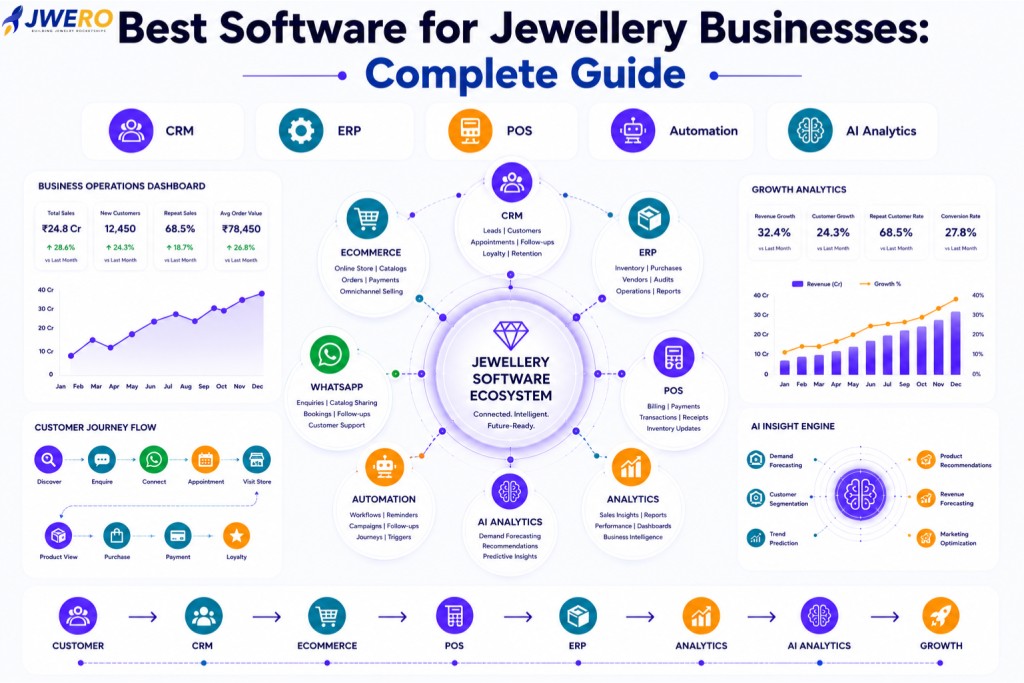
Inventory + ERP + CRM = Complete Visibility
The most successful jewellers connect:
- Inventory
- Sales
- POS
- CRM
- Analytics
into one ecosystem.
This creates a unified view of the business.
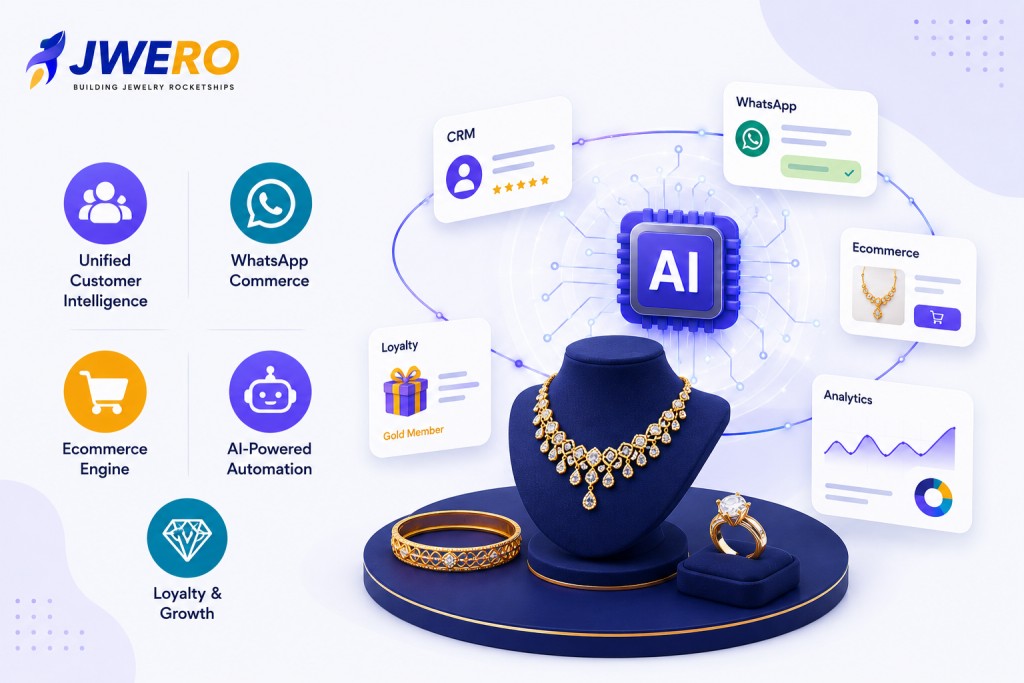
How Jwero Supports Inventory-Driven Growth
Jwero helps jewellers by connecting:
- CRM
- Leads
- Appointments
- Customer Journeys
- Sales Analytics
- Omnichannel Engagement
With inventory-aware customer experiences.
This helps retailers align stock visibility with customer demand.
Benefits of Modern Jewellery ERP Systems
- Better Inventory Control
- Faster Billing
- Improved Accuracy
- Better Customer Experience
- Stronger Reporting
- Multi-Store Visibility
- Omnichannel Operations
- Higher Profitability
Final Thoughts
Inventory is one of the largest investments for any jewellery retailer.
Businesses that implement modern inventory management and ERP systems gain:
- Better visibility
- Better control
- Faster operations
- Improved customer experiences
- Higher profitability
The future of jewellery retail lies in connected inventory, ERP, CRM, and omnichannel systems.
Frequently Asked Questions
What is jewellery inventory management?
Jewellery inventory management is the process of tracking, controlling, auditing, and optimising jewellery stock.
What is a jewellery ERP?
An ERP system connects inventory, billing, sales, CRM, reporting, and operations into one platform.
Why is barcode inventory important?
Barcode inventory is important because it improves accuracy, billing speed, stock visibility, and audit efficiency.
What is omnichannel inventory management?
Managing inventory across stores, websites, WhatsApp, and other sales channels from a single system is called Omnichannel inventory management.
How often should inventory audits be conducted?
Most jewellery retailers perform monthly, quarterly, and annual audits.
What is inventory turnover?
A KPI that measures how quickly inventory is sold and replenished is called Inventory turnover.