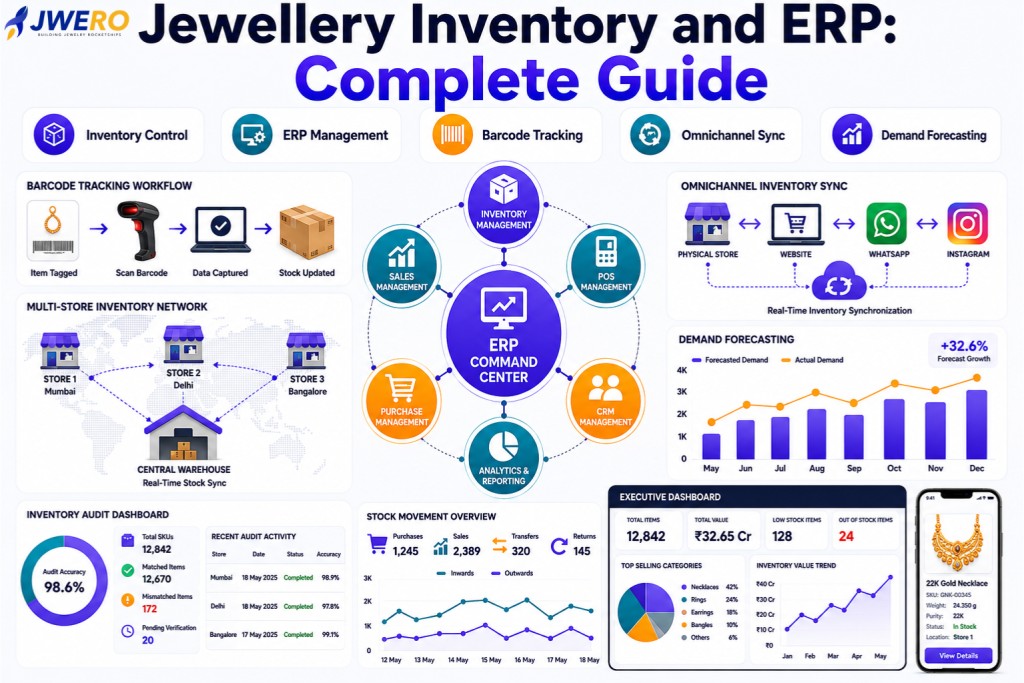


Inventory is one of the largest investments for any jewellery retailer.
Whether you sell gold, diamonds, silver, or custom jewellery, inventory directly impacts:
- Revenue
- Cash Flow
- Customer Satisfaction
- Profitability
- Operational Efficiency
Poor inventory management can lead to stock shortages, dead inventory, billing issues, and lost sales opportunities.
This guide explains how modern jewellery retailers can manage inventory effectively.
What is Jewellery Inventory Management?
Jewellery inventory management is the process of tracking, controlling, and optimising stock throughout its lifecycle.
This includes:
- Product Creation
- Stock Entry
- Inventory Tracking
- Sales
- Transfers
- Returns
- Audits
- Reporting
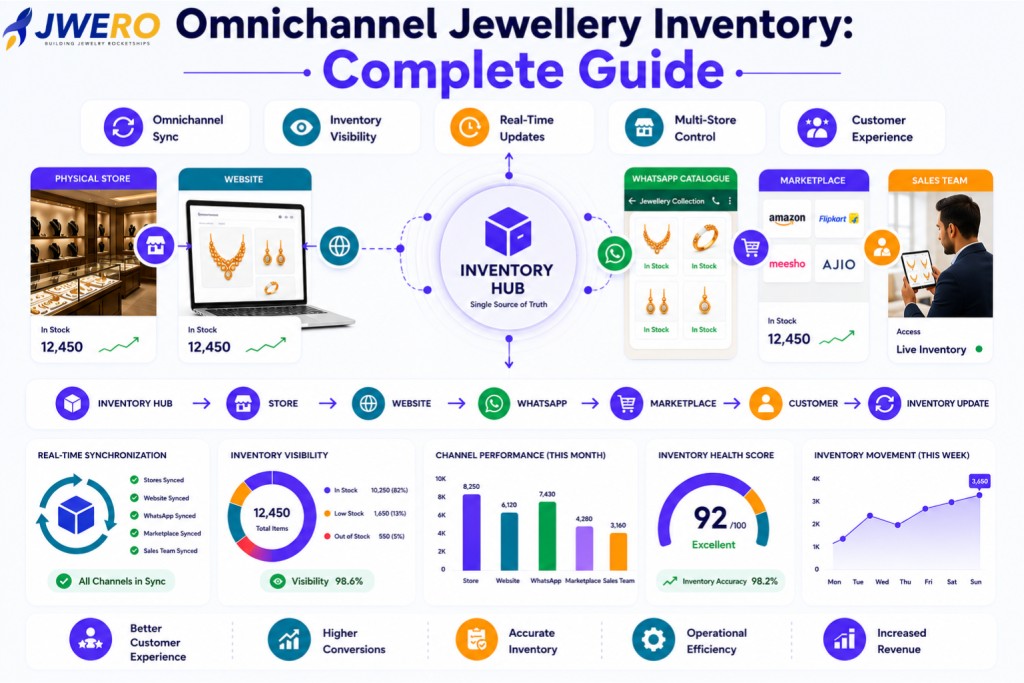
The goal is complete inventory visibility.
Why Inventory Management Matters
Proper inventory management helps retailers:
- Reduce Stock Losses
- Improve Accuracy
- Increase Sales
- Improve Customer Experience
- Reduce Dead Stock
- Improve Cash Flow
Inventory directly affects profitability.
Types of Jewellery Inventory
Most retailers manage:
- Gold Jewellery
- Diamond Jewellery
- Silver Jewellery
- Precious Stones
- Loose Diamonds
- Bridal Collections
- Custom Orders
Every category should be tracked separately.
Essential Inventory Data
Every product record should include:
- SKU
- Product Name
- Category
- Metal Type
- Purity
- Weight
- Stone Details
- Barcode
- Purchase Cost
- Selling Price
Accurate data improves visibility.
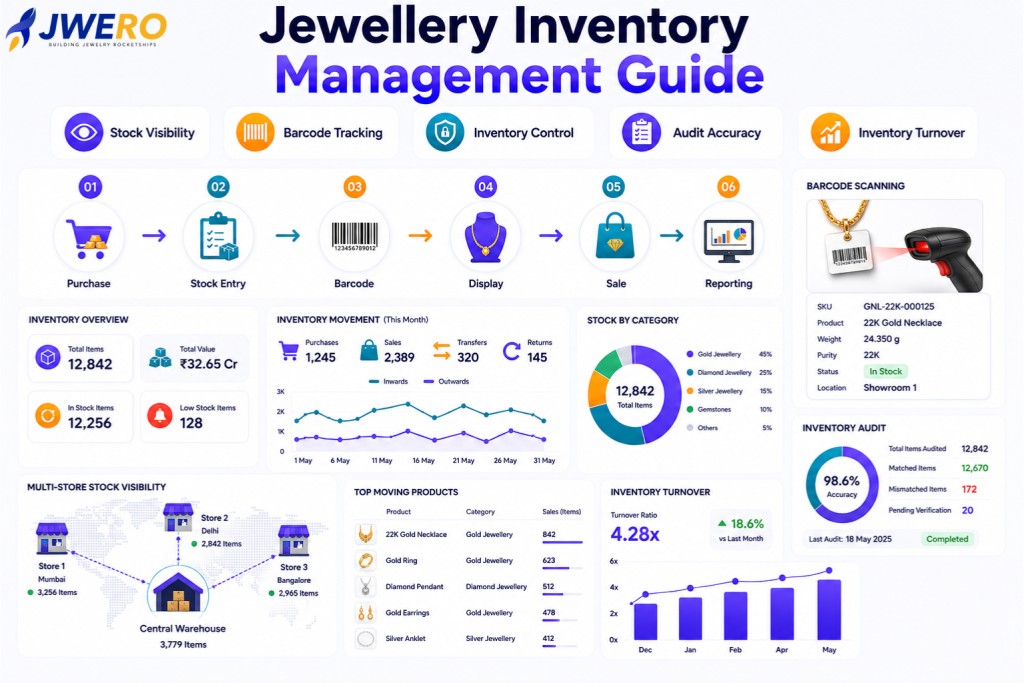
Inventory Lifecycle
Purchase
↓
Stock Entry
↓
Barcode Assignment
↓
Store Display
↓
Sale
↓
Customer Purchase
↓
↓
Reporting
Every movement should be recorded.
Inventory Tracking Best Practices
Track inventory in real time.
Monitor:
- Stock Availability
- Stock Movements
- Product Locations
- Transfers
- Returns
- Damaged Items
Visibility reduces discrepancies.
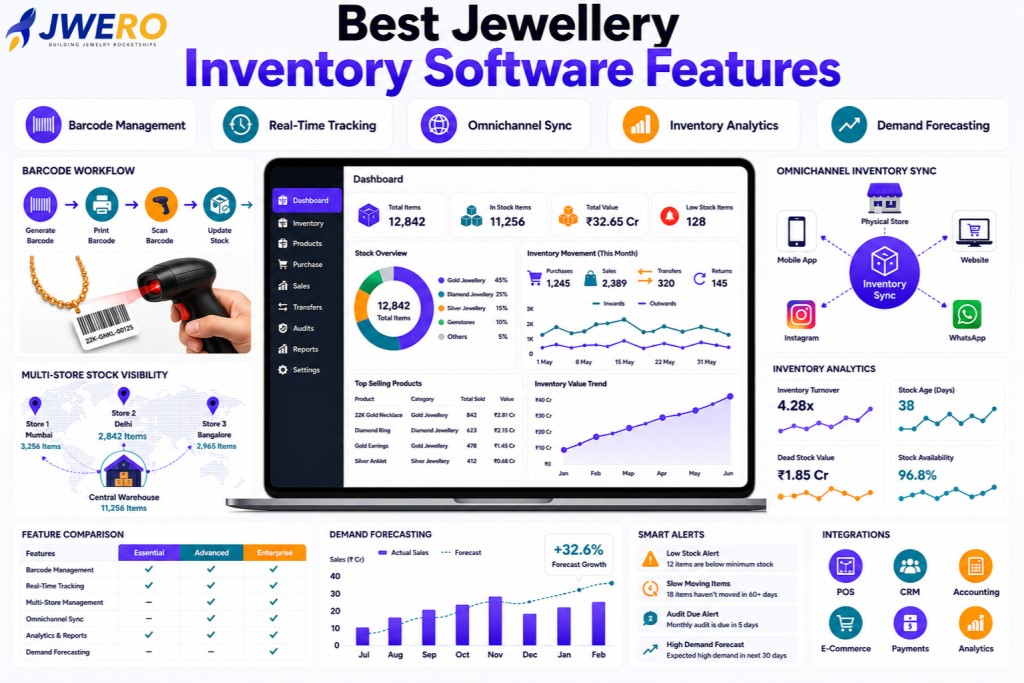
Barcode-Based Inventory Management
Barcode systems help retailers:
- Improve Accuracy
- Speed Up Billing
- Simplify Audits
- Reduce Human Error
- Improve Product Tracking
Barcode tracking is now a standard requirement.
Inventory Categorization
Group inventory based on:
- Product Type
- Metal Type
- Collection
- Occasion
- Price Range
- Demand Level
Categorisation improves analysis.
Inventory KPIs Every Jeweller Should Track
- Inventory Turnover
- Stock Age
- Dead Inventory
- Sell-Through Rate
- Fast-Moving Products
- Slow-Moving Products
- Stock Availability
These metrics improve decision-making.
Managing Dead Inventory
Dead inventory includes products that remain unsold for extended periods.
Solutions:
- Product Promotions
- Bundling
- Discount Campaigns
- Inventory Transfers
- Collection Refreshes
Reducing dead stock improves cash flow.
Multi-Store Inventory Management
For retailers with multiple stores:
- Centralise Inventory Data
- Track Store-Level Stock
- Monitor Transfers
- Maintain Real-Time Visibility
Centralised inventory improves efficiency.
Inventory Audits
Regular audits help:
- Verify Stock Accuracy
- Detect Variances
- Prevent Losses
- Improve Compliance
- Improve Reporting
Audits are essential for inventory health.
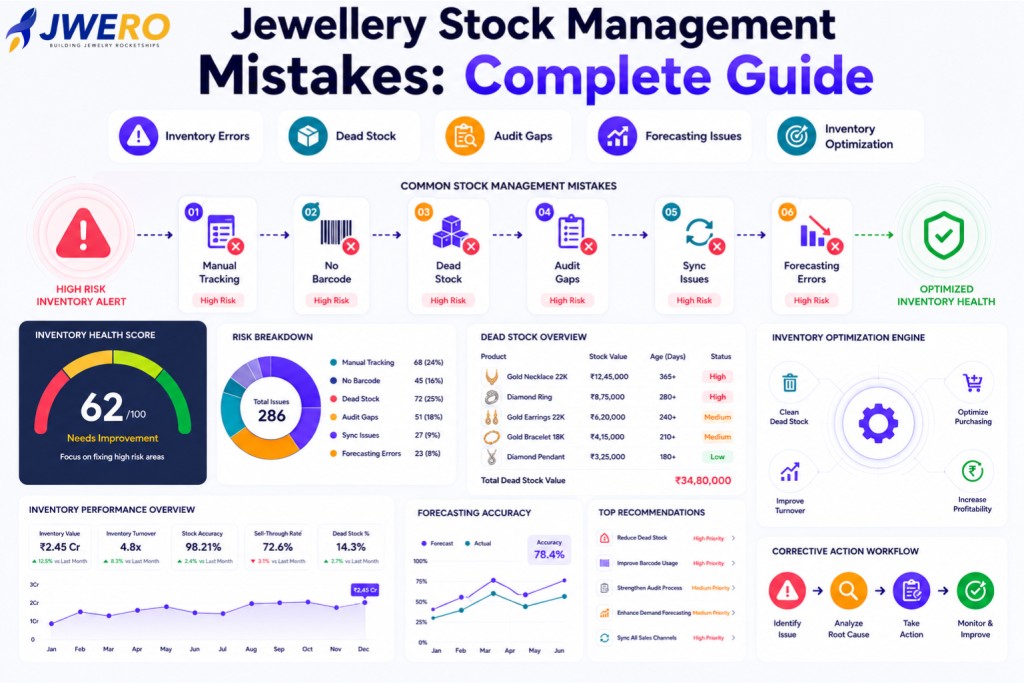
Common Inventory Management Mistakes
- Manual Tracking
- No Barcode System
- Poor Categorization
- No Audits
- No Inventory KPIs
- Delayed Stock Updates
These issues reduce profitability.
How Technology Improves Inventory Management
Modern systems help retailers:
- Track Inventory in Real Time
- Automate Updates
- Generate Reports
- Manage Multiple Stores
- Improve Accuracy
Technology improves operational efficiency.
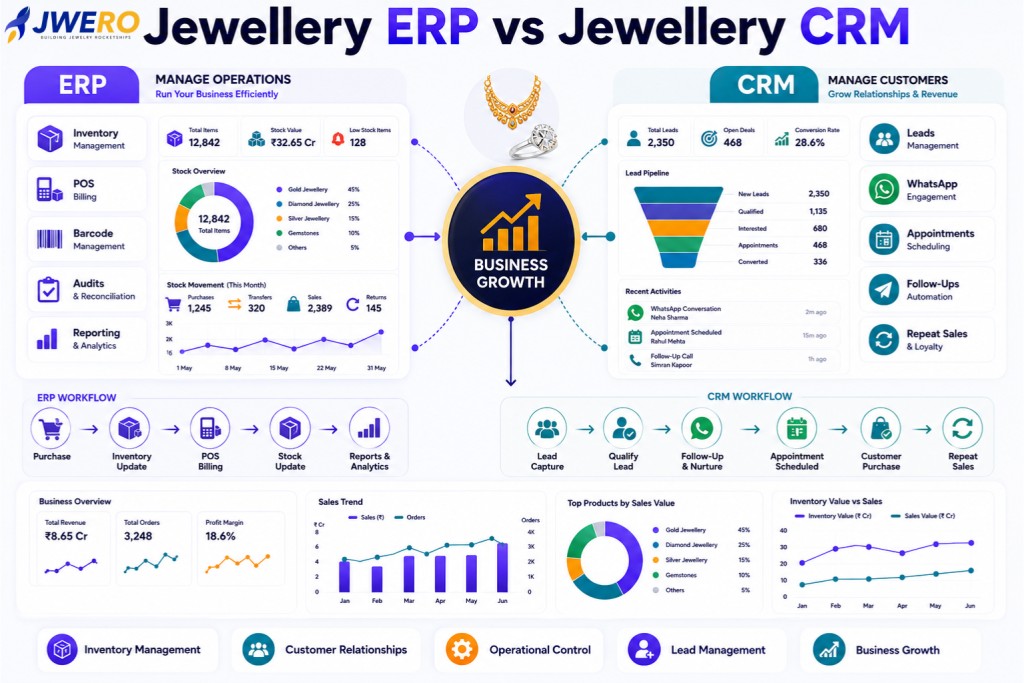
How Jwero Supports Inventory-Driven Growth
While inventory systems manage stock, Jwero helps retailers connect inventory demand with:
- CRM
- Customer Journeys
- Appointments
- Lead Management
- Sales Analytics
- Omnichannel Engagement
This creates better customer experiences and higher sales opportunities.
Final Thoughts
Inventory management is more than stock tracking.
It is a critical business function that impacts profitability, customer satisfaction, and operational efficiency.
Jewellers that invest in structured inventory management systems gain:
- Better visibility
- Better control
- Higher inventory turnover
- Improved cash flow
- Better business performance
Frequently Asked Questions
What is jewellery inventory management?
Jewellery Inventory Management is the process of tracking and controlling jewellery stock throughout its lifecycle.
Why is inventory management important?
It helps reduce losses, improve accuracy, increase sales, and improve profitability.
What is inventory turnover?
Inventory turnover measures how quickly stock is sold and replenished.
Why are barcodes important?
Barcodes improve product tracking, billing accuracy, and audit efficiency.
How often should inventory audits be conducted?
Most jewellery retailers conduct monthly, quarterly, and annual audits.