

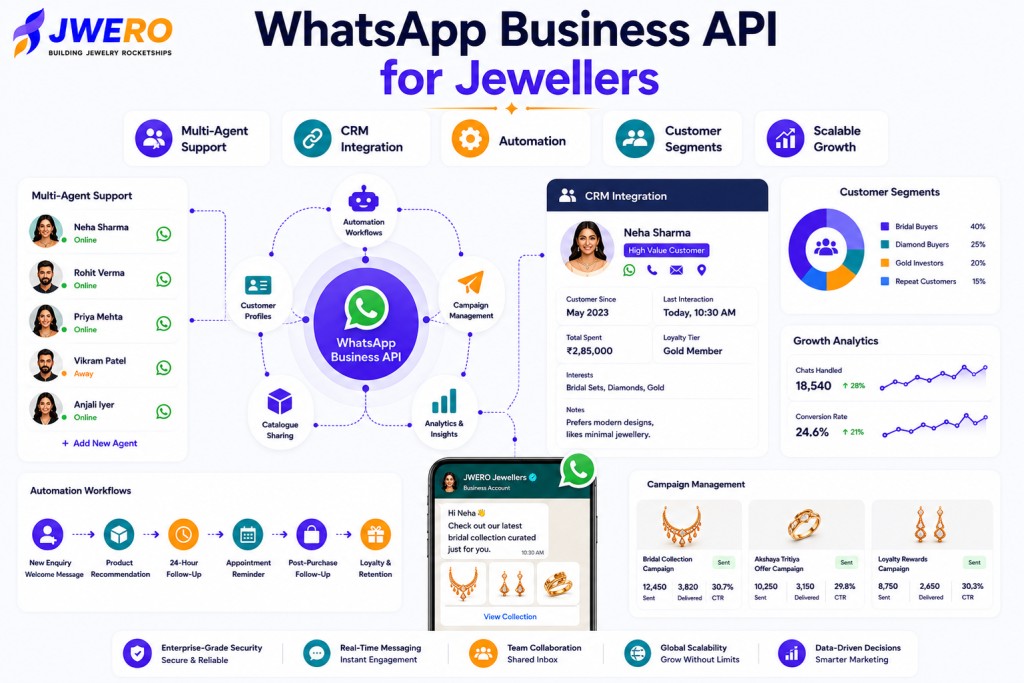
Many jewellery retailers start their customer communication journey using WhatsApp Business.
Initially, it works well.
A few enquiries per day.
A single team member manages conversations.
Basic catalogue sharing.
However, as enquiries increase, businesses begin to face challenges:
- Missed messages
- Delayed responses
- Poor lead tracking
- Limited team collaboration
- No automation
This is where WhatsApp Business API becomes essential.
For growing jewellery businesses, WhatsApp Business API transforms WhatsApp from a messaging tool into a complete customer engagement platform.
What Is WhatsApp Business API?
WhatsApp Business API is the enterprise version of WhatsApp designed for businesses that need scalable communication.
Unlike the WhatsApp Business App, the API allows businesses to:
- Automate conversations
- Integrate CRM
- Manage multiple agents
- Track customer interactions
- Send campaigns at scale
It is designed for businesses handling larger customer volumes.
WhatsApp Business App vs WhatsApp Business API
| Feature | WhatsApp Business App | WhatsApp Business API |
|---|---|---|
| Single User | ✅ | ❌ |
| Multi-Agent Access | ❌ | ✅ |
| CRM Integration | ❌ | ✅ |
| Automation | Limited | Advanced |
| Customer Segmentation | ❌ | ✅ |
| Campaign Management | Limited | ✅ |
| Analytics | Basic | Advanced |
| Scalable Communication | ❌ | ✅ |
For growing jewellery retailers, API provides significantly more capabilities.
Why Jewellers Need WhatsApp Business API
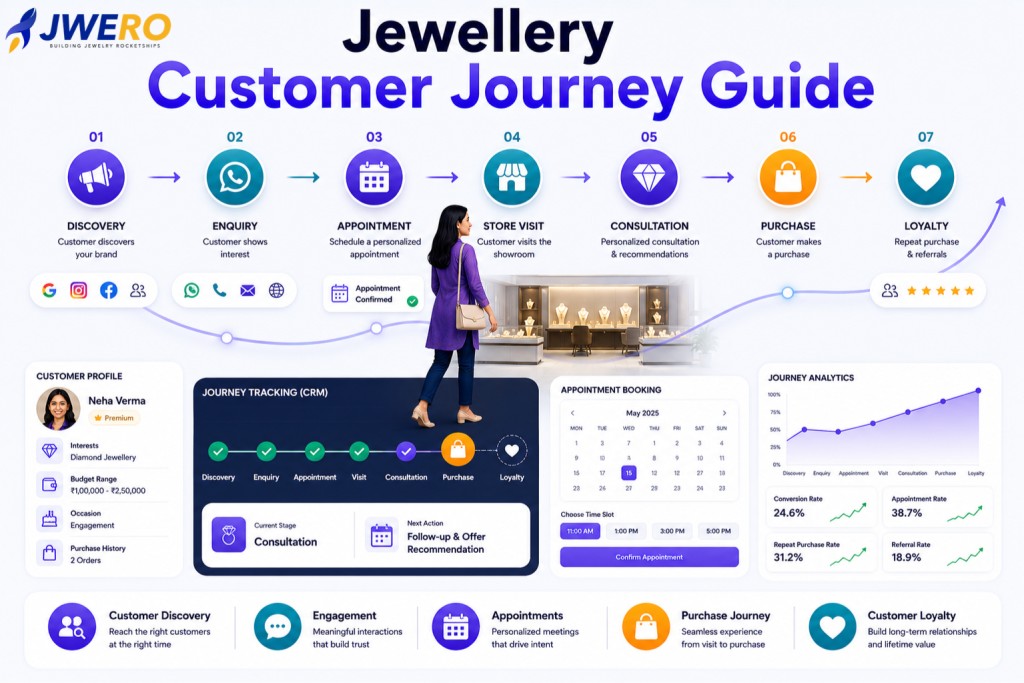
Jewellery sales often involve long customer journeys.
A customer may:
- Discover a product
- Request pricing
- Compare options
- Visit the showroom
- Return later
- Complete a purchase
Managing this manually becomes difficult.
API helps businesses create structured customer journeys.
Key Benefits of WhatsApp Business API for Jewellery Stores
1. Multi-Agent Customer Support
Multiple team members can manage conversations simultaneously.
Benefits:
- Faster response times
- Better service
- Improved customer experience
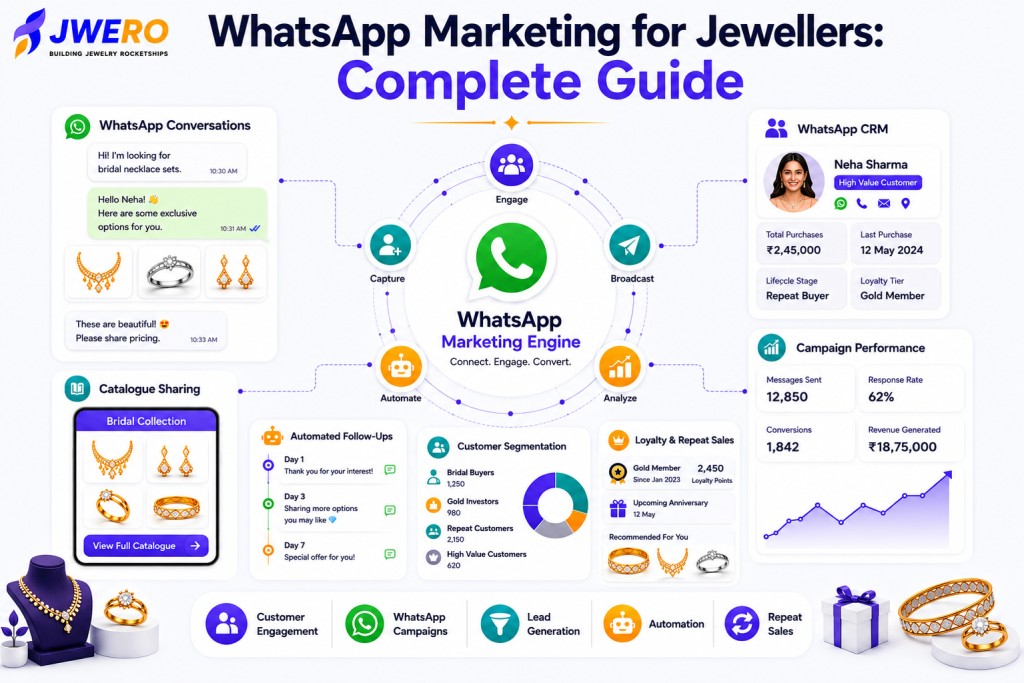
2. CRM Integration
API connects directly with CRM systems.
Benefits:
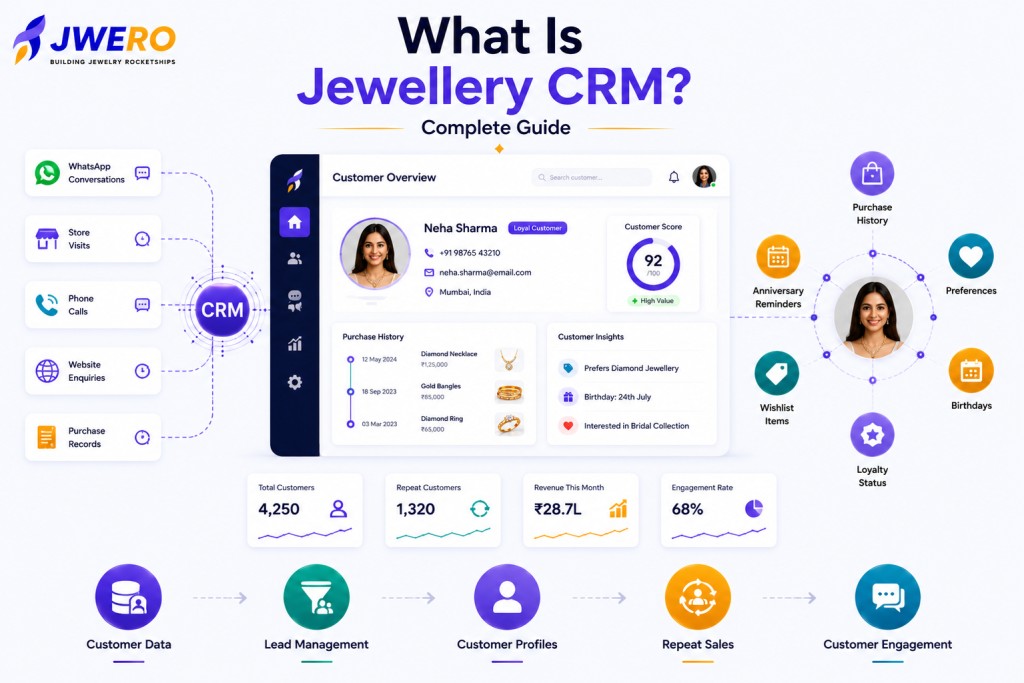
- Customer profiles
- Purchase history
- Lead tracking
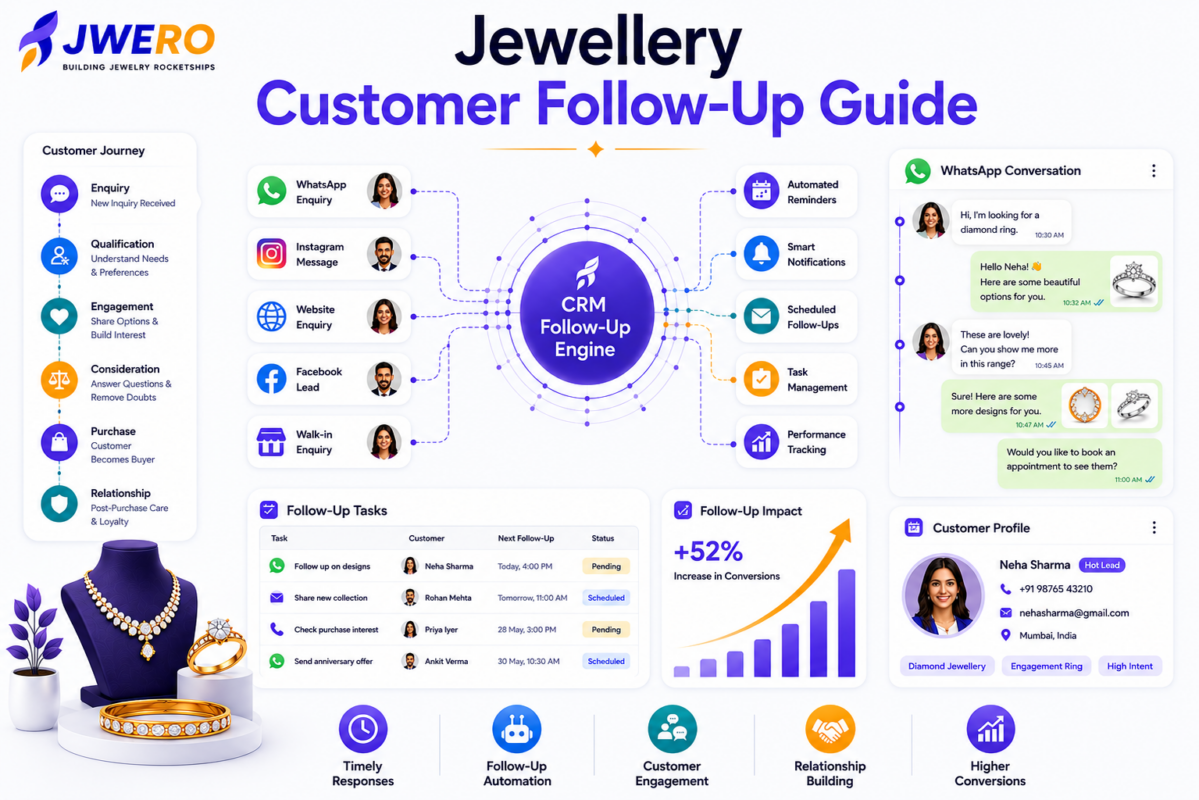
- Follow-up management
This creates a complete customer view.
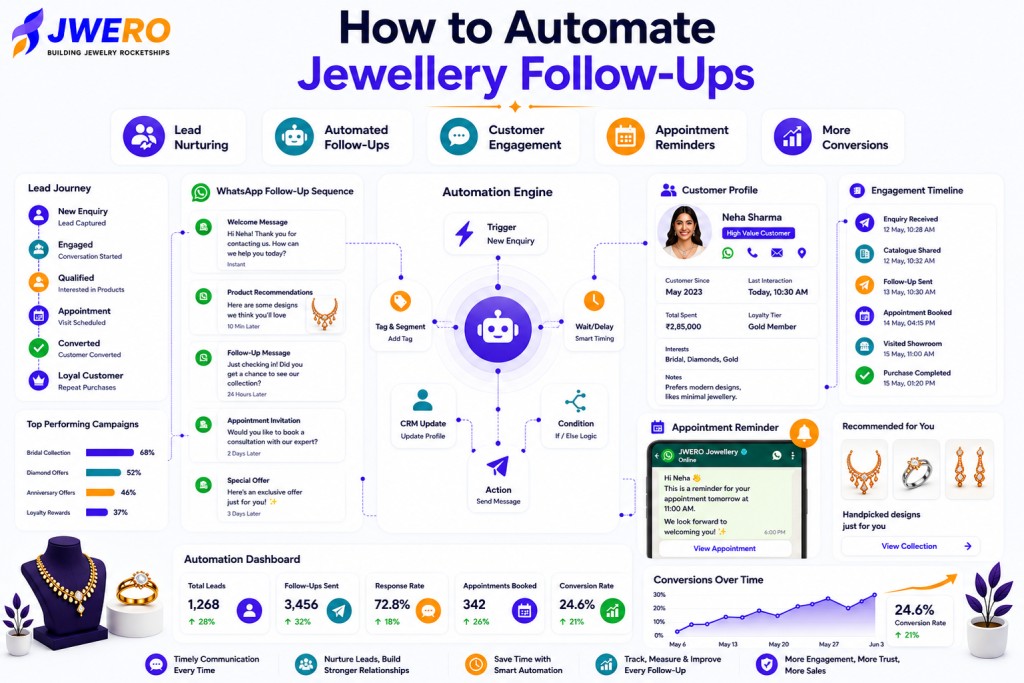
3. Automated Follow-Ups
Businesses can automate:
- Welcome messages
- Lead nurturing
- Appointment reminders
- Post-purchase communication
Automation improves consistency.
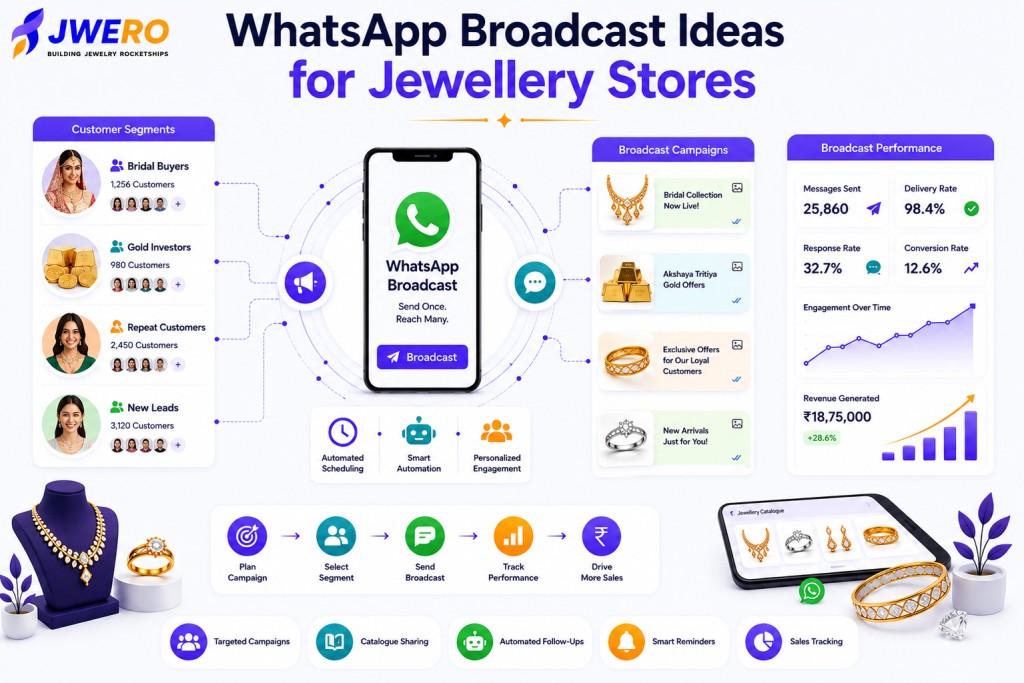
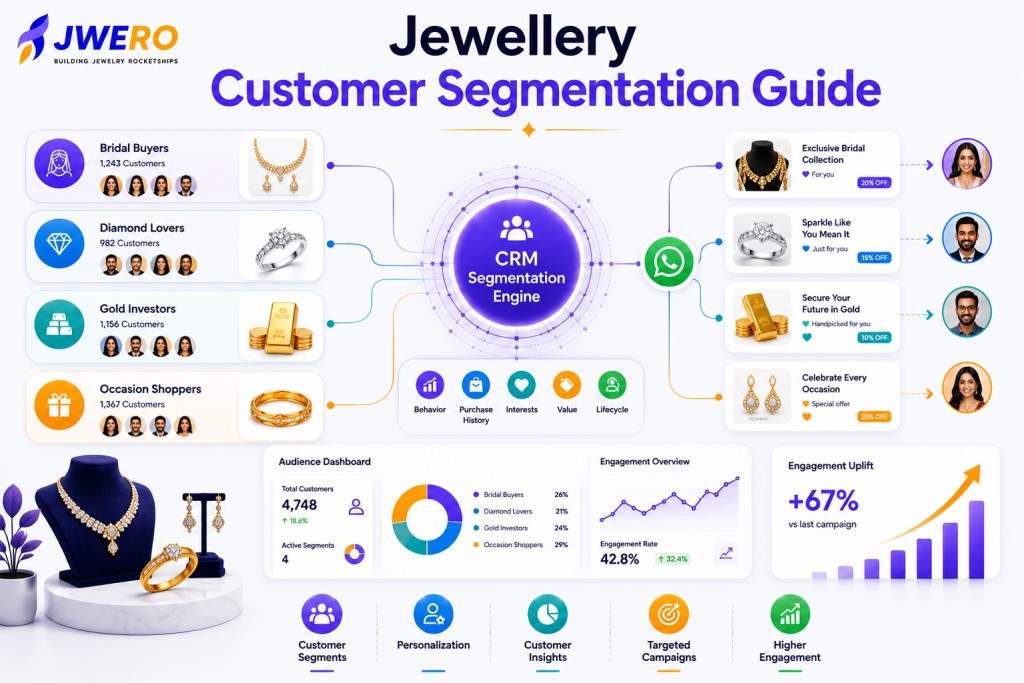
4. Customer Segmentation
Customers can be grouped into segments such as:
- Bridal Buyers
- Diamond Buyers
- Gold Investors
- Repeat Customers
Segmentation improves campaign relevance.
5. Campaign Management
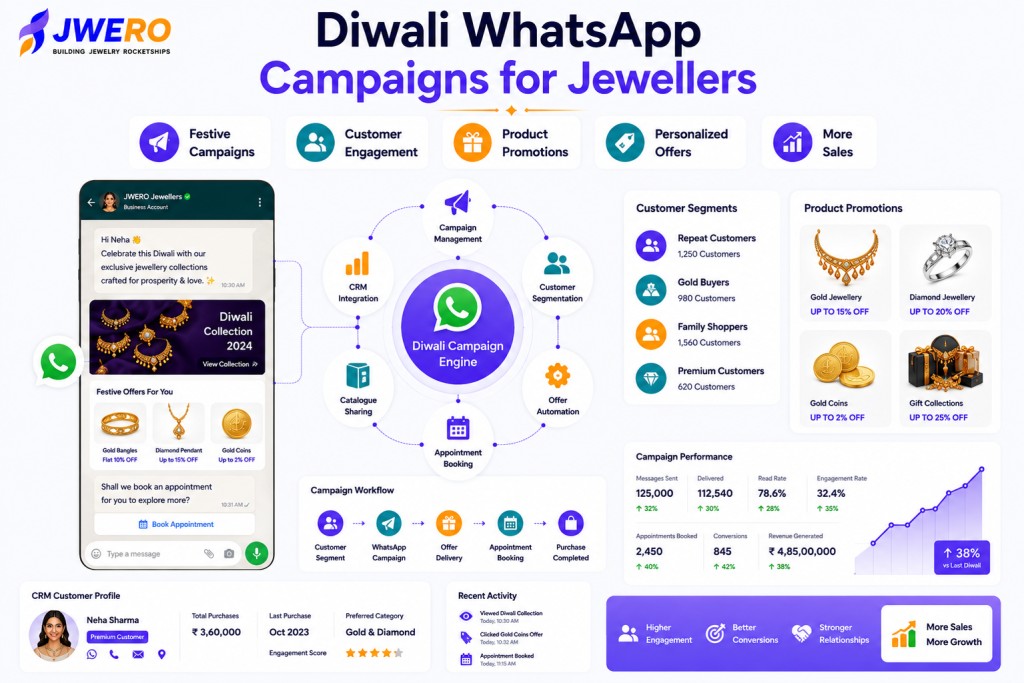
API enables businesses to run:
- Product launches
- Festival campaigns
- Wedding campaigns
- Loyalty campaigns
at scale.
WhatsApp API Use Cases for Jewellery Retailers
Lead Management
Capture and manage enquiries automatically.
Product Discovery
Share personalised recommendations.
Catalogue Sharing
Send jewellery catalogues directly inside WhatsApp.
Appointment Booking
Schedule showroom visits and consultations.
Customer Retention
Maintain long-term customer engagement.
WhatsApp API and Customer Automation
Automation workflows may include:
- New Enquiry Workflow
- Product Follow-Up Workflow
- Bridal Lead Workflow
- Appointment Reminder Workflow
- Birthday Campaign Workflow
- Anniversary Campaign Workflow
- Loyalty Reward Workflow
Automation reduces manual effort while improving customer engagement.
WhatsApp API and Customer Profiles
Every interaction becomes part of the customer record.
Businesses gain visibility into:
- Conversation history
- Product interests
- Purchase history
- Customer preferences
This improves personalisation.
WhatsApp API and Team Productivity
Without API:
One person manages WhatsApp.
With API:
Multiple agents collaborate using a shared platform.
This improves:
- Response times
- Accountability
- Customer experience
WhatsApp API and Customer Intelligence
Modern customer engagement requires data.
API helps businesses understand:
- Customer behaviour
- Purchase intent
- Engagement patterns
- Lifecycle stages
This supports smarter marketing decisions.
Common WhatsApp API Mistakes
Using Automation Without Personalisation
Automation should feel human.
Poor Customer Segmentation
Relevant communication performs better.
No CRM Integration
Customer visibility becomes limited.
Over-Messaging Customers
Frequency should be controlled.
Ignoring Analytics
Optimisation requires measurement.
Metrics to Track
- Response Rate
- Lead Conversion Rate
- Appointment Bookings
- Campaign Performance
- Repeat Purchase Rate
- Customer Lifetime Value
These metrics reveal business impact.
How Jwero Helps Jewellers Use WhatsApp Business API
Jwero enables jewellery retailers to:
- Integrate WhatsApp API
- Manage customer conversations
- Build customer profiles
- Automate follow-ups
- Run campaigns
- Segment customers
- Track customer journeys
This creates a connected customer engagement ecosystem.
Final Thoughts
WhatsApp Business API is no longer a tool reserved for large enterprises.
It has become an essential platform for jewellery retailers that want to scale customer communication, improve engagement, and drive more sales.
Businesses that combine WhatsApp API, CRM, and automation gain a significant competitive advantage.
Frequently Asked Questions
What is WhatsApp Business API?
WhatsApp Business API is a business communication platform that enables automation, CRM integration, customer segmentation, and scalable messaging.
How is WhatsApp API different from WhatsApp Business App?
API supports multi-agent access, automation, CRM integration, campaigns, and advanced analytics.
Is the WhatsApp API useful for jewellery stores?
Yes. It helps jewellery retailers manage enquiries, automate communication, improve customer engagement, and increase conversions.
Can the WhatsApp API integrate with CRM?
Yes. CRM integration allows businesses to track customer interactions, preferences, and purchase history.
Can WhatsApp API automate follow-ups?
Absolutely. Businesses can automate reminders, lead nurturing, appointment confirmations, loyalty campaigns, and more.
Does the WhatsApp API improve customer experience?
Yes. Faster responses, personalised communication, and better customer visibility create a stronger experience.