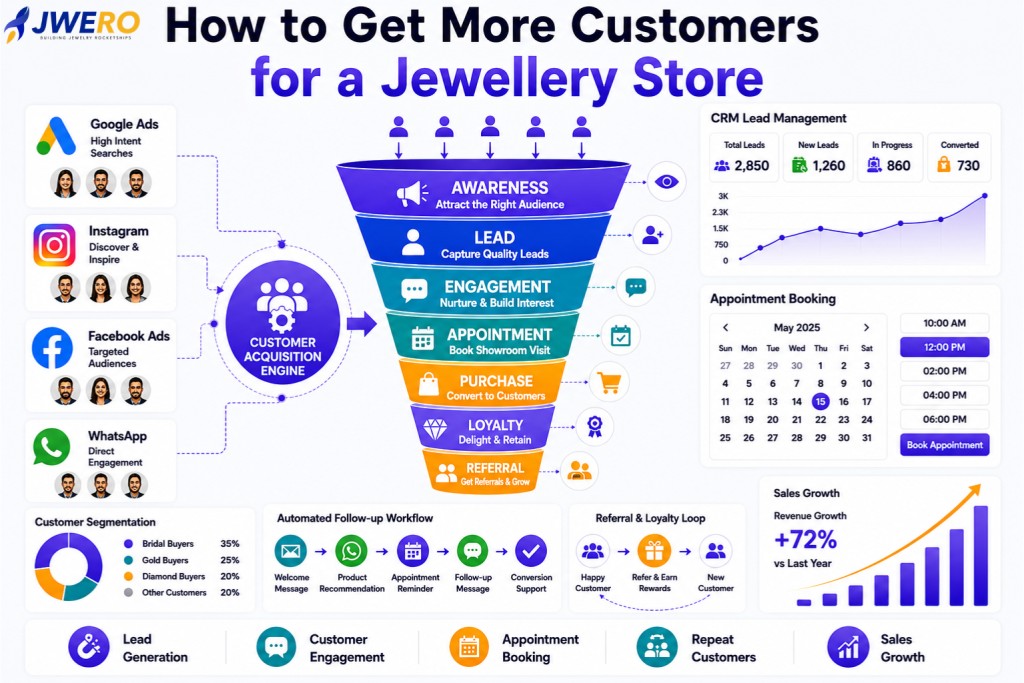


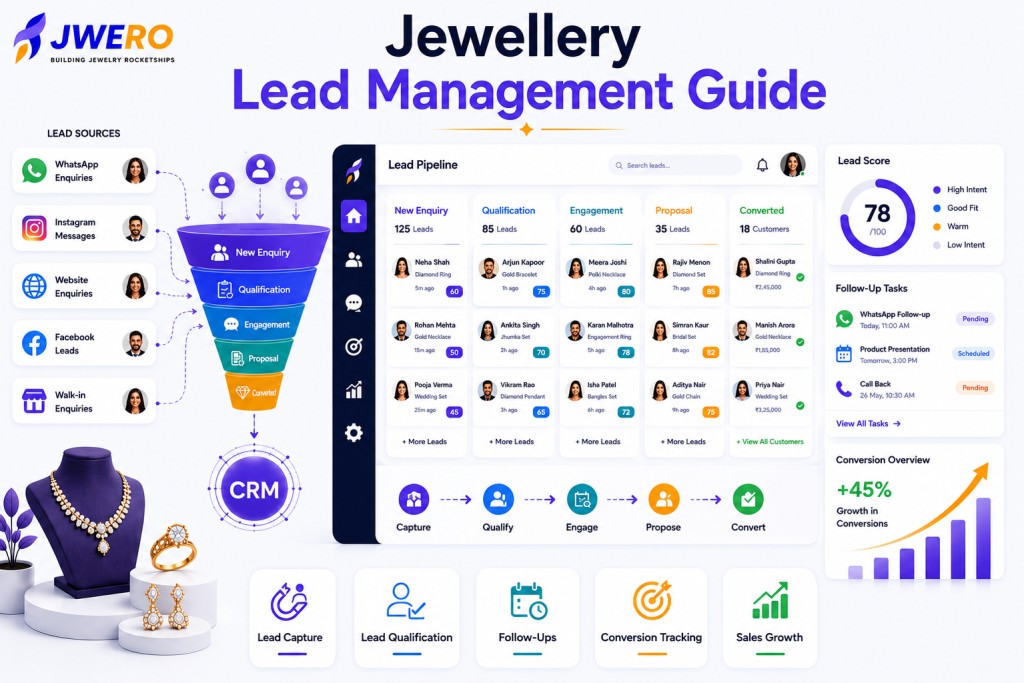
Most jewellery businesses do not have a lead generation problem.
They have a lead management problem.
Every day, potential customers enquire through:
- Ecommerce websites
- Walk-in visits
- Referrals
The challenge is not generating enquiries.
The challenge is ensuring those enquiries become customers.
Without a structured lead management process, many opportunities are lost simply because they are forgotten, delayed, or poorly followed up.
Effective lead management helps jewellery businesses improve conversion rates, increase revenue, and create better customer experiences.
What Is Jewellery Lead Management?
Jewellery lead management is the process of tracking, organising, nurturing, and converting potential customers into buyers.
It involves:
- Capturing enquiries
- Understanding customer intent
- Tracking interactions
- Managing follow-ups
- Prioritizing opportunities
- Monitoring conversion progress
The goal is to ensure no valuable customer opportunity is lost.
Why Lead Management Matters in Jewellery Retail
Jewellery purchases often involve long decision cycles.
Customers may:
- Compare products
- Visit multiple stores
- Discuss purchases with family
- Wait for special occasions
- Consider budget options
As a result, many customers do not purchase immediately.
Without proper lead management, businesses lose visibility into these opportunities.
Common Lead Management Problems
Many jewellery retailers experience:
Missed Follow-Ups
Customers never hear back.
No Lead Prioritisation
High-value opportunities receive the same attention as low-intent enquiries.
Scattered Customer Information
Data exists across WhatsApp, Excel, and staff phones.
No Visibility
Managers cannot see which leads are progressing.
Inconsistent Processes
Different team members follow different approaches.
These issues reduce conversion rates.
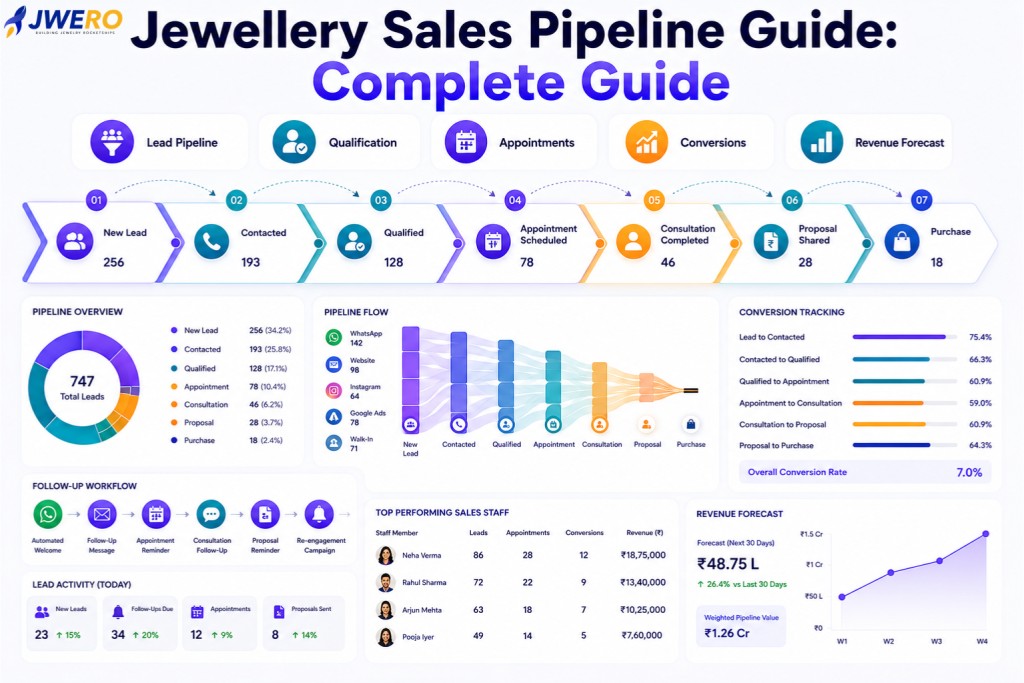
The Jewellery Lead Lifecycle
Every lead typically moves through several stages.
Stage 1: New Enquiry
The customer makes initial contact.
Sources may include:
- Social media
- Website forms
- Walk-ins
At this stage, speed matters.
Stage 2: Qualification
The business gathers information such as:
- Product interest
- Budget range
- Purchase timeline
- Occasion
This helps determine lead quality.
Stage 3: Engagement
The customer begins exploring options.
Examples include:
- Product recommendations
- Catalog sharing
- Consultations
Trust begins forming here.
Stage 4: Evaluation
The customer compares products and options.
This stage often requires:
- Follow-ups
- Clarifications
- Additional information
Many opportunities are lost during evaluation.
Stage 5: Purchase
The customer completes a transaction.
Lead management becomes sales conversion.
Stage 6: Relationship Building
The journey does not end after purchase.
Customers may become:
- Repeat buyers
- Referral sources
- Loyalty members
This stage supports long-term growth.
How CRM Improves Lead Management
CRM provides structure to the entire process.
Instead of relying on memory, businesses gain:
Lead Visibility
Every opportunity becomes visible.
Follow-Up Tracking
Nothing gets forgotten.
Team Coordination
Everyone works from the same information.
Customer History
All interactions remain accessible.
Performance Monitoring
Managers can track outcomes.
Lead Qualification Best Practices
Not all leads have the same potential.
Businesses should identify:
High Intent Leads
Ready to purchase soon.
Research Leads
Exploring options.
Future Buyers
Interested but not ready.
Low Intent Leads
Minimal engagement potential.
Prioritisation improves efficiency.
Why Follow-Up Is Critical
Most jewellery sales do not happen during the first interaction.
Customers often require:
- Multiple conversations
- Product comparisons
- Budget discussions
- Family consultations
Consistent follow-up keeps opportunities active.
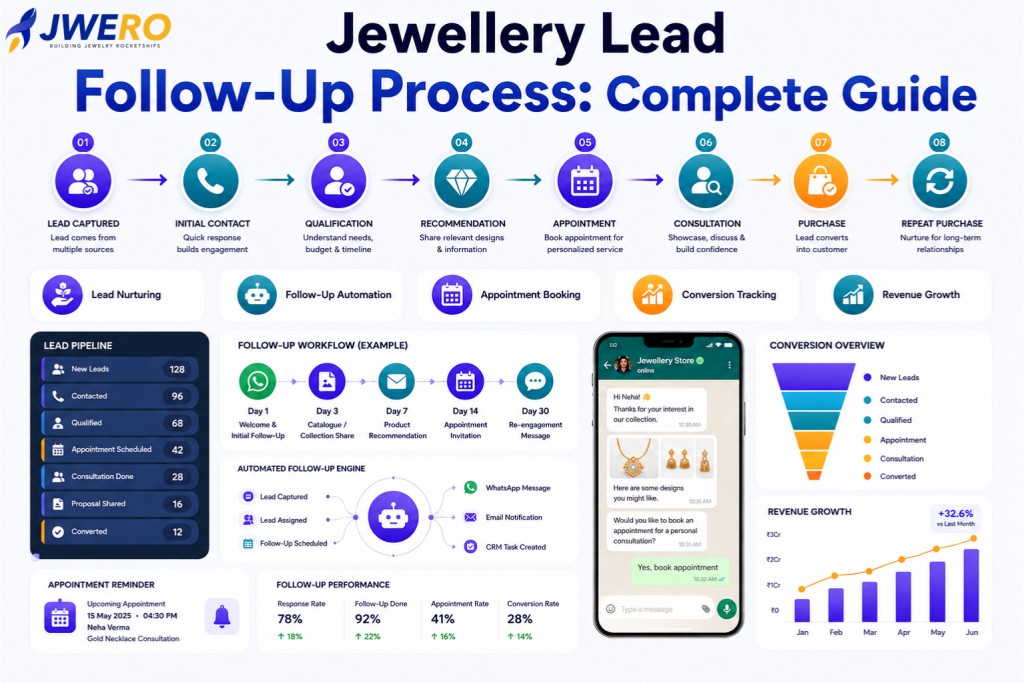
The businesses that follow up best often win the sale.
WhatsApp and Lead Management
WhatsApp has become one of the most important lead management channels.
Customers expect:
- Fast responses
- Product recommendations
- Convenient communication
A structured WhatsApp workflow helps businesses:
- Capture leads
- Track conversations
- Manage follow-ups
- Improve engagement
Measuring Lead Management Success
Key metrics include:
Lead Response Time
How quickly enquiries receive responses.
Lead Conversion Rate
Percentage of leads that become customers.
Follow-Up Completion Rate
Percentage of scheduled follow-ups completed.
Sales Cycle Duration
Time required to convert leads.
Revenue Per Lead
Average value generated by each lead.
These metrics help identify improvement opportunities.
Common Lead Management Mistakes
Treating Every Lead Equally
Prioritisation is essential.
Delayed Responses
Speed often influences outcomes.
No Follow-Up System
Opportunities disappear without structure.
Poor Customer Data Management
Incomplete information limits effectiveness.
Focusing Only on New Leads
Existing customers often generate significant revenue.
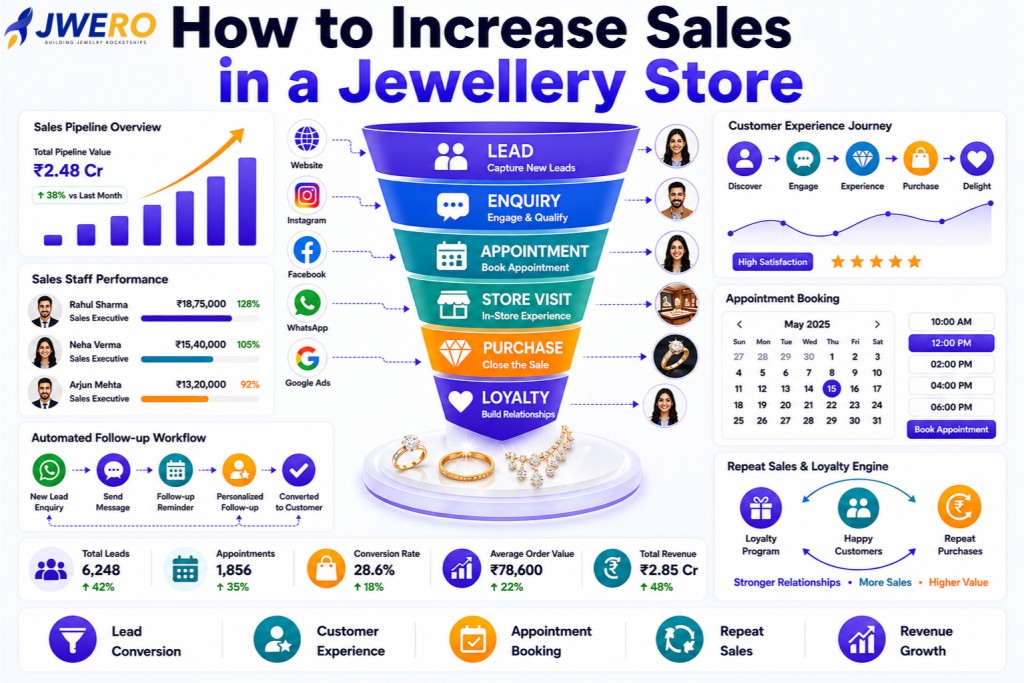
How Lead Management Increases Sales
Effective lead management improves:
- Lead visibility
- Customer engagement
- Conversion rates
- Customer experience
- Team productivity
Small improvements in conversion often generate significant revenue growth.
How Jwero Supports Jewellery Lead Management
Jwero helps jewellery businesses manage:
- Lead capture
- Customer profiles
- Follow-ups
- WhatsApp engagement
- Customer journeys
- Conversion tracking
This helps businesses create a more structured and effective lead management process.
Final Thoughts
Lead generation creates opportunities.
Lead management converts opportunities into revenue.
The most successful jewellery businesses are not necessarily the ones generating the most enquiries.
They are often the ones managing enquiries most effectively.
A structured lead management system helps businesses improve customer experiences, increase conversion rates, and drive sustainable growth.
Frequently Asked Questions
What is jewellery lead management?
Jewellery lead management is the process of tracking, nurturing, and converting customer enquiries into buyers.
Why is lead management important for jewellers?
It helps improve conversion rates, reduce missed opportunities, and create more structured customer engagement.
How does CRM help with lead management?
CRM centralises customer information, tracks interactions, schedules follow-ups, and improves visibility across the sales process.
What is lead qualification?
Lead qualification helps determine which opportunities are most likely to convert into customers.
Why are follow-ups important in jewellery retail?
Most jewellery purchases involve multiple interactions before a buying decision is made.
Can WhatsApp improve lead management?
Yes. WhatsApp is one of the most effective channels for customer communication and follow-up management.