

Modern jewellery customers no longer buy through a single channel.
A customer may:
- Discover products on Instagram
- Browse your website
- Request details on WhatsApp
- Visit your showroom
- Complete the purchase later
To support this journey, inventory must remain synchronised across every touchpoint.
This is where omnichannel inventory management becomes critical.
What is Omnichannel Inventory Management?
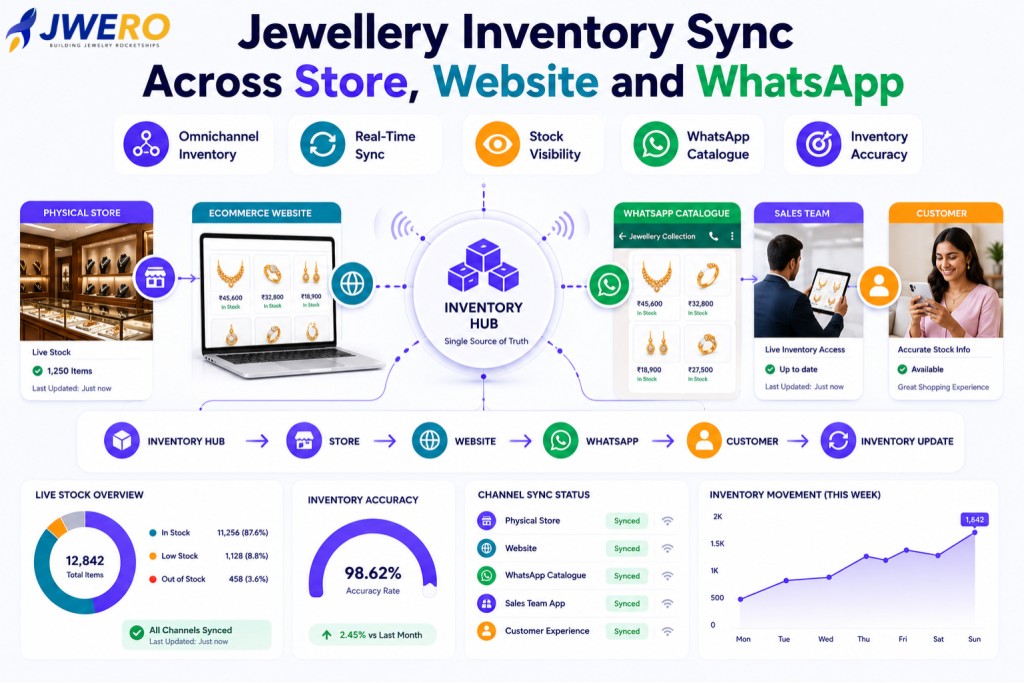
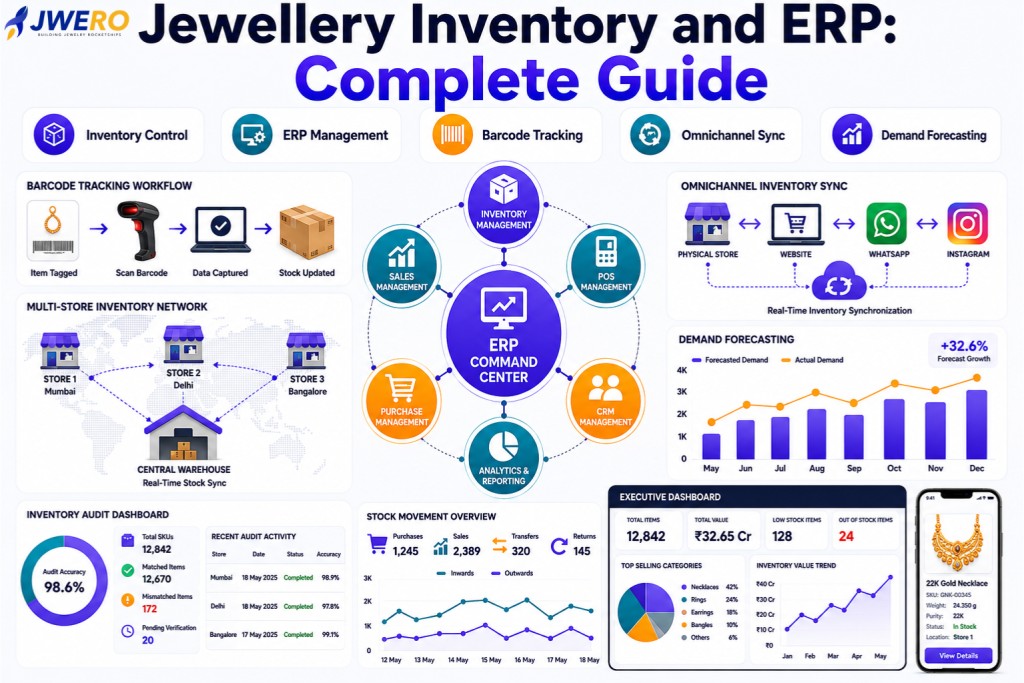
Omnichannel inventory management is the process of maintaining one centralised inventory system across all customer-facing channels.
Inventory updates automatically across:
- Physical Stores
- Ecommerce Websites
- WhatsApp Catalogues
- Sales Teams
- Online Marketplaces
- Mobile Apps
Every channel works from the same inventory data.
Why Omnichannel Inventory Matters
Omnichannel inventory helps retailers:
- Prevent Overselling
- Improve Inventory Accuracy
- Improve Customer Experience
- Increase Sales
- Improve Operational Efficiency
- Improve Inventory Visibility
Customers expect real-time availability information.
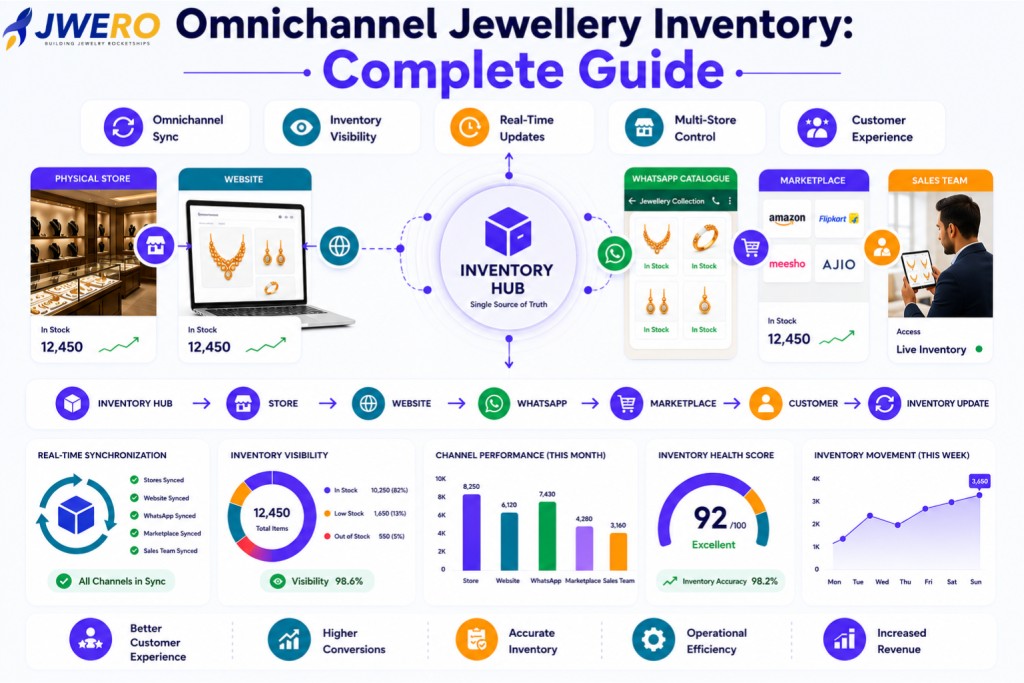
The Omnichannel Inventory Ecosystem
Central Inventory Hub
↓
Store
↓
Website
↓
↓
Marketplace
↓
Sales Team
↓
Customer
↓
Inventory Update
Every inventory change should update all connected channels.
Common Problems Without Omnichannel Inventory
Retailers often face:
- Stock Mismatches
- Overselling
- Duplicate Inventory Records
- Delayed Updates
- Customer Frustration
- Lost Revenue
Disconnected systems create operational problems.
Physical Store Integration
Store inventory should support:
- Real-Time Visibility
- Product Availability Checks
- Branch Transfers
- Centralized Reporting
Store operations must stay connected.
Website Inventory Integration
Website inventory should update automatically when:
- Products Sell
- Inventory Transfers Occur
- Products Are Reserved
- New Stock Arrives
Customers should always see accurate availability.
WhatsApp Catalogue Integration
WhatsApp is becoming a major jewellery sales channel.
Inventory integration enables:
- Accurate Product Availability
- Better Customer Conversations
- Faster Product Discovery
- Improved Conversions
- Better Customer Experience
Catalogue accuracy improves trust.
Marketplace Inventory Integration
Retailers selling through marketplaces require:
- Inventory Synchronization
- Stock Visibility
- Order Management
- Product Availability Updates
Marketplace sales should update inventory automatically.
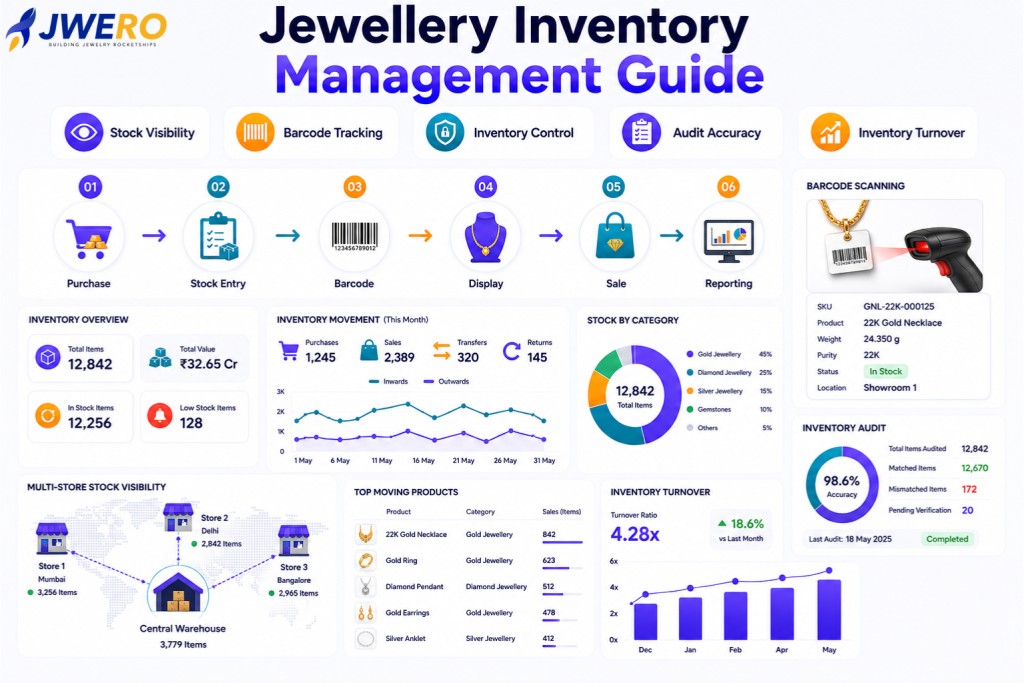
Multi-Store Inventory Visibility
Retailers with multiple branches need:
- Store-Wise Inventory
- Transfer Tracking
- Centralized Visibility
- Unified Reporting
- Inventory Analytics
Visibility improves control.
Real-Time Inventory Updates
Inventory should automatically update when:
- Sales Occur
- Products Are Reserved
- Transfers Happen
- Returns Are Processed
- New Inventory Arrives
Automation reduces errors.
Omnichannel Inventory Analytics
Track:
- Inventory Accuracy
- Channel Performance
- Product Availability
- Inventory Turnover
- Inventory Value
- Channel Sales Contribution
Analytics improve decision-making.
Benefits of Omnichannel Inventory
- Better Customer Experience
- Faster Sales Cycles
- Higher Conversion Rates
- Improved Inventory Accuracy
- Better Visibility
- Reduced Operational Errors
Connected inventory drives growth.
Common Omnichannel Inventory Mistakes
- Manual Updates
- Separate Inventory Systems
- Delayed Synchronization
- No Centralised Inventory Hub
- Weak Reporting
- No Analytics
A single source of truth is essential.
Technology Requirements
A modern omnichannel inventory system should provide:
- Central Inventory Database
- Real-Time Synchronization
- Website Integration
- WhatsApp Integration
- Multi-Store Support
- Analytics & Reporting
Technology is the foundation of omnichannel operations.
How Jwero Supports Omnichannel Customer Journeys
Jwero helps jewellery retailers connect inventory visibility with:
- CRM
- WhatsApp Engagement
- Customer Enquiries
- Appointments
- Lead Management
- Customer Analytics
This improves customer experience across channels.
Final Thoughts
Omnichannel inventory is no longer optional.
Customers expect seamless experiences across:
- Stores
- Websites
- Sales Teams
- Marketplaces
Retailers that build connected inventory ecosystems gain stronger visibility, higher customer satisfaction, and more sales.
Frequently Asked Questions
What is omnichannel inventory management?
Managing inventory across multiple sales channels from a centralised system is called Omnichannel inventory management.
Why is omnichannel inventory important?
Omnichannel inventory management is important because it improves accuracy, prevents overselling, and enhances customer experience.
Can WhatsApp catalogues be integrated with inventory?
Yes. Modern systems can synchronise product availability with WhatsApp catalogues.
Should inventory be synchronised across stores and websites?
Yes. Customers expect accurate stock information everywhere.
What is the biggest benefit of omnichannel inventory?
Complete inventory visibility across all sales channels