

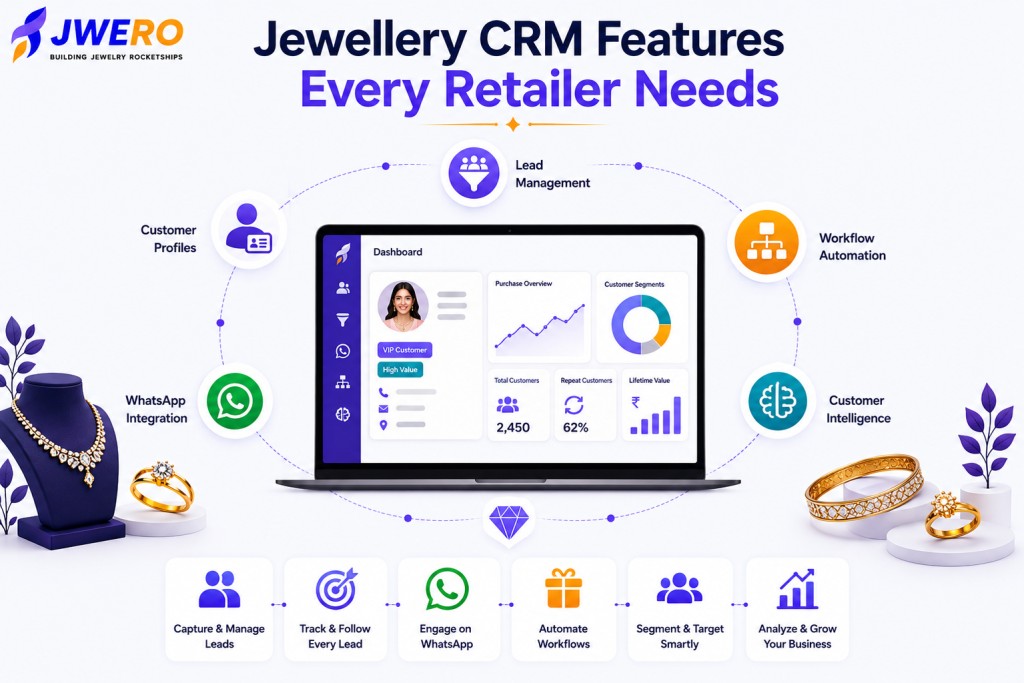
A CRM system can become one of the most valuable tools in a jewellery business.
However, not all CRM systems are created equally.
Many retailers purchase software based on price or popularity without understanding which features actually drive customer engagement and business growth.
The best CRM is not the one with the most features.
It is the one with the right features.
This guide explores the most important CRM capabilities every jewellery retailer should look for.
Why CRM Features Matter
Jewellery retail is unique.
Customers often:
- Research extensively
- Visit multiple stores
- Compare products
- Purchase based on life events
- Return for future occasions
A CRM should support these customer journeys.
The right features help retailers:
- Improve customer engagement
- Increase conversions
- Strengthen loyalty
- Drive repeat sales
Feature 1: 360° Customer Profiles
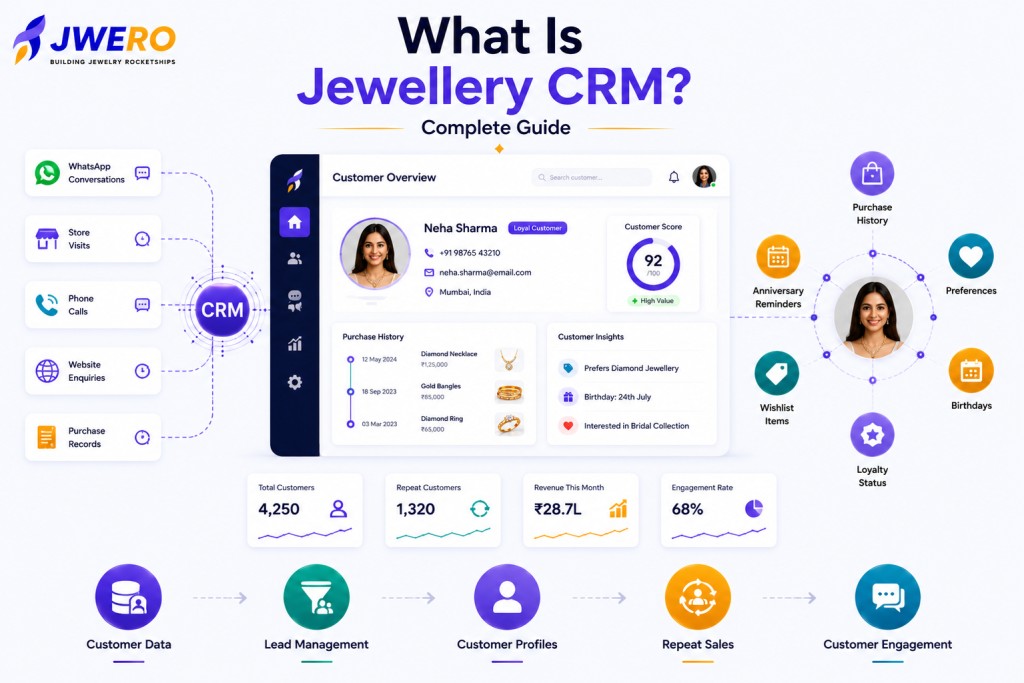
Every customer should have a complete profile.
A strong CRM should store:
- Contact information
- Purchase history
- Preferences
- Important dates
- Communication history
This creates a complete customer view.
Feature 2: Lead Management
Lead management helps businesses organise and convert enquiries.
CRM should support:
- Lead capture
- Lead tracking
- Lead qualification
- Opportunity management
This prevents valuable leads from being lost.
Feature 3: Customer Segmentation
Customers should be grouped based on:
- Interests
- Purchase behaviour
- Customer value
- Lifecycle stage
Segmentation enables more personalised engagement.
Feature 4: Follow-Up Management
Many jewellery sales require multiple interactions.
CRM should include:
- Task management
- Follow-up reminders
- Workflow tracking
This improves consistency.
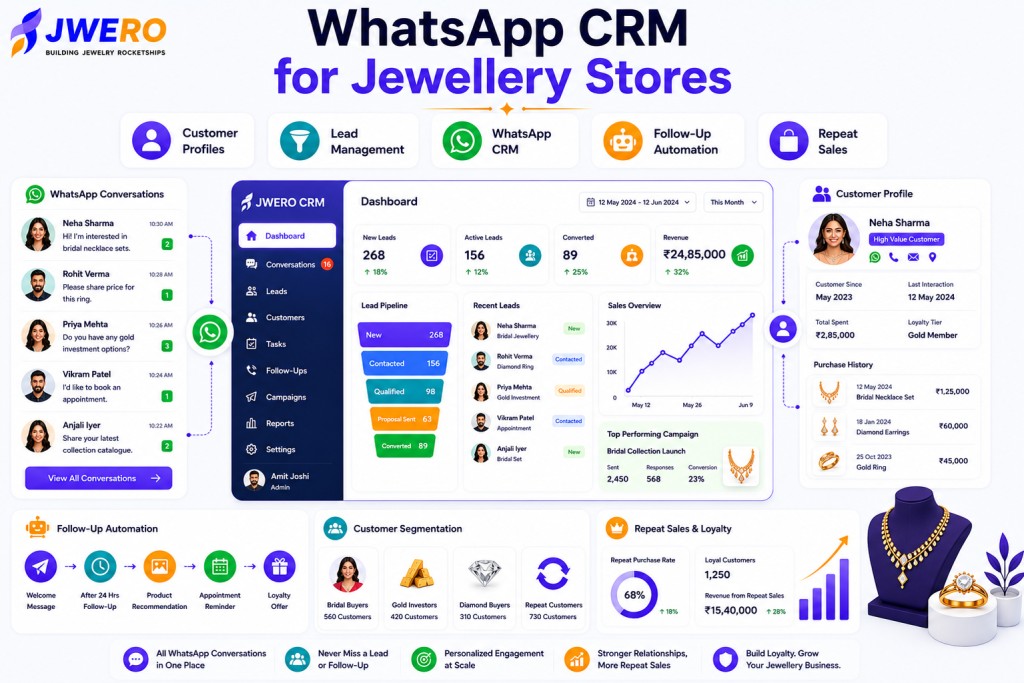
Feature 5: WhatsApp Integration
WhatsApp has become a critical customer communication channel.
CRM should help businesses:
- Track conversations
- Manage enquiries
- Personalize communication
This creates a better customer experience.
Feature 6: Purchase History Tracking
Customer purchase history provides valuable insights.
CRM should track:
- Products purchased
- Purchase dates
- Order values
- Customer preferences
This supports future recommendations.
Feature 7: Customer Journey Tracking
A CRM should show where customers are within the lifecycle.
Example:
Lead → Prospect → Customer → Repeat Buyer → Loyal Customer
This visibility improves engagement strategies.
Feature 8: Occasion-Based Engagement
Jewellery purchases are closely tied to life events.
CRM should track:
- Birthdays
- Anniversaries
- Engagement dates
- Wedding dates
These dates create valuable engagement opportunities.
Feature 9: Loyalty Program Management
CRM should help manage:
- Loyalty memberships
- Reward points
- Customer benefits
- Retention programs
This strengthens customer relationships.
Feature 10: Reporting and Analytics
Good decisions require visibility.
CRM should provide:
- Sales Reports
- Customer Insights
- Engagement Metrics
- Conversion Tracking
- Retention Analytics
Analytics turn customer data into business intelligence.
Feature 11: Customer Intelligence
Modern CRM systems are evolving beyond record-keeping.
Customer intelligence helps businesses understand:
- Behaviour patterns
- Purchase intent
- Customer value
- Engagement opportunities
This improves personalisation.
Feature 12: Automation Workflows
Automation improves consistency and efficiency.
Examples:
- Lead assignment
- Follow-up reminders
- Birthday campaigns
- Anniversary messages
Automation reduces manual effort.
Feature 13: Multi-Channel Communication
Customers interact through multiple channels.
CRM should support:
- Calls
- Store visits
A unified communication view improves customer understanding.
Feature 14: Team Collaboration
Customer information should be shared across teams.
CRM should provide:
- Shared records
- Activity visibility
- Team coordination
This creates consistent customer experiences.
Feature 15: Scalability
The CRM should support future growth.
A solution that works for:
- 500 customers
should also work for:
Scalability protects long-term investments.
Common CRM Feature Mistakes
Choosing Based on Feature Count
More features do not always mean better outcomes.
Ignoring Customer Experience
Features should improve engagement.
Overlooking WhatsApp
Customer communication is increasingly mobile-first.
Underestimating Customer Intelligence
Data alone is not enough; insights create value.
How CRM Features Impact Revenue
Strong CRM capabilities improve:
- Lead Conversion
- Customer Retention
- Repeat Sales
- Customer Experience
- Team Productivity
The result is stronger business performance.
The Future of Jewellery CRM Features
Future CRM systems will increasingly include:
- Artificial Intelligence
- Predictive analytics
- Customer intent scoring
- Automated segmentation
- Conversational commerce
CRM is evolving into a customer intelligence platform.
How Jwero Supports Modern Jewellery CRM
Jwero helps jewellery retailers manage:
- Customer profiles
- Lead management
- Customer segmentation
- WhatsApp engagement
- Follow-ups
- Loyalty programs
- Customer intelligence
This creates a connected customer ecosystem designed specifically for jewellery retail.
Final Thoughts
The right CRM features help jewellery businesses move beyond customer record-keeping and toward building customer relationships.
Businesses that understand customers better can engage more effectively, retain customers longer, and grow more sustainably.
A CRM should not simply store customer data.
It should help businesses create better customer experiences.
Frequently Asked Questions
What are the most important CRM features for jewellery retailers?
Customer profiles, lead management, segmentation, follow-ups, WhatsApp integration, loyalty management, and customer intelligence.
Why is WhatsApp integration important?
WhatsApp is one of the primary communication channels for modern jewellery customers.
What is customer intelligence in CRM?
Customer intelligence helps businesses understand customer behaviour, preferences, and engagement opportunities.
Does CRM help increase repeat sales?
Yes. CRM supports retention, personalisation, loyalty programs, and customer engagement.
Can small jewellery stores benefit from CRM?
Absolutely. CRM helps businesses of all sizes improve customer relationship management.
What makes a jewellery CRM different?
Jewellery CRM focuses on customer journeys, occasion-based engagement, personalisation, and long-term relationship building.