


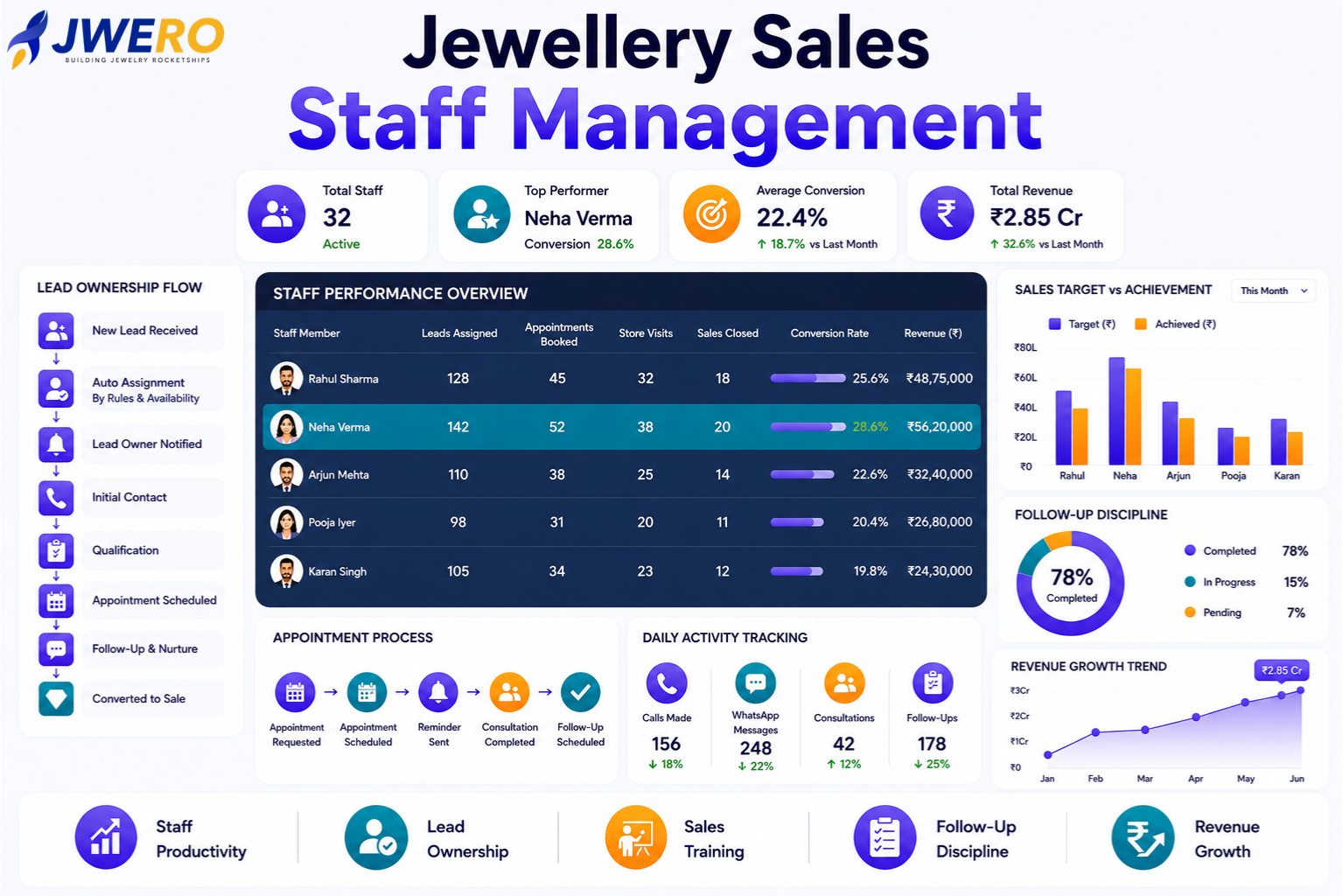
A jewellery store’s sales team plays a direct role in revenue growth.
Even with strong collections and good marketing, poor staff management can lead to:
- Missed leads
- Weak follow-ups
- Low conversion rates
- Poor customer experience
- Lost sales opportunities
Jewellery sales staff management is about creating a structured system for training, accountability, performance tracking, and customer handling.
Why Sales Staff Management Matters
Jewellery purchases are high-value and relationship-driven.
Customers expect:
- Product Knowledge
- Personalized Guidance
- Fast Responses
- Professional Communication
- Trustworthy Recommendations
A well-managed sales team improves both conversion and customer satisfaction.
Key Responsibilities of Jewellery Sales Staff
Sales teams are responsible for:
- Handling Enquiries
- Managing Walk-Ins
- Booking Appointments
- Sharing Product Recommendations
- Following Up Leads
- Closing Sales
- Building Customer Relationships
Every responsibility should be tracked.
Common Sales Staff Challenges
- No Lead Ownership
- Poor Follow-Up Discipline
- Inconsistent Customer Handling
- Lack of Product Knowledge
- No Performance Visibility
- Weak Accountability
These issues directly reduce sales.
How to Manage Jewellery Sales Staff Effectively
1. Define Clear Roles
Each team member should know their responsibilities.
Examples:
- Lead Owner
- Appointment Manager
- Walk-In Consultant
- Follow-Up Executive
- Relationship Manager
Clear roles prevent confusion
2. Track Individual Performance
- Leads Assigned
- Appointments Booked
- Store Visits Managed
- Sales Closed
- Conversion Rate
- Revenue Generated
Performance visibility improves accountability.
3. Train Staff Regularly
Training should cover:
- Product Knowledge
- Customer Communication
- Objection Handling
- Upselling
- CRM Usage
- Follow-Up Discipline
Training improves confidence and results.
4. Use CRM for Staff Accountability
CRM helps track:
- Lead Ownership
- Follow-Up Status
- Customer Interactions
- Appointment Outcomes
- Sales Performance
This reduces dependency on manual updates.
5. Create Follow-Up Standards
Every staff member should follow a defined follow-up process.
Example:
Day 1: Initial follow-up
Day 3: Product reminder
Day 7: Recommendation
Day 14: Re-engagement
Consistency improves conversion.
6. Monitor Customer Experience
Track:
- Response Time
- Customer Feedback
- Appointment Experience
- Consultation Quality
- Repeat Customer Engagement
Customer experience impacts loyalty.
Staff Performance Dashboard
A good dashboard should show:
- Sales Target
- Revenue Achieved
- Conversion Rate
- Follow-Up Completion
- Appointment Conversion
- Customer Satisfaction
This helps owners make better decisions.
Incentives and Motivation
Motivate teams with:
- Sales Targets
- Conversion Bonuses
- Appointment Bonuses
- Repeat Sales Incentives
- Customer Experience Rewards
Balanced incentives improve performance.
How Jwero Helps Jewellery Sales Staff Management
Jwero helps jewellery retailers manage:
- Lead Assignment
- Staff Performance Tracking
- Follow-Up Automation
- Appointment Management
- CRM Activity Tracking
- Sales Pipeline Visibility
- Customer Journey Tracking
This helps owners improve staff productivity and sales performance.
Final Thoughts
Jewellery sales staff management is not only about monitoring employees.
It is about creating a system where every lead is handled properly, every customer receives a strong experience, and every sales opportunity is tracked.
With the right training, CRM, follow-up process, and performance visibility, jewellery retailers can significantly improve sales.
Frequently Asked Questions
Why is sales staff management important for jewellery stores?
Sales staff management is important for jewellery stores because sales staff directly influence customer experience, lead conversion, and revenue.
What KPIs should jewellery sales staff track?
Leads assigned, appointments booked, conversion rate, revenue generated, follow-up completion, and customer satisfaction.
How can CRM help staff management?
CRM tracks lead ownership, follow-ups, customer interactions, and staff performance.
How often should jewellery staff be trained?
Ideally, every month, with additional training during the campaign and wedding seasons.
What causes poor sales staff performance?
Lack of training, unclear roles, weak follow-ups, poor accountability, and no performance tracking cause poor sales staff performance.