

Introduction
For years, jewellery businesses focused on one thing:
Managing leads.
Capture them.
Assign them.
Follow up.
Close the sale.
That model worked when customer journeys were simple.
They are not simple anymore.
Today’s jewellery buyer moves across:
- Websites
- Store visits
- Family discussions
- Long decision pauses
The journey is no longer linear.
And that changes everything.
Modern jewellery retail now needs something deeper:
Lead orchestration.
No more chasing.
No more reminders.
No more dashboards.
Better coordination.
Because jewellery customers do not move in straight lines, they move in emotional cycles.
Table of Contents
- Why Traditional Lead Management Is Breaking
- Jewellery Buying Is Not a Task List
- What Lead Orchestration Actually Means
- From Ownership to Alignment
- Coordinating Website, CRM & WhatsApp
- Why Silence Is Part of the Journey
- Advisors Should Guide, Not Chase
- Lead Management vs Lead Orchestration
- Why This Shift Matters for Jewellery Brands
- Final Thought
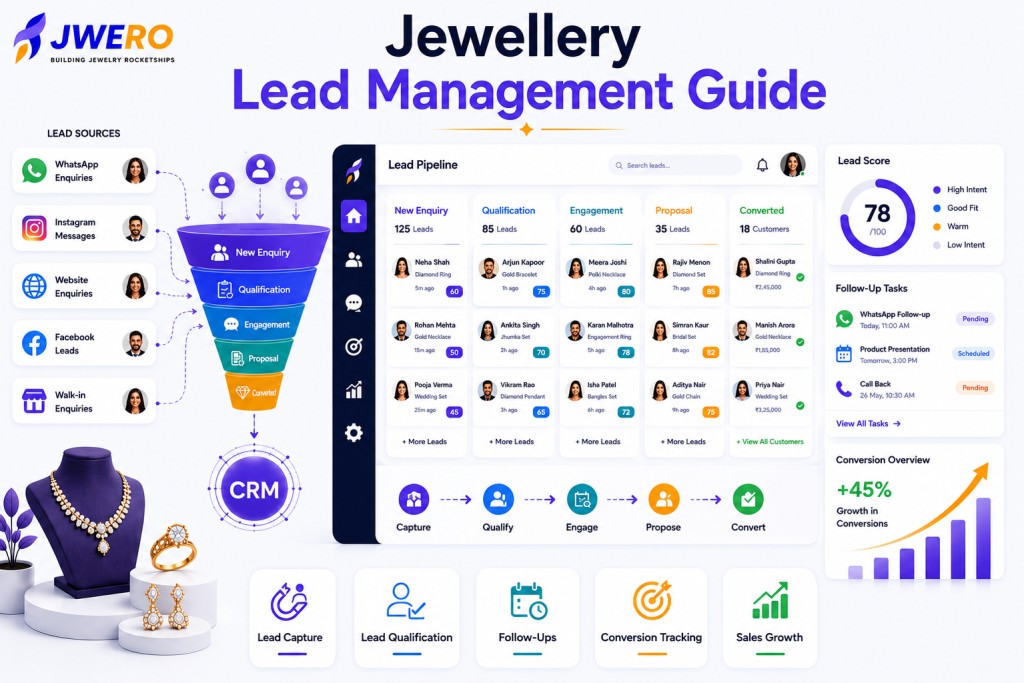
Why Traditional Lead Management Is Breaking
Traditional lead systems focus on activity.
The logic is simple:
- Capture more leads
- Increase follow-ups
- Push advisor accountability
- Measure response rates
In transactional industries, this works reasonably well.
Jewellery behaves differently.
Too many follow-ups create pressure.
Pressure damages trust.
That damage usually stays invisible until conversions start slowing down.
This is why many jewellery teams feel busy but still struggle with predictability.
The issue is not effort.
The issue is coordination.
A customer may already be:
- Browsing designs online
- Comparing stores quietly
- Revisiting products silently
- Waiting for family approval
Yet the system only sees:
“Lead pending follow-up.”
That disconnect creates friction.
Jewellery Buying Is Not a Task List
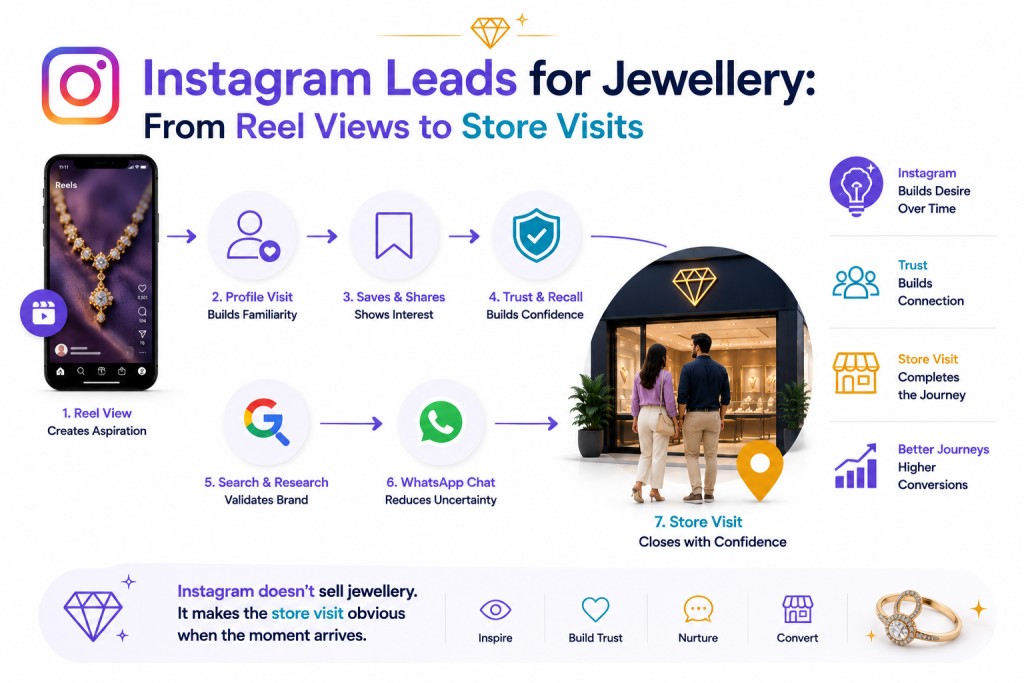
Jewellery decisions unfold slowly.
A customer may:
- Browse online today
- Visit a store next week
- Go silent for a month
- Return through WhatsApp later
- Buy after a family event
This is normal behaviour.
But traditional lead management treats pauses like failure.
That creates unnecessary pressure.
Lead orchestration sees the same journey differently.
Instead of asking:
“Why hasn’t the customer replied?”
It asks:
“What stage of confidence are they in?”
That shift changes how every channel behaves.
What Lead Orchestration Actually Means
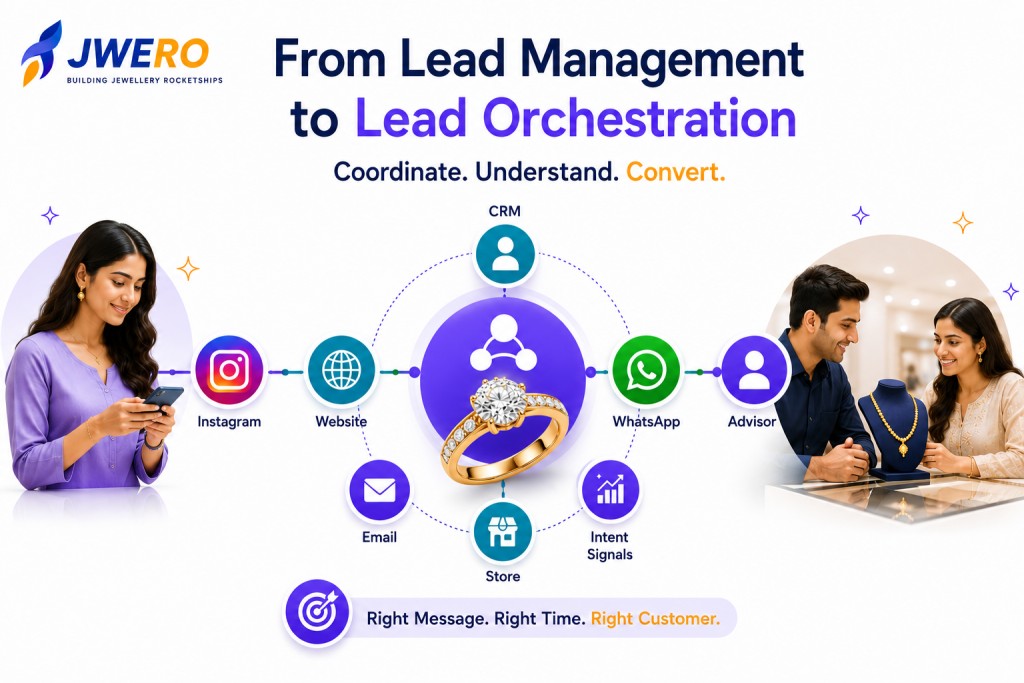
Lead orchestration means coordinating:
- Customer intent
- Timing
- Channels
- Human interaction
- Automation
The goal is not more communication.
The goal is better timing.
A strong orchestration system knows:
- When to wait
- When to nurture
- When to involve an advisor
- When to suppress follow-ups
- When a customer is actually ready
This creates calmer customer journeys.
And calmer journeys usually convert better in jewellery.
From Ownership to Alignment
Older lead models depend heavily on individuals.
One advisor owns the lead.
One person handles everything.
That creates inconsistency.
Results depend on:
- Experience
- Memory
- Discipline
- Availability
As businesses scale, this becomes fragile.
Lead orchestration changes the structure.
The system interprets intent.
The advisor handles meaningful conversations.
That distinction matters.
The business stops depending on heroic salespeople.
It starts with consistent customer journeys.
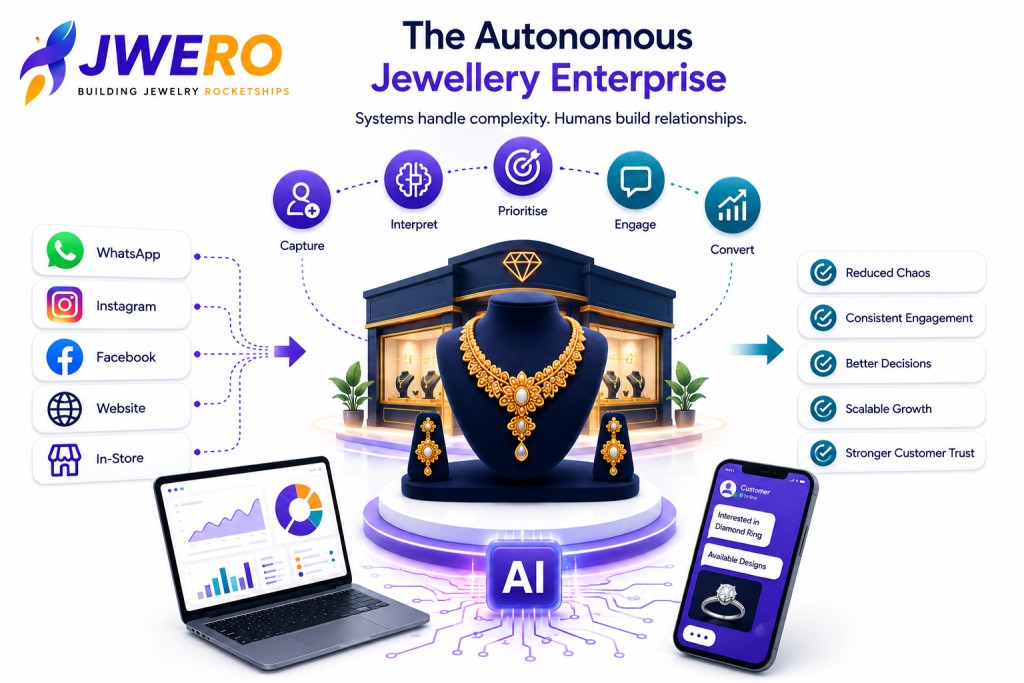
Coordinating Website, CRM & WhatsApp
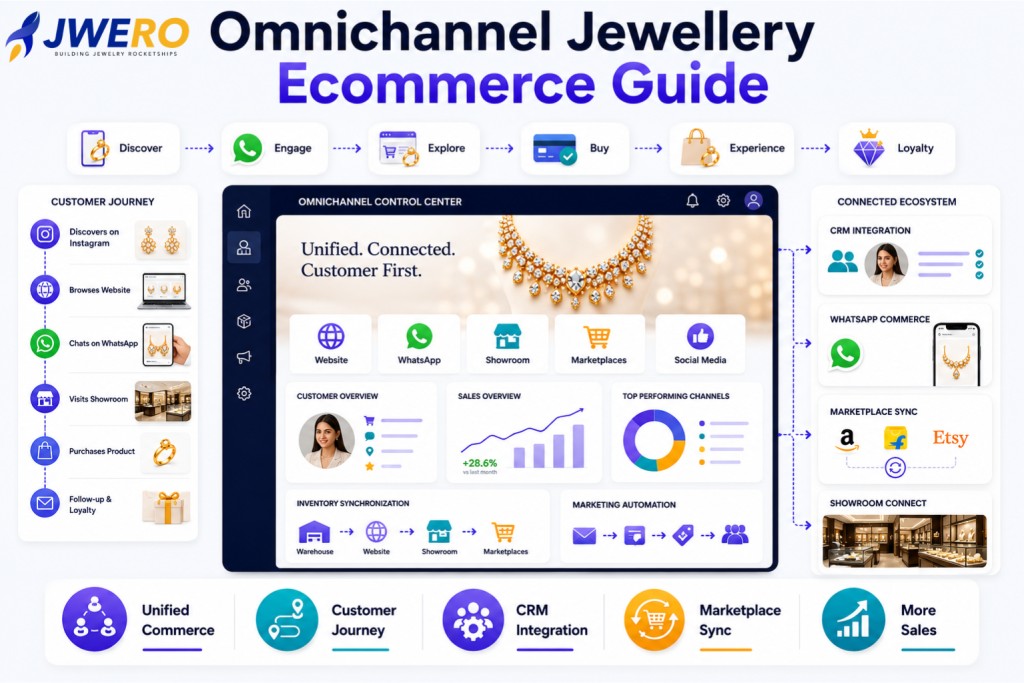
High-performing jewellery brands no longer let channels work independently.
Each channel plays a role.
- Websites capture browsing behaviour
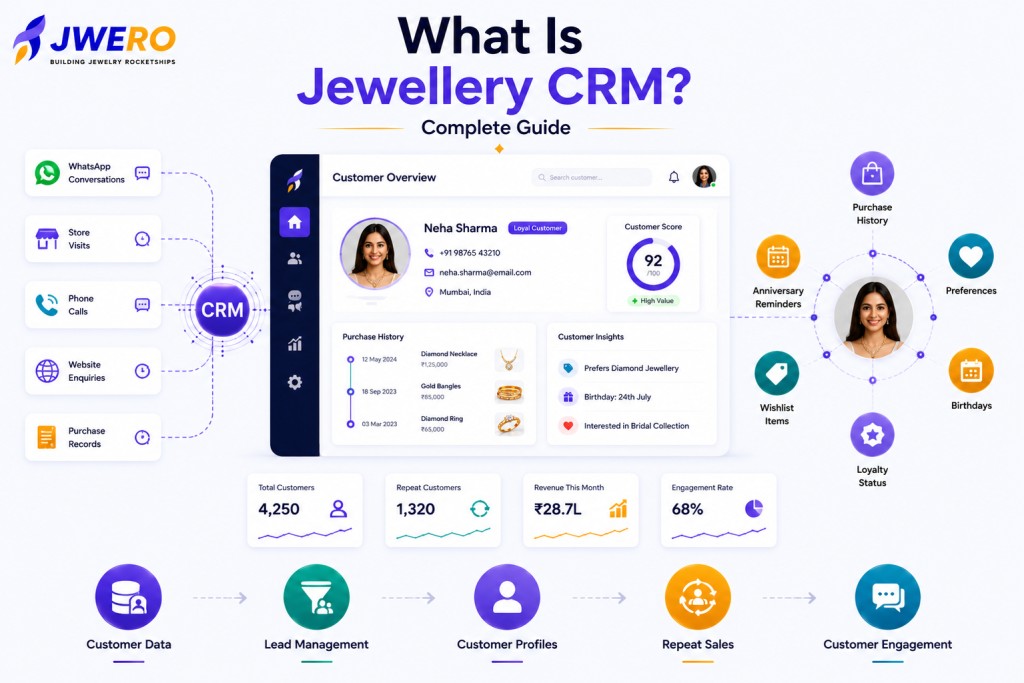
- CRM systems preserve context
- WhatsApp supports reassurance
- Store teams handle emotional closure
The experience feels connected.
Not fragmented.
This is where platforms like Jwero.ai help jewellery brands unify conversations and customer history across touchpoints.
Similarly, Jwero Chats helps teams maintain continuity across WhatsApp, Instagram, and other communication channels without losing customer context.
The customer should never feel like they are starting over.
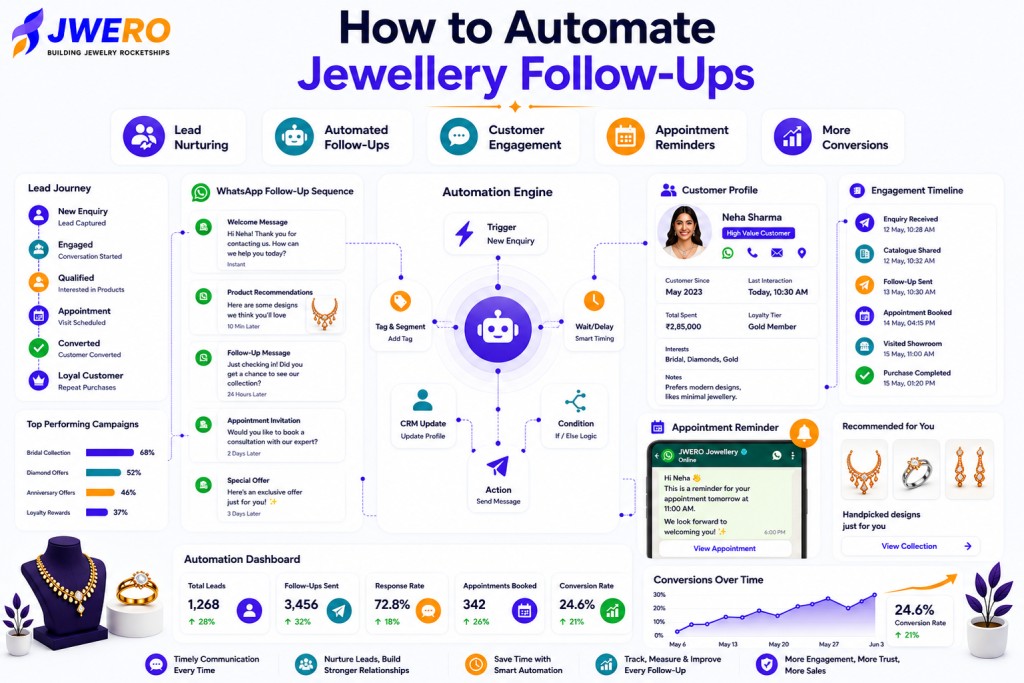
Why Silence Is Part of the Journey
Most lead systems panic during silence.
Jewellery buyers often go silent because they are:
- Thinking
- Comparing
- Discussing with family
- Waiting for timing alignment
Silence is not always disinterested.
Sometimes it is decision-making.
Good orchestration systems understand this.
They avoid unnecessary nudges.
They protect customer comfort.
And they react only when behaviour signals change.
This becomes especially important on platforms like Jwero WhatsApp, where over-following up can damage trust very quickly.
Advisors Should Guide, Not Chase
In weak systems, advisors become follow-up machines.
That creates:
- Stress
- Robotic conversations
- Generic outreach
- Poor timing
In orchestration-led businesses, advisors enter conversations with context.
They know:
- What the customer viewed
- Which products were revisited
- Whether store visits happened
- What conversations have already occurred
This changes behaviour completely.
The conversation becomes helpful instead of forceful.
Advisors stop asking:
“Should I follow up again?”
They start asking:
“What does this customer need right now?”
That is a healthier sales culture.
And customers feel the difference immediately.
Lead Management vs Lead Orchestration
| Area | Lead Management | Lead Orchestration |
|---|---|---|
| Focus | Activity | Intent |
| Follow-ups | Fixed schedules | Behaviour-based |
| Advisor role | Chasing | Guiding |
| Channels | Separate | Coordinated |
| Customer experience | Reactive | Consistent |
| Decision logic | Manual | Context-aware |
The biggest difference is emotional.
Customers feel managed in one system.
They feel understood in the other.
Why This Shift Matters for Jewellery Brands
Jewellery retail is becoming more complex every year.
More channels.
More stores.
More conversations.
More customer expectations.
Without orchestration:
- Teams burn out
- Follow-ups become noisy
- Customer journeys break
- Trust weakens quietly
With orchestration:
- Conversations become calmer
- Timing improves
- Store teams gain context
- Customers move naturally toward purchase
This is not just a technology upgrade.
It is a business maturity shift.
Final Thought
Lead management asks:
“Did we follow up?”Lead orchestration asks:
“Did we support the customer’s decision journey?”
That difference defines modern jewellery retail.
The brands growing strongest today are not necessarily louder.
They are better coordinated.
They understand that jewellery conversion is not about pressure.
It is about timing, memory, reassurance, and trust.
And those things cannot be managed through task lists alone.
They must be orchestrated.
Frequently Asked Questions
What is lead orchestration in jewellery retail?
Lead orchestration means coordinating customer journeys across WhatsApp, websites, Instagram, CRM systems, and store visits using behaviour and intent signals.
Why is traditional lead management failing in jewellery?
Because jewellery decisions are emotional and long-term. Fixed follow-ups often create pressure instead of trust.
How does WhatsApp fit into lead orchestration?
WhatsApp works best as a reassurance and continuity channel, not a pressure channel. Timing matters more than message frequency.
Can CRM alone handle jewellery customer journeys?
Not completely. CRM stores data, but orchestration systems connect timing, behaviour, channels, and advisor actions together.
Why is silence important in jewellery customer journeys?
Silence often represents consideration, family discussion, or confidence-building. Treating silence as failure creates unnecessary pressure.
Build Better Jewellery Customer Journeys
Discover how intelligent lead orchestration helps jewellery brands improve timing, reduce follow-up pressure, and create connected customer experiences across stores, WhatsApp, Instagram, and websites.
Explore:
Jwero.ai
- How jewellery brands manage customer journeys
- lead orchestration in jewellery retail
- Why jewellery follow-ups fail
- jewellery customer journey automation
- WhatsApp lead orchestration for jewellery stores