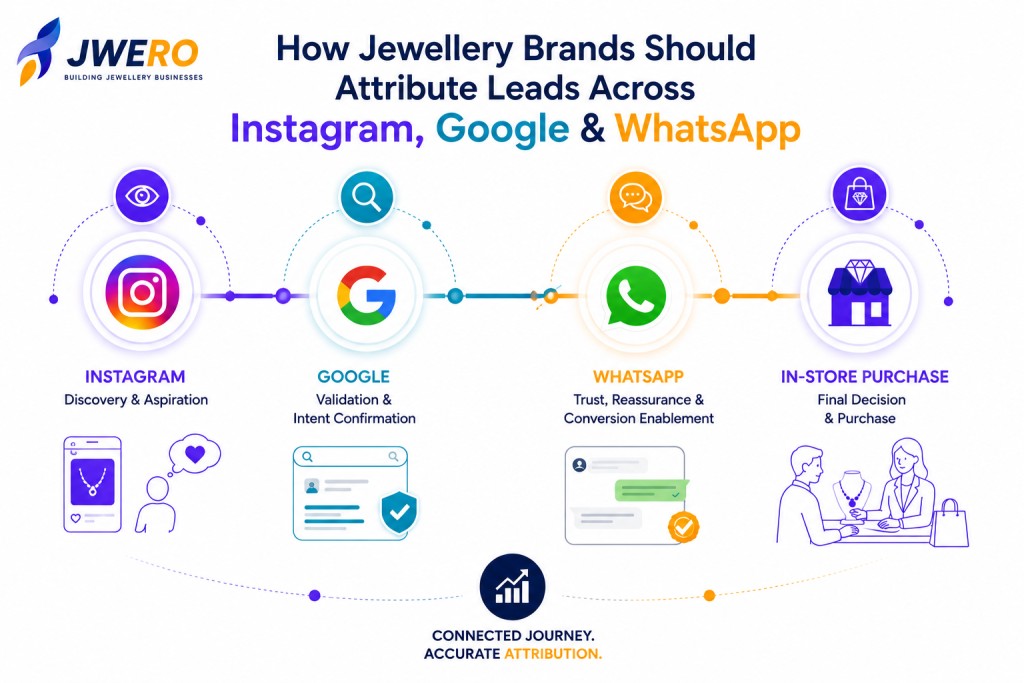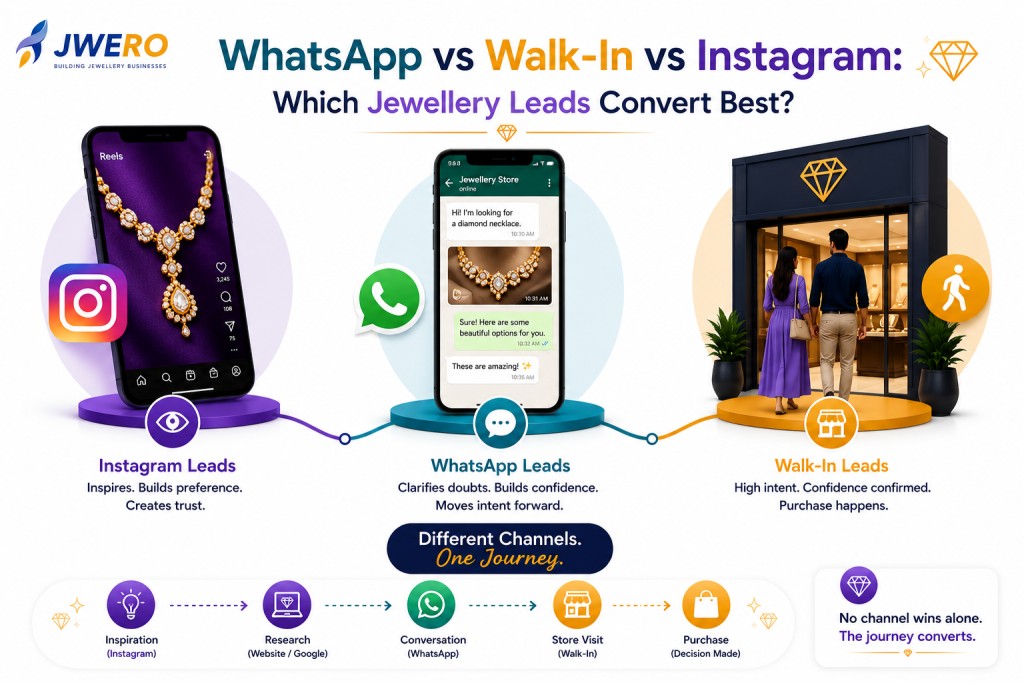


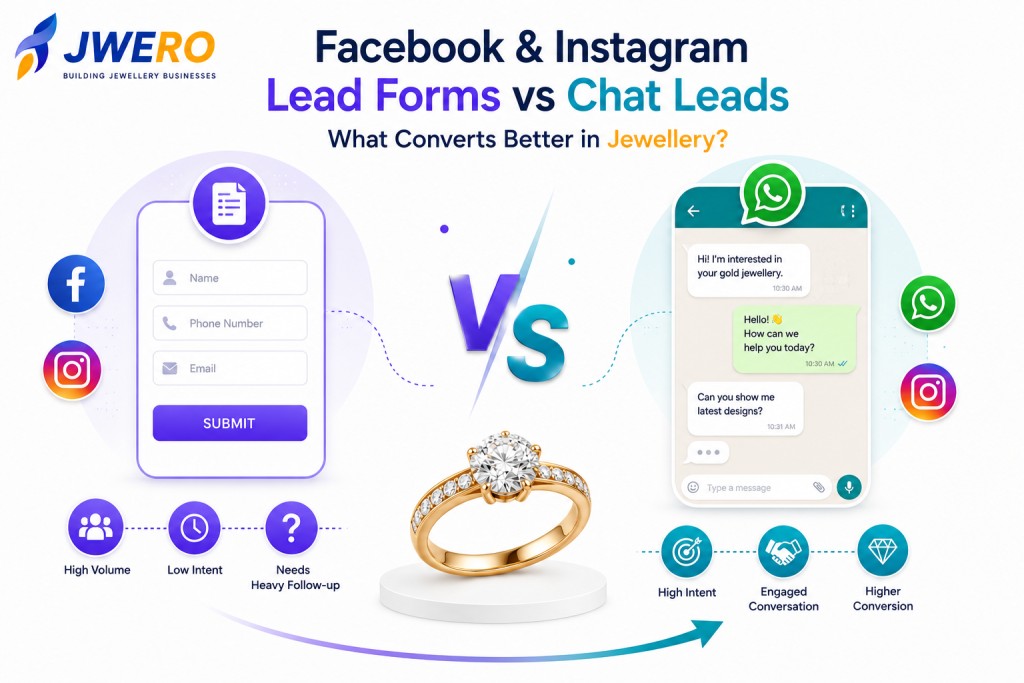
Jewellery brands generate huge numbers of leads every month.
Especially from:
- Facebook ads
- Instagram campaigns
- click-to-chat campaigns
- WhatsApp journeys
But internally, one problem keeps repeating:
“Why are lead volumes high but conversions inconsistent?”
Usually, the issue is not the ad creative.
And not the budget.
The real issue is misunderstanding lead intent.
Because in jewellery retail, not all leads behave the same way.
A customer filling a lead form behaves very differently from a customer starting a WhatsApp conversation voluntarily.
And that difference changes conversion quality dramatically.
Table of Contents
- Why Jewellery Leads Behave Differently
- Why Facebook & Instagram Lead Forms Create Volume
- Why Lead Forms Often Convert Poorly
- Why Chat Leads Show Stronger Intent
- Why Chat Leads Convert Better in Jewellery
- The Mistake of Treating Both Leads the Same
- The Smart Way to Use Lead Forms & Chat Leads Together
- What Jewellery CXOs Should Understand About Lead Quality
- Why Intent Clarity Matters More Than Lead Volume
1. Why Jewellery Leads Behave Differently
Jewellery purchases are emotionally sensitive.
Customers usually:
- explore slowly
- compare quietly
- delay decisions
- involve family
- avoid pressure
That changes how lead generation works.
In fast-moving industries, quick form fills often indicate strong buying intent.
In jewellery, forms often capture emotional curiosity instead.
That distinction matters operationally.
Because jewellery conversion depends heavily on comfort and confidence.
Not urgency.
2. Why Facebook & Instagram Lead Forms Create Volume
Lead forms are designed for speed.
They reduce friction aggressively.
Customers can submit details quickly without leaving the platform.
That creates:
- lower cost-per-lead
- Higher lead volume,
- faster campaign scaling
From a reporting perspective, this looks excellent.
But jewellery behaviour tells a different story underneath.
Most lead forms actually capture:
- browsing curiosity
- aspirational interest
- early exploration
- “save for later” behaviour
Not immediate readiness.
That is why many jewellery businesses generate huge lead databases but still struggle with conversion consistency.
3. Why Lead Forms Often Convert Poorly
Lead forms create a hidden psychological problem.
Customers submit details casually.
Then suddenly receive:
- repeated calls
- aggressive WhatsApp follow-ups
- appointment pushes
- sales-heavy messaging
The emotional gap becomes too large too quickly.
Customers often feel:
- rushed
- pressured
- interrupted
- misunderstood
Many disengage silently afterwards.
Not because the product was weak.
But the interaction timing felt premature.
This is where many jewellery CRM systems create pressure unintentionally.
Especially when lead forms and stronger intent signals are treated identically.
4. Why Chat Leads Show Stronger Intent
Chat leads behave differently from the beginning.
A customer who starts:
- a WhatsApp conversation
- an Instagram DM
- a click-to-chat enquiry
Is actively choosing engagement.
That creates a clearer intent immediately.
Not necessarily “hotter” intent.
But clearer intent.
Chat leads indicate:
- conversational willingness
- emotional comfort
- trust openness
- active curiosity
Customers entering conversations voluntarily usually feel more psychologically prepared than customers passively submitting forms.
That changes the entire engagement dynamic.
5. Why Chat Leads Convert Better in Jewellery
Chat leads usually convert better because customers maintain control.
And control matters enormously in jewellery retail.
Strong jewellery conversations:
- unfold naturally
- allow pauses
- reduce pressure
- build reassurance gradually
This is why platforms like Jwero WhatsApp and Jwero Instagram increasingly focus on conversational continuity instead of aggressive follow-up structures.
Because jewellery customers convert better when conversations feel calm.
Not transactional.
6. The Mistake of Treating Both Leads the Same
This is where many jewellery businesses create operational inefficiency.
Lead forms and chat leads often enter:
- the same CRM
- the same workflow
- the same follow-up sequence
That creates several problems:
- Weak leads get over-pressured
- stronger leads get under-prioritised
- advisors burn time inefficiently
- Intent clarity gets lost
Different lead behaviours require different handling logic.
Otherwise, businesses optimise volume instead of conversion quality.
7. The Smart Way to Use Lead Forms & Chat Leads Together
Both lead types still matter.
Just differently.
Lead Forms Work Best For:
- long-term nurturing
- remarketing journeys
- design discovery
- low-pressure brand familiarity
They should not trigger aggressive sales behaviour immediately.
Chat Leads Work Best For:
- active engagement
- faster clarification
- appointment coordination
- reassurance-building conversations
This is where connected systems like Jwero Chats become operationally valuable.
Because they help jewellery brands preserve customer context across longer decision journeys.
8. What Jewellers Should Understand About Lead Quality
Many leadership teams focus too heavily on:
- CPL
- lead counts
- campaign volume
But volume alone rarely predicts jewellery revenue accurately.
The more important questions are:
- How clear was the intent?
- How much pressure did the journey create?
- How naturally did confidence develop?
Lead forms usually scale visibility.
Chat leads usually scale conversion efficiency.
Both matter.
But they serve different business purposes.
9. Why Intent Clarity Matters More Than Lead Volume
Jewellery brands often chase more leads.
But stronger growth usually comes from understanding intent more accurately.
Because:
- Curiosity is not readiness
- Conversation is not a purchase
- Volume is not confidence
The strongest jewellery businesses increasingly focus on:
- behavioural understanding
- calmer engagement
- context continuity
- customer-controlled progression
That is where platforms like Jwero.ai and Jwero Facebook become strategically useful.
Because connected journeys outperform disconnected lead chasing over time.
Final Thought
Lead forms capture interest.
Chat leads capture conversational intent.
Those are very different things in jewellery retail.
The brands growing strongest today are not simply generating more leads.
They are identifying:
- which customers are exploring
- Which customers are comparing,
- and which customers are emotionally progressing toward purchase
That is what makes jewellery conversion predictable instead of reactive.
Because in jewellery retail, intent clarity almost always matters more than lead volume.
FAQs
Do chat leads convert better than form leads in jewellery?
Yes. Chat leads usually show stronger intent clarity because customers voluntarily begin conversations.
Why do jewellery lead forms perform inconsistently?
Many form submissions represent early curiosity instead of true buying readiness.
Are Facebook and Instagram lead forms useless for jewellery brands?
No. They work well for awareness and long-term nurturing, but should not be treated as immediate high-intent leads.
Why are WhatsApp leads important in jewellery retail?
WhatsApp helps customers ask questions comfortably and build confidence gradually before purchasing.
How should jewellery brands handle lead forms differently?
Lead forms should enter softer nurturing journeys instead of aggressive follow-up workflows.
Build Jewellery Lead Journeys Around Real Intent
Different lead types require different customer journeys.
The right systems help jewellery brands separate curiosity from readiness, preserve conversational context, and improve conversion quality across Facebook, Instagram, WhatsApp, and showroom interactions.
Explore:
- Jwero.ai
- Jwero Chats
- Jwero WhatsApp
- Do chat leads convert better in jewellery
- Facebook lead forms vs WhatsApp leads
- Jewellery Instagram lead quality explained
- best lead type for jewellery brands