

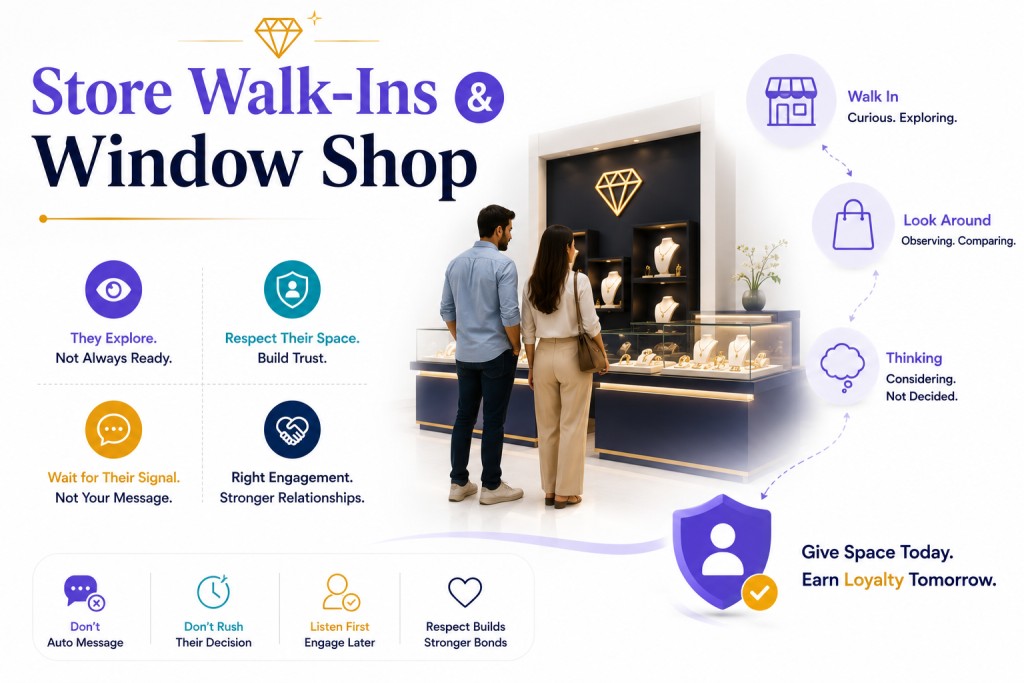
Jewellery store visits are deeply misunderstood.
Most retailers treat them as buying signals.
Very often, they are not.
People walk into jewellery stores for many reasons:
- curiosity
- emotional exploration
- comparison
- reassurance
- inspiration
Sometimes they are testing comfort more than readiness.
That changes how follow-ups should work.
A customer entering a store does not automatically invite ongoing communication.
And when brands misunderstand this moment, trust weakens quietly.
Table of Contents
- Why Jewellery Store Visits Feel Different
- Why Offline Browsing Feels More Personal
- Common Store Walk-In Follow-Up Mistakes
- The Hidden Cost of Store-Triggered Messaging
- When Follow-Ups Actually Make Sense
- What Jewellery Store Visits Should Trigger Instead
- Why Silence Often Builds More Trust
- Rethinking Jewellery Follow-Up Automation
1. Why Jewellery Store Visits Feel Different
Jewellery retail is emotional.
Customers rarely walk in with full certainty.
Many visitors are:
- undecided
- exploring quietly
- accompanied by family
- emotionally cautious
A store visit often answers one question:
“How does this feel in real life?”
Not:
“Am I ready to purchase?”
That difference matters.
Because most automation systems still treat store visits like strong buying intent.
And that creates pressure too early.
2. Why Offline Browsing Feels More Personal
This surprises many brands.
Online browsing often feels anonymous.
Offline browsing feels socially exposed.
Inside a jewellery showroom, customers may worry about:
- judgement
- expectations
- budget assumptions
- sales pressure
They are already emotionally aware during the visit.
So when a follow-up message arrives afterwards, it can feel heavier than expected.
Especially if the customer never requested ongoing communication.
That delayed pressure often feels more uncomfortable than direct in-store selling.
3. Common Store Walk-In Follow-Up Mistakes
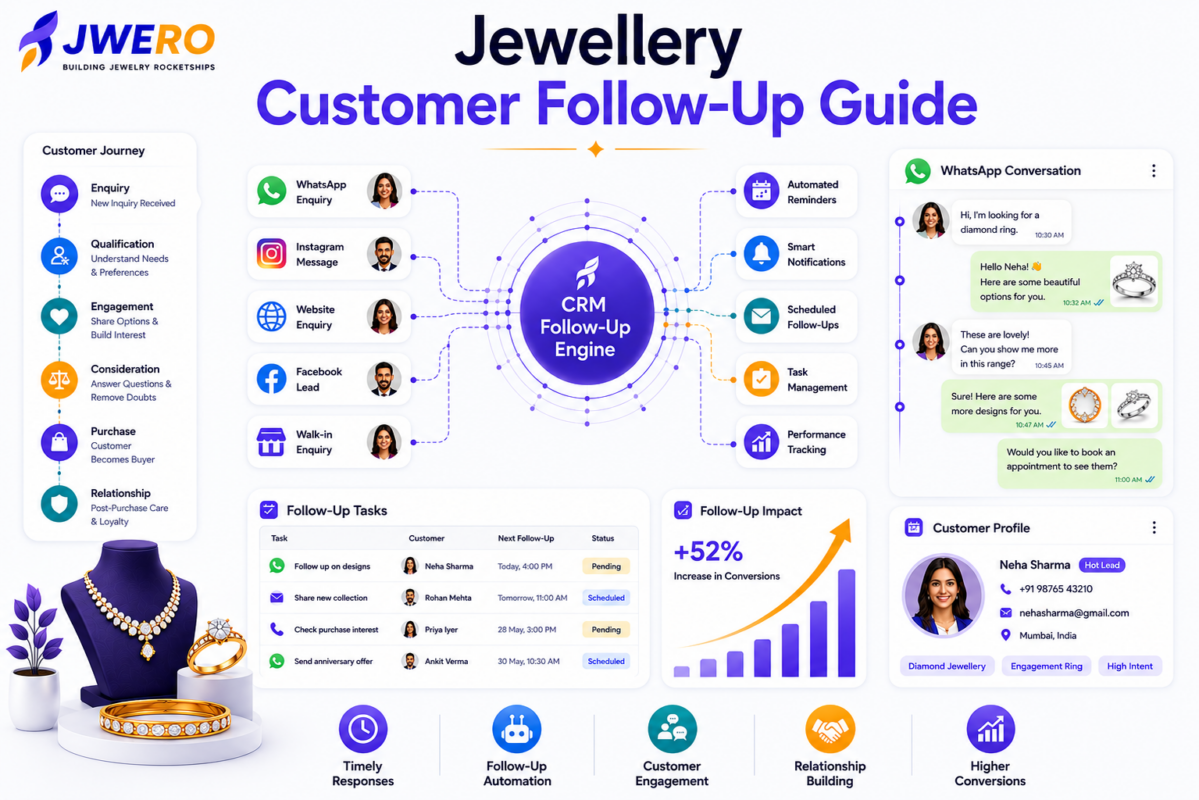
Many jewellery brands automate follow-ups too aggressively after visits.
The intention may be good.
But the experience often feels intrusive.
“Thanks for Visiting Our Store” Messages
Messages like:
“Hope you enjoyed your visit today.”
may appear polite internally.
But customers often interpret them differently.
The message can:
- create obligation
- imply expectation
- turn a casual visit into active selling
That shift changes the emotional tone immediately.
Associate-Logged Visit Triggers
Sales teams frequently log:
- walk-ins
- trial sessions
- design discussions
- casual conversations
Problems begin when these notes automatically trigger outreach later.
Customers start feeling remembered too closely.
Especially after exploratory visits.
Good jewellery CRM systems should preserve context internally without forcing immediate communication externally.
That distinction matters.
Window Shopping & Mall Footfall Tracking
This is where many brands cross the line.
Wi-Fi triggers, beacon tracking, and location-based messaging can feel deeply uncomfortable in jewellery retail.
Customers do not experience this as service.
They experience it as surveillance.
Luxury retail depends heavily on emotional comfort.
Once customers feel watched, trust becomes difficult to rebuild.
4. The Hidden Cost of Store-Triggered Messaging
The damage rarely appears instantly.
Customers usually do not complain.
Instead, they quietly slow down engagement.
This matters because jewellery buying often involves:
- family conversations
- partner discussions
- emotional timing
- financial consideration
A follow-up message after a visit can unintentionally create pressure inside those private discussions.
That pressure increases hesitation.
Not confidence.
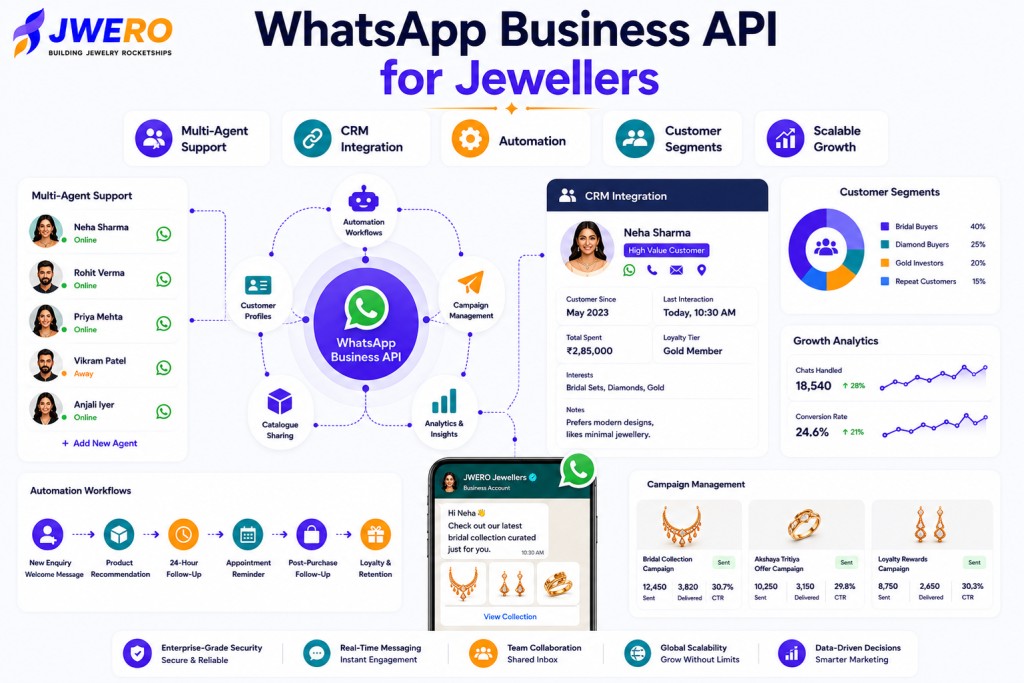
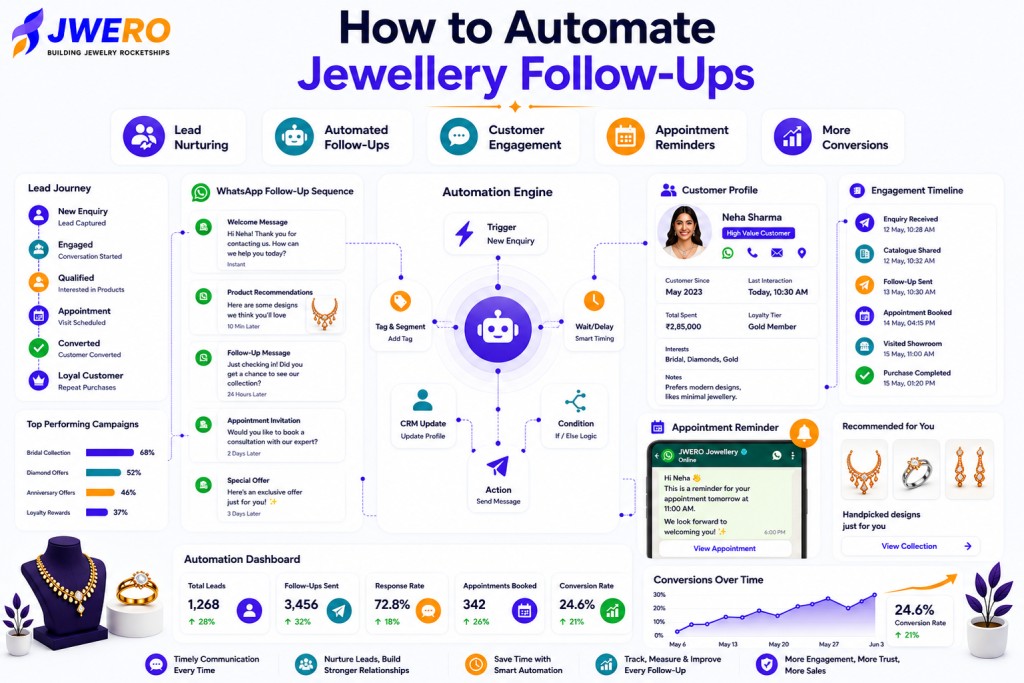
Many jewellers now use centralized communication systems like Jwero Chats to reduce duplicate outreach and maintain calmer customer journeys across channels.
Because not every interaction needs immediate follow-up.
5. When Follow-Ups Actually Make Sense
There are situations where post-visit communication is completely reasonable.
But the trigger should come from customer intent.
Not from store entry itself.
When the Customer Requests Information
Examples include:
- “Please WhatsApp these designs.”
- “Can you send the quotation later?”
- “Share the diamond details with me.”
Here, the customer clearly initiated the next step.
That changes the interaction completely.
The automation is responding to permission.
Not forcing continuity.
This is where tools like Jwero WhatsApp can help jewellery teams maintain structured follow-ups without becoming overwhelming.
When an Appointment or Service Is Booked
Some actions naturally justify communication.
For example:
- custom design consultations
- home trials
- repair updates
- booked appointments
But even here, the tone matters.
The communication should:
- confirm details
- reduce uncertainty
- provide reassurance
Not aggressively upsell.
6. What Jewellery Store Visits Should Trigger Instead
Most jewellery walk-ins should improve internal understanding.
Not customer pressure.
Pause Digital Noise
After a store visit, brands should often reduce outreach temporarily.
Because the store itself is already an active engagement channel.
Good systems suppress unnecessary messaging during this phase.
That creates breathing room for the customer.
Improve Internal Context
Store notes remain valuable internally.
They help teams remember:
- preferences
- designs viewed
- sizing discussions
- emotional cues
But customer memory inside a CRM does not equal messaging permission.
That is an important distinction.
Platforms like Jwero.ai help jewellery businesses centralize this context without automatically converting every interaction into outbound communication.
Return Control to the Customer
After a showroom visit, the safest next step is often patience.
The customer should feel free to return naturally.
Without pressure.
Without repeated nudges.
Without feeling tracked.
Silence can communicate confidence better than constant follow-ups.
7. Why Silence Often Builds More Trust
Many jewellery teams fear silence.
They assume:
“If we don’t follow up, we will lose the customer.”
But jewellery buying does not work like fast ecommerce.
Customers often return when they feel:
- comfortable
- respected
- emotionally safe
- unpressured
Over-following creates the opposite effect.
It removes emotional space.
And emotional space matters enormously in luxury retail.
8. Rethinking Jewellery Follow-Up Automation
The old mindset was simple:
“We met the customer, so we should follow up.”
The smarter mindset is different:
“We met the customer, so now we should step back.”
The store visit already created the relationship moment.
Good automation should protect that trust.
Not weaken it through unnecessary urgency.
Jewellery brands that understand this usually create calmer customer experiences.
And calmer experiences often convert better over time.
Final Thought
A jewellery store visit is not automatic permission for continued messaging.
That distinction is becoming increasingly important.
The strongest jewellery brands today understand something subtle:
Respect creates stronger customer relationships than persistence.
Especially after walk-ins.
Sometimes the best follow-up is simply giving the customer space to return willingly.
FAQs
Should jewellery stores follow up after walk-ins?
Only when the customer explicitly requests communication or books a specific service or appointment.
Why do jewellery customers dislike post-visit follow-ups?
Many customers view unexpected follow-ups as pressure, especially after casual or exploratory visits.
Are automated WhatsApp messages after store visits effective?
Not always. Poorly timed messages can reduce trust and make customers disengage quietly.
What should jewellery CRM systems do after showroom visits?
They should preserve customer context internally while avoiding unnecessary outbound communication.
How can jewellery brands improve customer trust after store visits?
By reducing pressure, coordinating communication better, and respecting customer timing.
Build Jewellery Customer Journeys That Feel Respectful
Jewellery customers value comfort, timing, and emotional space.
The right systems help brands coordinate conversations, preserve context, and reduce unnecessary follow-ups across online and offline journeys.
Explore:
- Jwero.ai
- Jwero Chats
- Jwero WhatsApp
- should jewellery stores follow up after walk-ins
- why jewellery window shoppers avoid follow-ups
- jewellery store visit automation mistakes
- how jewellery brands should handle walk-in customers