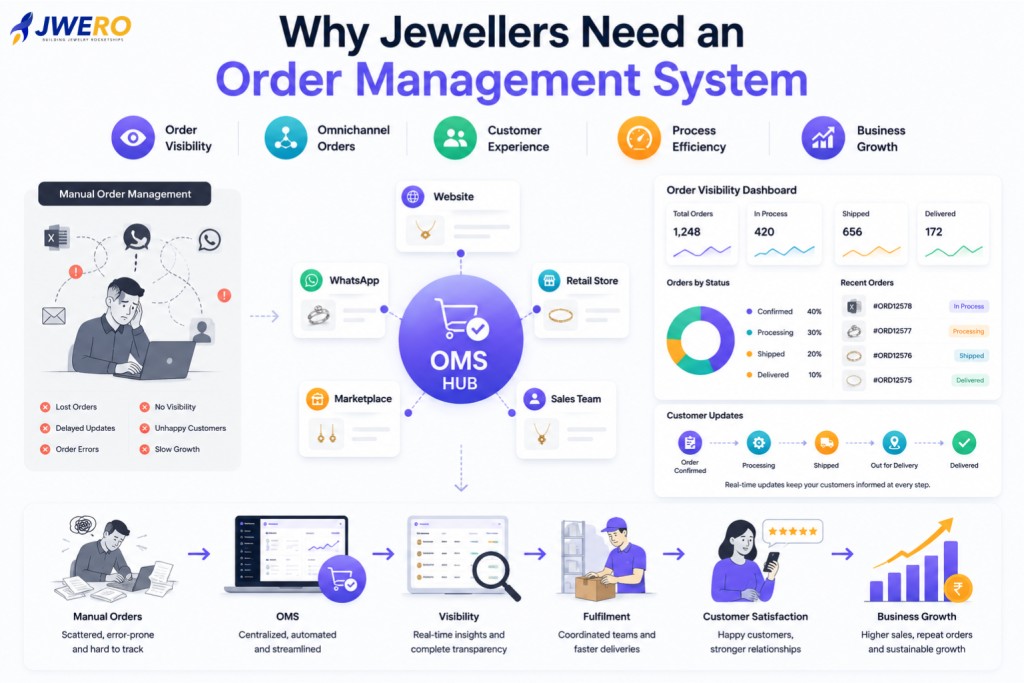


The way customers buy jewellery has changed dramatically.
A customer may discover a product on Instagram, enquire through WhatsApp, visit a showroom, place an order online, and request delivery updates through customer service.
This is no longer unusual.
It is the new normal.
As customer journeys become more connected, jewellery businesses need a better way to manage orders across every touchpoint.
This is where omnichannel order management becomes critical.
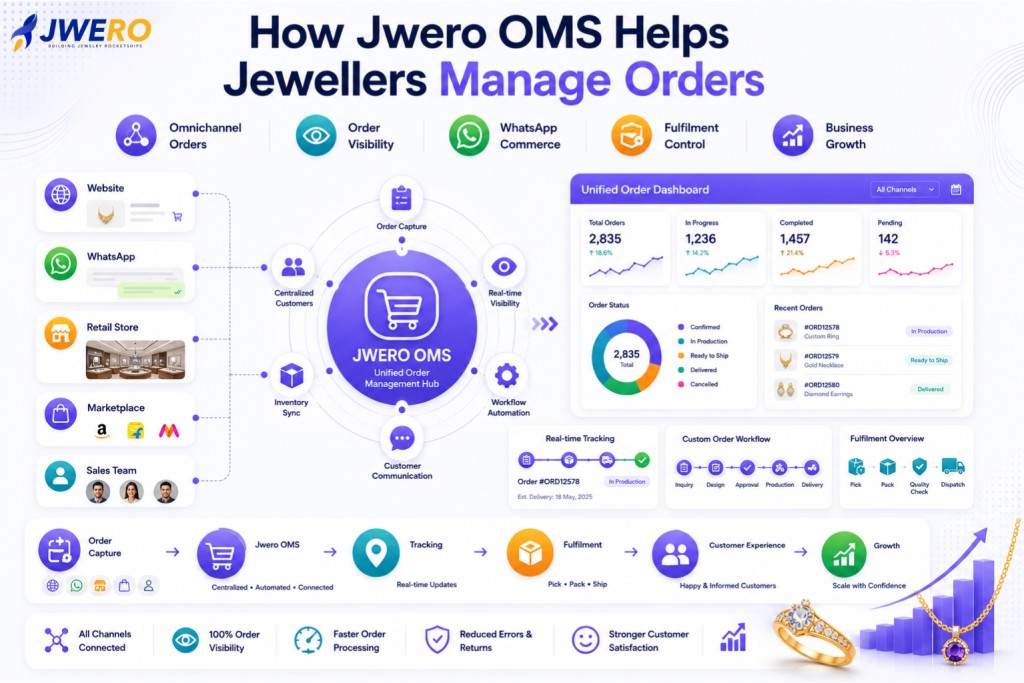
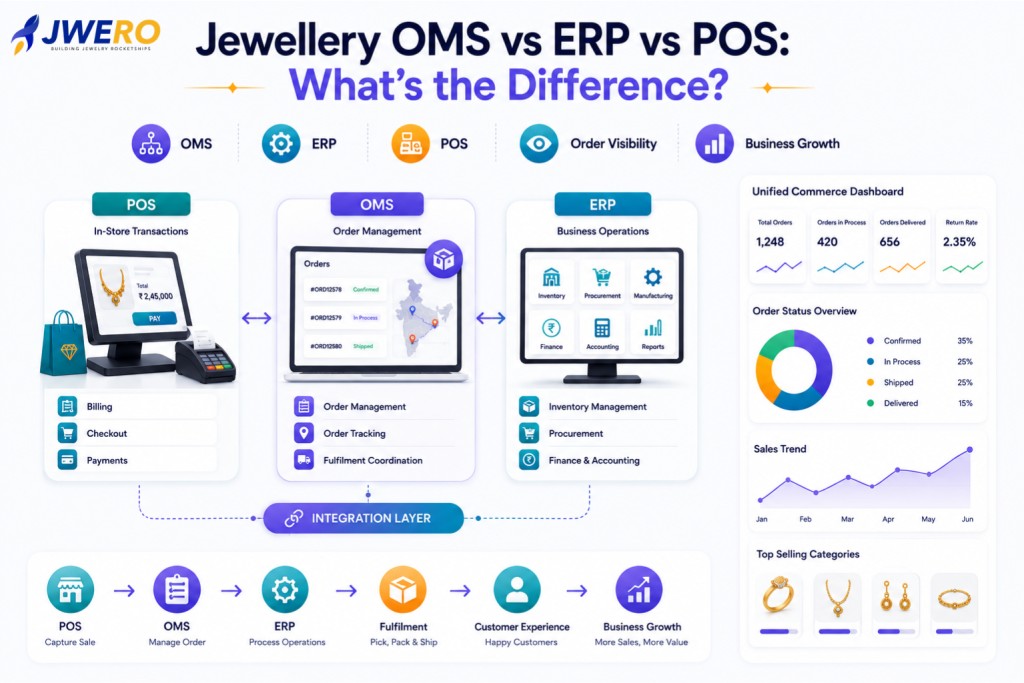
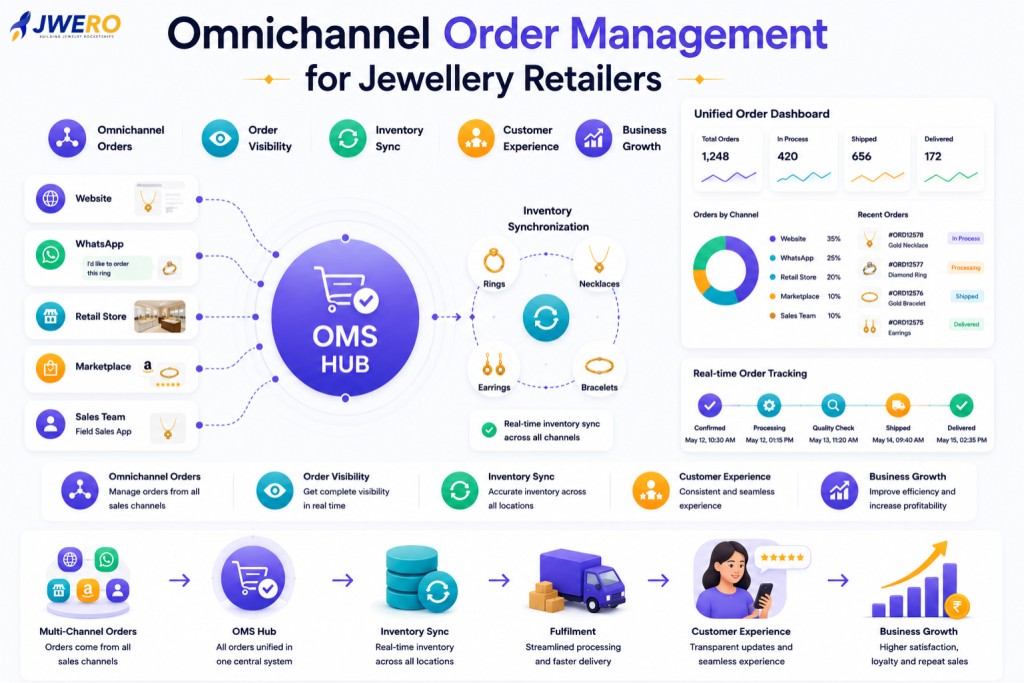
An omnichannel Order Management System (OMS) helps jewellery retailers manage orders from multiple channels through a centralized platform, ensuring better visibility, faster fulfilment, and a consistent customer experience.
In this guide, we’ll explore how omnichannel order management works and why it has become essential for modern jewellery retailers.
What Is Omnichannel Order Management?
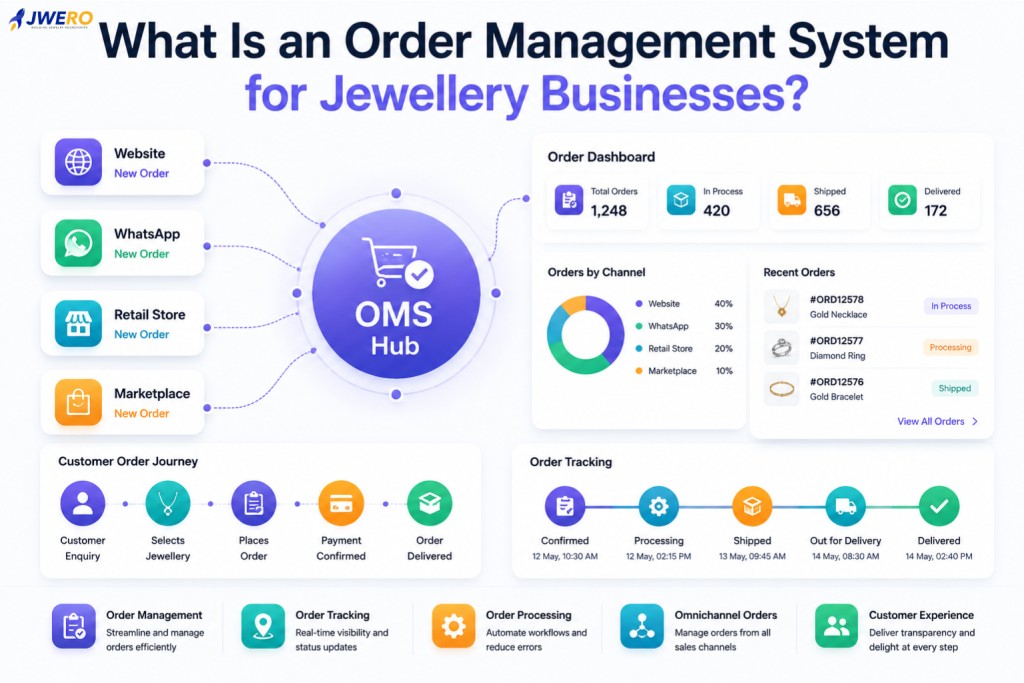
Omnichannel order management is the process of managing customer orders from multiple sales channels through a single system.
Rather than tracking orders separately, businesses consolidate all order activity into one centralized workflow.
Typical channels include:
- Ecommerce Website
- Retail Store
- Marketplace
- Sales Team
- Franchise Locations
The goal is simple:
Create one unified view of every customer order.
Why Omnichannel Matters in Jewellery Retail
Jewellery customers rarely purchase through a single channel.
A typical customer journey may look like this:
- Discover product on Instagram
- Request details through WhatsApp
- Visit the showroom
- Compare options online
- Place an order
- Track delivery through customer support
Without omnichannel order management, these interactions become disconnected.
Customers receive inconsistent experiences and teams struggle to coordinate information.
The Challenges of Managing Orders Across Multiple Channels
As businesses expand into new channels, complexity increases.
Common challenges include:
- Duplicate Orders
- Inventory Conflicts
- Delayed Fulfilment
- Inconsistent Customer Information
- Poor Visibility
- Communication Gaps
- Manual Data Entry
These problems become more severe as order volumes increase.
Centralized Order Visibility
One of the biggest advantages of omnichannel order management is visibility.
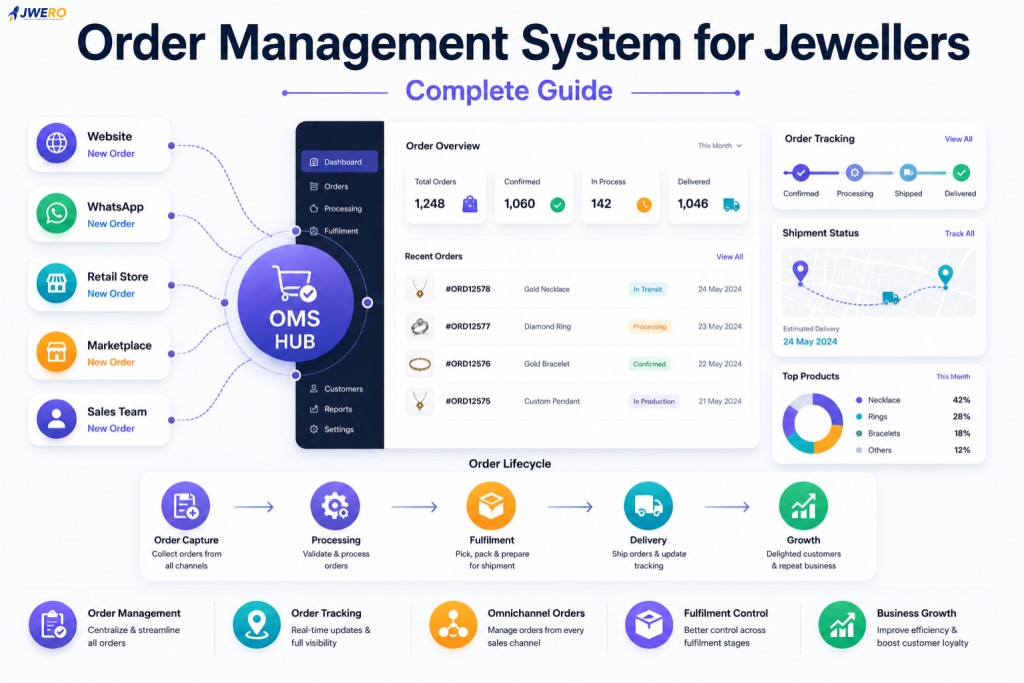
Every order becomes accessible from a single platform.
Teams can see:
- Order Status
- Customer Information
- Payment Status
- Inventory Allocation
- Fulfilment Progress
- Delivery Updates
This eliminates information silos and improves decision-making.
Connecting Online and Offline Sales
Many jewellery businesses operate both physical and digital channels.
Examples include:
- Retail Showrooms
- Ecommerce Websites
- WhatsApp Commerce
- Instagram Shopping
- Marketplace Listings
Without integration, each channel operates independently.
An omnichannel OMS connects these touchpoints into one ecosystem.
This creates a consistent experience regardless of where the order originates.
Inventory Synchronization Across Channels
Inventory visibility is critical in jewellery retail.
Without synchronization, businesses often experience:
- Overselling
- Duplicate Allocation
- Stock Discrepancies
- Fulfilment Delays
An omnichannel OMS helps maintain inventory consistency across all channels.
Customers receive accurate availability information regardless of where they engage.
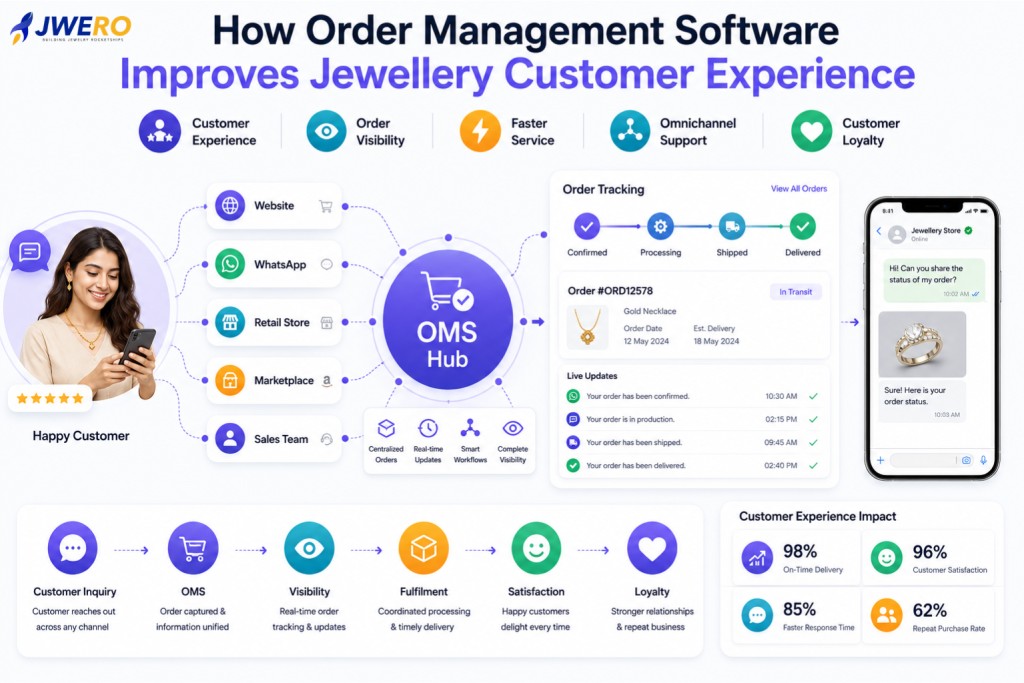
Better Customer Experience
Customers do not think in channels.
They think in experiences.
They expect businesses to remember:
- Previous Conversations
- Product Preferences
- Order Status
- Purchase History
Omnichannel order management helps create a seamless experience throughout the customer journey.
This improves satisfaction and trust.
WhatsApp and Omnichannel Commerce
WhatsApp has become a major sales channel for jewellery businesses.
Customers frequently use WhatsApp to:
- Request Catalogues
- Ask Questions
- Confirm Orders
- Track Deliveries
- Request Product Modifications
When WhatsApp operates independently, order visibility becomes limited.
An omnichannel OMS connects WhatsApp activity with order workflows.
This improves communication and operational efficiency.
Managing Custom Jewellery Orders
Custom jewellery projects often span multiple channels.
A customer may:
- Discover designs online
- Discuss requirements on WhatsApp
- Visit the showroom
- Approve designs remotely
- Track production updates
Omnichannel visibility ensures every interaction remains connected.
This improves both customer experience and project management.
Real-Time Order Tracking
Customers increasingly expect transparency.
They want updates about:
- Order Confirmation
- Production Status
- Quality Checks
- Dispatch
- Delivery
An omnichannel OMS enables real-time tracking across all channels.
Customers receive consistent information regardless of where they ask.
Team Collaboration Improves
Order fulfilment involves multiple departments.
Examples include:
- Sales Team
- Customer Service
- Inventory Team
- Production Team
- Logistics Team
A centralized OMS ensures everyone works from the same information.
This reduces delays and improves accountability.
Business Benefits of Omnichannel Order Management
Implementing omnichannel order management provides significant advantages.
- Better Customer Experience
- Faster Order Processing
- Improved Inventory Visibility
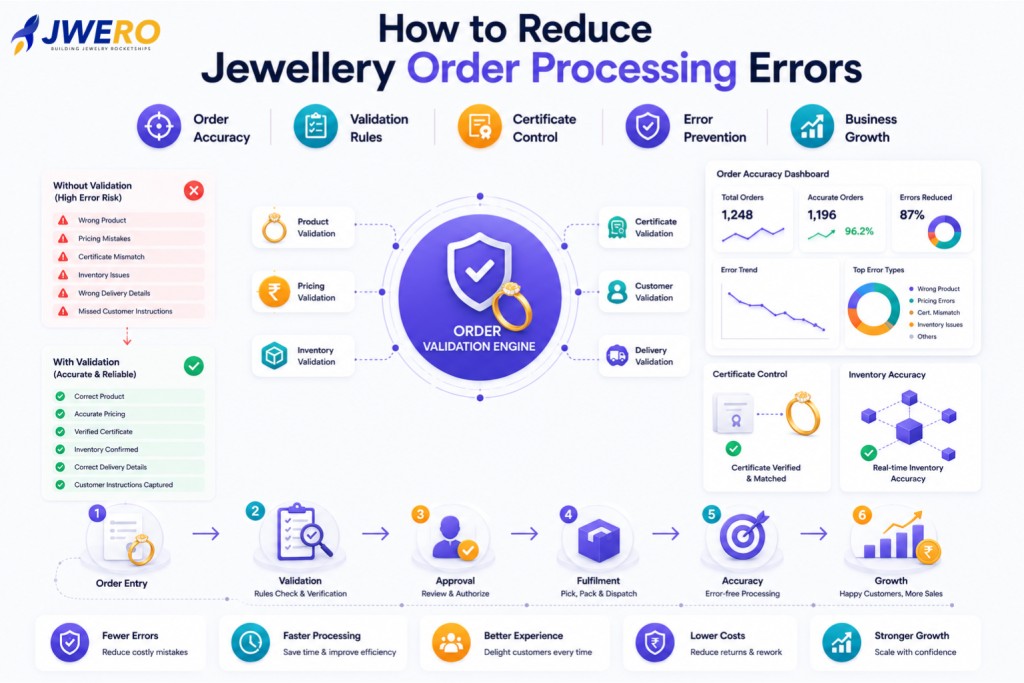
- Reduced Errors
- Better Team Coordination
- Increased Customer Trust
- Improved Scalability
As businesses grow, these benefits become increasingly valuable.
Signs Your Business Needs Omnichannel Order Management
You may benefit from omnichannel order management if:
- Orders come from multiple channels.
- Teams struggle to track order status.
- Customers receive inconsistent updates.
- Inventory visibility is limited.
- Manual processes are increasing.
- Order errors are becoming common.
These are often indicators that disconnected systems are creating operational challenges.
The Future of Omnichannel Order Management
Order management is becoming increasingly connected and intelligent.
Future OMS platforms will include:
- AI-Powered Routing
- Predictive Fulfilment
- Automated Customer Updates
- Real-Time Inventory Visibility
- Connected Commerce Ecosystems
- Unified Customer Views
The future belongs to businesses that can deliver seamless experiences across every channel.
How Jwero OMS Supports Omnichannel Order Management
Jwero OMS helps jewellery businesses manage orders across every sales channel through a centralized platform.
Capabilities include:
- Omnichannel Order Capture
- Real-Time Visibility
- WhatsApp Order Management
- Inventory Synchronization
- Custom Order Tracking
- Fulfilment Coordination
- Customer Communication
- Order Analytics
Rather than managing separate systems, jewellers can operate through one connected commerce ecosystem.
The result is better customer experiences, improved efficiency, and greater operational control.
Final Thoughts
Modern jewellery customers move seamlessly between online and offline channels.
Businesses that continue managing orders through disconnected systems often struggle to keep up.
Omnichannel order management creates a centralized framework that improves visibility, customer experience, and operational efficiency.
As jewellery retail becomes increasingly connected, omnichannel order management is no longer optional.
It is becoming a core requirement for sustainable growth.
Frequently Asked Questions
What is omnichannel order management?
Omnichannel order management is the process of managing orders from multiple sales channels through a centralized system.
Why is omnichannel order management important for jewellers?
It improves visibility, customer experience, inventory accuracy, and operational efficiency.
Can omnichannel OMS manage WhatsApp orders?
Yes. Modern OMS platforms can connect WhatsApp conversations with structured order workflows.
How does omnichannel order management improve customer experience?
Customers receive consistent information, real-time updates, and seamless service across every channel.
Is omnichannel order management only for large retailers?
No. Growing jewellery businesses often benefit significantly from implementing omnichannel workflows early.