

The jewellery industry has become more complex than ever before.
Customers no longer follow a simple path from store visit to purchase.
They discover products on Instagram, enquire through WhatsApp, browse ecommerce websites, compare options online, visit physical stores, request customizations, and expect regular updates throughout the buying process.
As customer journeys become more connected, jewellery businesses face increasing pressure to manage orders efficiently across multiple channels.
Unfortunately, many jewellers still rely on spreadsheets, WhatsApp chats, manual records, and disconnected systems to track customer orders.
While these methods may work for smaller businesses, they quickly become difficult to manage as order volumes increase.
This is why modern jewellers are investing in Order Management Systems (OMS).
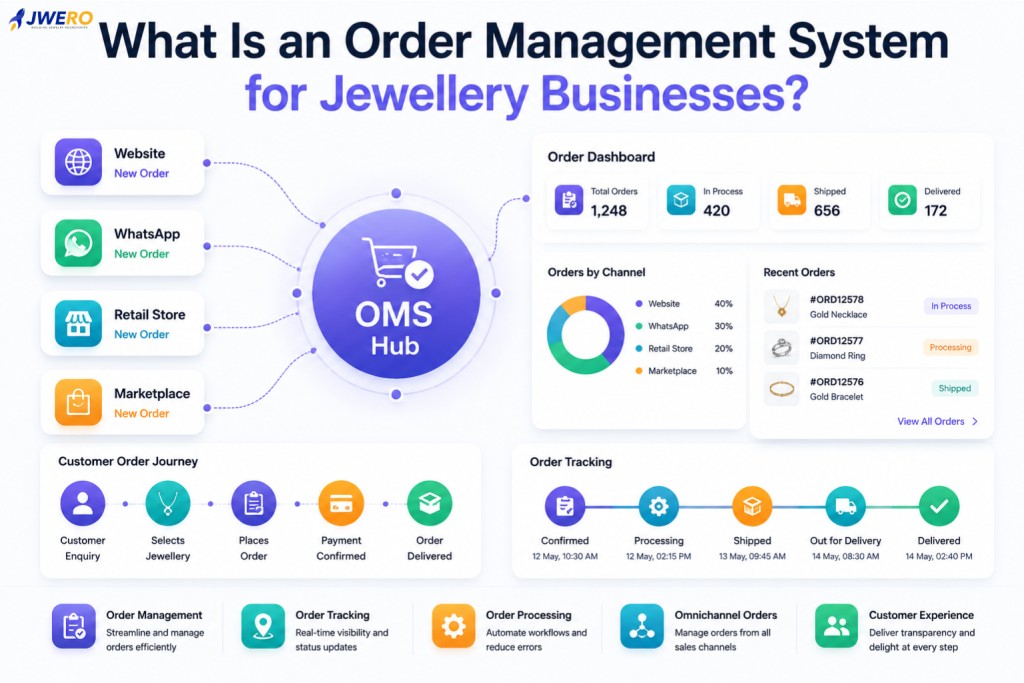
An OMS helps businesses centralize order information, improve visibility, reduce errors, and deliver better customer experiences.
In this guide, we’ll explore why order management has become essential for jewellery businesses and how an OMS helps support sustainable growth.
The Modern Jewellery Customer Journey Is Complex
A typical jewellery purchase is no longer a single interaction.
Today’s customers often:
- Discover products on social media
- Browse the website
- Ask questions on WhatsApp
- Visit the showroom
- Compare multiple products
- Request customization
- Place an order
- Track delivery status
Every step creates additional complexity.
Without a centralized system, businesses struggle to keep track of customer interactions and order progress.
As order volumes grow, these challenges become even more difficult to manage.
Manual Order Management Creates Operational Problems
Many jewellery businesses manage orders using:
- Excel spreadsheets
- WhatsApp conversations
- Shared documents
- Email chains
- Paper-based processes
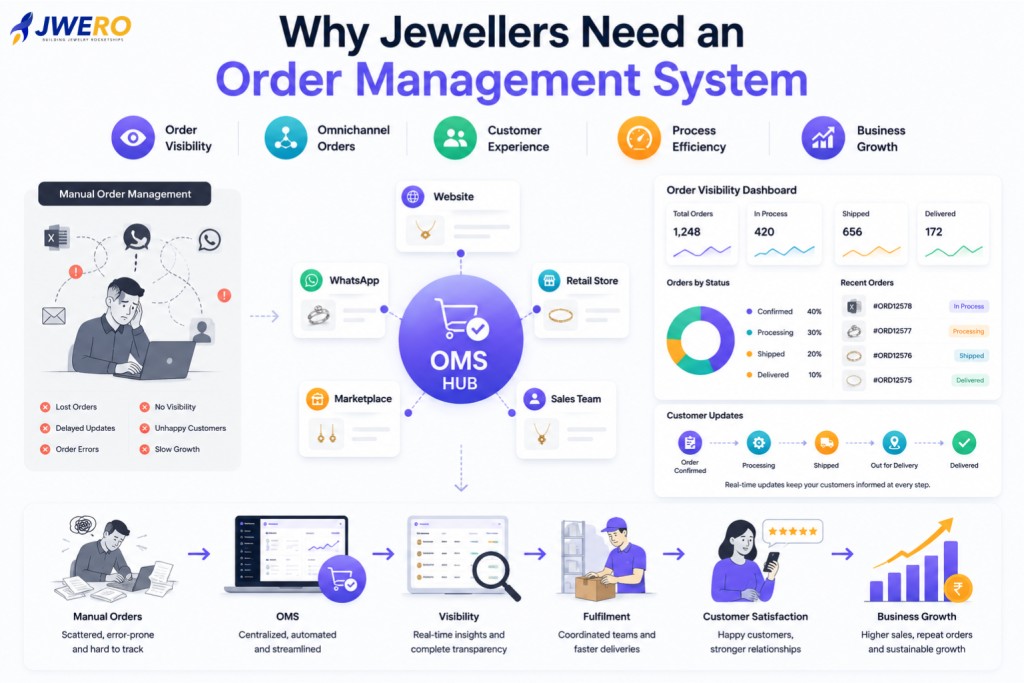
The problem is that information becomes scattered.
When teams rely on multiple systems, businesses often experience:
Lost Orders
Order details become difficult to locate.
Duplicate Work
Multiple employees may work on the same task unknowingly.
Delayed Fulfilment
Important steps are missed or delayed.
Customer Frustration
Customers struggle to get accurate updates.
Lack of Visibility
Management cannot see the complete order pipeline.
Over time, these issues impact both customer satisfaction and profitability.
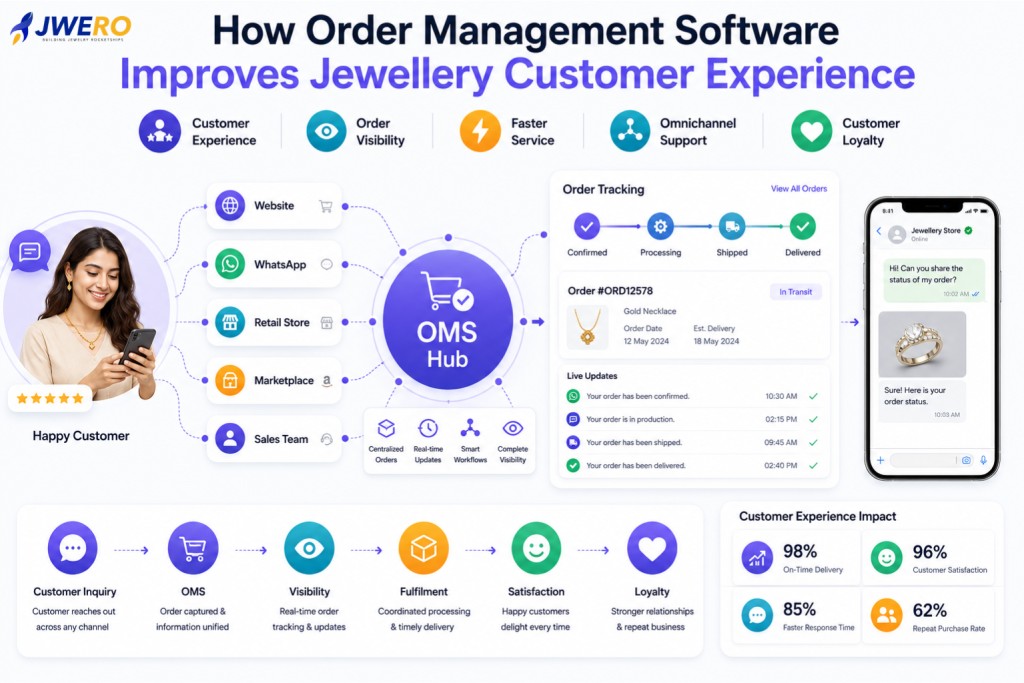
Customers Expect Real-Time Updates
Modern customers expect transparency.
After placing an order, customers want to know:
- Has my order been confirmed?
- Is my jewellery being manufactured?
- Has my item been dispatched?
- When will it arrive?
Without proper systems, answering these questions often requires manual investigation.
Sales teams must contact production teams, inventory teams, or delivery partners before providing updates.
This creates delays and frustration.
An OMS centralizes information and makes order status visible in real time.
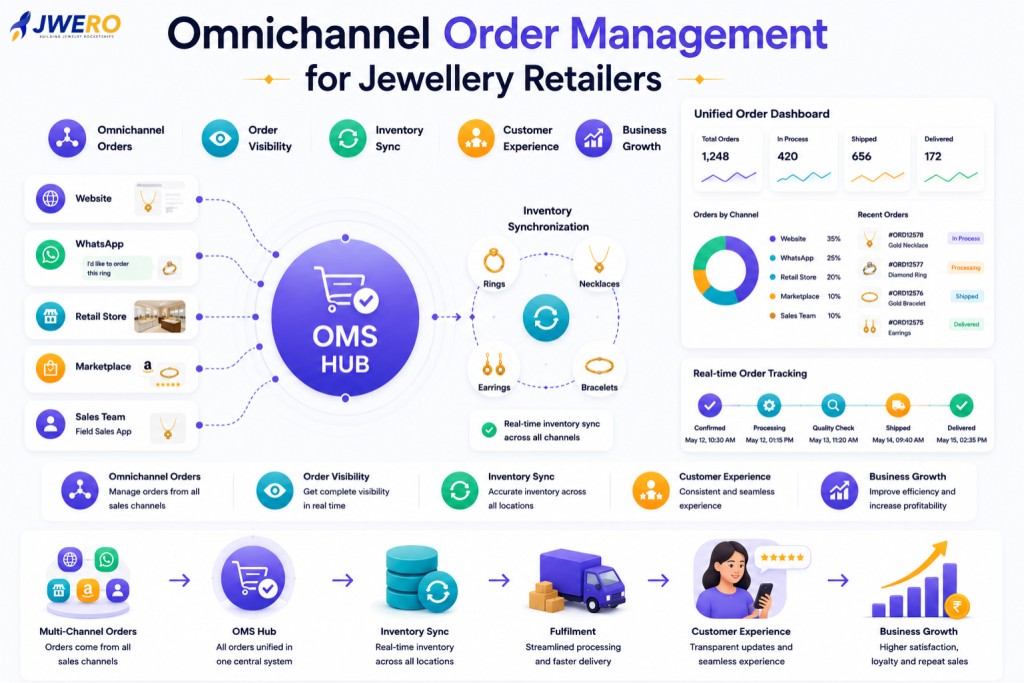
Omnichannel Selling Requires Better Coordination
Jewellery businesses increasingly sell across multiple channels.
These may include:
- Retail Stores
- Ecommerce Websites
- Marketplaces
- Sales Representatives
Orders arrive from multiple sources.
Without a centralized system, teams often struggle to coordinate information.
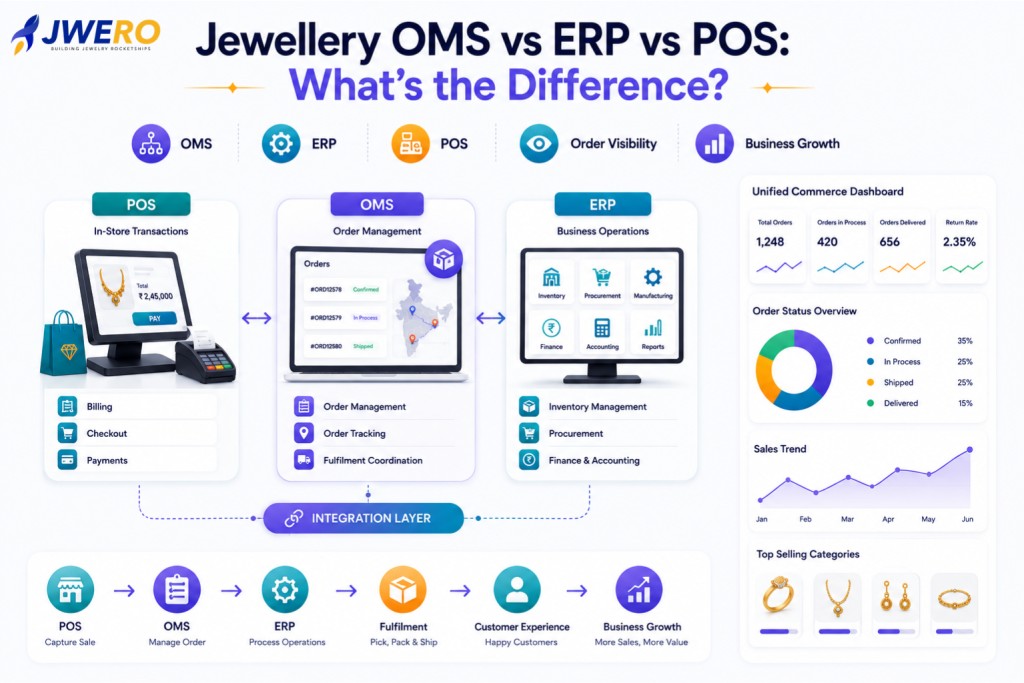
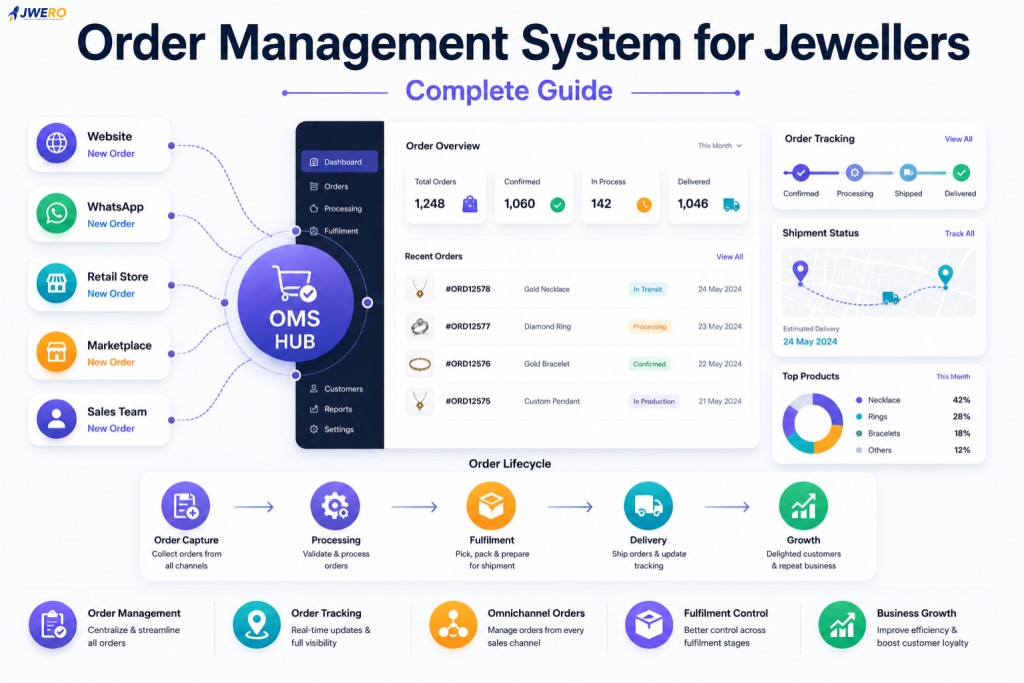
An OMS creates a single source of truth for every order regardless of where it originated.
This improves operational consistency and customer experience.
Custom Jewellery Orders Require Structured Workflows
Custom jewellery is one of the most profitable areas of the industry.
However, custom orders introduce additional complexity.
Examples include:
- Bridal Jewellery
- Bespoke Designs
- Personalized Jewellery
- Stone Modifications
- Metal Changes
- Size Adjustments
These orders often involve:
- Design Reviews
- Customer Approvals
- Production Updates
- Delivery Milestones
Managing these stages manually can create confusion and delays.
An OMS helps businesses structure and track every stage of the custom order journey.
Inventory and Order Visibility Must Work Together
One of the biggest causes of customer dissatisfaction is inventory mismatch.
Examples include:
- Selling unavailable products
- Double allocation of inventory
- Incorrect stock information
- Delayed fulfilment
These issues occur when order systems and inventory information are disconnected.
A modern OMS helps synchronize order activity with inventory availability.
This reduces operational risk and improves fulfilment accuracy.
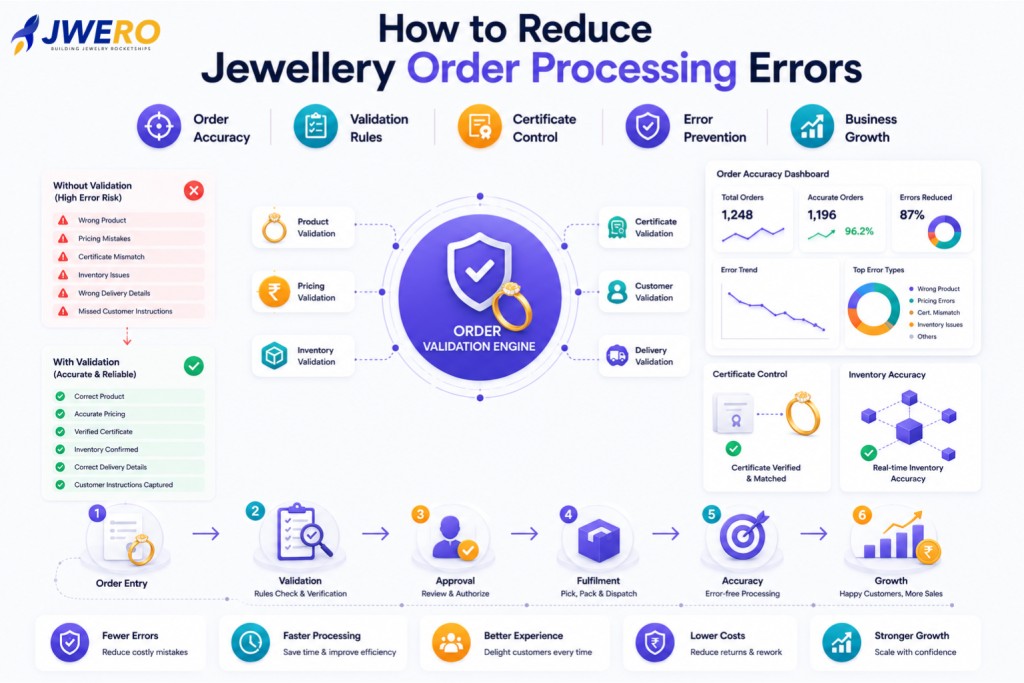
Order Errors Can Be Expensive
Even small mistakes can have significant consequences.
Common order errors include:
- Incorrect Product Selection
- Wrong Pricing
- Incorrect Specifications
- Delivery Mistakes
- Missed Instructions
These errors lead to:
- Rework
- Delays
- Customer Complaints
- Revenue Loss
An OMS introduces validation processes that reduce the likelihood of errors.
Better Customer Experience Drives Growth
Customer experience is increasingly becoming a competitive differentiator.
Customers remember:
- Fast responses
- Accurate information
- Transparent communication
- Reliable delivery
They also remember poor experiences.
Businesses that consistently deliver smooth order experiences often enjoy:
- Higher Customer Satisfaction
- More Referrals
- Increased Repeat Purchases
- Stronger Brand Reputation
An OMS helps create the operational foundation for these outcomes.
Teams Need Better Collaboration
Order fulfilment often involves multiple departments.
Examples include:
- Sales Team
- Inventory Team
- Production Team
- Customer Service Team
- Delivery Team
When information is disconnected, collaboration becomes difficult.
An OMS ensures every team works from the same information.
This improves accountability and efficiency.
Growth Creates More Complexity
Many manual processes work reasonably well when businesses process a small number of orders.
However, growth changes everything.
As order volumes increase, businesses face:
- More Customers
- More Channels
- More Products
- More Custom Orders
- More Employees
Complexity grows faster than expected.
Businesses that fail to modernize their processes often struggle to scale efficiently.
An OMS provides the infrastructure needed to support growth.
The Cost of Not Having an OMS
Many jewellers focus on the cost of implementing software.
However, the bigger question is:
What is the cost of not having one?
Without an OMS, businesses often experience:
- Order Delays
- Customer Dissatisfaction
- Revenue Leakage
- Increased Manual Work
- Higher Error Rates
- Operational Bottlenecks
These hidden costs frequently exceed the investment required for modern order management technology.
Signs Your Jewellery Business Needs an OMS
You should consider an OMS if:
- Orders are tracked through spreadsheets.
- Customers frequently ask for updates.
- Multiple channels create confusion.
- Teams struggle with visibility.
- Order errors are increasing.
- Custom orders are difficult to manage.
- Fulfilment delays are becoming common.
These are clear indicators that manual processes are reaching their limits.
Order Management Is Becoming a Competitive Advantage
The jewellery industry is becoming increasingly digital.
Businesses that provide:
- Faster Processing
- Better Visibility
- Consistent Communication
- Omnichannel Experiences
will often outperform competitors relying on manual workflows.
An OMS is no longer simply an operational tool.
It is becoming a strategic business advantage.
How Jwero OMS Helps Jewellers
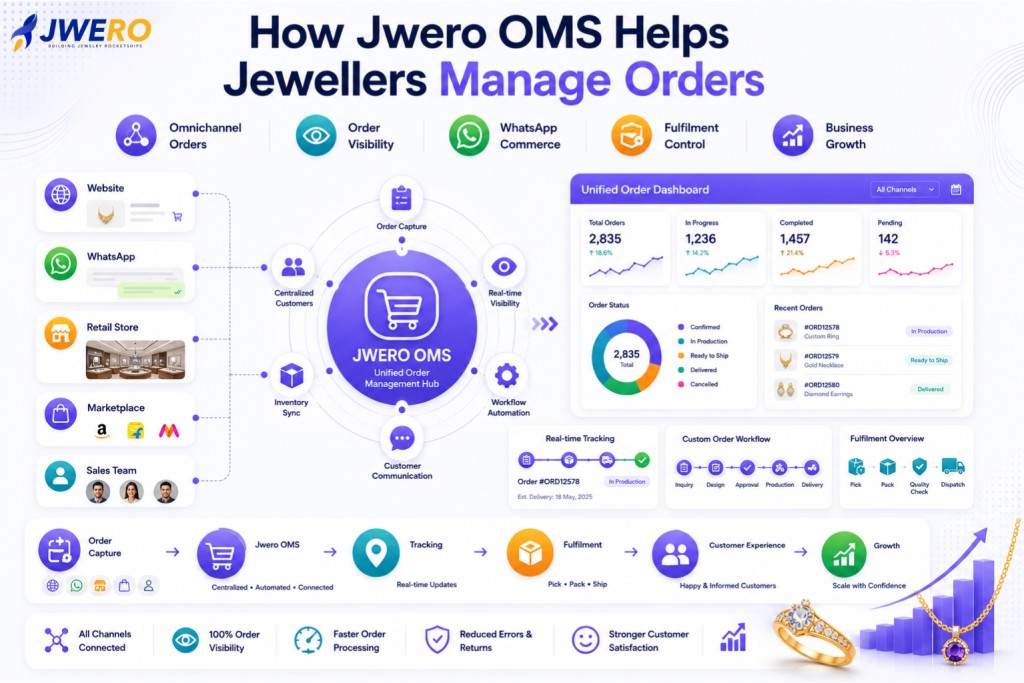
Jwero OMS helps jewellery businesses manage orders across every customer touchpoint.
Capabilities include:
- Centralized Order Management
- Omnichannel Order Capture
- WhatsApp Order Tracking
- Custom Order Workflows
- Inventory Synchronization
- Fulfilment Coordination
- Customer Communication
- Real-Time Order Visibility
Rather than managing orders through disconnected systems, jewellers can operate through a connected Jewellery Commerce ecosystem.
The result is improved efficiency, reduced errors, faster fulfilment, and better customer experiences.
Frequently Asked Questions
Why do jewellers need an Order Management System?
Jewellers need an OMS to manage orders efficiently, reduce errors, improve visibility, and support omnichannel customer experiences.
What problems does OMS solve?
OMS helps solve issues such as order delays, poor visibility, inventory conflicts, customer communication challenges, and fulfilment errors.
Is OMS useful for custom jewellery orders?
Yes. OMS platforms help manage approvals, production workflows, milestones, and delivery tracking for custom jewellery orders.
Can OMS help improve customer experience?
Yes. OMS platforms provide real-time order visibility, faster communication, and better fulfilment coordination.
Is OMS only for large jewellery businesses?
No. Small and growing jewellery businesses often benefit significantly from implementing structured order management processes early.