

The jewellery industry has evolved far beyond traditional showroom sales.
Today’s customers discover products on Instagram, enquire through WhatsApp, browse ecommerce stores, visit physical showrooms, place custom orders, request product modifications, and expect regular updates until delivery.
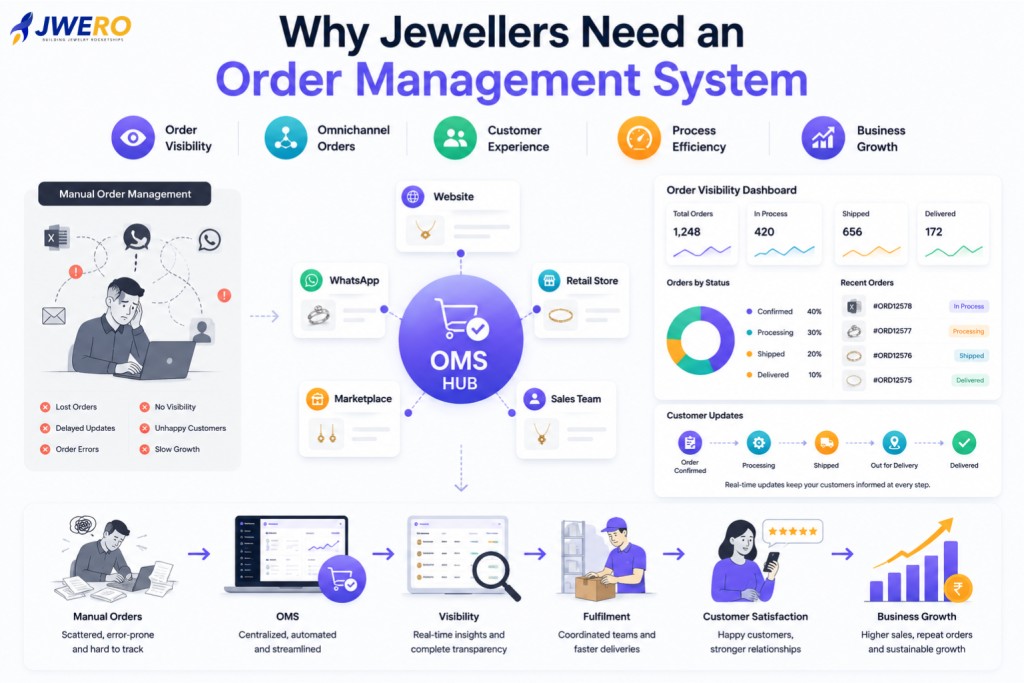
As businesses grow, managing these orders manually becomes increasingly difficult.
Orders can originate from multiple channels, involve multiple teams, require approvals, depend on inventory availability, and often include custom specifications that need careful tracking.
Without a structured process, businesses face delayed deliveries, communication gaps, order errors, customer dissatisfaction, and operational inefficiencies.
This is why modern jewellery businesses are investing in Order Management Systems (OMS).
A Jewellery OMS helps businesses capture, manage, track, process, and fulfil orders across every channel from a single platform.
In this guide, we explore everything jewellers need to know about Order Management Systems, how they work, why they matter, and how they help businesses scale efficiently.
What Is an Order Management System?
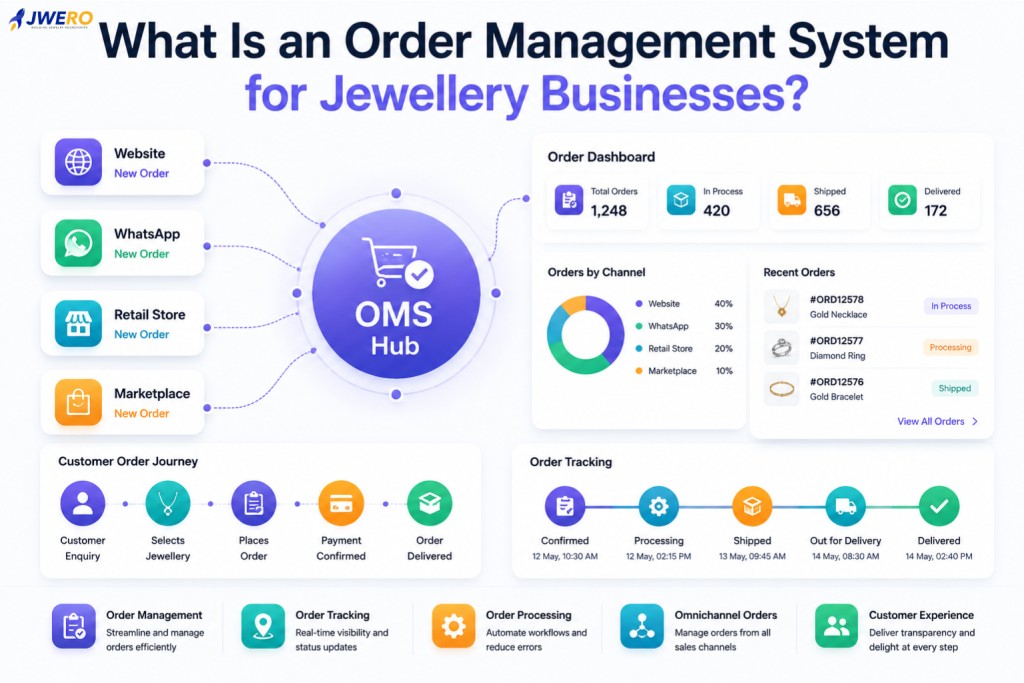
An Order Management System (OMS) is software that helps businesses manage the complete lifecycle of an order.
From the moment a customer places an order until delivery and post-purchase support, the OMS acts as a central system that coordinates activities across teams, channels, and processes.
For jewellery businesses, this includes:
- Order Capture
- Order Processing
- Inventory Verification
- Custom Order Management
- Production Tracking
- Delivery Coordination
- Customer Communication
- Returns & Exchanges
Instead of managing orders across spreadsheets, WhatsApp messages, emails, and disconnected systems, businesses can manage everything from a centralised platform.
Why Order Management Matters in Jewellery Retail
Order management in jewellery is more complex than in many other industries.
A typical jewellery order may involve:
- Product Selection
- Size Adjustments
- Stone Modifications
- Custom Design Requests
- Manufacturing Processes
- Certification Requirements
- Inventory Allocation
- Delivery Coordination
Each stage introduces complexity.
Without proper order management, businesses often experience:
- Order Delays
- Lost Orders
- Incorrect Deliveries
- Inventory Conflicts
- Customer Complaints
- Revenue Leakage
As customer expectations increase, effective order management becomes a competitive advantage.
The Modern Jewellery Customer Journey
Today’s customer journey is omnichannel.
A customer may:
- Discover products on Instagram
- Browse your website
- Enquire through WhatsApp
- Visit the showroom
- Request customization
- Place an order
- Track delivery status
- Return for future purchases
Every interaction creates an order-related touchpoint.
The challenge is keeping all teams aligned throughout the process.
An OMS ensures every order remains visible and manageable regardless of where it originates.
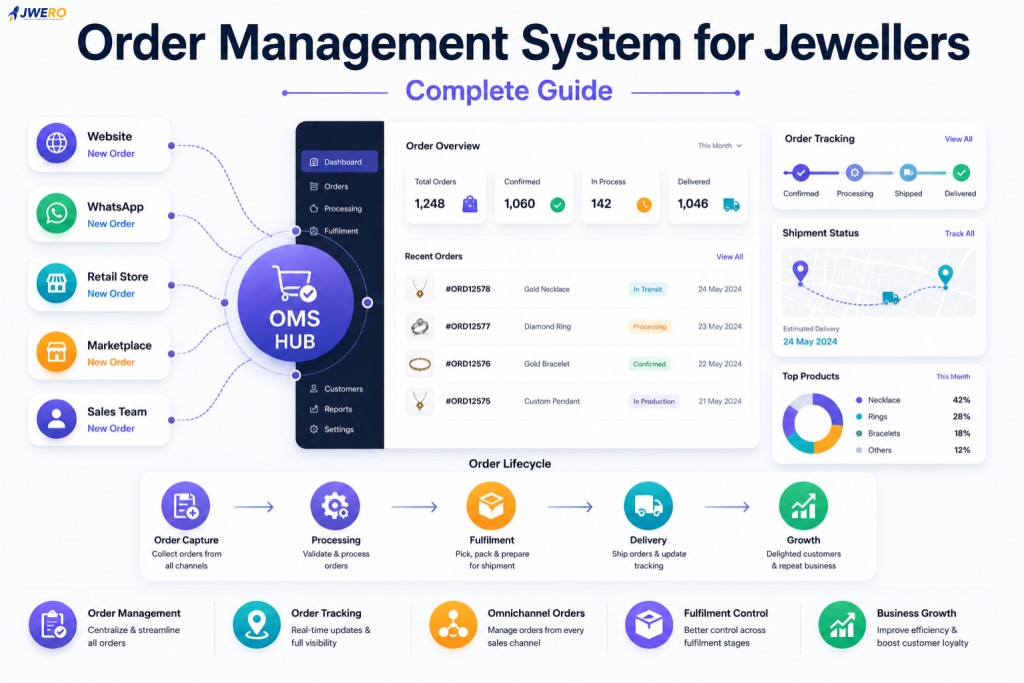
How a Jewellery OMS Works
A Jewellery OMS acts as a central coordination layer.
Typical workflow:
Customer Inquiry
       ↓
Order Creation
       ↓
Inventory Validation
       ↓
Approval Process
       ↓
Production / Allocation
       ↓
Fulfilment
       ↓
Delivery
       ↓
Customer Updates
This creates visibility throughout the order lifecycle.
Order Capture Across Multiple Channels
Modern jewellery businesses receive orders from:
- Showrooms
- Ecommerce Websites
- Marketplaces
- Sales Teams
- Franchise Locations
Managing orders from multiple sources manually creates confusion.
A centralised OMS consolidates all incoming orders into a single workflow.
This is particularly important for businesses pursuing omnichannel growth.
Managing Custom Jewellery Orders
Custom jewellery orders often involve additional complexity.
Examples include:
- Bespoke Designs
- Bridal Jewellery
- Name Jewellery
- Stone Changes
- Metal Changes
- Product Modifications
These orders require:
- Customer Approvals
- Design Tracking
- Production Updates
- Delivery Milestones
A structured OMS helps businesses manage custom workflows effectively.
Inventory and Order Synchronisation
One of the biggest causes of order issues is inventory mismatch.
Businesses often face situations where:
- Products appear available online but are unavailable in-store.
- Multiple sales channels sell the same inventory.
- Teams lack real-time stock visibility.
An OMS helps synchronise order and inventory information to prevent overselling and stock conflicts.
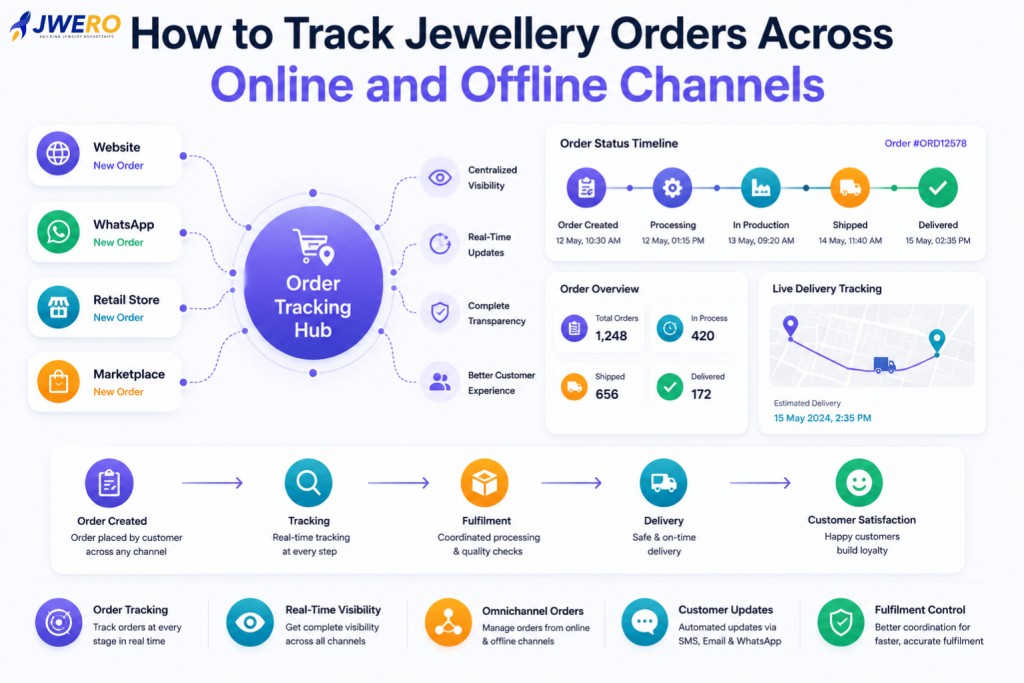
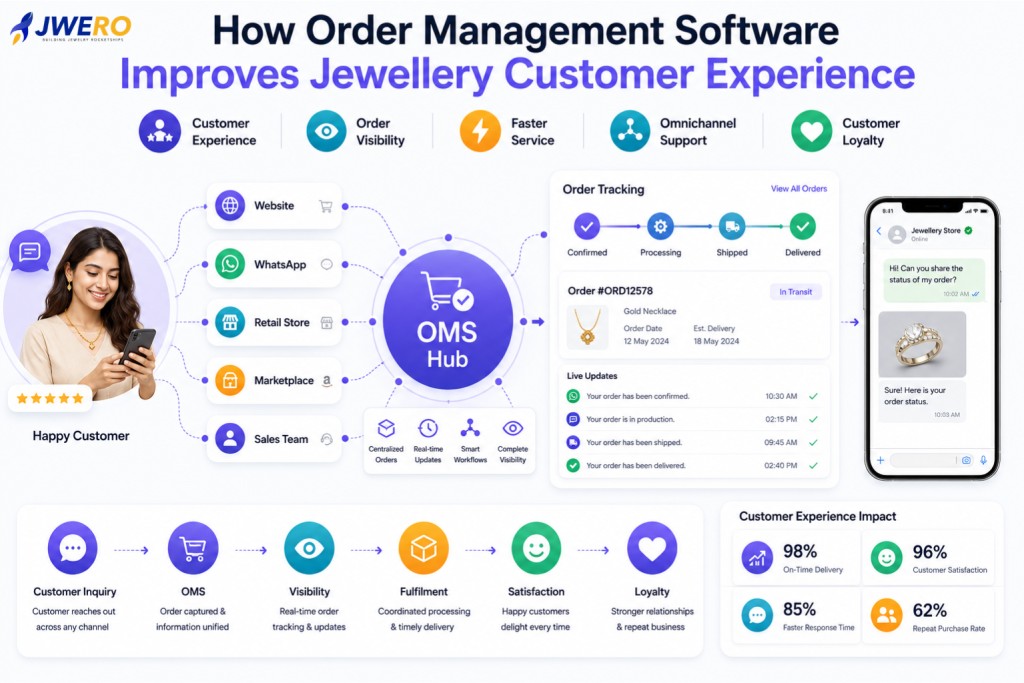
Order Tracking and Customer Visibility
Customers increasingly expect transparency.
They want to know:
- Has my order been confirmed?
- Is production complete?
- Has the item been dispatched?
- When will it arrive?
Providing regular updates improves customer trust.
A Jewellery OMS enables real-time order tracking and communication.
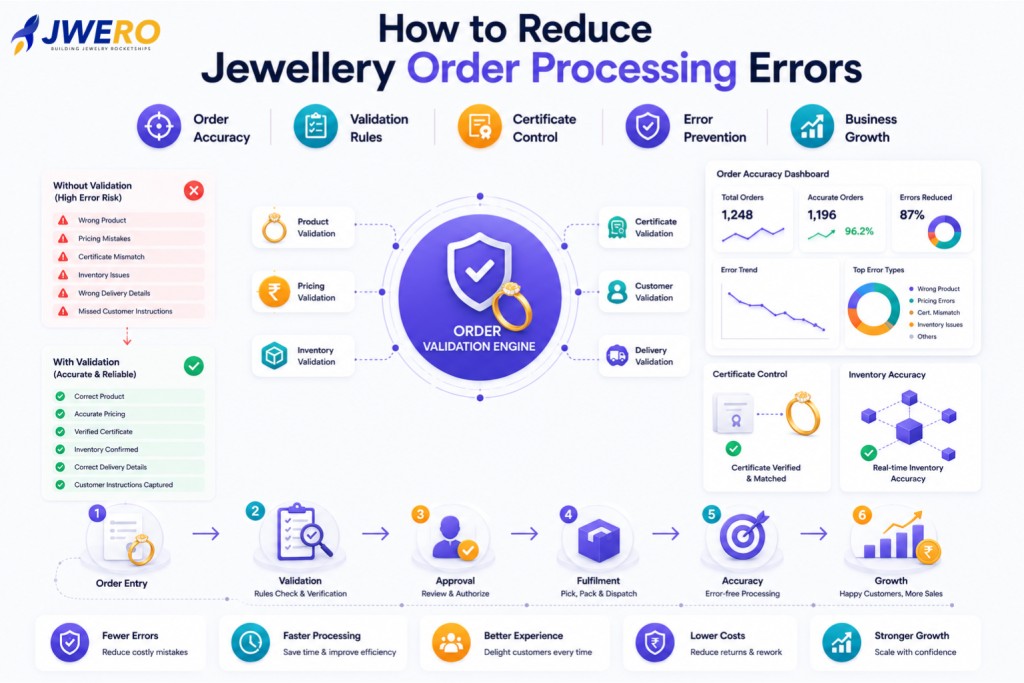
Reducing Order Processing Errors
Order errors can be expensive.
Common problems include:
- Incorrect Product Selection
- Wrong Pricing
- Incorrect Specifications
- Delivery Errors
- Missed Follow-Ups
Many of these issues result from manual processes.
A centralised OMS reduces errors through structured workflows and validation processes.
WhatsApp Order Management
WhatsApp has become one of the most important sales channels for jewellers.
Customers frequently:
- Request Catalogues
- Ask Product Questions
- Place Orders
- Request Modifications
- Confirm Purchases
Managing these interactions manually can become overwhelming.
An OMS helps businesses connect WhatsApp conversations with structured order workflows.
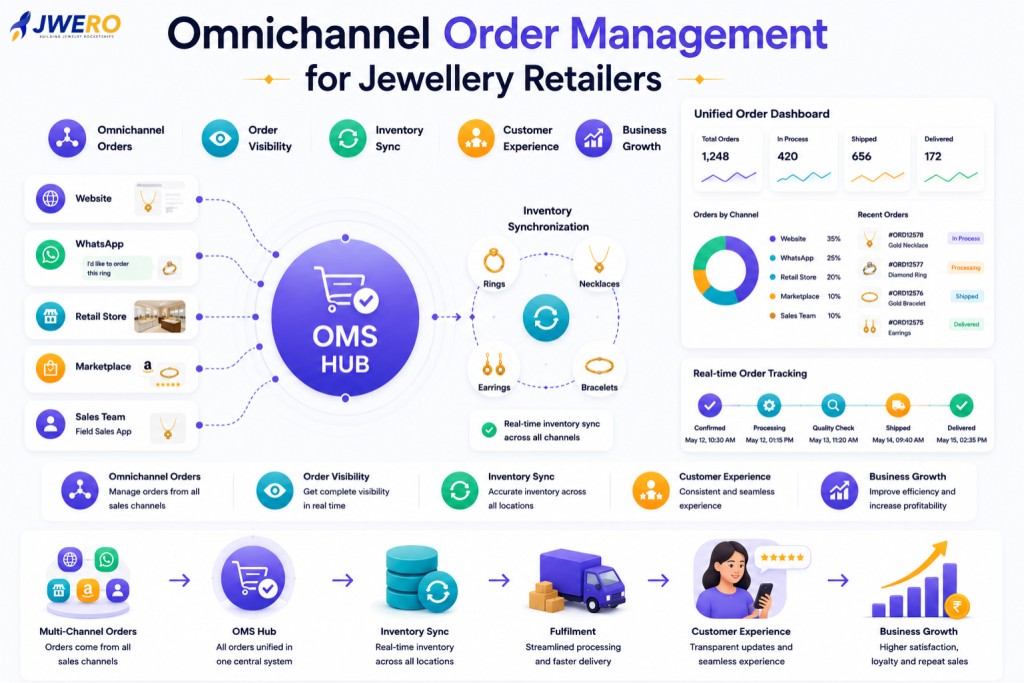
Omnichannel Order Management
Today’s customers expect consistency across channels.
They want:
- Accurate Order Status
- Consistent Pricing
- Inventory Availability
- Seamless Experiences
Whether the order originates online, in-store, or through WhatsApp, the experience should remain consistent.
This is where omnichannel order management becomes critical.
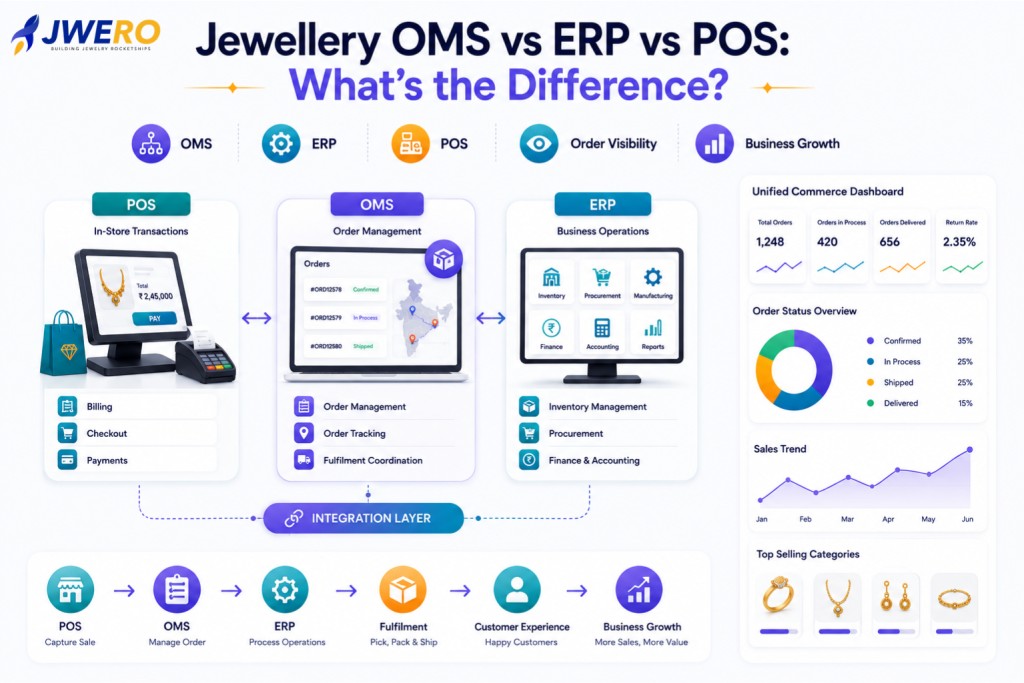
OMS vs ERP vs POS
Many jewellers struggle to understand the difference between:
- OMS
- ERP
- POS
While these systems often work together, they solve different problems.
| System | Primary Purpose |
|---|---|
| OMS | Order Lifecycle Management |
| ERP | Business Operations |
| POS | Retail Transactions |
Understanding these differences helps businesses make better technology decisions.
Explore Jewellery OMS vs ERP vs POS: What’s the Difference?
Benefits of a Jewellery Order Management System
Implementing an OMS delivers significant business benefits.
Faster Order Processing
Reduce delays and manual work.
Better Customer Experience
Provide transparency and updates.
Reduced Errors
Improve order accuracy.
Omnichannel Visibility
Manage orders from every channel.
Better Team Collaboration
Improve coordination across departments.
Increased Scalability
Support growth without increasing complexity.
Signs Your Business Needs an OMS
You may need a Jewellery OMS if:
- Orders are managed through spreadsheets.
- Teams struggle with order visibility.
- Customers frequently ask for status updates.
- Custom orders are difficult to track.
- Order errors are increasing.
- Multiple channels create confusion.
- Fulfilment delays are becoming common.
These are often signs that manual processes are no longer sustainable.
The Future of Order Management
Order management is becoming increasingly intelligent.
Future OMS platforms will include:
- AI-Powered Order Routing
- Predictive Fulfilment
- Automated Customer Updates
- Real-Time Inventory Synchronisation
- Connected Commerce Ecosystems
- Omnichannel Visibility
The goal is not simply to process orders faster.
The goal is to create exceptional customer experiences.
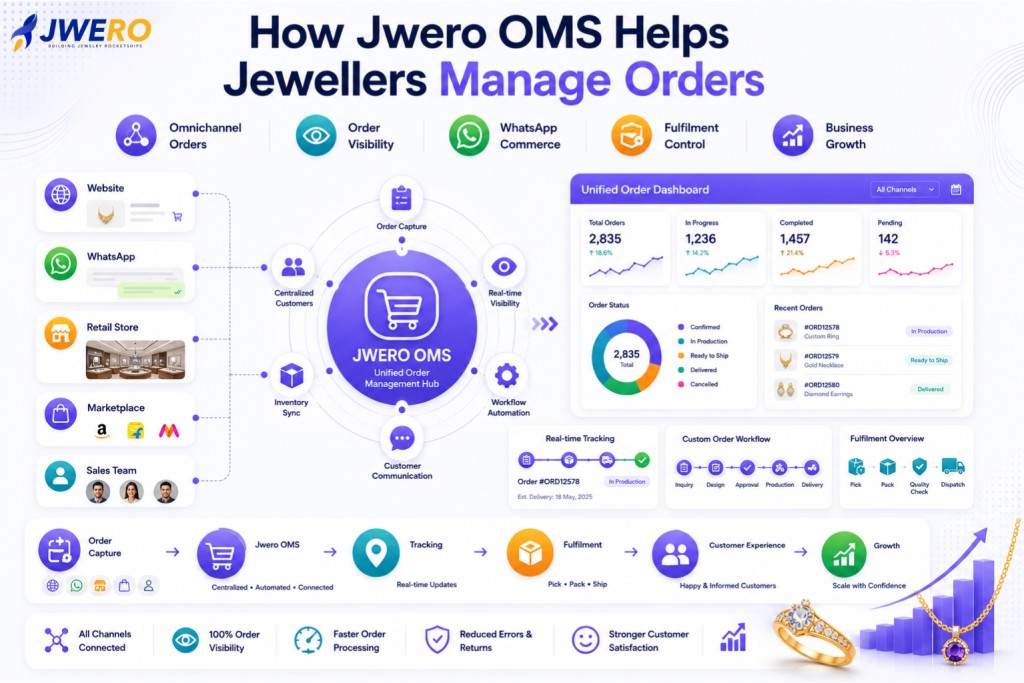
How Jwero OMS Helps Jewellers
Jwero OMS helps jewellery businesses manage orders across every customer touchpoint.
Capabilities include:
- Centralised Order Management
- Omnichannel Order Capture
- WhatsApp Order Tracking
- Custom Order Workflows
- Inventory Synchronization
- Customer Communication
- Order Status Visibility
- Fulfilment Coordination
Rather than managing orders through disconnected systems, businesses can operate through a connected Jewellery Commerce ecosystem.
The result is improved efficiency, fewer errors, faster fulfilment, and better customer experiences.
Frequently Asked Questions
What is an Order Management System for jewellers?
A Jewellery OMS is software that helps businesses manage orders from creation to fulfilment across multiple channels and teams.
Why do jewellery businesses need order management software?
Order management software improves visibility, reduces errors, supports omnichannel operations, and enhances customer experiences.
Can an OMS manage custom jewellery orders?
Yes. Modern Jewellery OMS platforms support custom workflows, approvals, production tracking, and delivery coordination.
How does OMS differ from ERP?
ERP manages broader business operations such as finance and inventory, while OMS focuses specifically on order lifecycle management.
Can OMS integrate with WhatsApp?
Yes. Modern OMS platforms can connect WhatsApp conversations with order workflows to improve tracking and customer communication.
What are the biggest benefits of OMS?
The biggest benefits include:
- Faster Processing
- Better Customer Experience
- Reduced Errors
- Improved Visibility
- Omnichannel Management
- Business Scalability