

Jewellery Sales No Longer Happen in One Place Or One Moment
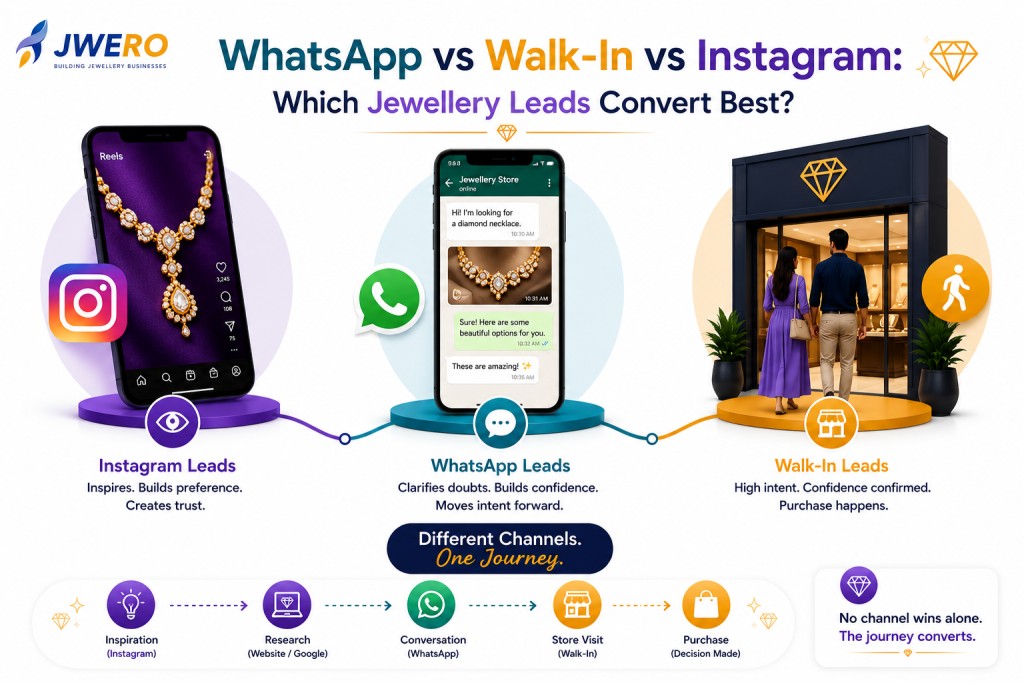
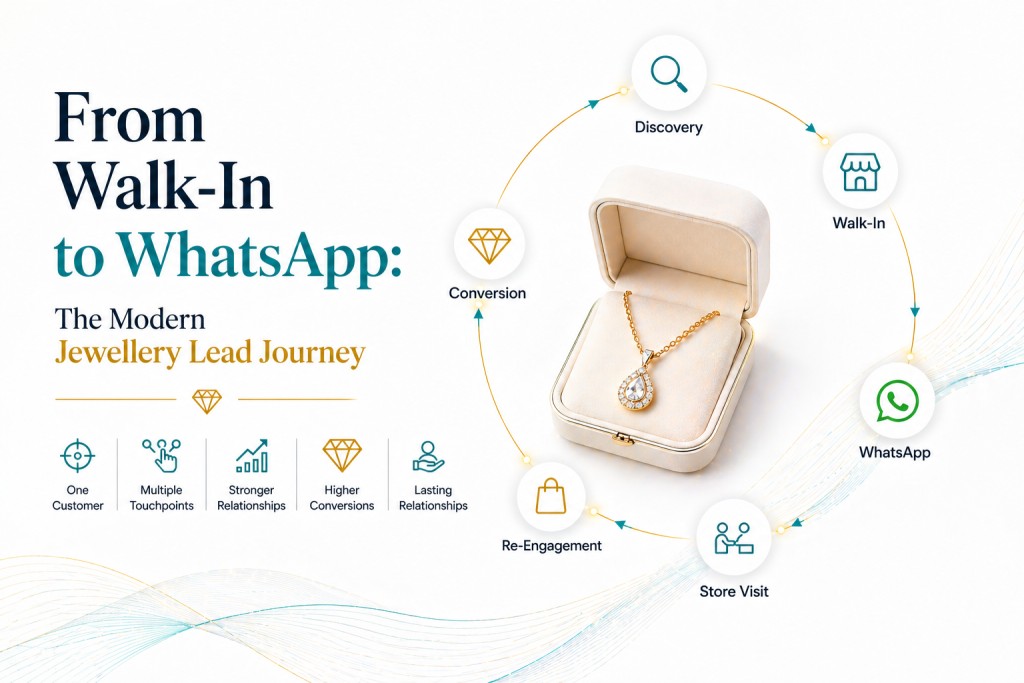
A jewellery purchase rarely begins and ends in the same channel now a days.
A customer may:
- Discover a design on Instagram
- Visit the showroom “just to see”
- Ask for prices on WhatsApp days later
- Shortlist designs on the website
- Return with family weeks after
To the customer, this is one journey.
To most jewellery systems, it looks like:
Five different leads.
This disconnect is the single biggest reason jewellery businesses lose control as they scale.
The Biggest Myth in Jewellery Retail
“Customers either come online or offline.”
In reality:
- Customers move fluidly
- Intent travels across channels
- Decisions evolve over time
The real problem is not lead generation.
It is journey fragmentation.
Why Jewellery Lead Journeys Are Uniquely Complex
Jewellery is not FMCG.
It is not electronics.
It is not impulse retail.
Jewellery Journeys Are:
- High value
- Emotionally driven
- Socially influenced
- Time extended
- Trust dependent
This means:
- Customers rarely convert on first touch
- Silence does not mean disinterest
- Repetition is part of confidence building
Any system that assumes a straight funnel will fail.
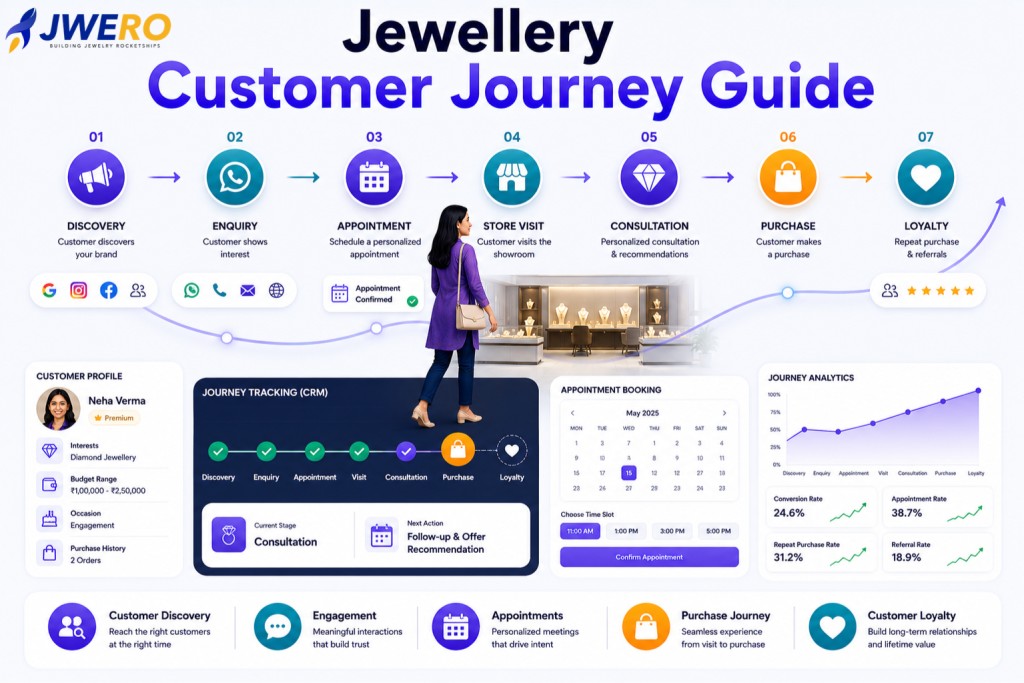
The 7-Stage Modern Jewellery Lead Journey
Let’s break down what actually happens, step by step.
Stage 1: Discovery (Intent Is Born)
This happens through:
- Instagram reels & posts
- Google search & Google Business
- Word of mouth & referrals
- Offline visibility & hoardings
At this stage:
- Customers are not “leads”
- They are emotionally curious
What most jewellers do:
Nothing.
What should happen:
Intent signals should be captured quietly.
Stage 2: First Interaction (Curiosity Turns Active)
This could be:
- Walk-in visit
- WhatsApp message
- Instagram DM
- Google phone call
This is the first real lead moment.
Customers ask:
- Price ranges
- Availability
- Weight & purity
- Customisation options
Mistake: Treating this as a one-time enquiry.
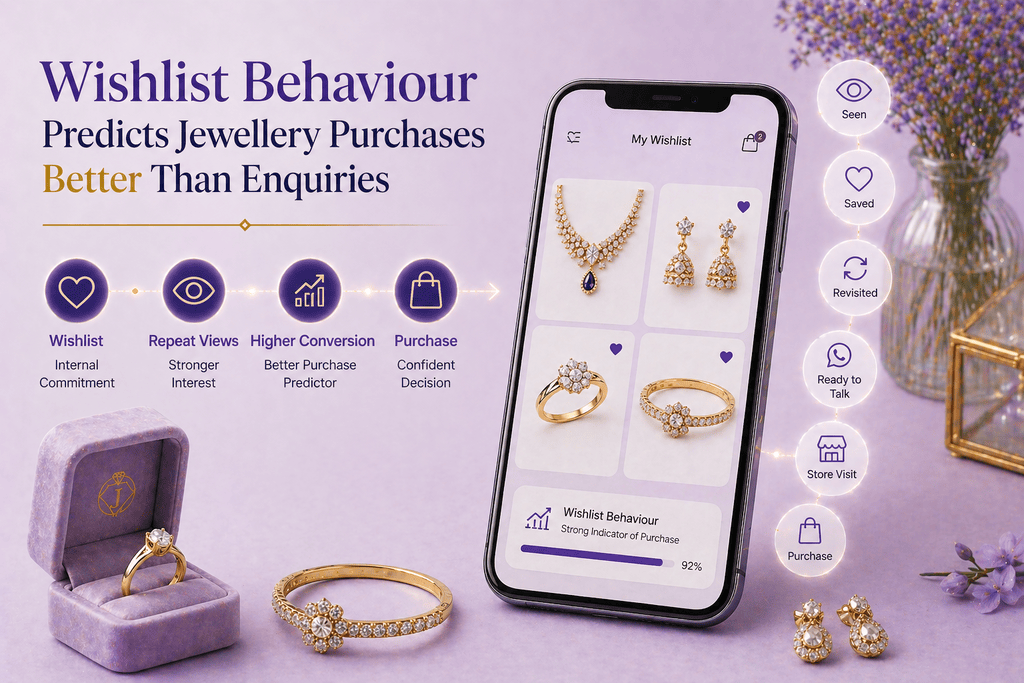
Stage 3: Exploration (Silent Intent Builds)
After first contact, customers:
- Browse catalogs
- Revisit Instagram posts
- View website pages
- Add items to wishlist
- Share designs with family
Most customers go silent here.
This is where:
- Human follow-ups feel intrusive
- Manual tracking fails
- CRM statuses lie
Silence ≠ disinterest.
Silence = consideration.
Stage 4: Re-Engagement (Intent Needs a Nudge)
The right nudge could be:
- A WhatsApp reminder
- A design variation
- A price update
- A festival prompt
- A store invite
The wrong nudge:
- Generic follow-ups
- Repeated “Any update?”
- Aggressive sales calls
This stage decides conversion vs drop-off.
Stage 5: Store Visit (Trust Formation)
Most jewellery purchases still happen in-store.
But now:
- Customers arrive informed
- Comparisons are done
- Expectations are high
If the showroom team:
- Knows the journey → confidence rises
- Does not know → trust resets
Disconnected journeys feel unprofessional.
Stage 6: Decision Delay (The Invisible Phase)
Even after selection:
- Family discussions happen
- Budget alignment occurs
- Dates are planned
This delay is normal.
Poor systems assume:
“Lead went cold.”
Good systems assume:
“Lead is ripening.”
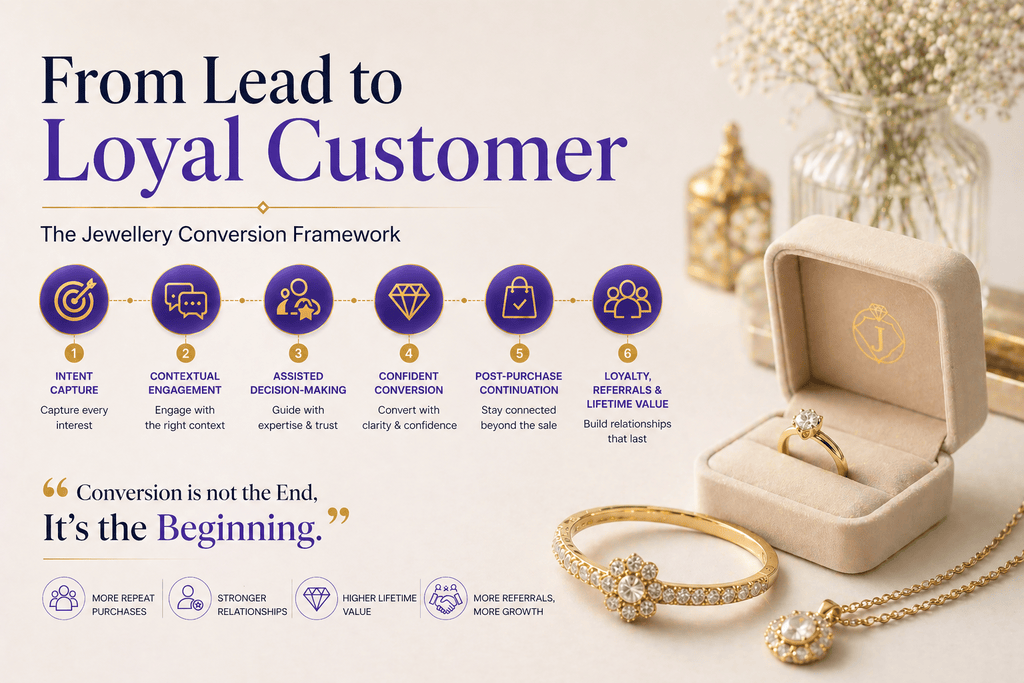
Stage 7: Conversion & Continuation
Even after purchase:
- Referrals emerge
- Repeat purchases happen
- Gold schemes begin
- Relationship continues
The journey does not end at billing.
Why Most Jewellery Systems Break This Journey
Traditional setups fail because:
- Online and offline are disconnected
- WhatsApp is not linked to CRM
- Store visits are not tracked
- Behaviour is invisible
- Follow-ups depend on people
As a result:
- Journeys reset at every touch
- Customers repeat themselves
- Staff lose context
- Conversion probability drops
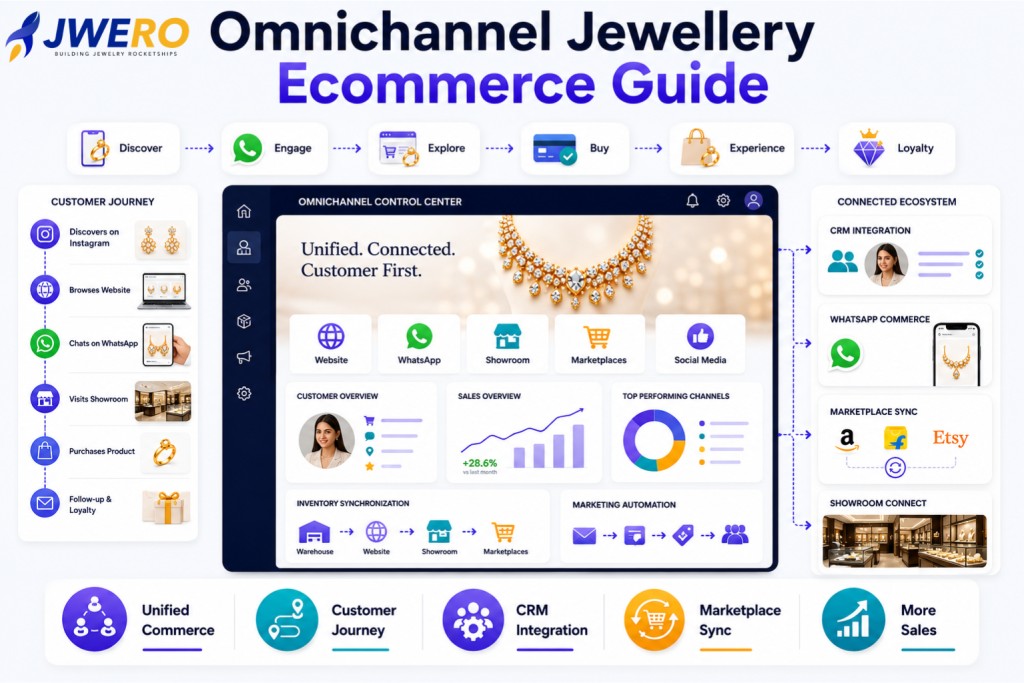
What a Unified Jewellery Lead Journey Looks Like
In a unified system:
- Walk-in creates a lead
- WhatsApp messages enrich it
- Website behaviour updates intent
- Instagram clicks add context
- Store visits reinforce confidence
To the system:
It is one customer, one journey, many signals.
How Jwero Improves the Jewellery Lead Journey
AI makes journeys intelligent by:
- Detecting intent peaks
- Timing engagement
- Personalising messages
- Avoiding over-follow-ups
- Predicting readiness to buy
This allows:
- Fewer messages
- Higher relevance
- Better experience
- Higher conversion
Geography Matters in Lead Journeys
India
- Walk-in → WhatsApp → family → store
- Gold schemes extend journeys
Middle East
- Instagram → Google call → store
- Luxury browsing before visits
Southeast Asia
- App → promotion → WhatsApp
- Faster digital nudges
Journeys differ — systems must adapt.
Why Jwero Is Built for the Jewellery Journey
Jwero is designed around journeys, not channels.
Jwero:
- Connects walk-ins, WhatsApp, website, social & POS
- Maintains context across every touch
- Tracks intent, not just messages
- Automates re-engagement intelligently
- Gives managers real-time journey visibility
Jwero doesn’t manage leads. It orchestrates jewellery buying journeys.
Frequently Asked Questions
What is a jewellery lead journey?
A jewellery lead journey is the complete path a customer takes — across online and offline channels — from discovery to purchase and beyond.
Why do jewellery customers switch channels?
Because jewellery purchases involve trust, comparison, and family input. Customers choose channels based on comfort at each stage.
How do jewellers track omnichannel journeys?
By using unified lead systems that connect WhatsApp, website behaviour, store visits, social engagement, and CRM into one journey view.
Is WhatsApp & Instragram are part of the jewellery sales funnel?
Yes, very much. WhatsApp & Instagram are often the primary bridge between online interest and in-store conversion.
How Jwero is empowering jewellers in Lead capture to Lead conversions & Beyond?
Final Thought
Jewellery customers don’t jump channels randomly.
They follow emotion, trust, and timing.
The jeweller who understands the journey will always outsell the one who counts leads.