

The jewellery industry is rapidly moving online.
Modern customers no longer begin their buying journey inside a showroom.
Instead, they:
- Search online
- Compare products
- Browse collections
- Read reviews
- Visit websites
- Engage on WhatsApp
Before making a purchase decision.
For jewellery retailers, ecommerce is no longer optional.
It has become a critical growth channel.
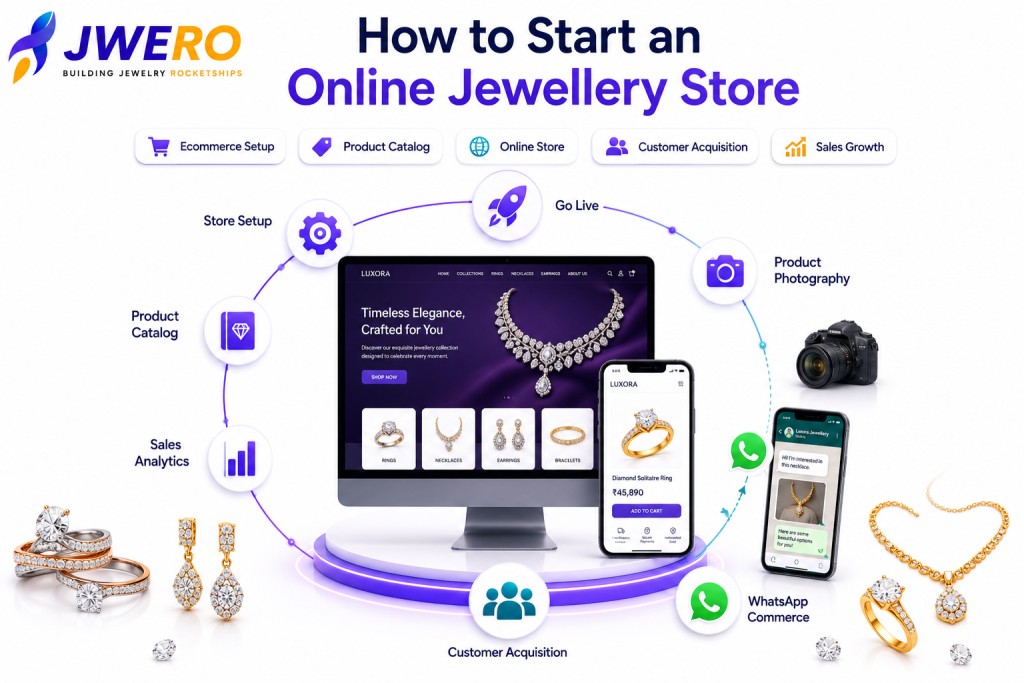
This guide explains everything jewellers need to know about building, managing, and growing a successful jewellery ecommerce business.
What Is Jewellery Ecommerce?
Jewellery ecommerce refers to selling jewellery products through digital channels such as:
- Ecommerce websites
- Mobile stores
- Online catalogues
- Social commerce
- WhatsApp commerce
- Omnichannel retail platforms
Customers can browse, compare, and purchase jewellery online without needing to visit a physical showroom first.
Why Ecommerce Is Important for Jewellery Retailers
Consumer behaviour has changed significantly.
Modern jewellery buyers expect:
- Online Product Discovery
- Convenient Shopping Experiences
- Transparent Information
- Digital Communication
- Personalized Recommendations
- Omnichannel Experiences
Businesses without a strong ecommerce presence risk losing customers to competitors.
Benefits of Jewellery Ecommerce
Expand Market Reach
Sell beyond your local market.
Generate Leads 24/7
Your website never closes.
Improve Customer Convenience
Customers can browse anytime.
Increase Brand Visibility
Search engines create additional discovery opportunities.
Support Omnichannel Retail
Connect online and offline experiences.
Drive Repeat Sales
Use CRM, WhatsApp, and email marketing to re-engage customers.
Key Components of a Successful Jewellery Ecommerce Business
A successful jewellery ecommerce strategy requires more than just a website.
It requires an integrated ecosystem.
Professional Ecommerce Website
Your website serves as the digital showroom.
Product Catalogue
Organised collections improve product discovery.
CRM Integration
Customer data supports personalisation.
WhatsApp Integration
Supports customer engagement and follow-ups.
Payment Systems
Provide secure transactions.
Analytics
Measure performance and customer behaviour.
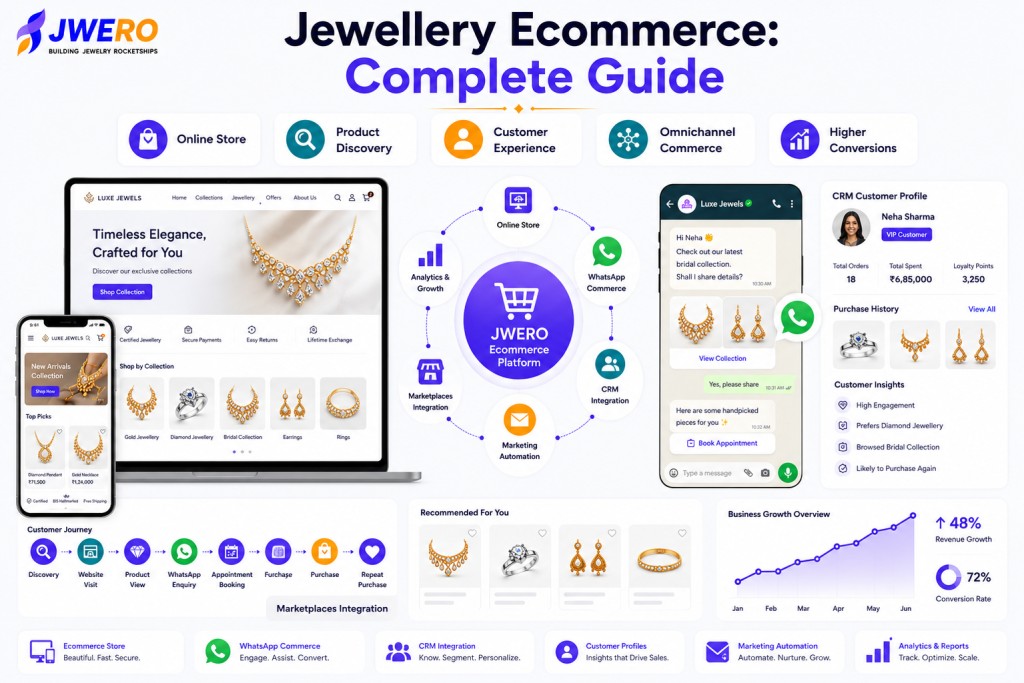
The Modern Jewellery Ecommerce Customer Journey
A typical customer journey looks like:
Google Search
↓
Website Visit
↓
Product Discovery
↓
Product Comparison
↓
WhatsApp Enquiry
↓
Appointment Booking
↓
Purchase
↓
Retention Campaign
↓
Repeat Purchase
Successful retailers optimise every stage.
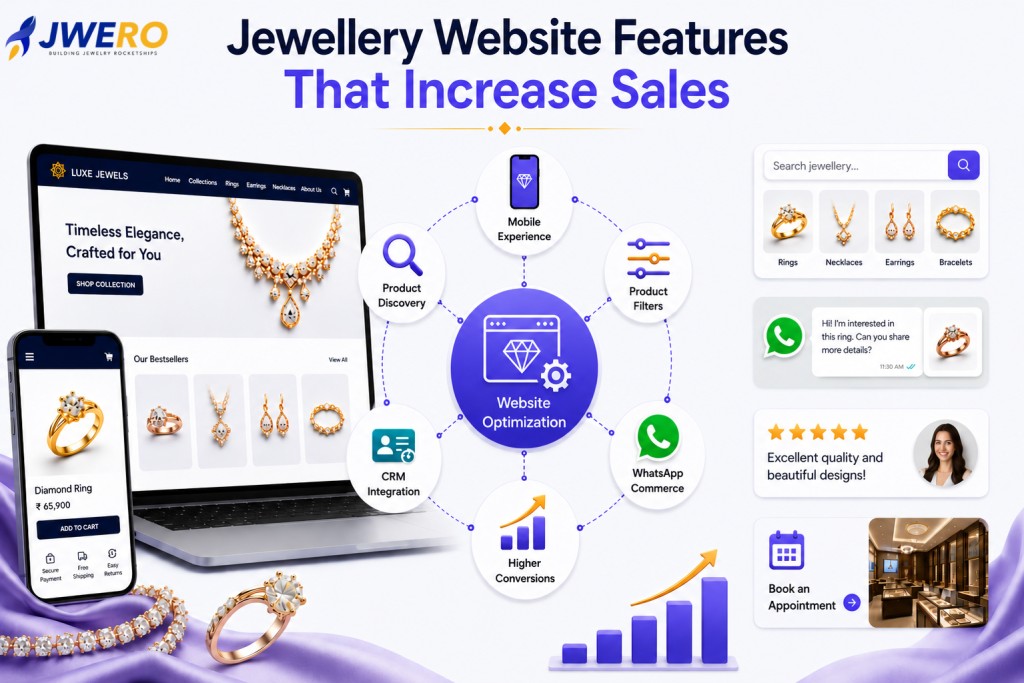
Essential Features of a Jewellery Ecommerce Website
Every jewellery website should include:
- Product Search
- Product Filters
- Product Categories
- High-Quality Images
- Mobile Optimization
- WhatsApp Integration
- Secure Checkout
- CRM Integration
- Customer Reviews
- Appointment Booking
These features improve user experience and conversions.
How Customers Discover Jewellery Online
Customers typically discover jewellery businesses through:
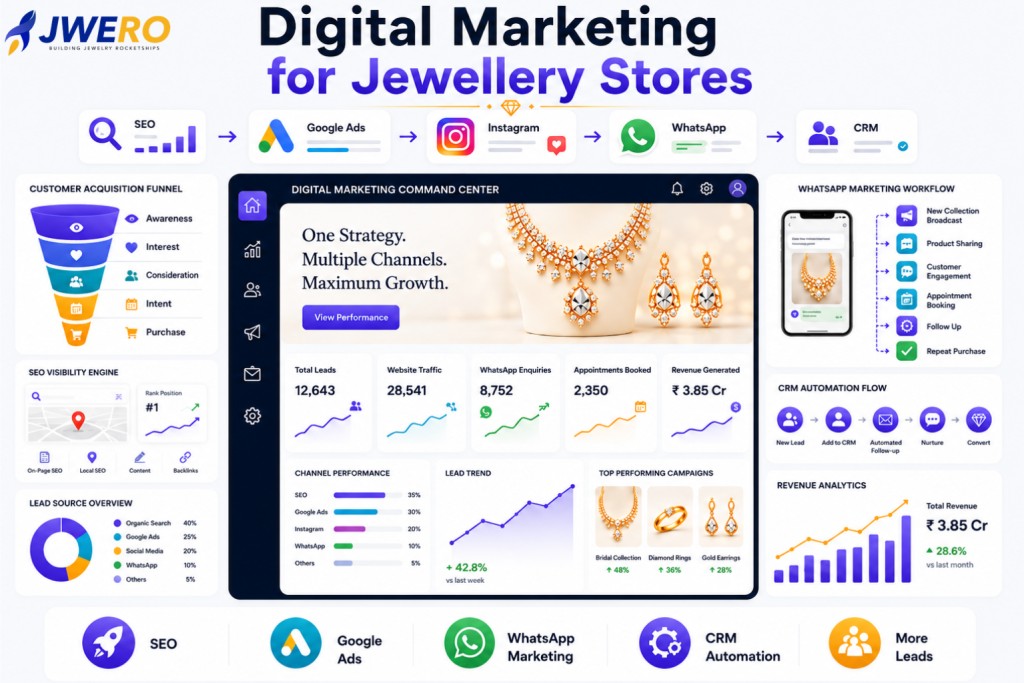
- Google Search
- Local SEO
- Social Media
- WhatsApp Marketing
- Referral Traffic
- Repeat Customers
Search visibility is particularly important.
The Role of SEO in Jewellery Ecommerce
SEO helps customers discover your website organically.
Key areas include:
- Product Page SEO
- Collection Page SEO
- Local SEO
- Technical SEO
- Content Marketing
- Internal Linking
Businesses that invest in SEO often achieve sustainable growth.
Why Product Pages Matter
Product pages are often the most visited pages on jewellery websites.
Strong product pages include:
- Professional images
- Product descriptions
- Specifications
- Reviews
- Pricing
- Trust signals
These influence purchase decisions.
Building Trust in Jewellery Ecommerce
Trust is essential because jewellery purchases are high-value decisions.
Customers look for:
- Certifications
- Reviews
- Secure Payments
- Return Policies
- Brand Reputation
- Contact Information
- Physical Store Presence
Trust significantly impacts conversions.
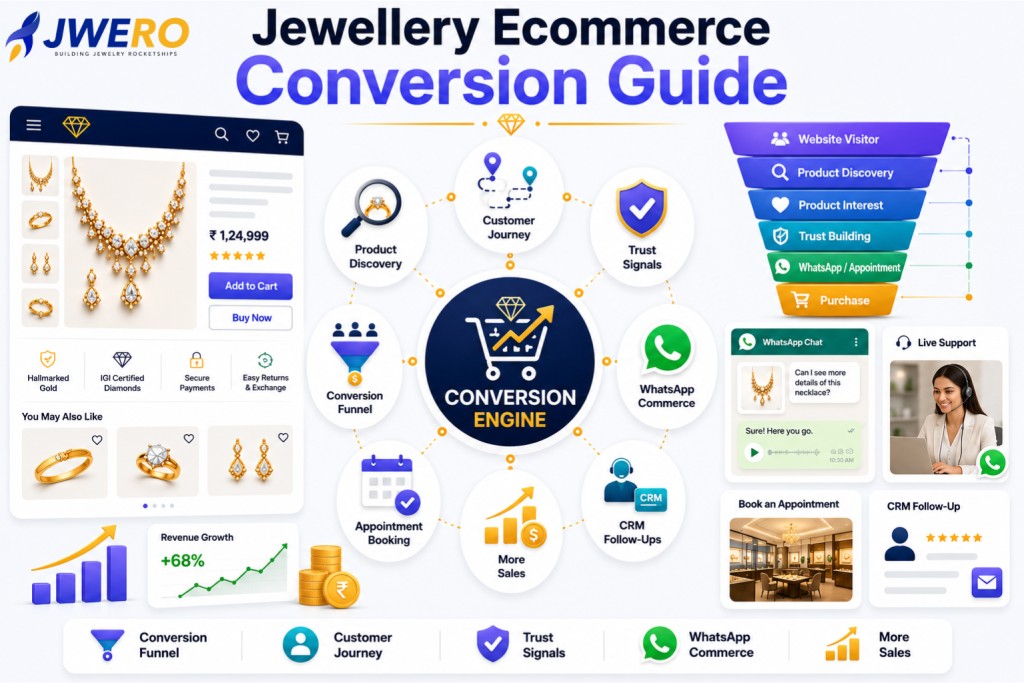
Ecommerce Conversion Optimisation for Jewellers
Traffic alone does not generate revenue.
Websites must convert visitors into customers.
Conversion optimisation focuses on:
- Better User Experience
- Faster Website Speed
- Strong Product Pages
- Clear CTAs
- Trust Signals
- Simplified Checkout
- WhatsApp Support
Small improvements often generate significant revenue gains.
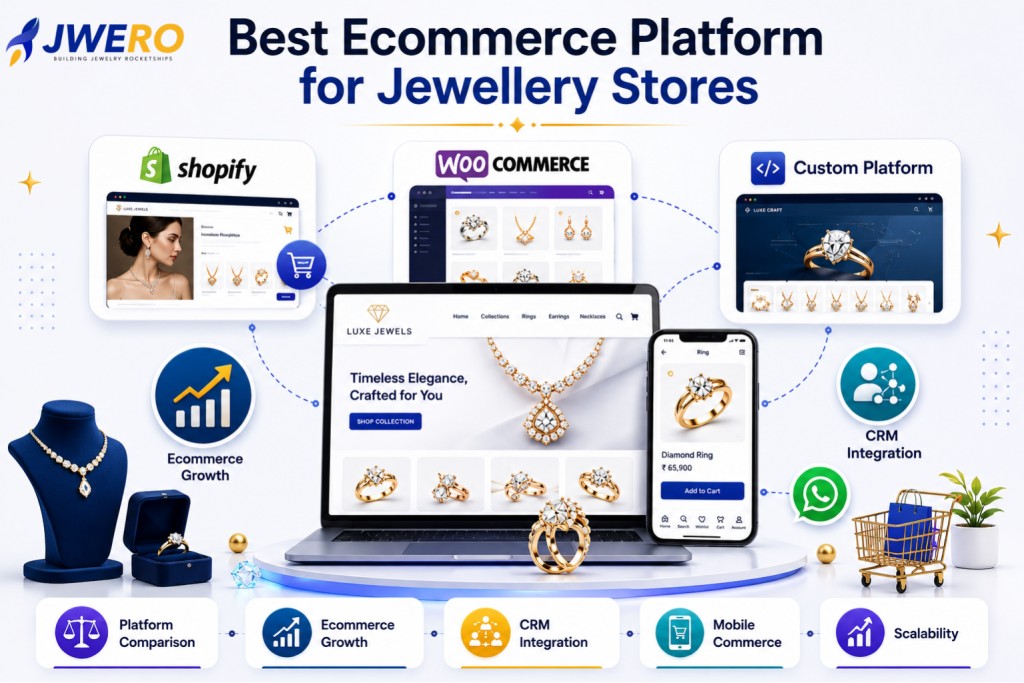
Choosing the Right Ecommerce Platform
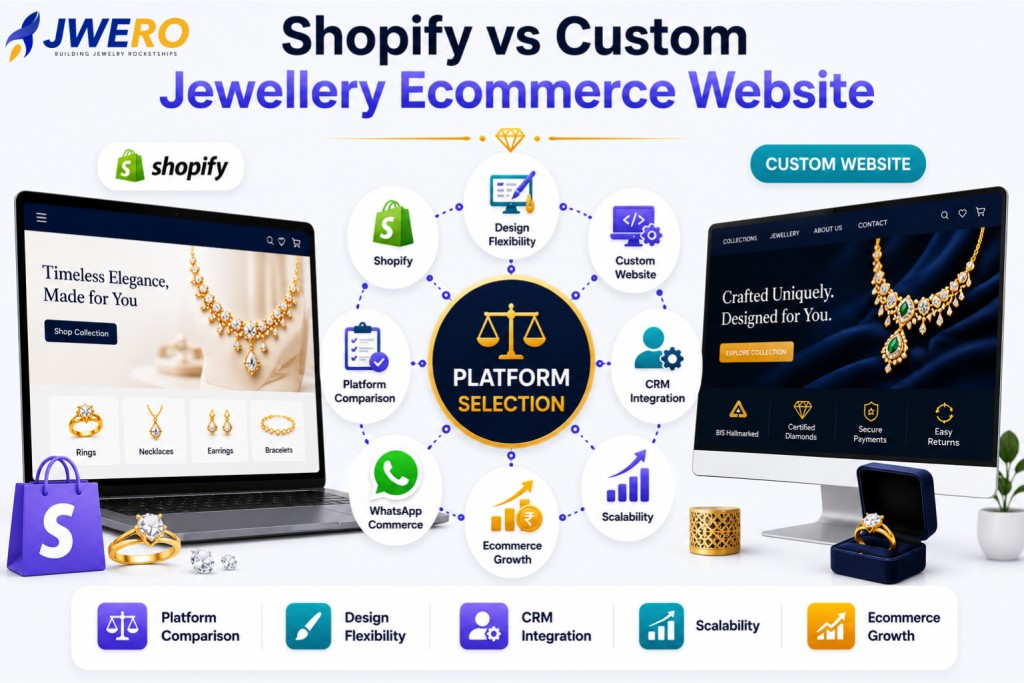
Jewellers commonly choose between:
- Shopify
- WooCommerce
- Magento
- Custom Ecommerce Solutions
Each platform has different advantages depending on business goals.
Omnichannel Ecommerce for Jewellery Retailers
Modern customers move between channels.
Example:
↓
Website
↓
↓
Showroom
↓
Purchase
↓
CRM Follow-Up
↓
Repeat Purchase
Omnichannel strategies improve customer experience and retention.
Common Jewellery Ecommerce Mistakes
- Poor Product Photography
- Slow Website Performance
- Weak SEO
- No WhatsApp Integration
- No CRM Integration
- Poor Mobile Experience
- Complicated Checkout Process
- Lack of Trust Signals
Avoiding these mistakes improves performance.
Measuring Ecommerce Success
Key metrics include:
- Website Traffic
- Conversion Rate
- Average Order Value
- Cart Abandonment Rate
- Customer Acquisition Cost
- Customer Lifetime Value
- Repeat Purchase Rate
- Revenue Growth
These metrics help identify improvement opportunities.
How Jwero Helps Jewellery Ecommerce Businesses
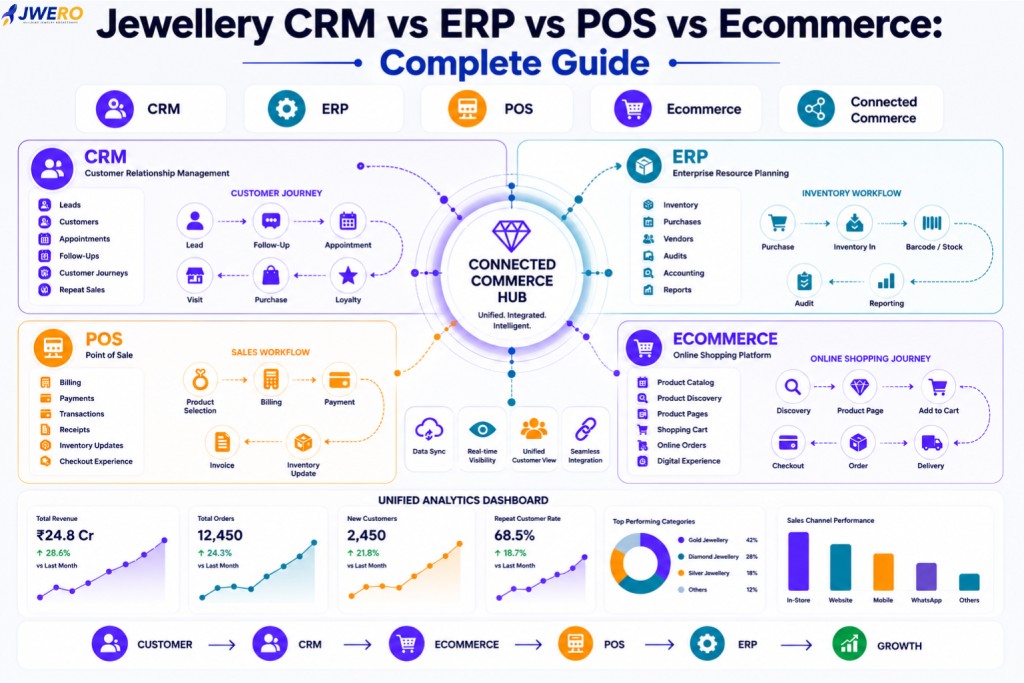
Jwero helps jewellery retailers connect:
- Ecommerce Websites
- WhatsApp Commerce
- CRM
- Customer Profiles
- Customer Segmentation
- Marketing Automation
- Lead Management
- Customer Journeys
This creates a connected ecommerce ecosystem that improves customer engagement and sales performance.
Final Thoughts
Jewellery ecommerce is no longer simply about selling products online.
It is about creating connected customer experiences across websites, WhatsApp, CRM, marketing, and physical stores.
Businesses that combine ecommerce, customer intelligence, automation, and omnichannel engagement are best positioned for long-term growth.
The future of jewellery retail is connected commerce.
Frequently Asked Questions
What is jewellery ecommerce?
Jewellery ecommerce refers to selling jewellery products online through websites, marketplaces, social commerce, and digital sales channels.
Why do jewellers need ecommerce websites?
Ecommerce websites help businesses reach more customers, generate leads, showcase products, and increase sales opportunities.
Which ecommerce platform is best for jewellery stores?
Popular options include Shopify, WooCommerce, Magento, and custom ecommerce solutions depending on business requirements.
How important is SEO for jewellery ecommerce?
SEO is critical because it helps potential customers discover products and collections through search engines.
How can jewellers increase ecommerce conversions?
By improving website design, product pages, trust signals, WhatsApp support, and checkout experiences.
What is omnichannel jewellery ecommerce?
Omnichannel ecommerce connects websites, WhatsApp, CRM, social media, and physical stores to create a seamless customer journey.