

The jewellery industry has always evolved alongside changes in customer behaviour.
From traditional family-owned stores to ecommerce platforms and omnichannel retail, each shift has transformed how jewellers engage customers.
Today, another transformation is underway.
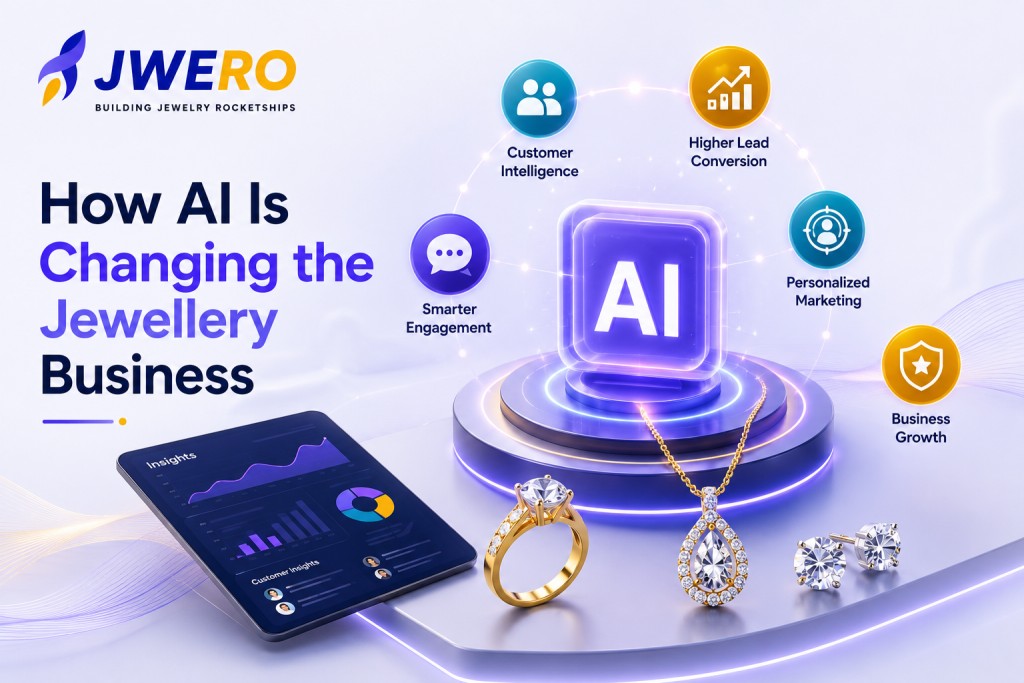
Artificial Intelligence is redefining jewellery retail.
What began as simple automation tools is evolving into intelligent systems capable of understanding customer behaviour, predicting needs, personalising experiences, and connecting every part of the customer journey.
The future of jewellery retail will not be defined by technology alone.
It will be defined by how effectively businesses use technology to create better customer experiences.
Why Jewellery Retail Is Entering a New Era
Modern jewellery customers behave differently from previous generations.
They expect:
- Personalized experiences
- Instant responses
- Omnichannel convenience
- Digital discovery
- Seamless communication
Customers no longer follow a linear path to purchase.
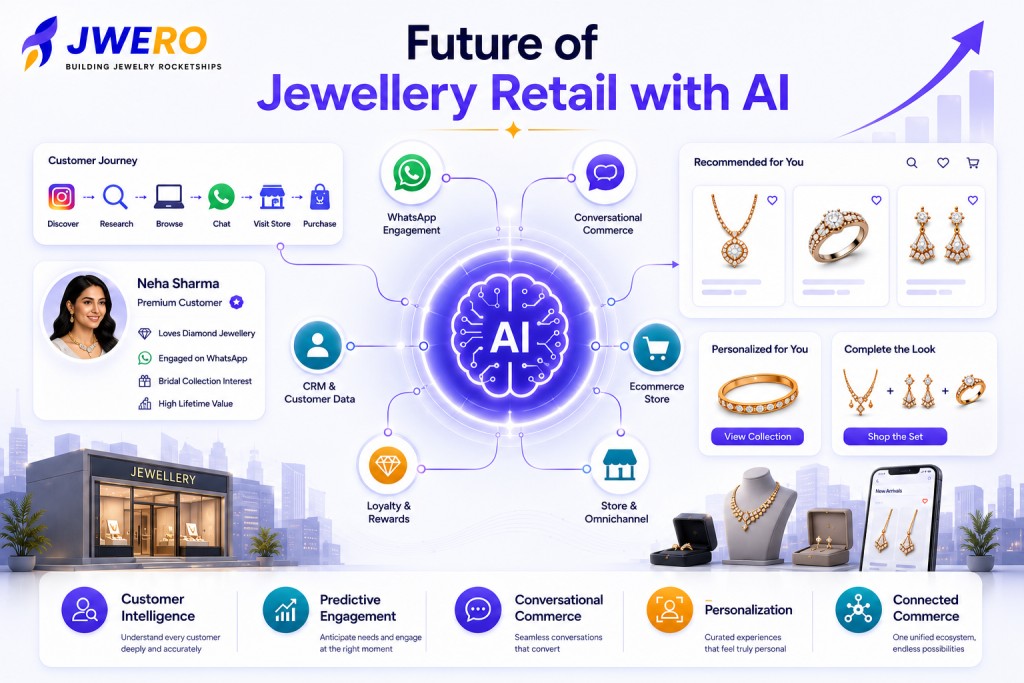
A typical journey may include:
- Instagram discovery
- Google research
- Website browsing
- WhatsApp conversations
- Store visits
- Follow-up interactions
The businesses that succeed will be those capable of connecting these touchpoints into a unified experience.
The Shift From Data to Customer Intelligence
Many jewellers already collect customer data.
However, collecting data is not the same as understanding customers.
The next generation of retail will focus on customer intelligence.
AI helps businesses transform information into insights by identifying:
- Purchase patterns
- Customer preferences
- Engagement behaviour
- Readiness signals
- Lifetime value opportunities
Instead of managing customer records, businesses will manage customer understanding.
Trend 1: Hyper-Personalization
Personalisation will become the standard expectation.
Future jewellery experiences will adapt to:
- Individual preferences
- Purchase history
- Style interests
- Occasion needs
- Budget ranges
Rather than browsing generic collections, customers will increasingly experience curated journeys.
Every interaction will feel more relevant.
Trend 2: Predictive Customer Engagement
Most customer engagement today is reactive.
Future engagement will become predictive.
AI will identify:
- Customers likely to purchase
- Customers at risk of disengagement
- Upgrade opportunities
- Anniversary gifting moments
- Loyalty opportunities
Businesses will engage before customers ask.
This creates more proactive customer experiences.
Trend 3: Conversational Commerce
Commerce is becoming increasingly conversational.
Customers already use:
- Messaging platforms
- Social media conversations
to discover and purchase products.
Future jewellery retail will see conversational commerce become a primary sales channel.
Customers will:
- Discover products
- Ask questions
- Receive recommendations
- Schedule appointments
- Complete purchases
Within a single conversation flow.
Trend 4: AI-Powered Product Discovery
Finding the right jewellery product will become significantly easier.
AI recommendation systems will become more sophisticated.
Customers will receive:
- Personalized suggestions
- Matching collections
- Occasion-based recommendations
- Style-based recommendations
Product discovery will become more intuitive and relevant.
Trend 5: Intelligent CRM Systems
Traditional CRM systems primarily store information.
Future CRM systems will generate intelligence.
AI-powered CRM platforms will:
- Identify opportunities
- Prioritize actions
- Recommend engagement strategies
- Predict customer behaviour
CRM will evolve from database to decision engine.
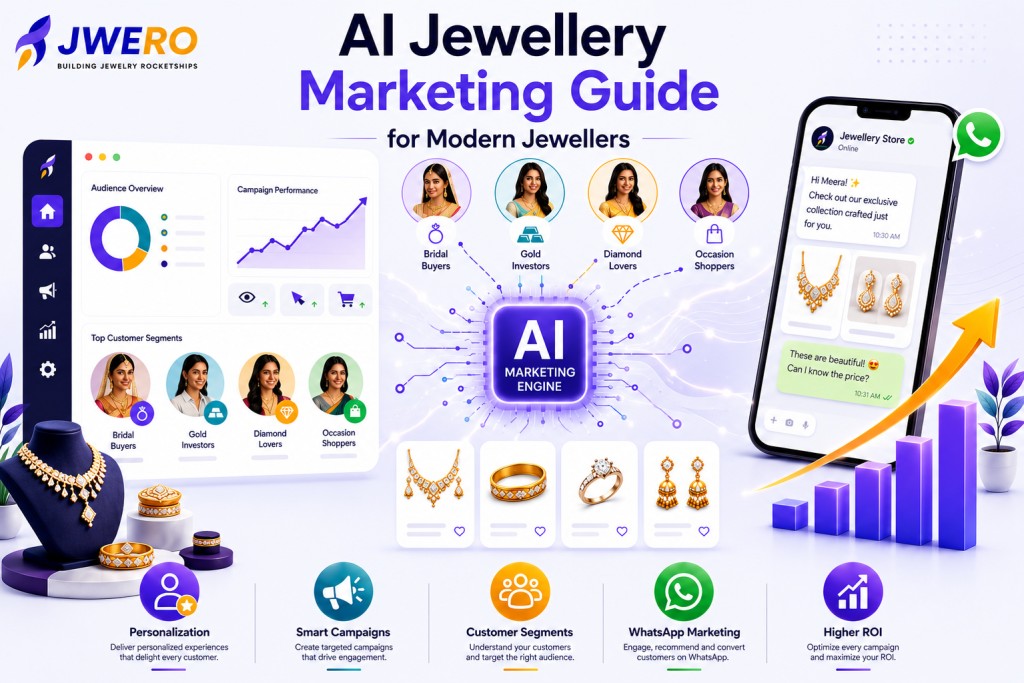
Trend 6: AI-Driven WhatsApp Engagement
WhatsApp is already becoming a dominant communication channel.
Future AI-powered WhatsApp experiences will include:
- Personalized recommendations
- Automated customer journeys
- Intelligent support
- Appointment management
- Loyalty engagement
Communication will become more contextual and customer-centric.
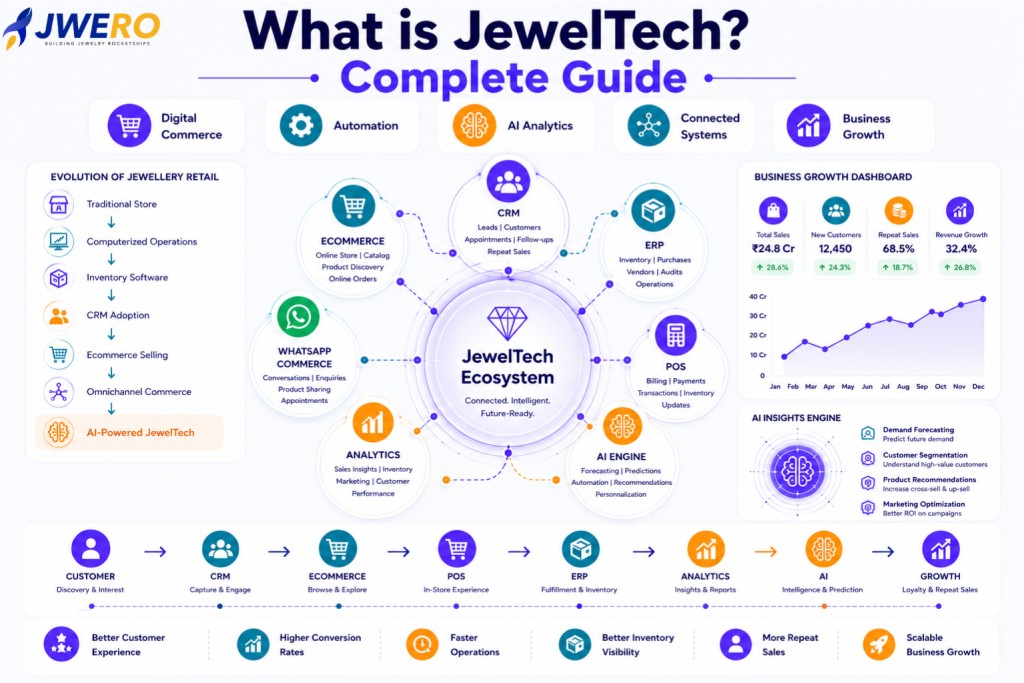
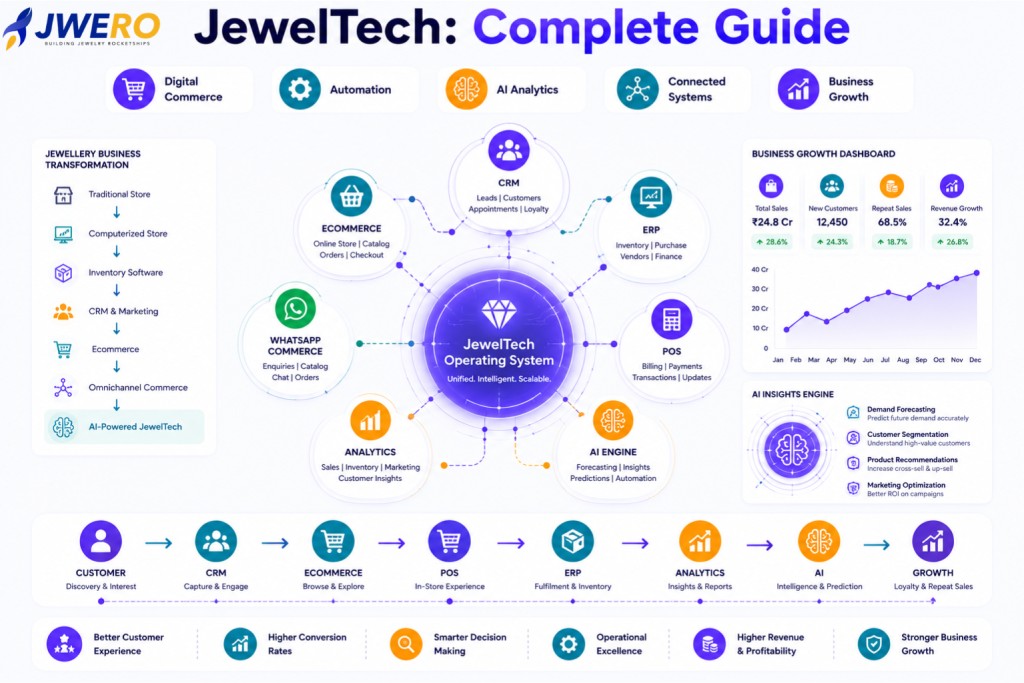
Trend 7: Unified Commerce Ecosystems
Many businesses currently operate disconnected systems.
Examples include:
- CRM platforms
- Marketing software
- Loyalty systems
- Ecommerce tools
- Customer service platforms
The future belongs to connected ecosystems.
AI performs best when every customer interaction is connected.
This creates a single customer view.
Trend 8: Loyalty Through Intelligence
Future loyalty programs will move beyond points and rewards.
AI will enable:
- Personalised loyalty journeys
- Behaviour-based rewards
- Predictive retention strategies
- Customer-specific experiences
Loyalty will become more meaningful and more effective.
Trend 9: Virtual Shopping Experiences
Virtual experiences will continue evolving.
Customers may increasingly use:
- Virtual consultations
- AI-powered recommendations
- Digital catalogue experiences
- Interactive product discovery
Technology will help replicate the in-store experience online.
Trend 10: AI as a Business Co-Pilot
Perhaps the biggest change will happen behind the scenes.
AI will increasingly support business decisions.
Examples include:
- Marketing recommendations
- Customer engagement suggestions
- Lead prioritization
- Revenue forecasting
- Opportunity identification
AI will become a strategic advisor rather than a simple automation tool.
What Will Not Change
Despite rapid technological advancement, several things will remain constant.
Customers will still value:
- Trust
- Expertise
- Craftsmanship
- Relationships
- Personal service
AI will not replace these qualities.
It will enhance them.
The future of jewellery retail remains deeply human.
Technology simply helps businesses deliver better experiences.
Challenges Businesses Must Prepare For
The future also introduces challenges.
Businesses must address:
Data Quality
AI requires accurate information.
Customer Privacy
Trust remains essential.
Change Management
Teams must adapt to new workflows.
Technology Integration
Disconnected systems reduce effectiveness.
Preparation matters.
The Competitive Advantage of Early Adoption
Every major technology shift creates leaders and followers.
Early adopters gain advantages through:
- Better customer understanding
- Stronger personalization
- Faster innovation
- Operational efficiency
- Competitive differentiation
Businesses that begin building AI capabilities today will be better positioned tomorrow.
How Jwero Fits Into the Future of Jewellery Retail
The future of jewellery retail requires connected customer experiences.
Jwero helps jewellery businesses bring together:
- CRM
- Customer engagement
- WhatsApp communication
- Loyalty
- Commerce
- Customer intelligence
into a unified Jewellery Commerce ecosystem.
As AI becomes increasingly important, businesses need platforms capable of connecting every customer interaction into one intelligent system.
Final Thoughts
The future of jewellery retail is not about replacing people with technology.
It is about using technology to understand customers better, serve them more effectively, and build stronger relationships.
Artificial Intelligence will shape how customers discover products, engage with brands, receive recommendations, and make purchasing decisions.
The jewellers who embrace these changes will be best positioned to thrive in the decade ahead.
The future belongs to businesses that combine intelligence with trust, personalisation with authenticity, and technology with human relationships.
Frequently Asked Questions
How will AI change jewellery retail?
AI will improve personalisation, customer engagement, product discovery, customer intelligence, and business decision-making across the jewellery retail sector.
Will AI replace jewellery salespeople?
No. AI supports sales teams by providing insights, recommendations, and automation while human relationships remain central.
What is the biggest opportunity AI creates for jewellers?
The biggest opportunity is the ability to understand customers more deeply and deliver highly personalised experiences.
How will AI affect customer engagement?
AI will enable more relevant communication, predictive engagement, and personalised customer journeys.
What is conversational commerce?
Conversational commerce allows customers to discover products, ask questions, receive recommendations, and make purchases through messaging platforms like WhatsApp.
What should jewellers do today to prepare for the future?
Businesses should focus on customer data, CRM, customer engagement systems, personalisation, and connected commerce platforms.