


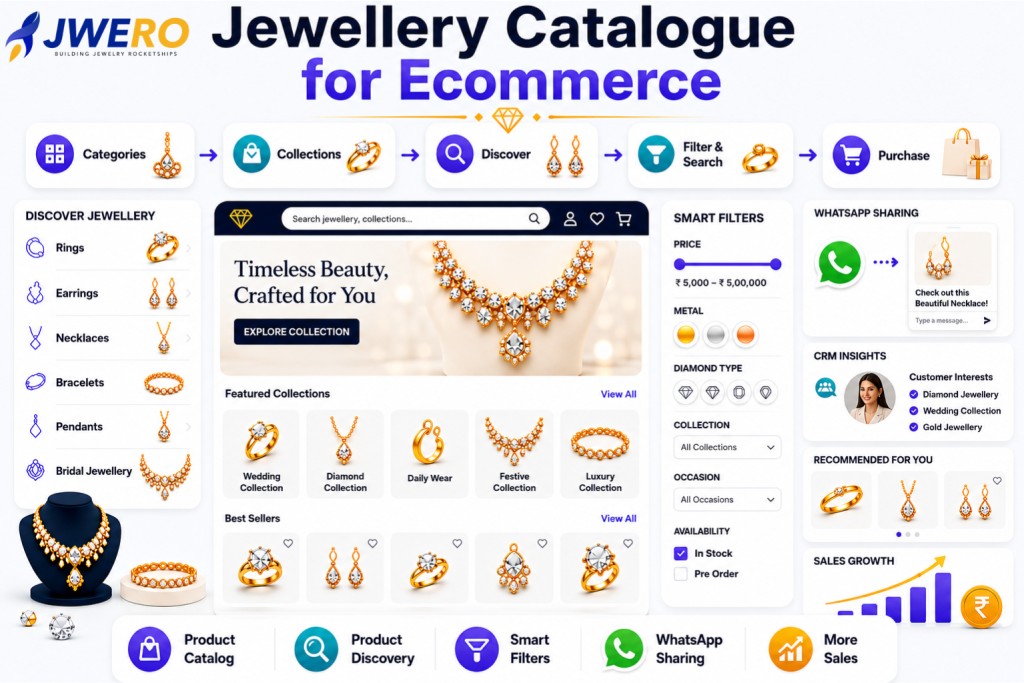
A jewellery catalogue is the foundation of every successful ecommerce store.
No matter how beautiful your website is, customers cannot buy products they cannot easily discover.
An organised catalogue improves:
- Product Discovery
- Customer Experience
- Conversion Rates
- SEO Performance
- Revenue Growth
This guide explains how jewellery retailers can build a catalogue that supports ecommerce success.
Why Catalogue Structure Matters
Customers expect to find products quickly.
A poorly organised catalogue leads to:
- Customer Frustration
- Higher Bounce Rates
- Lower Conversions
- Missed Sales Opportunities
An optimised catalogue creates a better shopping experience.
1. Organise Products by Category
Start with clear categories.
Examples:
- Rings
- Earrings
- Necklaces
- Bracelets
- Pendants
- Bridal Jewellery
Categories help customers navigate easily.
Collections improve product discovery.
Examples:
- Wedding Collection
- Diamond Collection
- Daily Wear Collection
- Festive Collection
- Luxury Collection
Collections allow customers to browse by intent.
3. Use High-Quality Product Images
Catalogue images should include:
- Multiple Angles
- Zoom Capability
- Lifestyle Photography
- White Background Images
- HD Product Photos
Visual quality influences purchasing decisions.
4. Add Detailed Product Information
Every product should include:
- Product Name
- Metal Type
- Weight
- Gemstone Details
- Certification Information
- Pricing
Complete information improves trust.
5. Implement Product Filters
Filters make browsing easier.
Useful filters include:
- Price
- Metal
- Diamond Type
- Collection
- Occasion
- Availability
Filters improve customer experience.
6. Add Product Search
Customers often know what they want.
Search functionality should support:
- Product Names
- Categories
- Collections
- Keywords
- Product Types
Fast search improves engagement.
7. Enable Product Recommendations
Recommendations help customers discover more products.
Examples:
- Similar Products
- Matching Sets
- Related Collections
- Frequently Viewed Products
Recommendations increase average order value.
8. Connect Catalogue to WhatsApp
Customers frequently request catalogue sharing.
Enable:
- Product Sharing
- Collection Sharing
- WhatsApp Enquiries
- Product Recommendations
- Instant Assistance
WhatsApp extends catalogue reach.
9. Integrate CRM with Catalogue Activity
Track:
- Viewed Products
- Favourite Categories
- Customer Interests
- Purchase History
- Engagement Behaviour
This creates personalised shopping experiences.
10. Optimise Catalogue for SEO
Each product and category page should include:
- SEO-Friendly URLs
- Product Descriptions
- Meta Tags
- Structured Data
- Internal Linking
SEO helps customers discover products through search engines.
11. Optimise Mobile Catalogue Experience
Most catalogue browsing happens on mobile.
Ensure:
- Mobile-Friendly Navigation
- Fast Loading
- Easy Filtering
- Product Search
- Mobile Checkout
Mobile experience directly impacts conversions.
12. Track Catalogue Performance
Measure:
- Product Views
- Search Usage
- Category Performance
- Conversion Rates
- Popular Collections
Data helps improve catalogue effectiveness.
Common Catalogue Mistakes
- Poor Category Structure
- Missing Product Information
- Low-Quality Images
- Weak Search Experience
- No Product Filters
- No Recommendations
- No CRM Tracking
Avoiding these issues improves customer experience.
Ecommerce Catalogue Checklist
✅ Categories
✅ Collections
✅ Product Images
✅ Product Information
✅ Filters
✅ Search
✅ Recommendations
✅ WhatsApp Sharing
✅ CRM Tracking
✅ Mobile Experience
How Jwero Helps Manage Jewellery Catalogues
Jwero helps jewellery retailers:
- Organise Product Catalogues
- Share Products via WhatsApp
- Track Customer Interests
- Connect CRM
- Automate Recommendations
- Analyse Product Performance
Creating a smarter ecommerce catalogue ecosystem.
Final Thoughts
A jewellery catalogue is more than a list of products.
It is a product discovery system that influences customer experience, trust, and conversions.
The easier products are to find and explore, the more likely customers are to purchase.
Frequently Asked Questions
Why is catalogue organisation important?
It helps customers discover products quickly and improves the shopping experience.
Should jewellery catalogues have collections?
Yes. Collections improve navigation and customer engagement.
Why are product filters important?
Filters help customers narrow choices and find products faster.
Can WhatsApp help catalogue engagement?
Yes. Customers frequently browse and enquire through WhatsApp.
How does CRM improve catalogue performance?
CRM tracks customer interests and enables personalised recommendations.
Is SEO important for product catalogues?
Absolutely. SEO helps customers discover products through search engines.