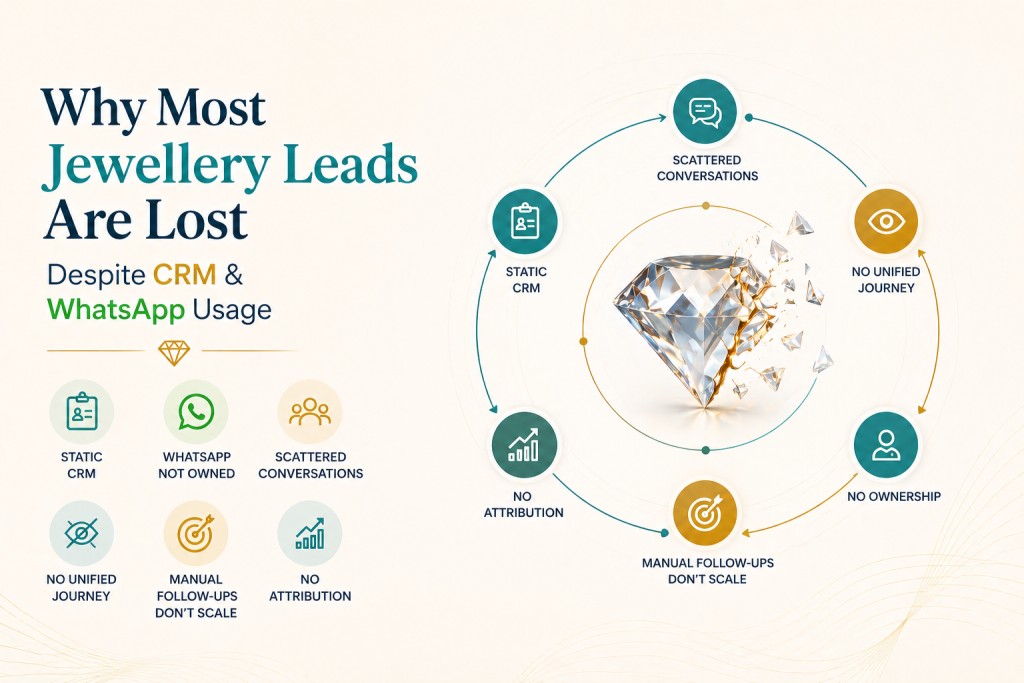


Most Jewellery CRMs Don’t Fail Technically — They Fail Conceptually
Ask any jewellery enterprise:
- “Do you have a CRM?”
- “Is it implemented?”
The answer is almost always yes.
Then ask:
“Do you trust it to tell you what to do next?”
Silence.
Because the problem isn’t CRM adoption.
The problem is that CRMs were never designed to understand jewellery intent.
What CRMs Are Actually Good At
Let’s be fair.
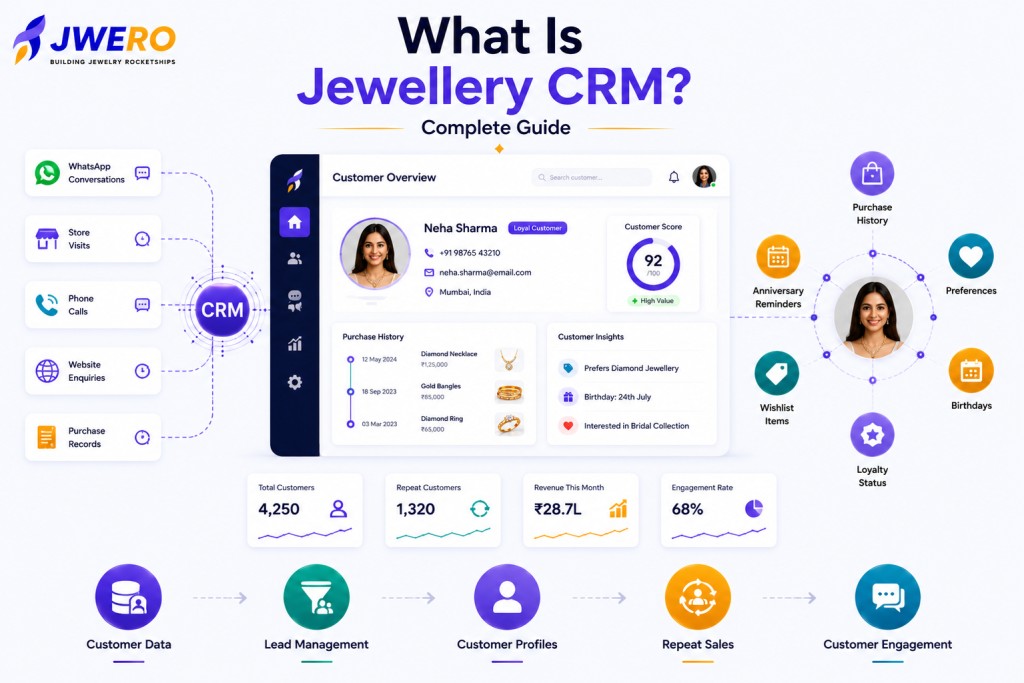
CRMs excel at:
- Storing contacts
- Logging conversations
- Managing tasks
- Tracking pipeline stages
- Generating reports
They answer questions like:
- Who spoke to whom?
- When was the last interaction?
- What stage was selected?
CRMs are excellent record keepers.
They are not decision-makers.
Why Jewellery Demands More Than Record-Keeping
Jewellery buying is:
- Emotional
- Non-linear
- Time-flexible
- Context-heavy
Customers:
- Browse silently
- Revisit designs
- Switch channels
- Pause for weeks
CRMs don’t understand silence.
They don’t understand browsing.
They don’t understand readiness.
They only understand what humans manually tell them.
The Core CRM Assumption That Breaks in Jewellery
CRMs assume:
“If something is important, a human will update it.”
This assumption collapses in jewellery because:
- Salespeople are busy
- Intent shifts quietly
- Signals happen outside conversations
- Memory is unreliable
By the time CRM data is updated, the moment has already passed.
5 Reasons Jewellery CRMs Fail Without Intent Intelligence
Let’s break this down clearly.
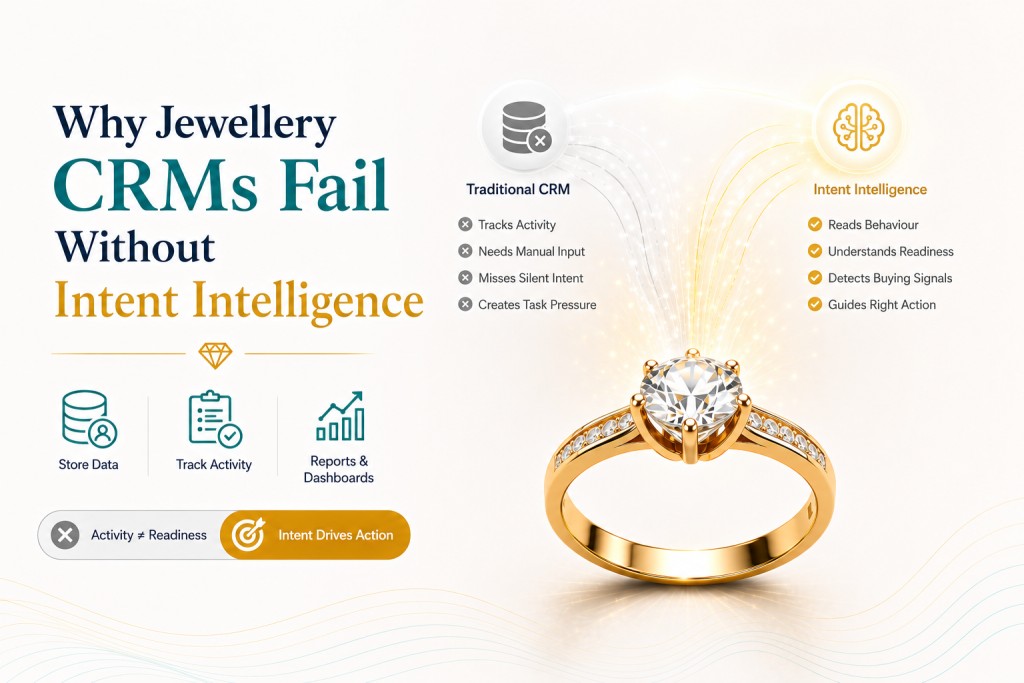
1. CRMs Track Activity — Not Readiness
CRMs can tell you:
- Calls made
- Messages sent
- Tasks overdue
They cannot tell you:
“Is this customer closer to buying today than yesterday?”
Readiness is behavioural.
CRMs are transactional.
2. CRMs Treat Silence as Inactivity
In CRM logic:
- No reply = cold
In jewellery reality:
- No reply often = consideration
CRMs misclassify high-value leads as lost — and teams move on too early.
3. CRMs Depend on Manual Stage Updates
Stages like:
- Interested
- Hot
- Follow-up
Are:
- Subjective
- Inconsistent
- Often outdated
Intent changes faster than humans update stages.
This creates false confidence and false alarms.
4. CRMs Cannot Interpret Omnichannel Behaviour
Jewellery intent appears across:
- Walk-ins
- WhatsApp browsing
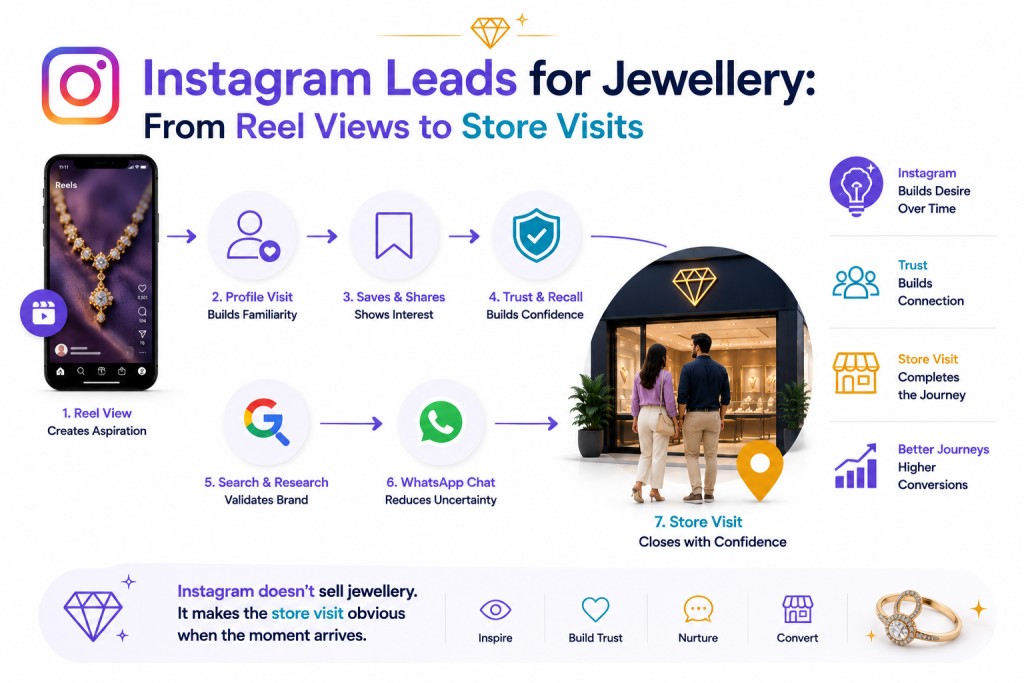
- Instagram saves
- Website wishlists
CRMs:
- See conversations
- Miss behaviour
Without behavioural intelligence, CRMs see only the tip of the iceberg.
5. CRMs Create Task Pressure, Not Decision Clarity
CRMs answer:
“What should I do?”
They do not answer:
“Should I do anything right now?”
This distinction is critical in jewellery.
Doing nothing at the right time is often the best action.
What Is Intent Intelligence in Jewellery?
Let’s define it precisely.
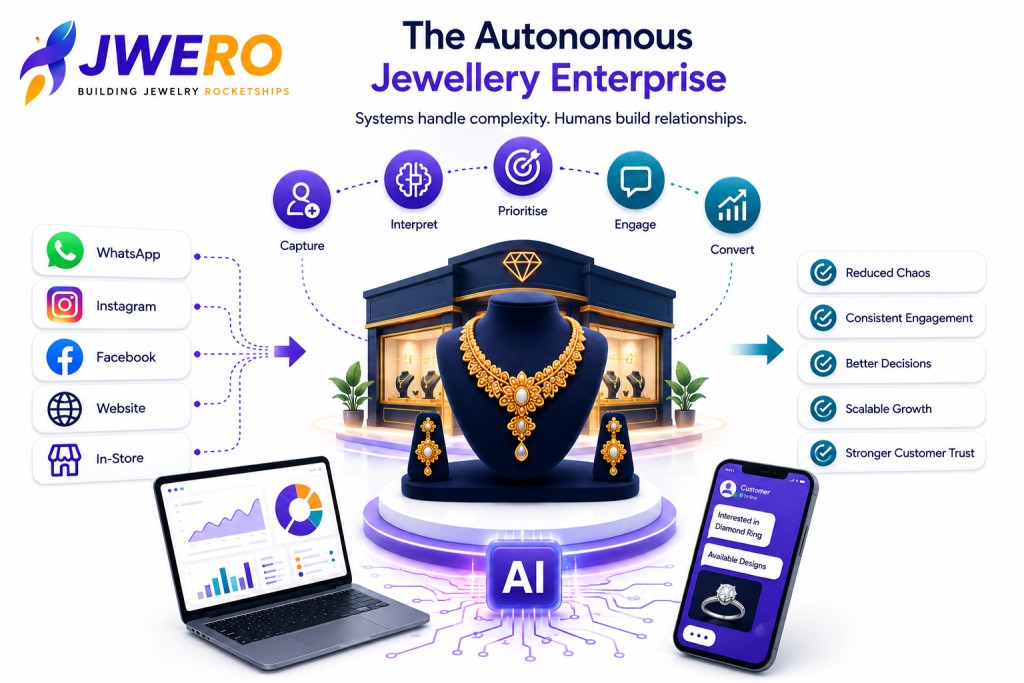
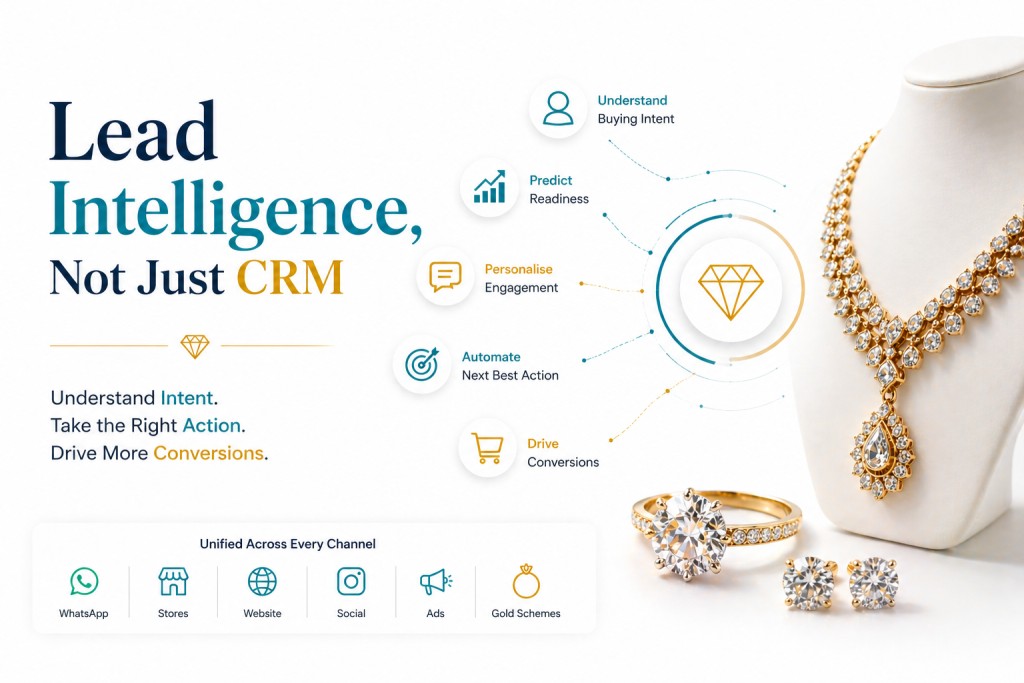
Intent intelligence is the system’s ability to continuously detect, interpret, and score a customer’s buying readiness based on behaviour, timing, and context — without manual input.
Intent intelligence reads:
- Patterns, not messages
- Momentum, not replies
- Behaviour, not labels
How Intent Intelligence Complements (Not Replaces) CRM
This is important.
Intent intelligence does not replace CRM.
It sits above it.
CRM:
- Executes tasks
- Logs conversations
Intent intelligence:
- Decides priority
- Times engagement
- Suppresses unnecessary actions
CRM becomes powerful only when guided by intelligence.
What Happens When CRM Is Paired With Intent Intelligence
When intent intelligence is added:
- Follow-ups become relevant
- Silence is understood correctly
- High-value leads surface naturally
- Teams stop guessing
- Leaders stop micromanaging
CRM shifts from:
A task managertoAn execution engine
Enterprise Impact: Why CRMs Disappoint at Scale
At enterprise scale:
- CRM data volume explodes
- Human discipline drops
- Stage accuracy declines
Leadership sees:
- Beautiful dashboards
- Poor predictability
This is why enterprises say:
“We invested in CRM, but nothing really changed.”
The missing layer was intelligence.
Why CRM Customisation Is the Wrong Fix
Many jewellery businesses try to:
- Add more stages
- Add more fields
- Add more rules
This increases:
- Complexity
- Resistance
- Data decay
You cannot configure intelligence into a CRM.
It must exist as a separate layer.
Geography & CRM Failure Patterns
India
- WhatsApp behaviour invisible to CRM
- Walk-ins dominate intent
Middle East
- Luxury pacing misread as inactivity
Southeast Asia
- Fast digital behaviour overwhelms CRM stages
Different symptoms.
Same root cause.
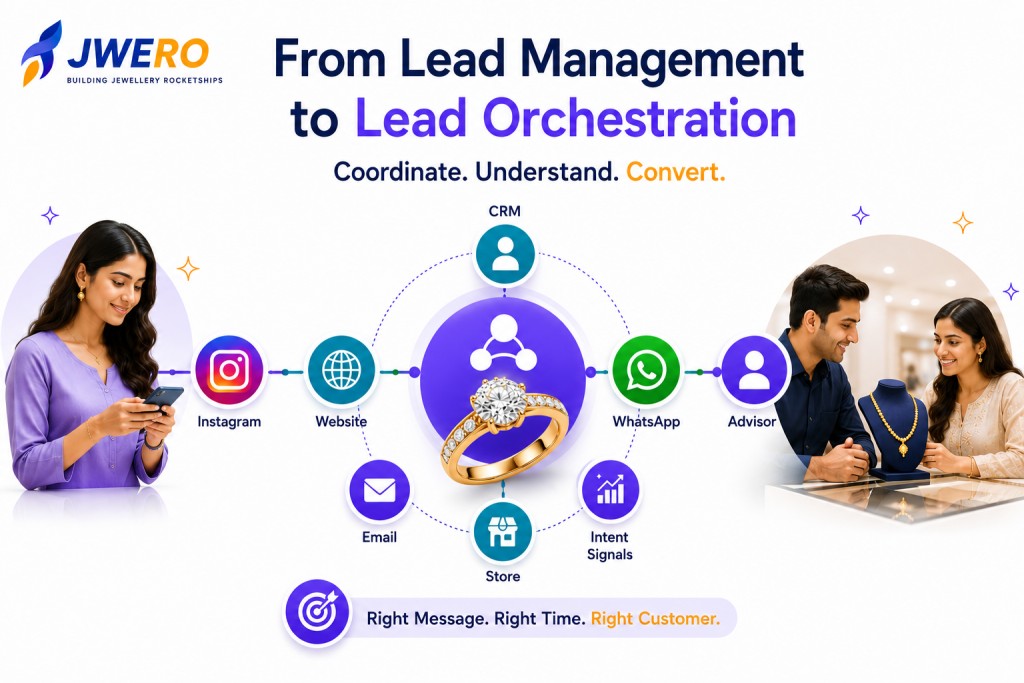
Why Jwero Was Built Beyond CRM Logic
Jwero does not try to be:
- “A better CRM”
Jwero is built to be:
The intent intelligence layer that CRMs lack
Jwero:
- Detects readiness continuously
- Orchestrates journeys automatically
- Tells CRM when to act
- Gives leadership early visibility
Jwero doesn’t replace your CRM.
It finally makes it useful for jewellery.
Frequently Asked Questions
Why do CRMs fail in jewellery retail?
Because they track activity and records, not buying intent and readiness.
Can CRM be fixed with better training?
No. Training improves usage, not intelligence.
What is intent intelligence?
It is the system’s ability to understand customer readiness based on behaviour and timing, not manual inputs.
Do jewellery businesses still need CRM?
Yes — but only as an execution layer guided by intent intelligence.
Final Thought
CRMs tell you what happened.
Jewellery leaders need systems that tell them what to do next — and when not to act.
Until intent intelligence exists,CRMs will remain organised guesswork.