

Why Most Jewellery Website Visitors Never Enquire
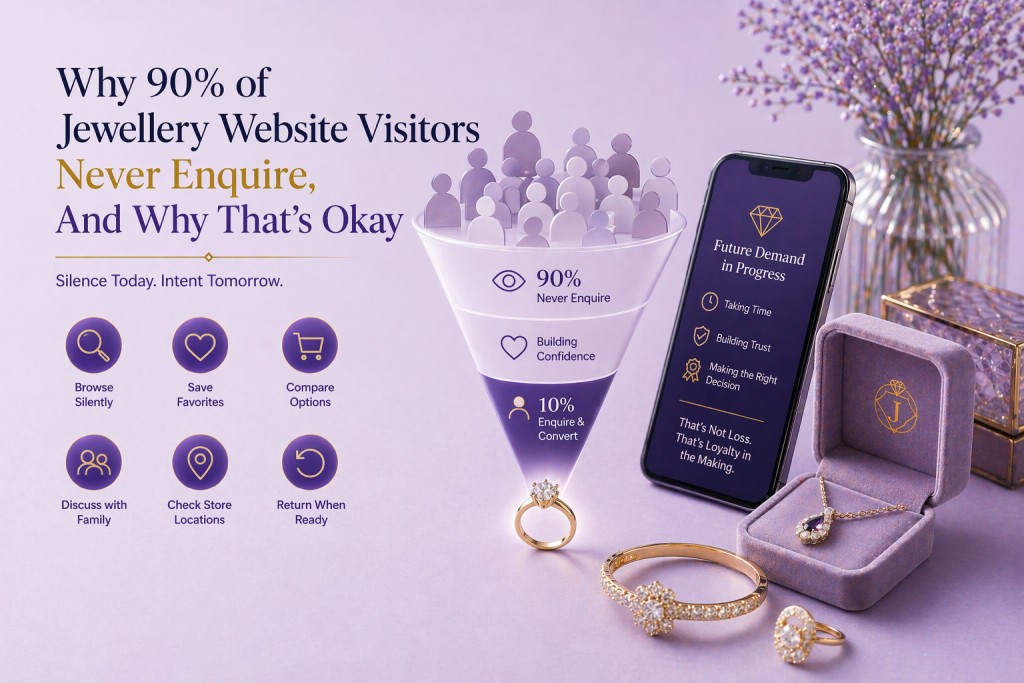
Most jewellery websites convert less than 10% of visitors into enquiries.
This statistic is usually treated as:
- A website problem
- A UX failure
- A lead-generation gap
In reality, it is normal, healthy, and expected behaviour in jewellery.
The real problem isn’t that 90% never enquire.
The real problem is brands misunderstanding what silence means.
Modern jewellery retailers increasingly use behavioural intelligence platforms like JWERO.ai to understand silent customer intent instead of relying only on enquiries and direct conversations.
Table of Contents
- Jewellery Is a Thinking Category, Not a Talking One
- Why Enquiring Is a Big Step in Jewellery
- What the 90% Are Actually Doing
- Why Forcing Enquiries Backfires
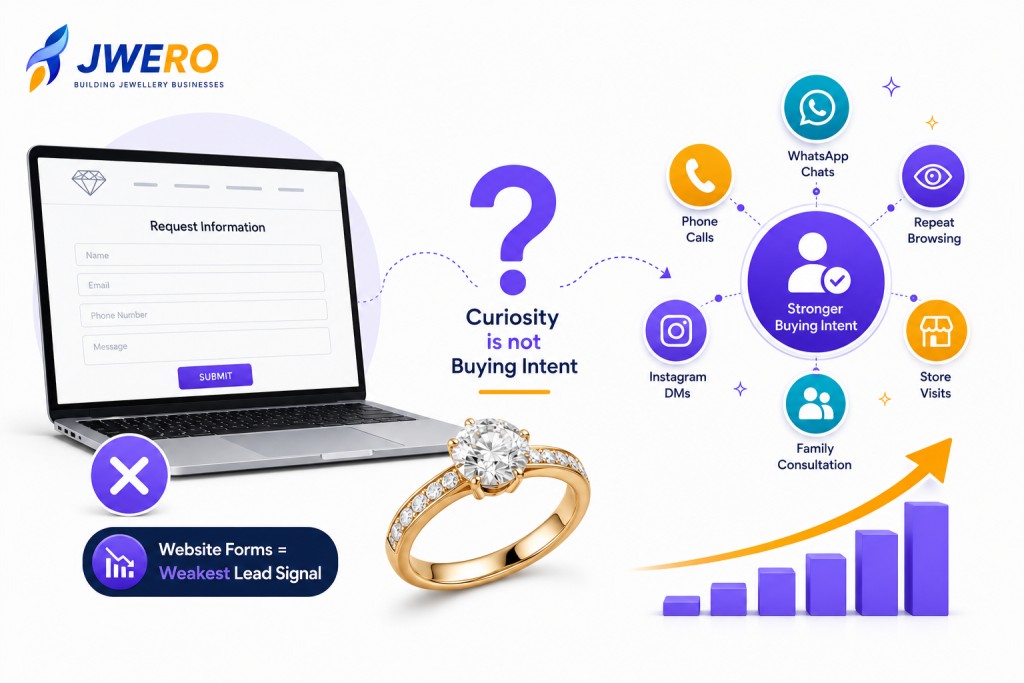
- Enquiry ≠ Intent in Jewellery
- The Role Enquiries Should Actually Play
- What High-Performing Jewellery Brands Do Differently
- CXO Insight: Silence Is a Feature, Not a Bug
- The Strategic Shift: From Enquiries to Readiness
- Final Thought
1. Jewellery Is a Thinking Category, Not a Talking One
Jewellery buyers don’t behave like buyers of:
- Electronics
- Travel
- Apparel
- Subscriptions
They:
- Think privately
- Compare slowly
- Involve family
- Delay interaction
- Avoid early sales conversations
Silence is not disengagement.
It is decision incubation.
Jewellery purchases are emotional, trust-sensitive, and often connected to long consideration cycles.
2. Why Enquiring Is a Big Step in Jewellery
An enquiry signals:
- Willingness to talk
- Openness to persuasion
- Acceptance of sales interaction
Most jewellery customers avoid this step until:
- They’ve shortlisted designs
- They’re comfortable with price range
- Emotional confidence has formed
- Timing is closer to purchase
So they browse, save, revisit — without speaking.
This is not leakage.
This is how trust is built.
Connected ecommerce ecosystems like JWERO Ecommerce help jewellery retailers track these silent journeys across website behaviour and customer engagement patterns.
3. What the 90% Are Actually Doing
Those “non-enquiring” visitors are:
- Watching reels and ads repeatedly
- Browsing the same categories multiple times
- Saving designs to wishlists
- Adding items to cart without checkout
- Sharing links with family
- Checking store locations
- Returning weeks or months later
They are not idle.
They are progressing silently.
Behavioural patterns often reveal stronger purchase intent than direct conversations in jewellery retail.
4. Why Forcing Enquiries Backfires
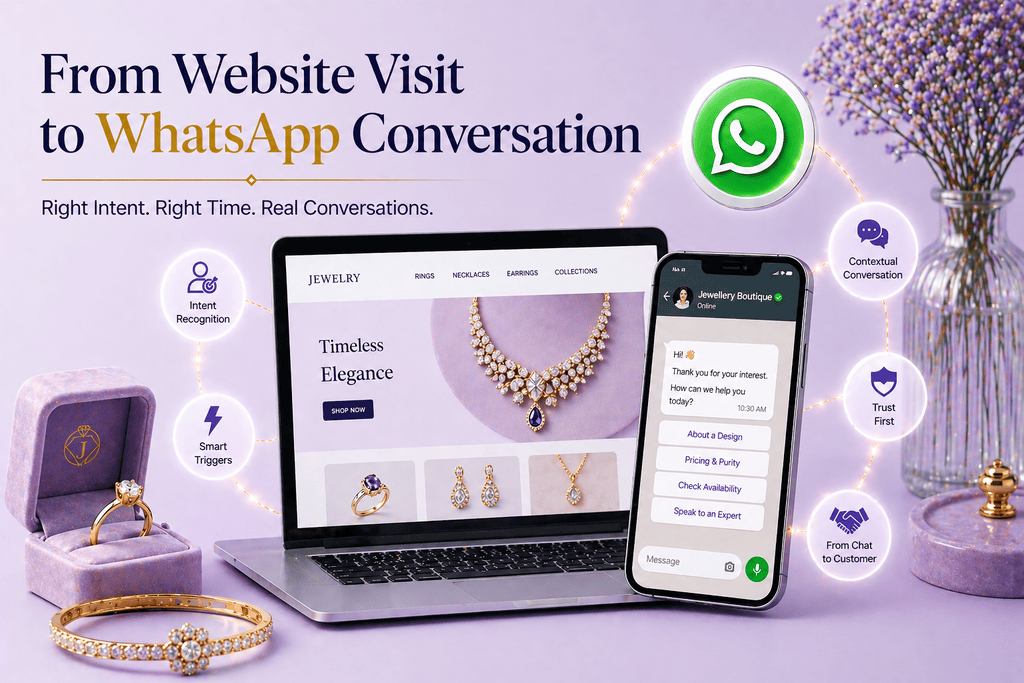
When brands try to “fix” low enquiry rates by:
- Aggressive pop-ups
- Early WhatsApp prompts
- Pushy CTAs
- Discount-led chat triggers
They:
- Break trust early
- Increase ghosting
- Reduce brand premium
- Convert fewer high-value buyers
Pressure creates interaction —
but kills confidence.
Platforms like JWERO WhatsApp Automation help jewellery brands create context-aware engagement journeys instead of aggressive interruption-based interactions.
5. Enquiry ≠ Intent in Jewellery
In jewellery:
- Enquiries often signal uncertainty
- Silence often signals evaluation
- Questions don’t equal readiness
- Saving and returning matter more
Many high-value buyers:
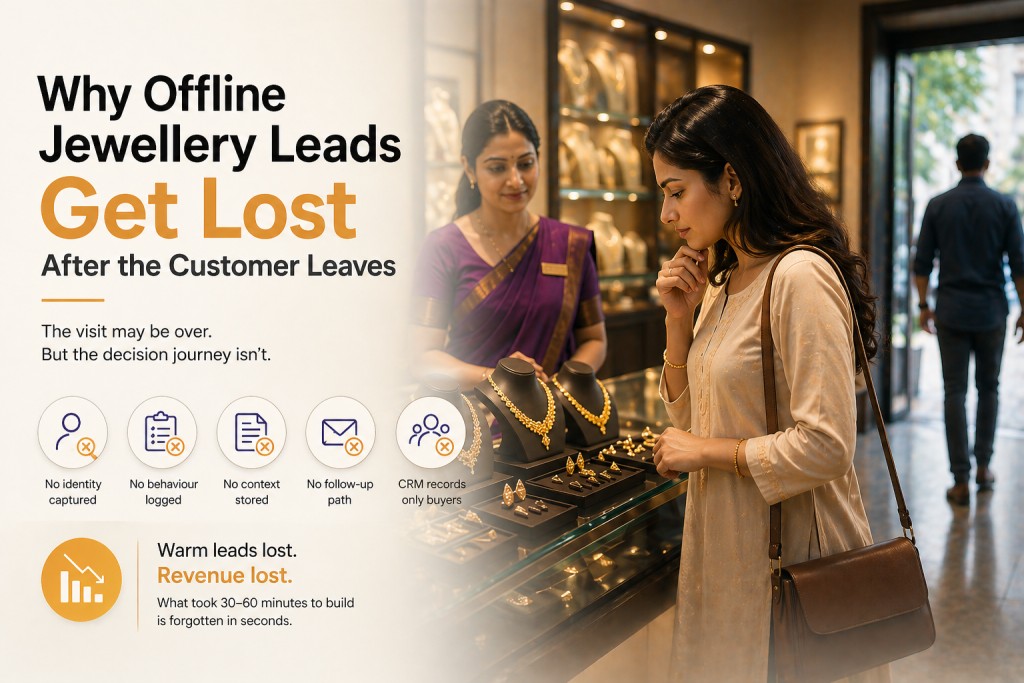
- Never enquire digitally
- Appear as “walk-ins”
- But have long digital histories
If you only track enquiries,
you only see the tip of demand.
This is why intent-based customer journey tracking is becoming critical in jewellery ecommerce.
6. The Role Enquiries Should Actually Play
Enquiries are not the goal.
They are one of many signals.
Used correctly, they should:
- Complement behavioural intent
- Trigger context-aware engagement
- Be prioritised after silent signals strengthen
- Never be treated as the sole indicator of readiness
Enquiries are useful —
just not dominant.
Retailers increasingly use systems like JWERO CRM to unify behavioural data, conversations, and customer journeys into a connected engagement view.
7. What High-Performing Jewellery Brands Do Differently
Smart brands:
- Accept low enquiry rates as normal
- Track silent intent deeply
- Measure repeat browsing and wishlists
- Read add-to-cart as consideration
- Connect website behaviour to store visits
- Engage only when confidence peaks
They don’t chase attention.
They wait intelligently.
Intent orchestration consistently outperforms pressure-based lead generation in luxury and high-trust retail categories.
8. CXO Insight: Silence Is a Feature, Not a Bug
For leadership, low enquiry rates actually indicate:
- Low friction browsing
- High trust environment
- Premium brand perception
- Customer-controlled journeys
A website that forces interaction early
often signals insecurity, not effectiveness.
The strongest jewellery brands allow customers to progress naturally instead of forcing premature sales conversations.
9. The Strategic Shift: From Enquiries to Readiness
The winning question is not:
“How do we make more visitors enquire?”
It is:
“How do we recognise readiness without forcing conversation?”
That’s the difference between:
- Lead generation
- And intent orchestration
AI-powered engagement systems like JWERO.ai help jewellery retailers identify behavioural readiness signals and engage customers at the right moment.
Integrated customer engagement platforms such as JWERO Chats also help unify WhatsApp, Instagram, Facebook, and website journeys into a continuous experience.
Frequently Asked Questions
Why do most jewellery website visitors never enquire?
Because jewellery buyers usually prefer private evaluation, silent comparison, and emotional confidence-building before starting direct conversations.
Are low enquiry rates normal in jewellery ecommerce?
Yes. Jewellery is a long-cycle, trust-driven category where many high-intent buyers remain silent until late in the decision process.
Why can aggressive WhatsApp prompts hurt jewellery conversions?
Because premature engagement creates pressure, reduces trust, increases ghosting, and weakens premium brand perception.
What signals are more important than enquiries in jewellery retail?
Repeat browsing, wishlists, category revisits, cart activity, store-location checks, and return visits often reveal stronger buying intent.
How can jewellery retailers identify silent customer intent?
By tracking behavioural patterns across websites, social engagement, WhatsApp interactions, and customer journey progression.
How does AI improve jewellery customer journey tracking?
AI helps retailers interpret behavioural signals, identify readiness patterns, and engage customers contextually without forcing conversations.
Final Thought
Jewellery customers don’t avoid enquiries because they’re uninterested. They avoid them because they’re thinking carefully.
A brand that respects this silence:
- Builds deeper trust
- Converts higher-value buyers
- Wins long-cycle decisions
- Looks calm and premium
In jewellery,
the quiet majority is not lost demand — it is future demand forming.
The brands that understand this
stop chasing noise
and start converting confidence.
Understand Silent Jewellery Buying Intent Before Competitors Do
Discover how JWERO.ai helps jewellery retailers track behavioural intent, unify customer journeys, and identify readiness signals without forcing conversations.
Explore capabilities including:
- Behaviour-based customer tracking
- Omnichannel customer engagement
- AI-powered intent recognition
- WhatsApp and social engagement orchestration
- Jewellery ecommerce analytics
- Unified customer journey visibility
why jewellery buyers avoid online enquiries, how jewellery retailers identify silent buying intent, why low enquiry rates are normal in jewellery retail, how jewellery brands convert silent website visitors, jewellery ecommerce behaviour tracking strategies, why jewellery customers browse silently before buying, how AI improves jewellery customer journey tracking, why jewellery enquiry rates are misleading, how jewellery retailers improve customer trust online, behavioural signals in jewellery ecommerce journeys