

How Jewellery Stores Use QR Codes to Capture Buyer Intent
Most jewellery stores use QR codes for:
- Catalog downloads
- Instagram follows
- Offers and schemes
This is a massive under-utilisation.
In reality, QR scans inside a jewellery showroom are among the strongest buying-intent signals available — because they happen mid-decision, not at discovery.
QR codes are not promotion tools.
They are silent lead capture points in the most valuable moment of the journey.
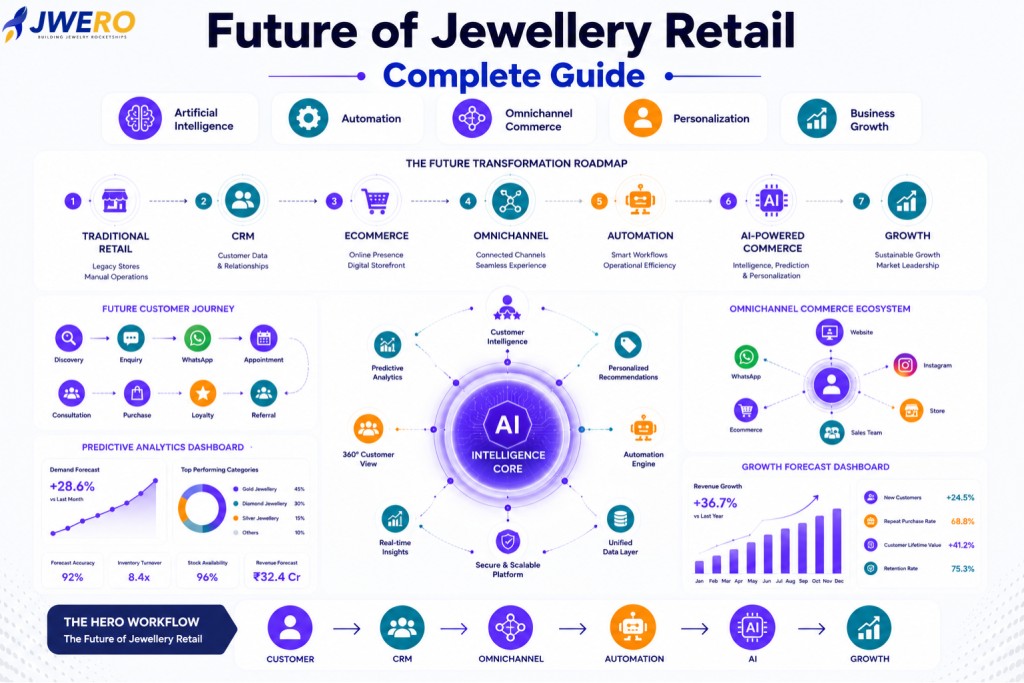
Modern jewellery retailers increasingly use intelligent customer engagement systems like JWERO.ai to connect in-store intent signals with long-term customer journeys.
Table of Contents
- Why In-Store QR Scans Matter More Than Online Clicks
- The Biggest Mistake: Treating QR Codes as Marketing Links
- What QR Codes Can Capture That Advisors Often Miss
- Why Customers Prefer QR Over Talking
- QR Codes Turn Browsers into Remembered Leads
- The Right Places for QR Codes in Jewellery Stores
- How QR + CRM Creates Offline-to-Digital Continuity
- Why QR-Captured Leads Convert Better
- CXO Insight: QR Codes Are Behavioural Opt-Ins
- The Strategic Shift: From Promotions to Intent Infrastructure
- Final Thought
1. Why In-Store QR Scans Matter More Than Online Clicks
A customer scanning a QR code inside a jewellery store has already:
- Physically visited
- Invested time
- Seen designs
- Engaged emotionally
- Considered price range
- Self opted-in
This is not curiosity.
This is decision reinforcement.
An in-store QR scan often signals:
“I want to remember this — or continue this later.”
That’s high-value intent.
Unlike digital ad clicks, showroom QR scans happen when buying confidence is actively forming.
2. The Biggest Mistake: Treating QR Codes as Marketing Links
Most brands link QR codes to:
- Generic catalogs
- Instagram pages
- Static PDFs
- Offer landing pages
This causes two failures:
- No identity is captured
- No intent context is stored
The customer scans.
The brand learns nothing.
That’s not lead capture — it’s lost opportunity.
Smart jewellery retailers increasingly connect QR flows directly into systems like JWERO CRM to preserve customer intent and behavioural context.
3. What QR Codes Can Capture That Advisors Often Miss
A well-designed in-store QR flow can capture:
- Category interest (bridal, daily wear, investment)
- Specific design or collection viewed
- Visit timestamp
- Store location
- Stage of decision
- Preferred follow-up channel (WhatsApp, call, none)
This happens without interrupting the customer.
QR codes capture intent quietly —
which is exactly how jewellery buyers prefer it.
Behaviour-based lead capture often reveals stronger buying signals than direct questioning.
4. Why Customers Prefer QR Over Talking
Many jewellery customers:
- Don’t want sales pressure
- Aren’t ready to answer questions
- Are still aligning with family
- Want to browse privately
- Want to continue later
QR scanning is a low-commitment signal:
“I’m interested — but not ready to talk.”
Brands that respect this convert better later.
This behaviour is especially common in high-value jewellery purchases where trust develops gradually.
5. QR Codes Turn Browsers into Remembered Leads
Without QR capture:
- Browsers leave anonymously
- Interest is forgotten
- Second visits start from zero
- Advisors guess intent
With QR capture:
- Browsing becomes a known journey
- Interest is preserved
- Follow-ups are contextual
- Second visits feel continuous
QR codes turn:
Footfall → Intent memory
This creates continuity across long jewellery decision cycles.
6. The Right Places for QR Codes in Jewellery Stores
High-intent QR placement matters more than quantity.
Best Locations
- Design trays
- Collection signage
- Trial mirrors
- Scheme counters
- Investment desks
- Exit points (“Continue later”)
Worst Locations
- Entrance posters
- Generic standees
- Promotional clutter
QR codes should appear when confidence is forming, not when curiosity starts.
Thoughtful placement improves behavioural opt-in quality significantly.
7. How QR + CRM Creates Offline-to-Digital Continuity
When QR scans feed directly into CRM:
- Offline interest becomes trackable
- WhatsApp journeys start with context
- Advisors know what was seen
- Silence is interpreted correctly
- Follow-ups happen only when needed
- Scan location context is preserved
QR codes become:
The bridge between in-store behaviour and future conversion.
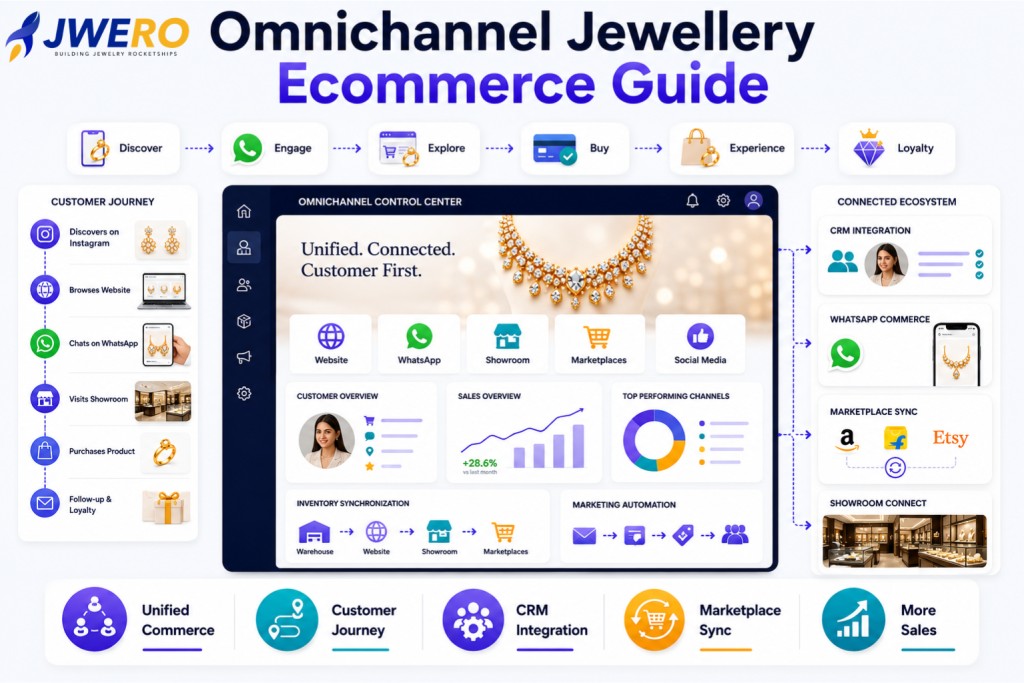
Integrated communication systems like JWERO Chats help jewellery retailers continue customer journeys across WhatsApp, Instagram, Facebook, and in-store interactions.
Automation tools such as JWERO WhatsApp Automation also help create contextual follow-ups instead of repetitive manual outreach.
8. Why QR-Captured Leads Convert Better
QR-based leads typically:
- Convert at higher ticket sizes
- Require fewer follow-ups
- Show stronger brand recall
- Are less price-sensitive
- Return more confidently
Because:
They opted in after experiencing the product.
That timing matters.
Behavioural opt-ins generated inside the showroom often outperform traditional lead-generation methods.
9. CXO Insight: QR Codes Are Behavioural Opt-Ins
Leadership often asks:
“How many walk-ins did we get?”
A better question:
“How many customers raised their hand silently?”
QR scans are voluntary behavioural opt-ins —
far stronger than forced registrations or cold follow-ups.
They show:
- Trust
- Interest
- Willingness to continue
These signals help leadership understand customer readiness beyond basic footfall metrics.
10. The Strategic Shift: From Promotions to Intent Infrastructure
Winning jewellery brands are shifting QR usage from:
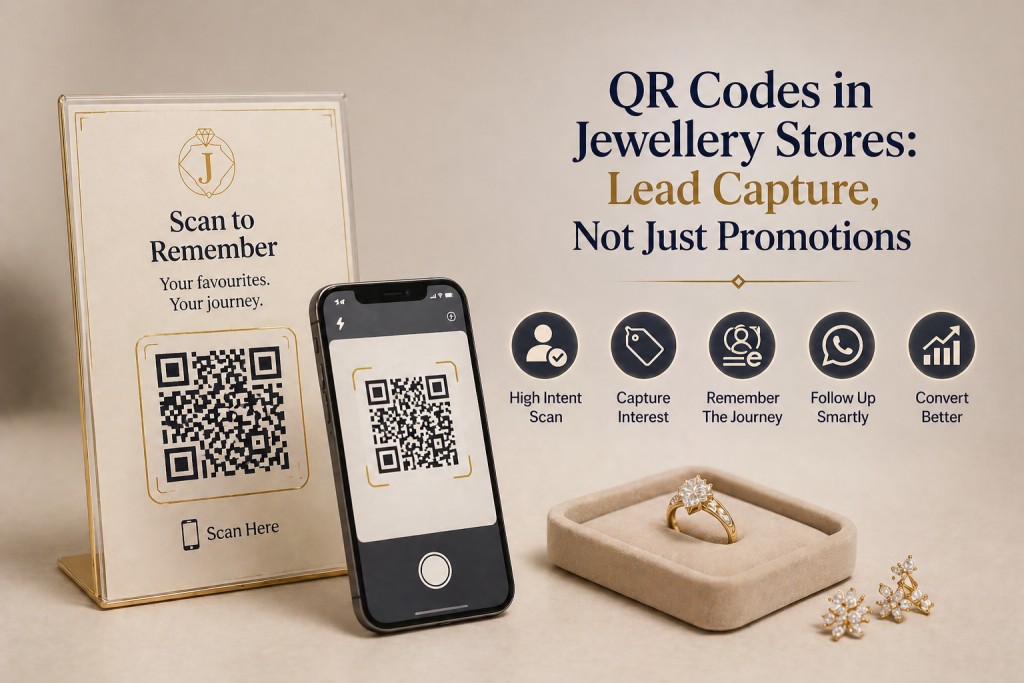
- “Scan for offers”
to
- “Scan to remember”
From:
- Marketing gimmicks
to
- Decision-journey capture
QR codes stop being posters —
and start becoming memory anchors.
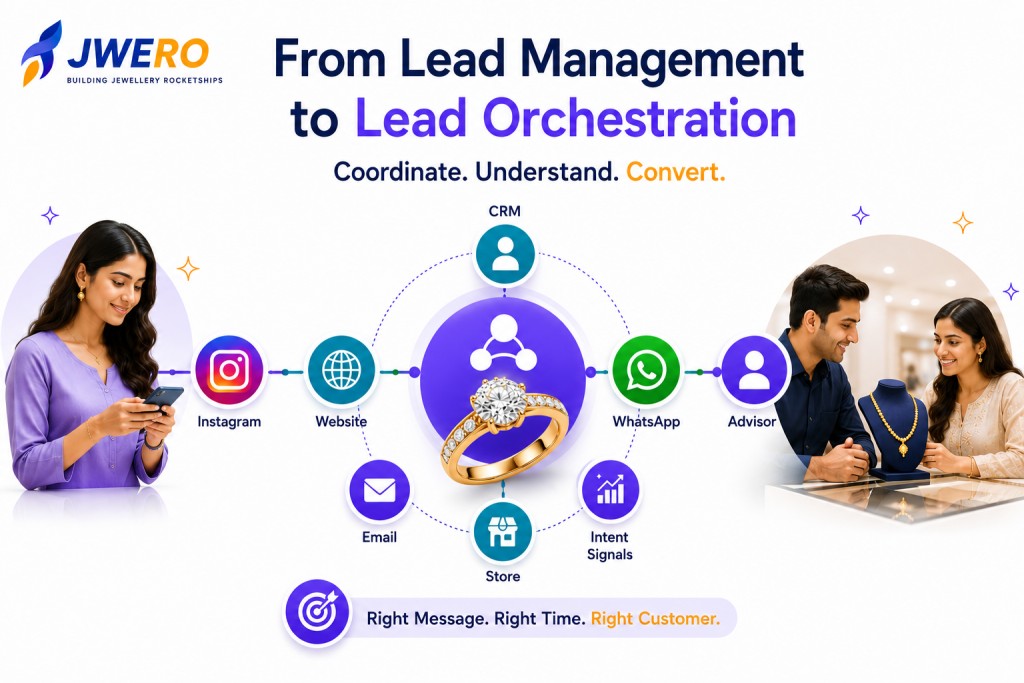
This is the shift from transactional marketing to intent orchestration.
Frequently Asked Questions
Why are QR scans important in jewellery retail?
Because QR scans inside jewellery stores happen during active consideration and often indicate strong buying intent.
How do QR codes help jewellery stores capture leads?
QR codes help capture customer preferences, category interest, browsing context, and follow-up readiness without interrupting the customer experience.
Why do jewellery buyers prefer QR interactions over conversations?
Many buyers prefer low-pressure engagement while they evaluate designs, compare options, and discuss decisions with family members.
How can jewellery retailers improve showroom QR code performance?
By placing QR codes at high-intent touchpoints such as design trays, collection displays, trial mirrors, and exit continuation points.
Can QR codes connect offline and digital jewellery journeys?
Yes. When integrated with CRM and customer engagement systems, QR scans create continuity between showroom visits and future digital interactions.
How does AI improve QR-based lead capture in jewellery retail?
AI helps interpret behavioural signals, preserve customer context, personalise engagement timing, and automate journey continuation intelligently.
Final Thought
Jewellery buyers don’t want to be chased. They want to be remembered — quietly and respectfully.
QR codes, used correctly, do exactly that.
They don’t interrupt the moment.
They extend it.
In jewellery,
the most valuable lead is the one created when the customer isn’t ready to talk — but is ready to remember.
Turn Jewellery Showroom Footfall Into Intelligent Customer Journeys
Discover how JWERO.ai helps jewellery retailers capture showroom intent, unify customer journeys, and automate contextual engagement across online and offline touchpoints.
Explore capabilities including:
- QR-powered lead capture
- Offline-to-online customer journey tracking
- AI-based customer intent recognition
- Omnichannel engagement orchestration
- CRM and WhatsApp integration
- Behaviour-driven follow-up automation
how jewellery stores capture customer intent using QR codes, best QR code strategy for jewellery showrooms, how jewellers connect offline and digital customer journeys, why QR scans indicate high buying intent in jewellery retail, jewellery showroom lead capture using QR codes, how QR codes improve jewellery customer engagement, jewellery CRM systems with QR code integration, how AI improves jewellery lead capture from showroom visits, QR code customer journey tracking for jewellers, how jewellery retailers convert walk-ins into digital leads