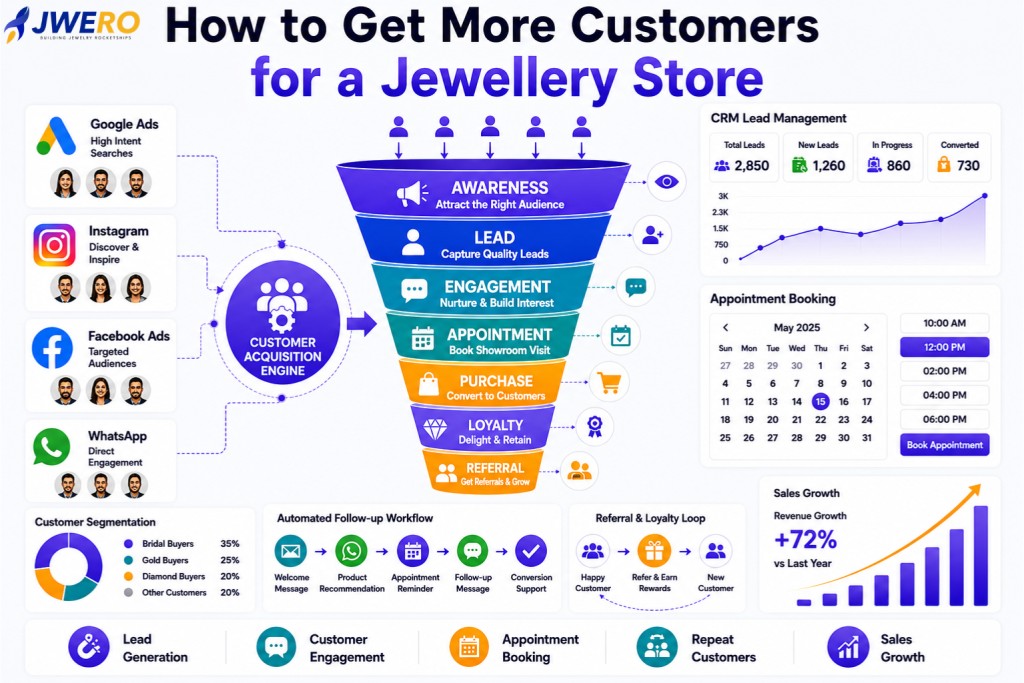


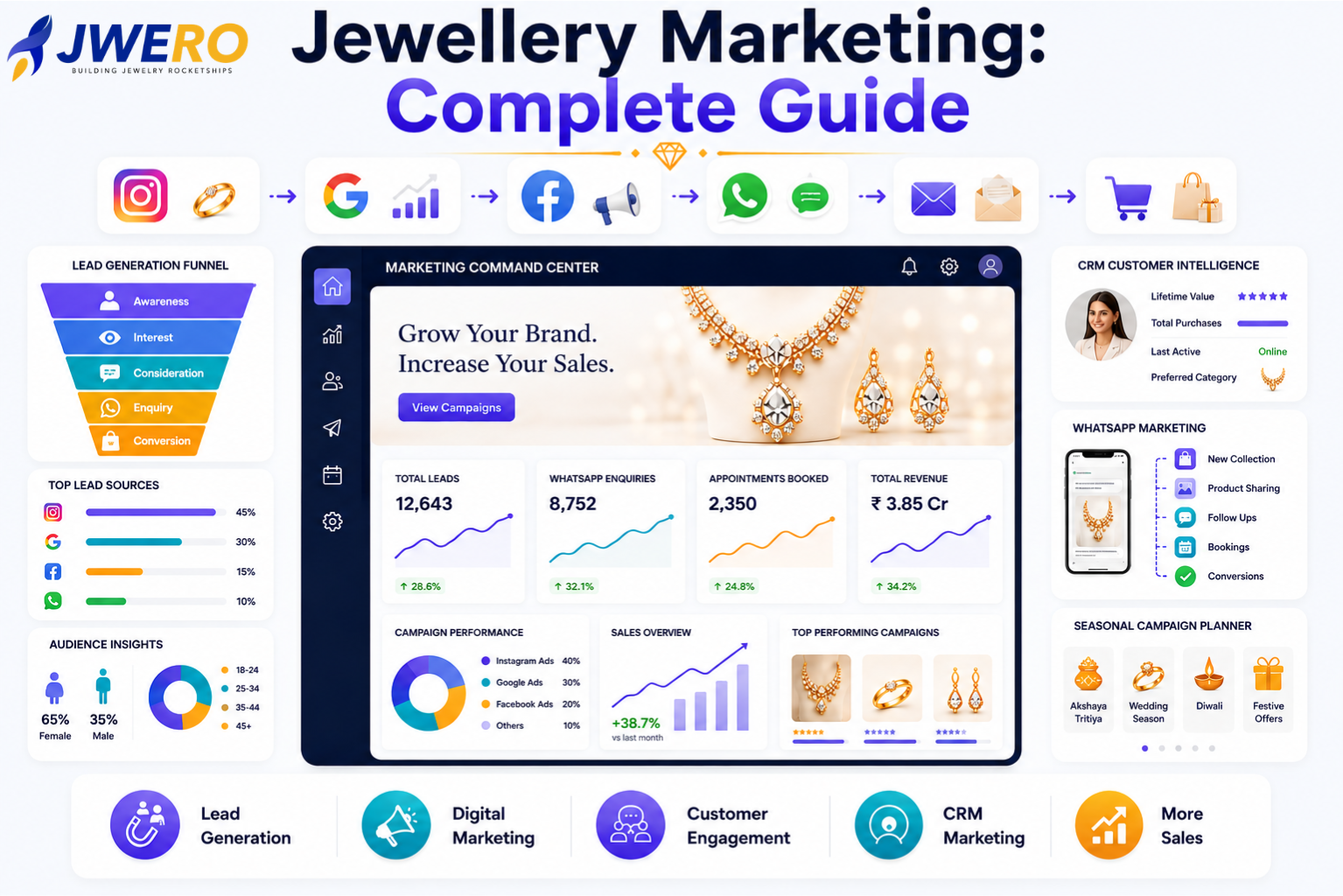
Marketing is no longer optional for jewellery retailers.
Today’s customers discover jewellery through:
- YouTube
- Online Reviews
- Ecommerce Websites
The jewellers who consistently attract customers are those who build a systematic marketing engine.
This guide explains everything jewellery retailers need to know about modern marketing.
What is Jewellery Marketing?
Jewellery marketing is the process of attracting, engaging, and converting potential customers into buyers.
A successful marketing strategy helps retailers:
- Generate Leads
- Increase Showroom Visits
- Build Brand Awareness
- Improve Customer Retention
- Drive More Sales
Marketing should support both online and offline customer journeys.
Why Marketing Matters for Jewellery Stores
Modern customers research extensively before purchasing.
They compare:
- Designs
- Pricing
- Trust Signals
- Reviews
- Brand Reputation
Without marketing, even great jewellery stores struggle to remain visible.
The Modern Jewellery Customer Journey
Customer discovers brand
↓
Views social media
↓
Visits website
↓
Chats on WhatsApp
↓
Visits showroom
↓
Makes purchase
↓
Receives follow-up campaigns
↓
Returns for future purchases
Marketing influences every stage.
1. Build a Strong Online Presence
Customers expect to find your business online.
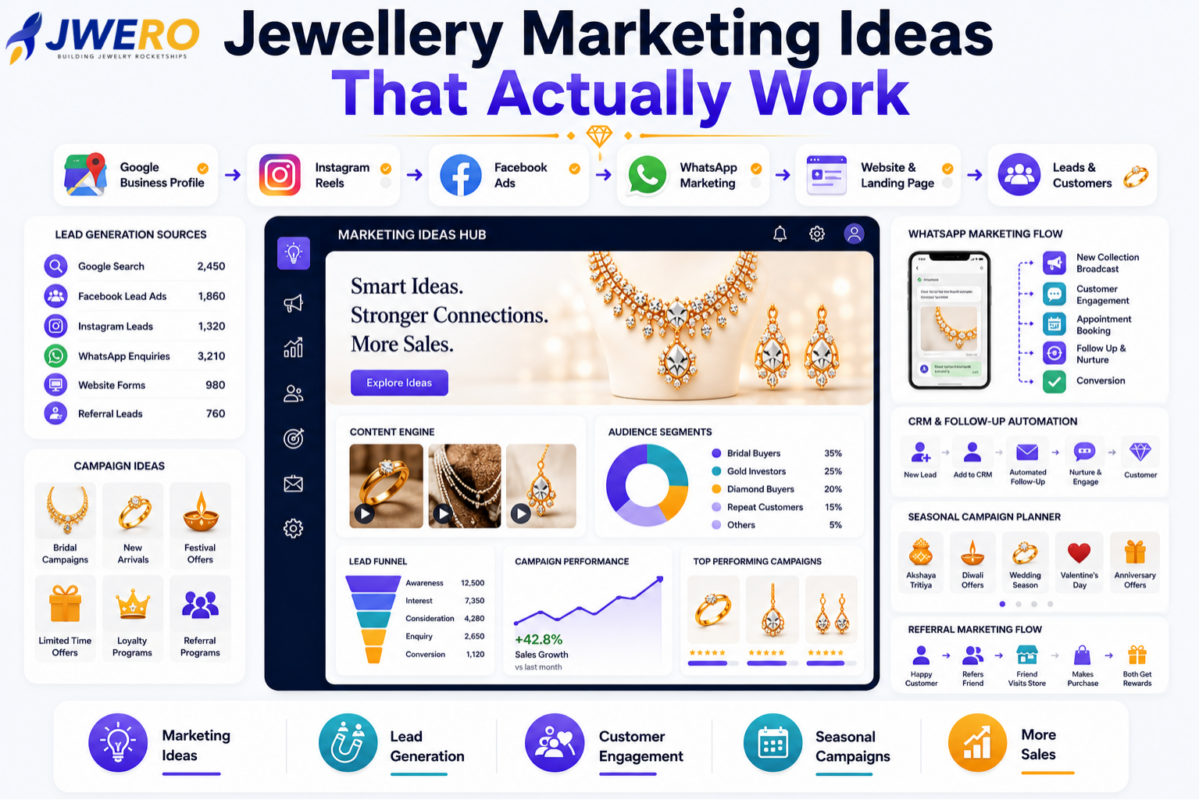
Essential channels include:
- Website
- Google Business Profile
- WhatsApp Business
- YouTube
These channels form the foundation of modern jewellery marketing.
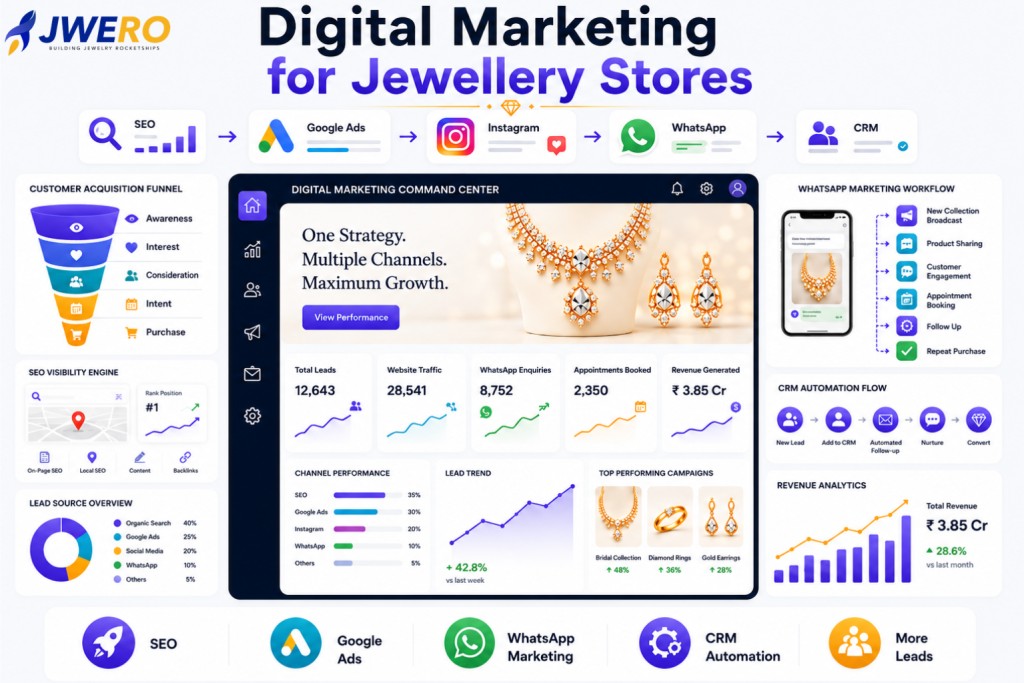
2. Invest in Digital Marketing
Digital marketing helps jewellery retailers reach targeted audiences.
Key channels include:
- SEO
- Google Ads
- Facebook Ads
- Instagram Marketing
- WhatsApp Marketing
- Email Marketing
Together, they create a scalable lead-generation system.
3. Use Instagram to Build Demand
Instagram remains one of the most powerful platforms for jewellery brands.
Popular content includes:
- New Collections
- Bridal Jewellery
- Behind-the-Scenes Videos
- Customer Stories
- Product Reels
- Styling Tips
Visual storytelling drives engagement.
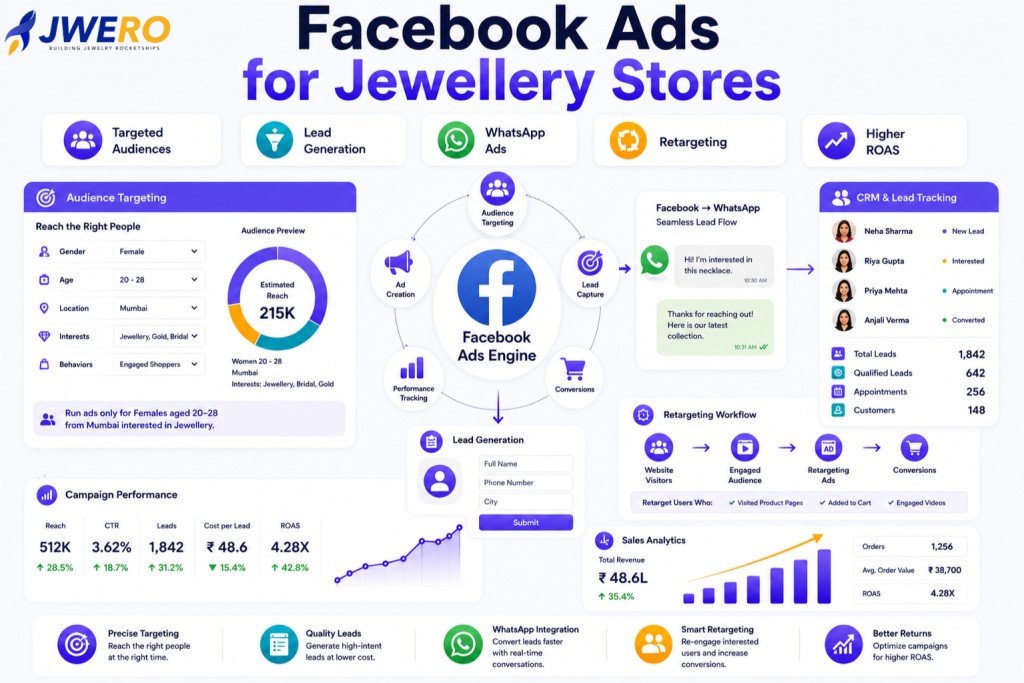
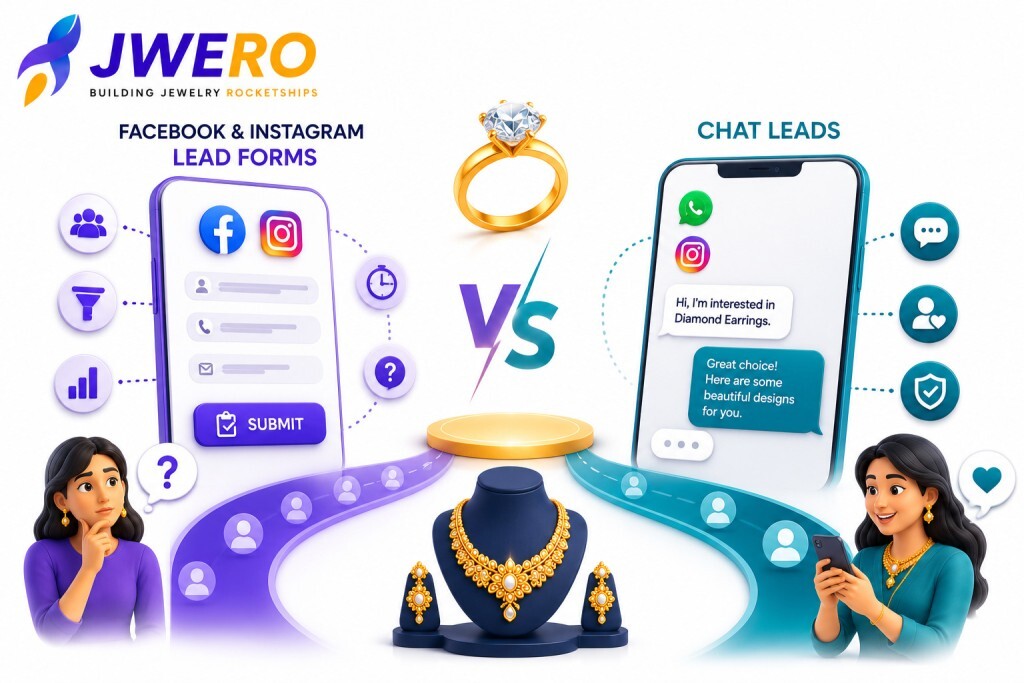
4. Run Facebook Ads and Instagram Ads
Paid advertising helps retailers:
- Reach New Audiences
- Generate Leads
- Promote Collections
- Increase Store Visits
- Drive Seasonal Campaigns
Well-targeted campaigns can produce consistent results.
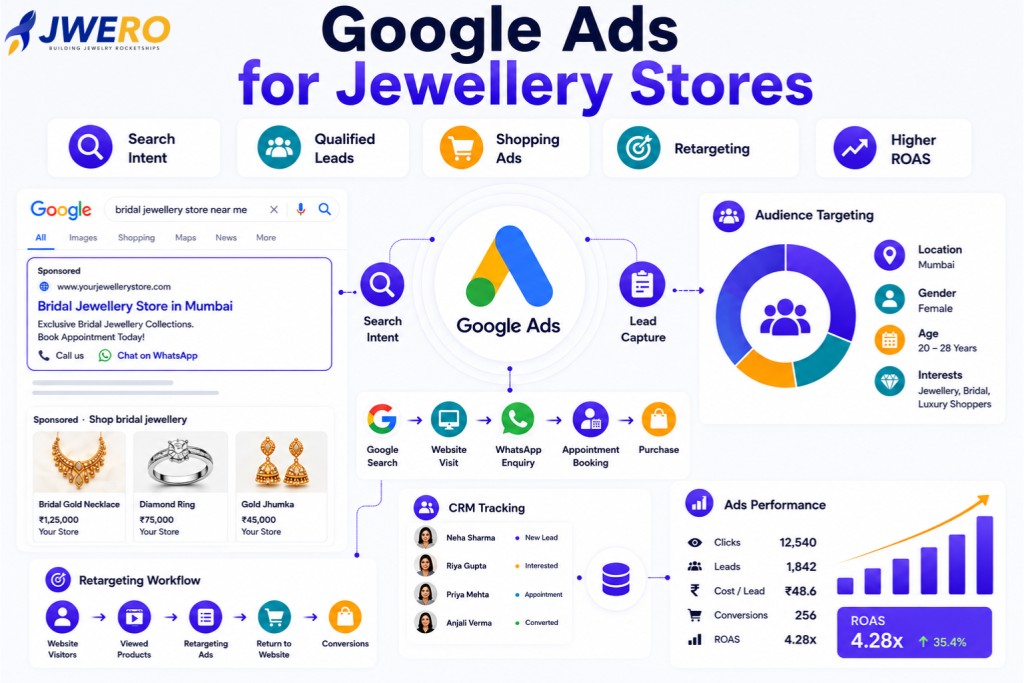
5. Use Google Ads for High-Intent Buyers
Google Ads targets customers already searching for jewellery.
Examples:
- Jewellery Store Near Me
- Bridal Jewellery Store
- Gold Necklace Designs
- Diamond Ring Price
Search traffic often converts at higher rates.
6. Use WhatsApp Marketing
WhatsApp has become one of the most effective jewellery marketing channels.
Use it for:
- Product Sharing
- Broadcast Campaigns
- Appointment Booking
- Follow-Ups
- Customer Support
- Repeat Purchase Campaigns
It creates direct customer engagement.
7. Create Seasonal Campaigns
Jewellery sales often peak during specific occasions.
Examples:
- Akshaya Tritiya
- Diwali
- Wedding Season
- Valentine’s Day
- Anniversary Campaigns
- Festive Collections
Seasonal marketing generates urgency.
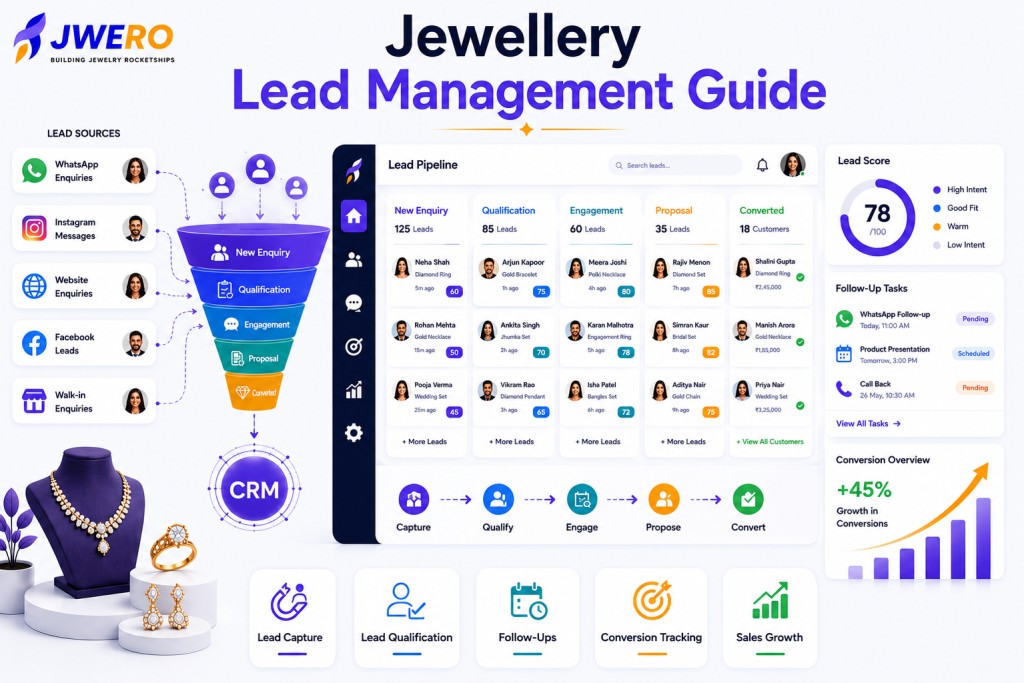
8. Focus on Lead Generation
Every marketing activity should support lead generation.
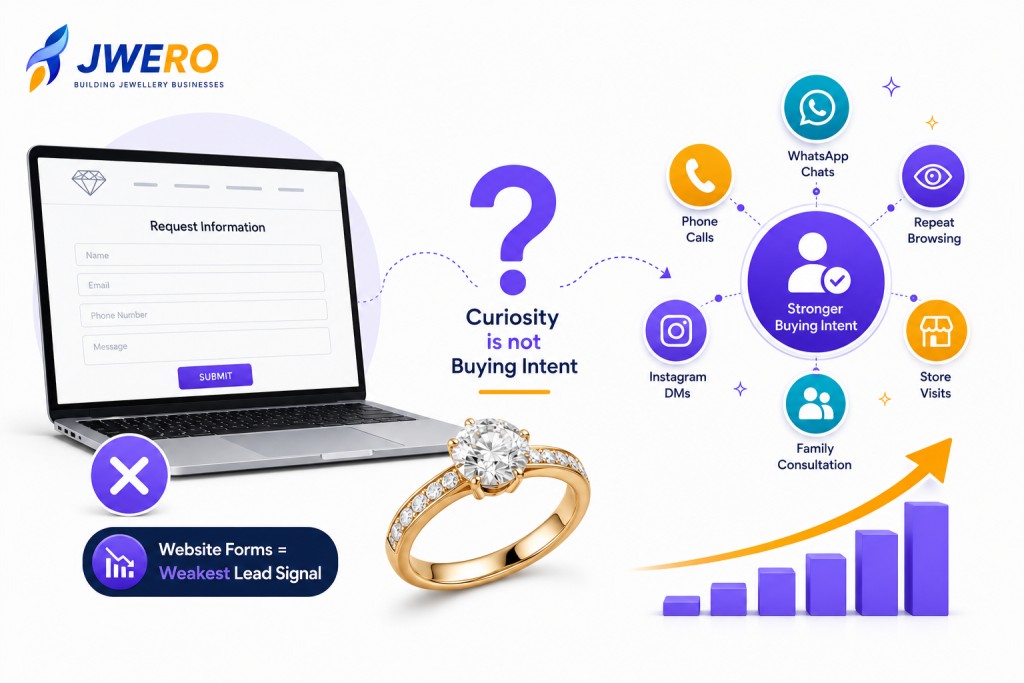
Common lead sources:
- Website Forms
- Facebook Lead Ads
- Google Ads
- Showroom Walk-Ins
- Referral Programs
More leads create more sales opportunities.
9. Use CRM for Marketing
CRM helps retailers:
- Store Customer Profiles
- Track Purchase History
- Segment Audiences
- Automate Follow-Ups
- Measure Campaign Results
Customer intelligence improves marketing performance.
10. Build Repeat Sales Systems
Most jewellery retailers focus heavily on acquisition.
However, repeat purchases often generate higher profitability.
Strategies include:
- Loyalty Programs
- Anniversary Campaigns
- Birthday Campaigns
- Personalized Recommendations
- Customer Reactivation
Retention marketing creates long-term growth.
11. Track Marketing Performance
Measure:
- Leads Generated
- Website Traffic
- WhatsApp Enquiries
- Appointment Bookings
- Showroom Visits
- Revenue
Tracking ensures marketing investments produce results.
Jewellery Marketing Channels Comparison
| Channel | Best For |
|---|---|
| SEO | Long-term visibility |
| Google Ads | High-intent leads |
| Brand awareness | |
| Facebook Ads | Lead generation |
| Engagement & conversions | |
| Email Marketing | Retention |
| CRM Marketing | Personalization |
Common Jewellery Marketing Mistakes
- No Marketing Strategy
- Inconsistent Content
- Ignoring WhatsApp
- Weak Follow-Ups
- No CRM
- No Seasonal Campaigns
- Not Tracking Results
Avoiding these mistakes improves marketing ROI.
Jewellery Marketing Checklist
✅ Website
✅ Google Business Profile
✅ Instagram Presence
✅ Facebook Advertising
✅ Google Ads
✅ WhatsApp Marketing
✅ CRM Integration
✅ Lead Generation System
✅ Marketing Analytics
How Jwero Helps Jewellery Marketing
Jwero helps jewellery retailers:
- Capture Leads
- Manage Customer Profiles
- Automate Follow-Ups
- Run WhatsApp Campaigns
- Track Customer Journeys
- Segment Customers
- Improve Marketing ROI
Creating a complete jewellery marketing ecosystem.
Final Thoughts
The best jewellery marketing strategy is not about a single channel.
It is about connecting:
- Website
- Social Media
- CRM
- Advertising
- Customer Retention
into one growth system.
The jewellers who build this system consistently attract more customers and generate more sales.
Frequently Asked Questions
What is the best marketing channel for jewellery stores?
A combination of Instagram, WhatsApp, Google Ads, SEO, and CRM marketing typically delivers the best results.
How can jewellery stores get more customers?
Through lead generation, social media marketing, advertising, WhatsApp engagement, and referral programs.
Is WhatsApp marketing effective for jewellers?
Yes. It is one of the highest-converting communication channels.
Why is CRM important for jewellery marketing?
CRM helps track customers, automate communication, and improve personalisation.
Should jewellery stores run seasonal campaigns?
Absolutely. Festivals and wedding seasons often generate significant jewellery demand.
How do you measure jewellery marketing success?
By tracking leads, enquiries, appointments, sales, customer acquisition costs, and repeat purchases.