

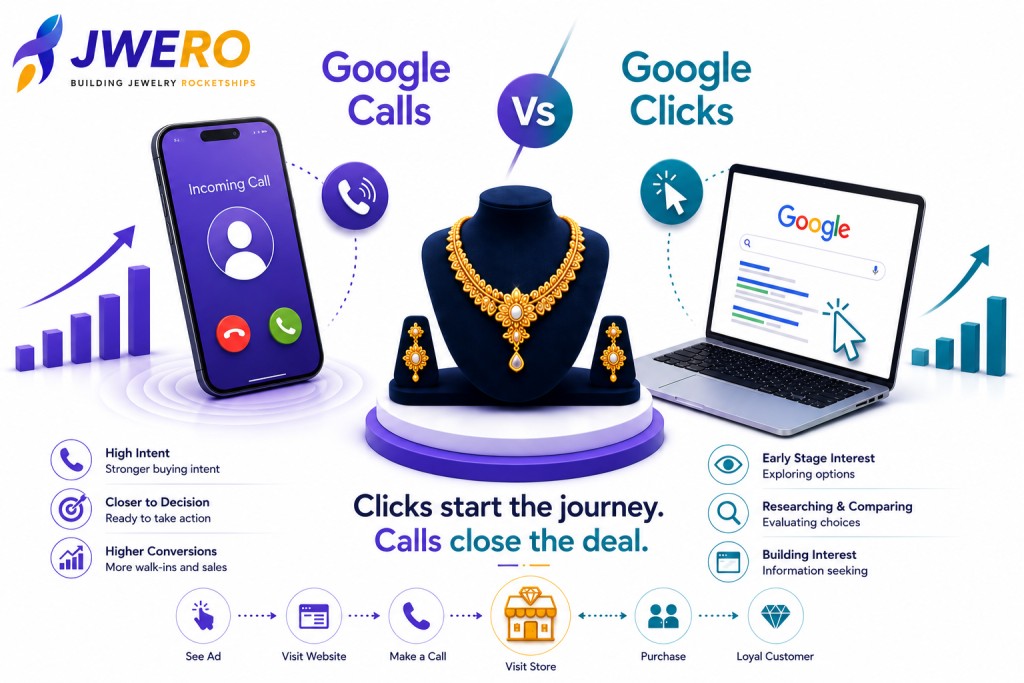
Most jewellery marketing teams optimise Google campaigns for clicks.
They track:
- website traffic
- cost per click
- click-through rates
- form submissions
But jewellery buying behaviour works differently.
A click and a call rarely mean the same thing.
One usually signals curiosity.
The other often signals readiness.
And yet, many jewellery businesses still group both under one label:
“Google leads.”
That creates misleading conclusions.
Especially when high-intent calls get ignored while low-intent clicks dominate reports.
Why Calls and Clicks Are Not the Same
Most jewellery dashboards oversimplify customer intent.
Website visits, form fills, and phone calls often get grouped.
That sounds convenient.
But it hides important behavioural differences.
A customer browsing designs online behaves very differently from someone calling the store directly.
Their intent levels are not equal.
Their readiness is not equal.
And their conversion probability is definitely not equal.
This is where many jewellery brands misread marketing performance.
They measure activity.
But they fail to measure decision proximity.
What Google Clicks Actually Mean
Google clicks usually represent early-stage exploration.
Customers are often:
- comparing prices
- browsing collections
- researching designs
- checking reviews
- exploring options
That does not mean weak intent.
It means undeclared intent.
Customers are gathering confidence slowly.
In jewellery retail, this stage matters.
Especially for bridal, high-ticket, and family purchases.
Clicks help warm interest over time.
Many of those users eventually return through different channels.
Sometimes weeks later.
What Google Calls Reveals About Buyer Intent
Calls usually happen later in the decision cycle.
Customers call when they need clarity.
Or reassurance.
Common reasons include:
- confirming availability
- discussing budgets
- checking store timing
- validating trust
- planning visits
A call requires effort.
It also reduces anonymity.
That changes buyer psychology.
The customer is no longer just researching.
They are moving closer to action.
This is why Google calls often outperform clicks in actual jewellery conversion.
Why Calls Convert Better in Jewellery
Jewellery purchases involve emotion, family discussion, and financial confidence.
By the time customers call, much of the comparison stage is already complete.
That creates stronger conversion potential.
Many jewellery brands notice:
- Higher walk-in rates after calls
- faster purchase timelines
- larger ticket sizes
- stronger advisor engagement
Calls may generate lower volume.
But they often generate better quality.
That distinction matters more than raw lead numbers.
The Hidden Problem With Call Tracking
Despite their importance, jewellery calls are still managed poorly.
In many stores:
- Calls are logged manually
- context gets lost
- follow-ups depend on memory
- advisors lack conversation history
Some calls never get tracked at all.
Especially missed calls.
That creates a silent revenue problem.
Because high-intent customers disappear without structured follow-up.
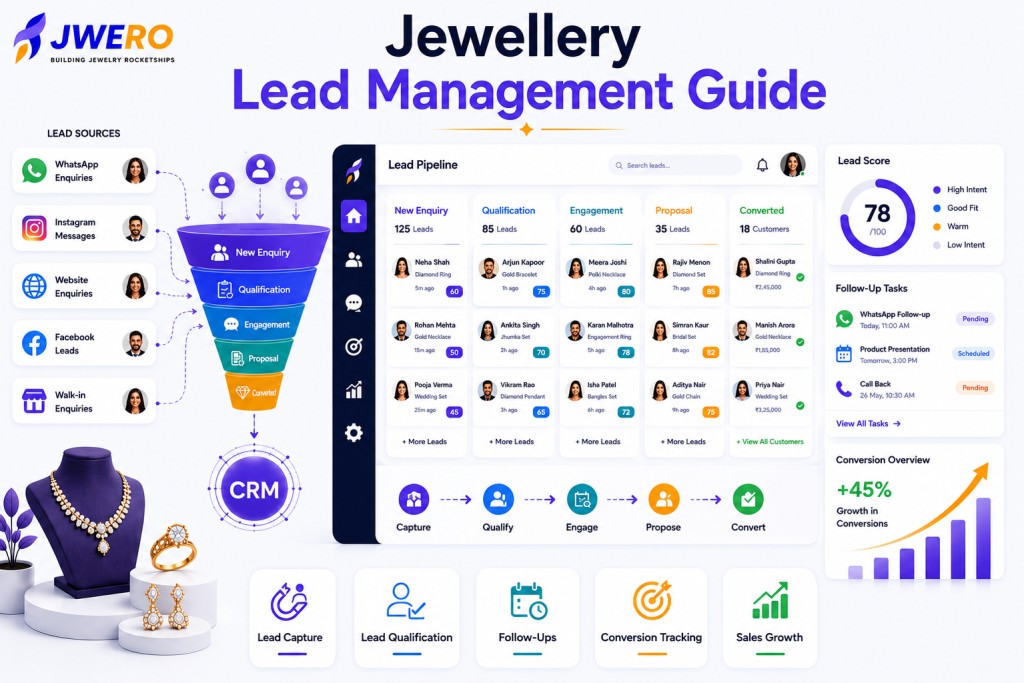
This is why many jewellers are moving toward centralised communication systems like Jwero Chats, where conversations, calls, and customer interactions stay connected across teams.
Why Marketing Teams Prioritise Clicks
Clicks dominate dashboards because they are easier to measure.
Agencies optimise around them.
Reports highlight them clearly.
Calls are different.
They feel operational.
Harder to track.
Harder to attribute.
Harder to scale manually.
As a result, many businesses unintentionally optimise for visibility instead of conversion quality.
That creates distorted ROI decisions.
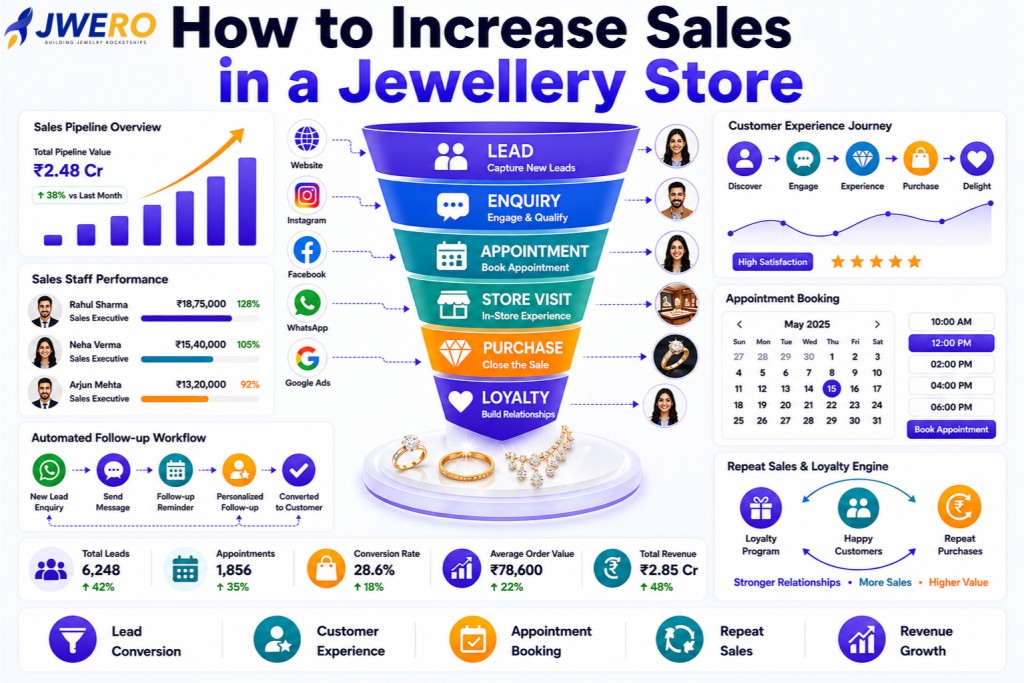
The Real Jewellery Conversion Journey
Jewellery conversions rarely happen in one step.
Customers move gradually.
Usually, the journey looks more like this:
- Google search
- Website browsing
- Product comparison
- Instagram exploration
- Phone call
- Store visit
- Purchase
Clicks often create familiarity.
Calls create confidence.
And store visits create decisions.
Treating these stages separately weakens understanding.
Strong jewellery brands now connect these touchpoints through unified systems like Jwero.ai and Jwero Ecommerce, where browsing behaviour, customer conversations, and offline interactions work together.
Common Mistakes With Google Leads
Many jewellery businesses still make avoidable mistakes.
For example:
- optimising campaigns only for clicks
- ignoring missed calls
- Treating all leads equally
- failing to connect calls with walk-ins
- measuring traffic instead of readiness
These mistakes affect both marketing and sales teams.
Marketing reports may look strong.
But showroom conversion remains inconsistent.
That disconnect usually signals missing intent tracking.
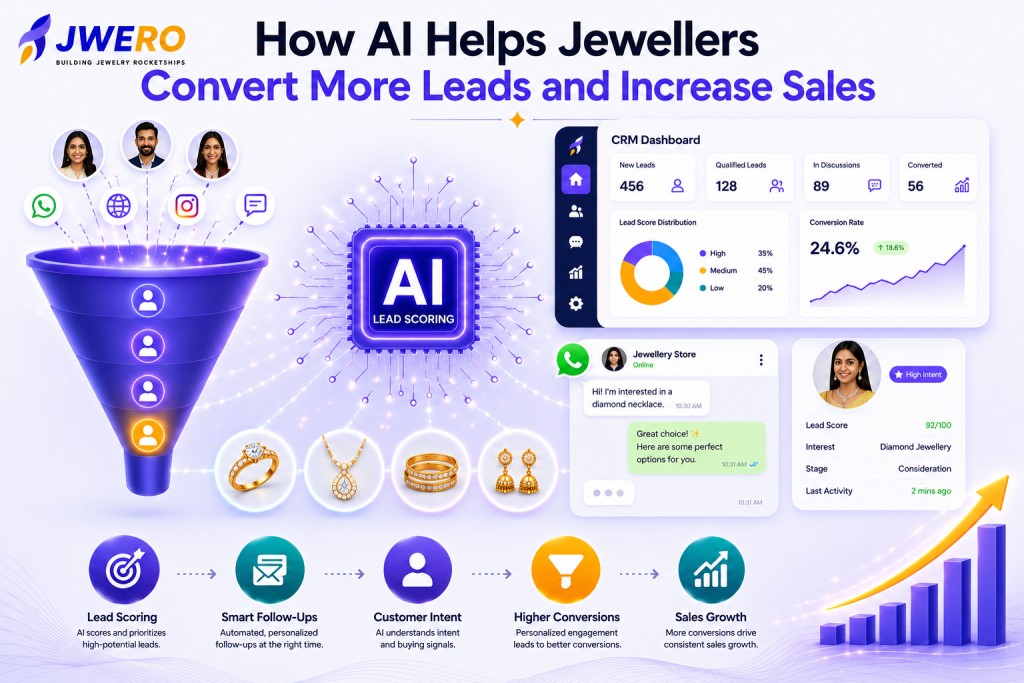
How AI Connects Calls, Clicks, and Store Visits
AI changes how jewellery brands understand customer journeys.
Instead of viewing calls and clicks separately, AI helps connect them.
That creates a clearer picture of intent progression.
For example, AI can help brands:
- Identify high-intent callers
- link browsing history with calls
- detect readiness patterns
- Prepare store teams before visits
- preserve customer context automatically
This shifts the focus away from vanity metrics.
And toward actual conversion behaviour.
Platforms like Jwero WhatsApp also help brands continue conversations naturally after inquiry stages without losing customer context.
Regional Behaviour Differences
Customer behaviour varies across markets.
But the intent ladder remains similar.
India
Calls often dominate bridal and high-value jewellery purchases.
Many customers prefer direct reassurance before visiting stores.
Missed calls frequently hide strong buying intent.
Middle East
Luxury buyers often call closer to the decision stage.
These conversations usually happen after extensive online research.
Southeast Asia
Customers browse heavily online first.
Calls usually confirm stock availability, pricing, or appointments.
Different regions behave differently.
But calls consistently signal stronger purchase readiness.
Why Missed Calls Quietly Hurt Revenue
A missed jewellery call is rarely just a missed inquiry.
It is often a missed decision moment.
Especially during high-intent buying periods.
Without structured callback systems:
- Customers lose momentum
- competitors gain attention
- Trust weakens quickly
Many customers never call again.
This is where centralised workflows and automated follow-up systems become critical.
Not for aggressive selling.
But for protecting intent before it disappears.
Final Thought
Clicks show curiosity.
Calls show confidence.
Both matter.
But they represent different stages of the jewellery buying journey.
Brands that optimise only for clicks often misunderstand conversion quality.
And brands that ignore clicks completely miss early intent formation.
The strongest jewellery businesses connect both.
Because real conversion happens when discovery, reassurance, and timing work together.
FAQs
Are Google calls better than website clicks for jewellery brands?
Google calls usually indicate stronger buying intent and higher readiness compared to clicks alone.
Why do jewellery calls convert better?
Customers who call are often closer to making a decision. They usually need reassurance, availability checks, or store confirmation.
Do Google clicks still matter in jewellery marketing?
Yes. Clicks help customers research designs, compare pricing, and build familiarity before contacting the store.
Why are missed jewellery calls dangerous?
Missed calls often represent high-intent customers. Without callbacks, many potential buyers never return.
How can jewellers track calls and clicks better?
Jewellers can use connected CRM and communication systems to unify browsing behaviour, calls, WhatsApp conversations, and store visits.
Stop Losing High-Intent Jewellery Leads
Calls, clicks, WhatsApp chats, and showroom visits should not exist in separate systems.
Jewellery brands grow faster when customer intent stays connected across every touchpoint.
Explore how Jwero.ai helps jewellers unify lead journeys from Google search to showroom conversion.