

The Most Expensive Mistake Jewellers Make About Leads
Ask ten jewellery businesses what a “lead” is, and most answers will sound familiar:
- Someone filled a contact form
- Someone messaged on WhatsApp
- Someone called the showroom
This definition made sense 10–15 years ago.
Today, it is silently costing jewellers crores in lost revenue.
Because in modern jewellery retail, most serious buyers never fill a form.
They browse
They compare
They shortlist quietly
They talk to family
They return weeks later — or go to a competitor who followed up better.
If you still define leads as “forms”, you are only seeing the tip of the iceberg.
The Old Definition of a Lead (And Why It Fails in Jewellery)
Traditional CRM Definition
A lead is a person who has shared their contact details.
This definition works for:
- Low-ticket products
- Fast decisions
- Single-channel sales
Jewellery is the opposite.
Why This Definition Breaks in Jewellery
- High-value purchases
- Emotional decision-making
- Long consideration cycles
- Multiple touchpoints (store, WhatsApp, Instagram, website)
- Family and social influence
In jewellery, intent appears long before contact details.
The Modern Definition of a Jewellery Lead
The Only Definition That Works Today
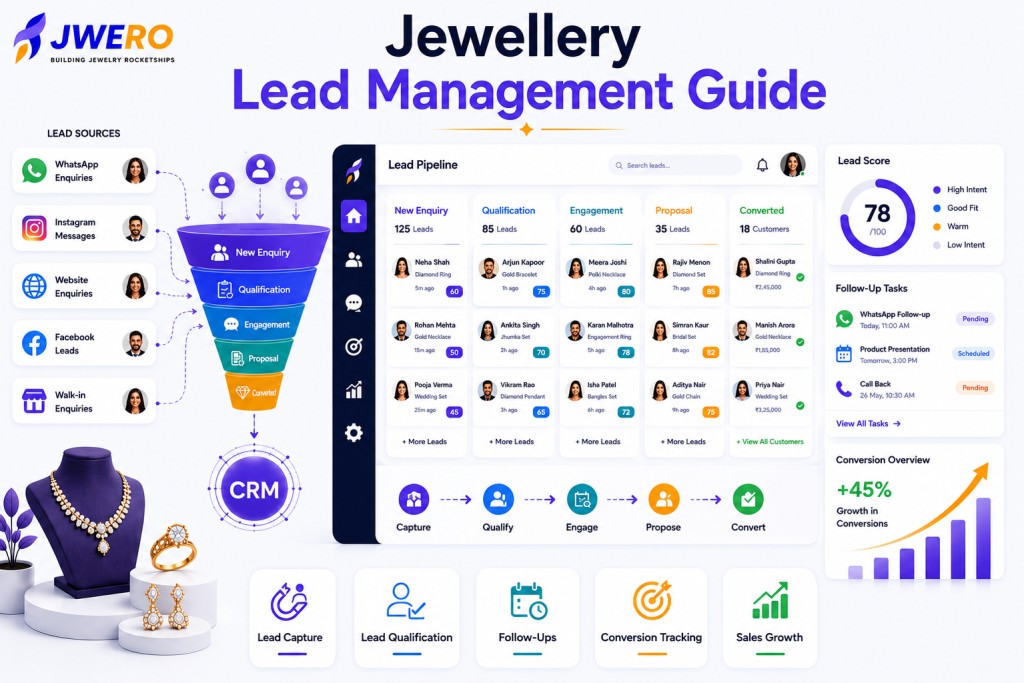
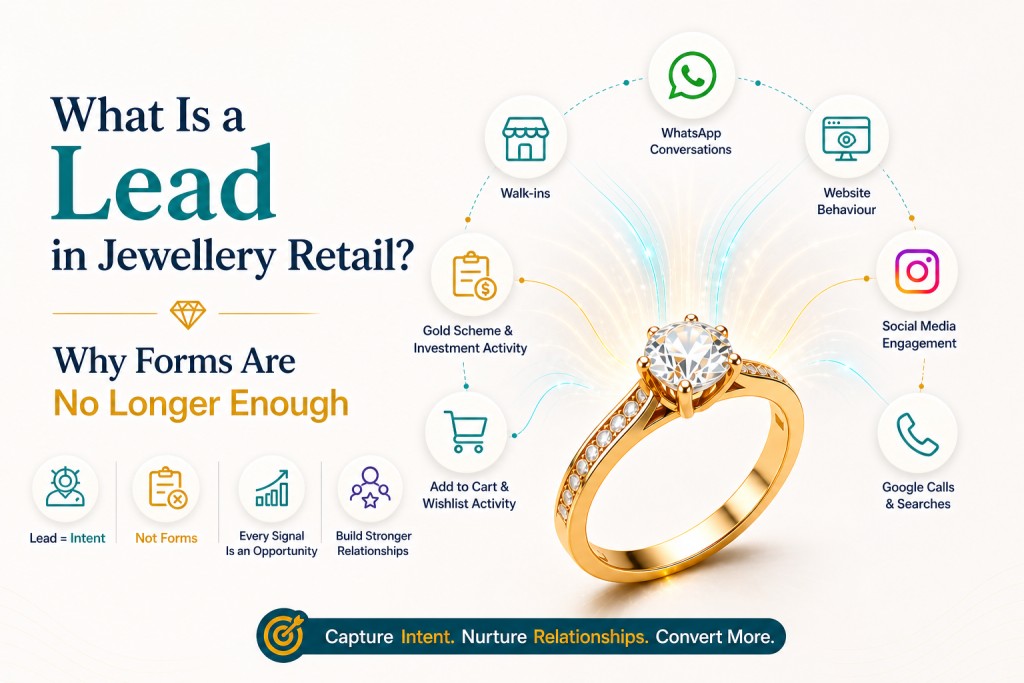
A jewellery lead is any identifiable signal of buying intent — expressed through behaviour, interaction, or engagement — across physical and digital channels.
A lead is not a form.
A lead is intent.
What Actually Counts as a Lead in Jewellery Retail Today
Let’s be very clear.
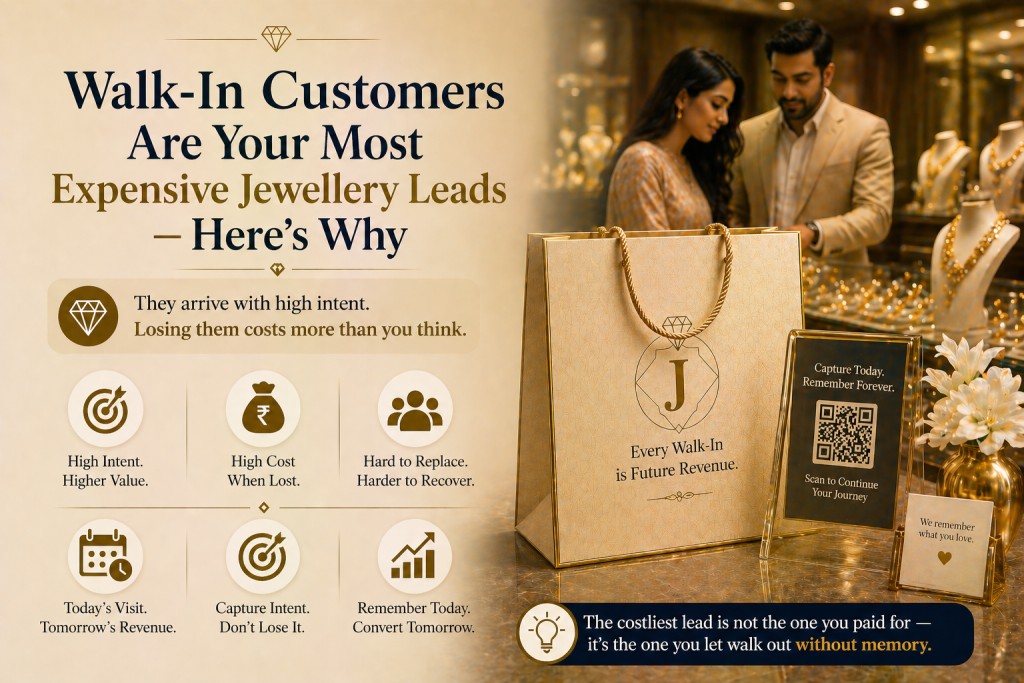
1. Walk-Ins Are Leads
A customer who:
- Enters your showroom
- Asks for prices
- Tries designs
- Leaves without buying
…is a high-intent lead, not a “missed sale”.
Most jewellers treat this as:
“They didn’t buy.”
Smart jewellers treat this as:
“They haven’t decided yet.”
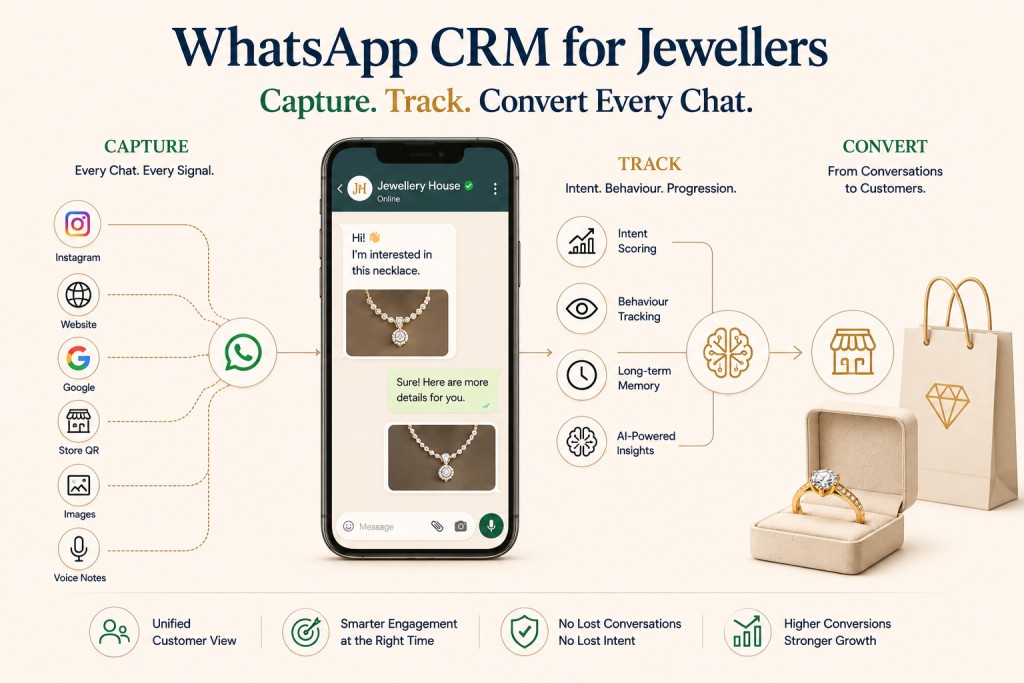
2. WhatsApp Conversations Are Leads
A customer who:
- Asks for weight, price, size
- Requests catalog images
- Saves your number
- Reads messages but doesn’t reply
…is already inside the buying journey.
Yet most jewellery businesses:
- Don’t track ownership
- Don’t record context
- Don’t follow up consistently
3. Website Behaviour Is Lead Data
A customer who:
- Views the same ring multiple times
- Adds items to wishlist
- Adds to cart but doesn’t checkout
- Spends time on bridal or high-ticket pages
…is showing strong intent — often stronger than a form filler.
Ignoring this behaviour is equivalent to:
A salesperson watching a customer browse for 20 minutes and walking away.
4. Instagram & Social Engagement Is a Lead
A customer who:
- Watches reels repeatedly
- Replies to stories
- DMs for prices
- Clicks “WhatsApp” from Instagram
…is already in the funnel.
Social engagement in jewellery is not branding — it is pre-sales.
5. Google Calls & Searches Are Leads
A customer who:
- Calls from Google Business
- Asks for today’s gold rate
- Enquires about availability
…has crossed the awareness stage.
These are high-intent, bottom-funnel leads — often mishandled.
6. Gold Scheme & Investment Customers Are Leads
A customer who:
- Enrols in a gold scheme
- Checks ledger regularly
- Makes monthly payments
…is a future jewellery buyer by design.
Treating them as “accounts” instead of “leads” is a massive missed opportunity.
Why Forms Are the Weakest Lead Signal in Jewellery
Forms feel comforting because they are:
- Visible
- Countable
- Familiar
But in jewellery, forms are:
- Late-stage signals
- Often price shoppers
- Sometimes low intent
The Reality
Most serious jewellery buyers:
- Avoid forms
- Prefer WhatsApp
- Prefer in-store conversations
- Prefer passive exploration
Forms capture who spoke.
Intent signals show who is thinking.
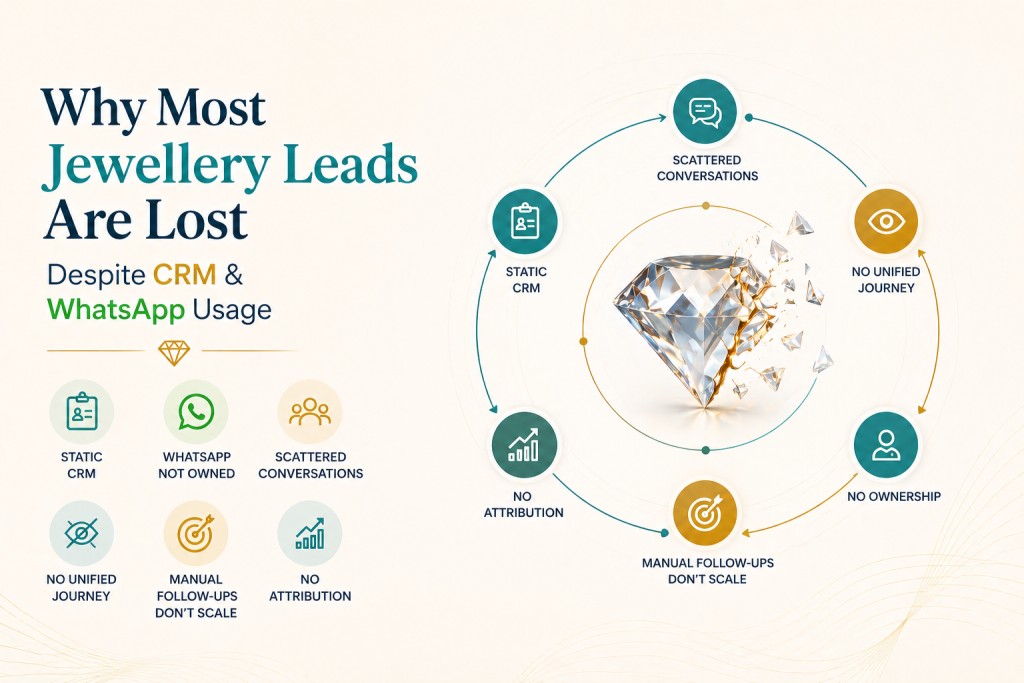
The Real Problem: Jewellers Track Contacts, Not Intent
Most CRMs answer:
- Who is the customer?
- What is their phone number?
They do not answer:
- How interested are they?
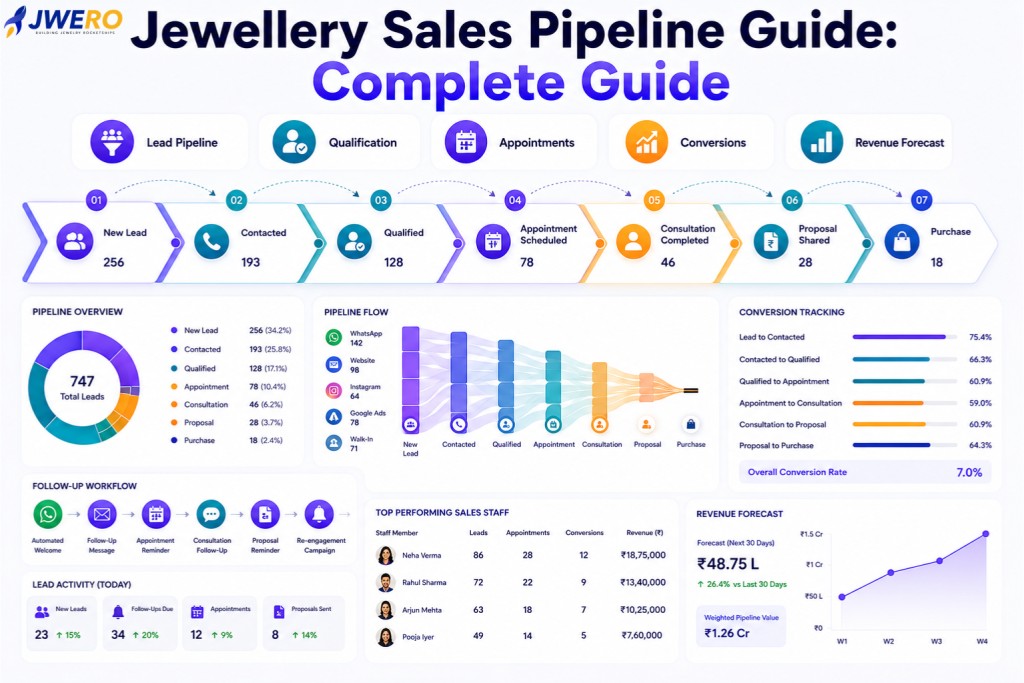
- What stage are they in?
- What triggered their interest?
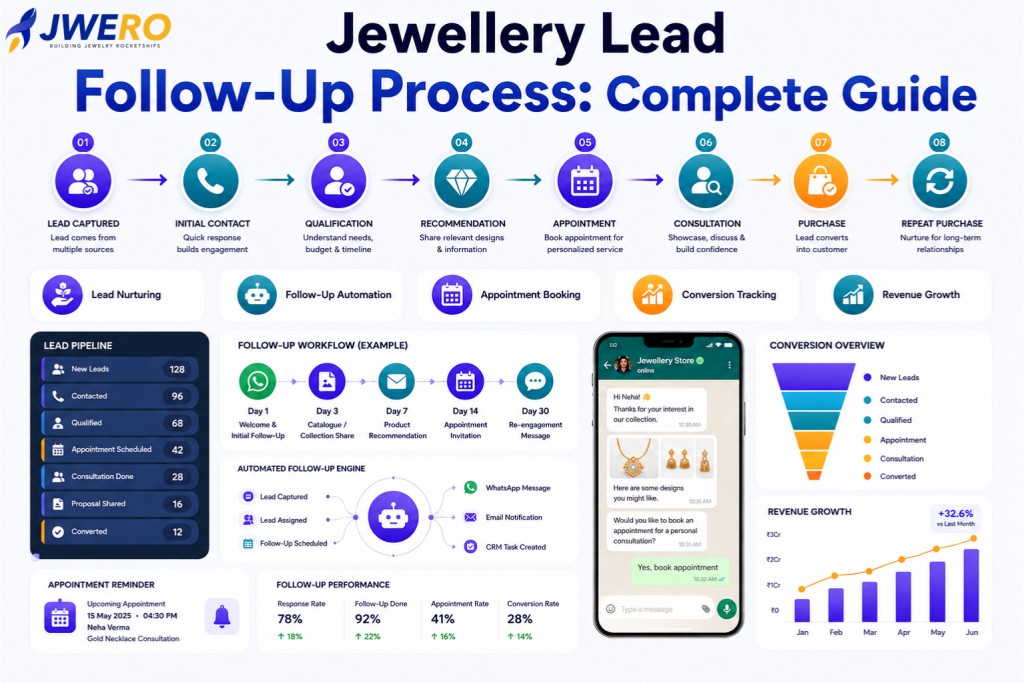
- What should happen next?
As a result:
- Every lead looks the same
- Teams treat all enquiries equally
- Hot leads cool down
- Cold leads waste time
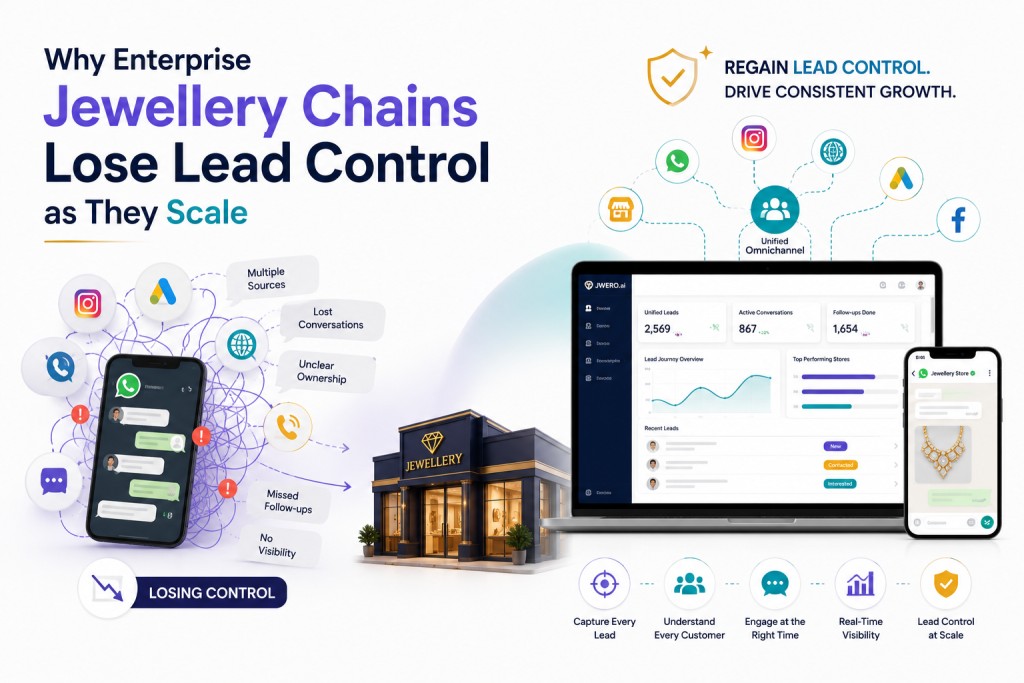
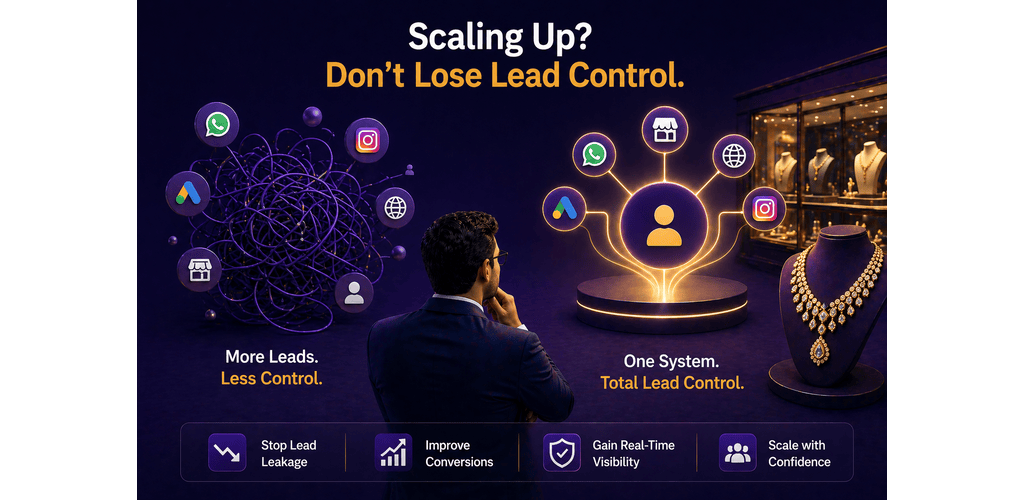
Why This Problem Gets Worse as Jewellers Scale
As businesses grow:
- More stores open
- More staff join
- More WhatsApp numbers are added
- More marketing channels are activated
Without redefining leads:
- Visibility reduces
- Dependency on managers increases
- Follow-ups become inconsistent
- Revenue depends on individuals, not systems
This is why large jewellery chains feel more stressed than small ones, despite higher sales.
The Shift Jewellers Must Make: From Leads to Buying Signals
Old Thinking
“Did we get a lead?”
New Thinking
“Did we capture buying intent?”
Old Metrics
- Number of enquiries
- Number of forms
- Number of chats
New Metrics
- Intent score
- Engagement depth (Leads Stage)
- Channel journey
- Time to conversion
How AI Changes the Definition of a Lead Forever
AI makes it possible to:
- Read behaviour, not just responses
- Identify silent intent
- Predict readiness to buy
- Trigger actions automatically
This means:
- Leads no longer need to “raise hands”
- Systems can detect interest early
- Sales teams engage at the right moment
In the AI age, every customer action becomes data — and every data point becomes a lead signal.
Geography Matters: How Leads Look Different Across Regions
India
- Walk-ins + WhatsApp dominate
- Gold schemes create long-cycle intent
- Family influence delays decisions
Middle East
- Instagram discovery
- Google calls before visits
- Luxury browsing behaviour
Southeast Asia
- App-first journeys
- Faster digital nudges
- Promotion-led intent spikes
A single definition of “lead” does not work globally — intent patterns must be understood locally.
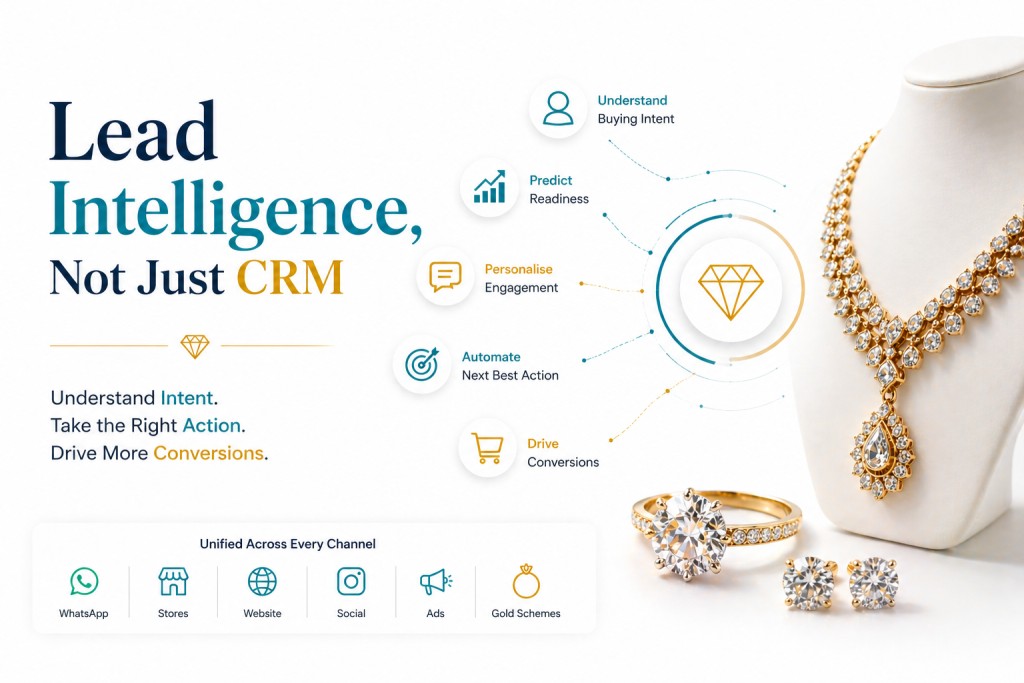
Why Jwero Redefines Leads for Jewellery Businesses
Jwero is built on one core belief:
Jewellery businesses don’t need more leads.They need better understanding of intent.
Jwero:
- Captures intent from every channel
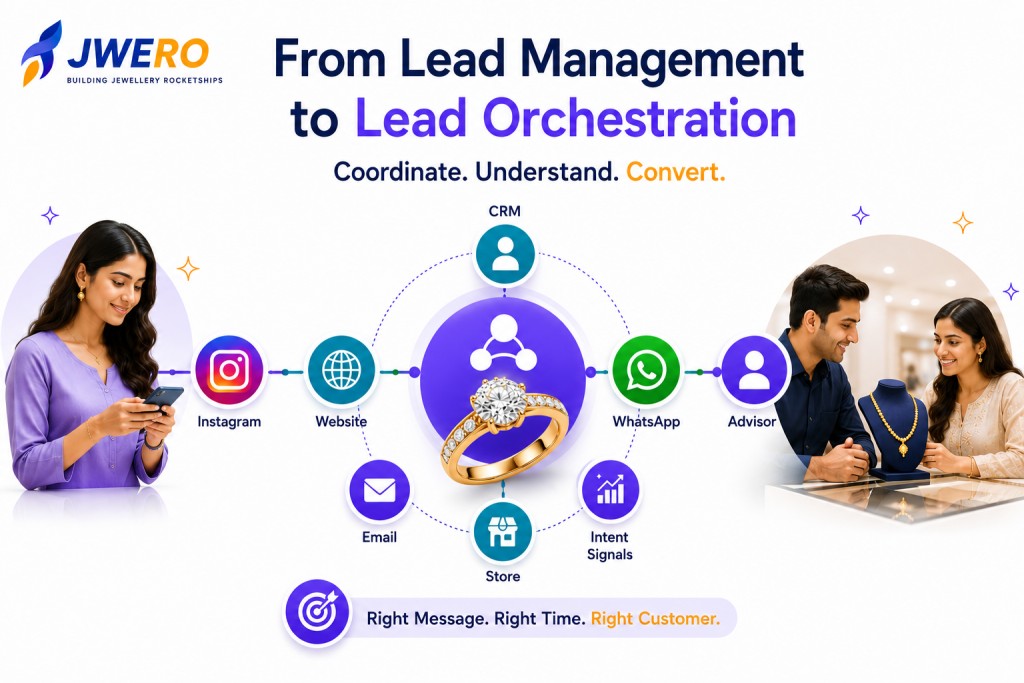
- Unifies online + offline behaviour
- Tracks journeys, not just contacts
- Automates next-best actions
- Ensures zero intent is ignored
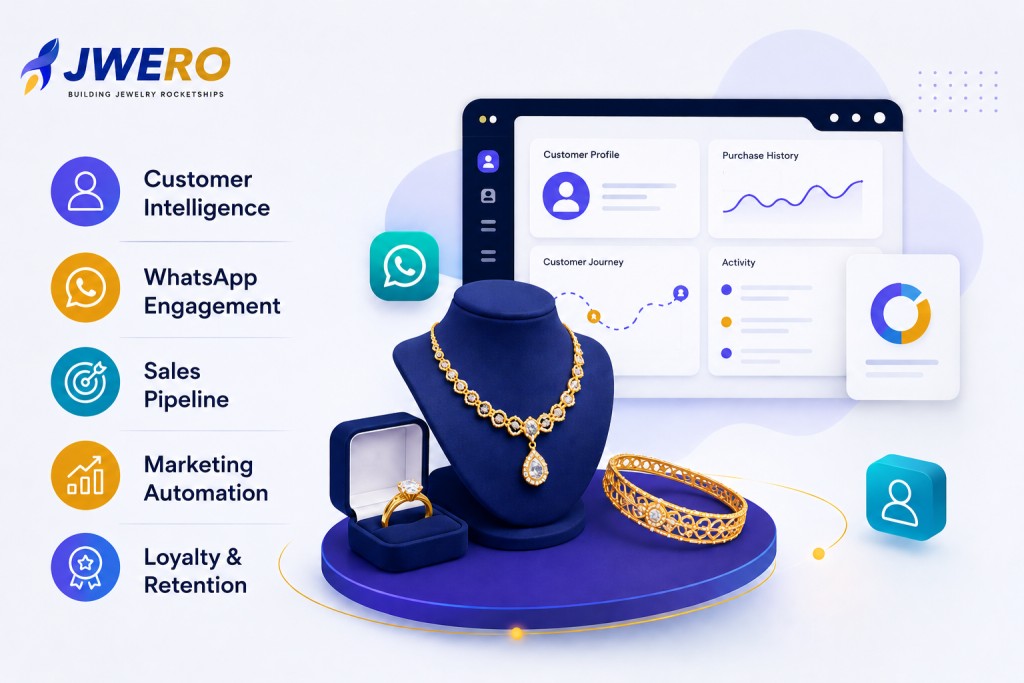
This is why Jwero is positioned as a Lead Intelligence Platform, not just a CRM.
Frequently Asked Questions
What is a lead in jewellery retail?
A lead in jewellery retail is any signal of buying intent — including walk-ins, WhatsApp chats, website behaviour, social engagement, calls, or gold scheme activity — not just form submissions.
Why are forms not enough for jewellery leads?
Most jewellery buyers avoid forms and express intent through behaviour instead. Relying only on forms ignores the majority of serious buyers.
How do jewellers identify high-intent leads?
By tracking engagement across channels, understanding behaviour patterns, and using AI-driven lead scoring instead of manual judgement.
Are walk-in customers considered leads?
Yes. Walk-ins who do not purchase are often high-intent leads and should be nurtured through follow-ups and personalised engagement.
Final Thought
If you define leads narrowly,
you will manage narrowly.
If you understand intent deeply,
you will sell consistently.
In jewellery retail, forms are optional. Intent is everything.